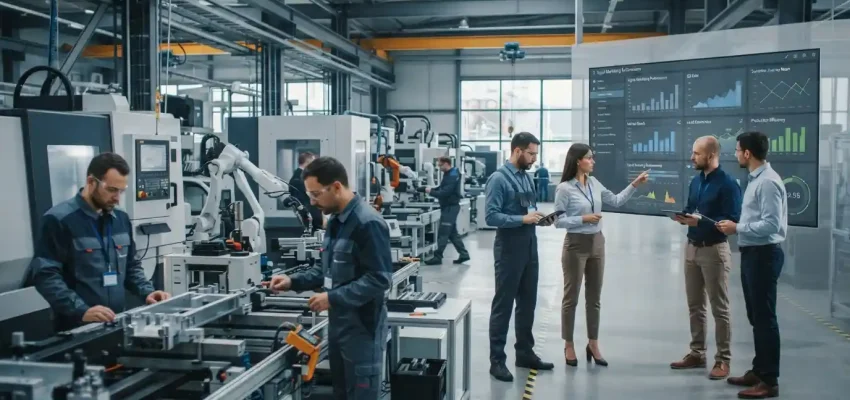

For years, manufacturing companies could rely heavily on distributors, established relationships, trade events, referrals, and offline sales networks. Those channels remain valuable, but modern buyers increasingly research suppliers, technologies, capabilities, and production partners online before making contact. That shift is changing how manufacturers in Novi Sad compete.
Digital marketing gives manufacturing companies an opportunity to reach potential customers earlier in the buying journey, demonstrate technical expertise, generate qualified leads, strengthen their reputation, and compete beyond their immediate geographic market.
Why Digital Marketing Matters to Manufacturing Companies in Novi Sad
Novi Sad has a growing business and technology ecosystem, making digital transformation particularly relevant for local manufacturers. Companies involved in industrial production, components, engineering, machinery, automation, materials, and related services can use digital channels to reach customers in Serbia and international markets.
The role of marketing is also becoming more closely connected to broader digital marketing trends and their global business impact. Manufacturing companies no longer need to treat marketing as a purely promotional function. Instead, it can become part of a wider strategy for growth, market intelligence, customer acquisition, and brand positioning.
A strong digital presence can help a manufacturer answer important questions before a prospective customer ever contacts the sales team:
- What does the company manufacture?
- Which industries does it serve?
- What production capabilities does it have?
- Where does it operate?
- What makes its products or services different?
- Can it support international customers?
- Does it have the technical expertise required for a particular project?
When these answers are easy to find online, the company can enter the buyer’s consideration process much earlier.
The Shift From Traditional Manufacturing Marketing to Digital Growth
Traditional manufacturing marketing often depended on sales representatives, printed catalogs, industry events, personal relationships, and direct outreach. These methods can still produce results, but digital channels allow companies to expand their reach without relying exclusively on physical interactions.
Modern manufacturing marketing can combine search engine optimization, technical content, social media, email marketing, paid advertising, website optimization, analytics, and customer relationship management.
This is part of a larger movement toward digital marketing for business services, where customers expect companies to provide useful information before initiating a commercial conversation.
For Novi Sad manufacturers, this creates an opportunity to build a digital sales environment that supports both local and international business development.
Search Visibility Is Becoming a Competitive Advantage
One of the most important changes in industrial buying behavior is the growing importance of search engines. Procurement teams, engineers, business owners, distributors, and project managers can search online for manufacturers, suppliers, components, technologies, and specialized services.
A manufacturing company that does not appear for relevant searches may lose potential opportunities to competitors that have invested in their online presence.
Search engine optimization can help manufacturers create pages targeting valuable topics such as:
- Industrial products and components
- Manufacturing capabilities
- Production technologies
- Industry-specific solutions
- Engineering services
- Manufacturing processes
- Supplier-related searches
- Product specifications
- Technical comparisons
- Industry trends
This approach connects manufacturing expertise with customer search intent. Instead of publishing generic promotional content, companies can create resources that answer the technical and commercial questions buyers actually ask.
Technical Content Can Build Manufacturing Authority
Manufacturing companies possess something many businesses struggle to develop: specialized knowledge. Engineers, production managers, technicians, and industry specialists understand processes and challenges that customers frequently need help evaluating.
That knowledge can become a powerful content asset.
A manufacturer could publish guides explaining production processes, comparisons between materials, maintenance considerations, technology developments, quality-control methods, or factors buyers should consider when selecting a supplier.
This strategy supports the broader principles discussed in advanced digital marketing for business excellence, where useful information can contribute to stronger customer relationships and business positioning.
Technical content also has an important secondary benefit: it demonstrates expertise. A detailed article can give a prospective customer more confidence in a company’s capabilities before the first sales conversation takes place.
Manufacturing Websites Are Becoming Digital Sales Tools
A manufacturing website should do much more than display a company logo, address, and basic service information. It can function as a 24-hour sales and information platform.
Modern industrial websites should make it easy for visitors to understand products, capabilities, industries served, certifications, processes, case studies, facilities, and contact options.
Website architecture is especially important because manufacturing businesses often have complicated product catalogs and highly specialized services.
Clear navigation can help visitors quickly move from a general company overview to specific product or service information. Search-optimized landing pages can then capture users who arrive through search engines with highly specific requirements.
This approach is closely connected to the concept of the digital customer journey and cognitive user experience. Every page should help move a visitor toward understanding, trust, and eventually action.
Data Is Changing How Manufacturers Understand Customers
Digital marketing produces valuable information about how potential customers interact with a company. Website analytics can reveal which pages attract visitors, what topics generate interest, which locations produce traffic, and where users leave the conversion process.
Manufacturers can use this information to make more informed marketing decisions.
For example, if a technical guide consistently attracts visitors searching for a particular manufacturing process, the company may discover an opportunity to create a dedicated service page, case study, downloadable resource, or lead-generation campaign around that subject.
This makes marketing more measurable and reduces dependence on assumptions.
Businesses can also learn from broader approaches to benchmarking digital marketing performance and apply similar measurement principles to industrial campaigns.
Digital Marketing Can Expand Novi Sad Manufacturers Beyond Serbia
One of the biggest opportunities for manufacturers in Novi Sad is international growth. Digital channels make it possible for a company to present its capabilities to potential customers outside Serbia without opening a physical office in every target market.
A manufacturer can build dedicated content around international industries, export capabilities, product categories, technical expertise, and common buyer questions.
Multilingual content can also help businesses communicate with customers in different markets when implemented carefully and professionally.
The goal is not simply to generate large amounts of website traffic. The objective is to attract the right visitors—companies, procurement teams, distributors, engineers, and decision-makers who may eventually become commercial opportunities.
Manufacturing and the Growth of Industry-Specific Digital Marketing
Generic marketing strategies rarely work equally well across every industry. Manufacturing has its own buying cycles, technical terminology, customer expectations, and decision-making structures.
That makes industry-specific digital marketing especially valuable.
Manufacturers can build content around specific verticals such as automotive, electronics, construction, energy, industrial equipment, logistics, or technology.
The connection between digital marketing and specialized industries can already be seen in resources covering digital marketing in the automotive sector and the economic impact of digital marketing in automotive markets.
These types of industry-focused strategies can inspire Novi Sad manufacturers to move away from broad messaging and create content specifically designed for the sectors they want to serve.
Technology Is Strengthening the Manufacturing Marketing Ecosystem
Manufacturing itself is becoming more technologically advanced, and marketing is following the same direction. Automation, analytics, artificial intelligence, customer databases, marketing platforms, and digital communication tools are changing how companies operate.
The wider technology ecosystem also provides examples of how businesses are positioning themselves around digital innovation. Topics such as digital innovation, modern technology solutions, and business technology innovation illustrate the increasing connection between technology and commercial growth.
For manufacturers, the lesson is straightforward: digital transformation should not stop at the production floor. Marketing, sales, customer service, and business development can also benefit from technology.
Artificial Intelligence Could Reshape Manufacturing Marketing
Artificial intelligence is becoming increasingly relevant to marketing operations. Manufacturers can potentially use AI-assisted systems for content research, customer segmentation, data analysis, campaign planning, personalization, and workflow automation.
However, industrial marketing still requires human expertise. Technical information needs to be accurate, commercially relevant, and understandable to the intended audience.
AI can help accelerate repetitive tasks, but engineers, marketers, and industry specialists should remain involved in reviewing important technical content and customer-facing information.
This balance between human expertise and technological innovation is particularly important for companies operating in specialized markets.
Social Media Can Humanize Industrial Brands
Manufacturing businesses sometimes assume that social media is primarily useful for consumer brands. In reality, industrial companies can use social platforms to demonstrate expertise and provide visibility into their operations.
Content can include factory processes, product demonstrations, engineering insights, employee expertise, technology updates, trade-event participation, company milestones, and educational material.
Visual content can be especially effective because manufacturing processes are naturally suited to photography, video, diagrams, demonstrations, and behind-the-scenes material.
Rather than using social media purely for promotion, manufacturers can use it as an additional channel for education and relationship building.
Email Marketing Can Support Long Manufacturing Sales Cycles
Manufacturing purchases often involve longer decision-making processes than ordinary consumer transactions. Multiple stakeholders may need to review specifications, pricing, capabilities, quality standards, and supplier qualifications.
Email marketing can help companies remain visible throughout this process.
A manufacturer could develop segmented email campaigns for distributors, existing customers, engineers, procurement teams, or prospective buyers.
Useful messages might include new product announcements, technical guides, industry updates, case studies, product comparisons, maintenance information, and company developments.
The objective should be to provide meaningful information rather than overwhelm recipients with promotional messages.
Measuring Digital Marketing ROI in Manufacturing
Manufacturers should evaluate digital marketing according to business outcomes rather than traffic alone.
Important metrics can include:
- Qualified leads generated
- Organic search growth
- Conversion rates
- Product-page engagement
- Contact-form submissions
- Quote requests
- Sales-qualified opportunities
- Customer acquisition cost
- Revenue influenced by digital campaigns
Businesses can also study established approaches to digital marketing ROI analysis and ROI measurement for business services when developing their own reporting systems.
The key is to connect marketing activity to commercial objectives. A smaller number of highly qualified industrial leads can be more valuable than thousands of irrelevant website visitors.
Digital Transformation Creates New Opportunities for Novi Sad
Novi Sad manufacturers have an opportunity to combine local industrial expertise with modern digital business practices.
The strongest companies will likely be those that understand digital marketing as part of a broader transformation rather than treating it as an isolated promotional activity.
This can involve integrating marketing data with sales processes, improving websites, creating technical content, developing stronger customer journeys, adopting analytics, and using technology to improve communication.
The broader impact of digital marketing on mid-market businesses demonstrates why digital channels are increasingly relevant to organizations seeking sustainable growth.
How Novi Sad Manufacturers Can Prepare for the Future
Manufacturers that want to strengthen their digital presence can begin with a practical roadmap.
1. Audit the Existing Website
Identify outdated pages, missing product information, weak calls to action, technical issues, and opportunities for search optimization.
2. Define High-Value Customer Segments
Determine which industries, markets, companies, and buyer roles represent the strongest commercial opportunities.
3. Build Technical Content
Turn internal expertise into useful guides, product resources, comparisons, case studies, and educational articles.
4. Improve Search Visibility
Research the terms potential buyers use and create dedicated pages that answer those searches accurately.
5. Connect Marketing and Sales
Marketing teams should understand which leads sales considers valuable, while sales teams should understand how digital campaigns influence prospects.
6. Measure Results
Track leads, conversions, qualified opportunities, and revenue rather than relying exclusively on impressions or website traffic.
7. Invest in Digital Skills
Marketing technology, analytics, content production, automation, and customer experience should become increasingly integrated into the company’s long-term capabilities.
Manufacturers can also learn from broader technology-focused business developments, including technology-driven business innovation and business website transformation through technology.
The Future of Manufacturing Marketing in Novi Sad
The future of manufacturing in Novi Sad will not be defined only by machinery, production capacity, or physical infrastructure. Digital visibility and customer experience will increasingly influence how companies compete for attention and business.
Manufacturers that build strong online platforms can communicate their capabilities before a prospective customer ever makes contact. They can educate buyers, demonstrate expertise, reach international markets, collect useful data, and create more efficient pathways from discovery to inquiry.
At the same time, digital marketing will continue becoming more connected with technology, automation, analytics, and business strategy. Manufacturing companies that embrace these changes early can position themselves for stronger long-term competitiveness.
Final Thoughts
Digital marketing is reshaping the manufacturing market in Novi Sad by changing how companies communicate, attract customers, demonstrate expertise, and compete in domestic and international markets.
The opportunity is particularly significant because manufacturing businesses already possess valuable technical knowledge. By converting that expertise into useful digital experiences, search-optimized content, targeted campaigns, and measurable customer journeys, manufacturers can build stronger relationships with modern buyers.
The future will belong to companies that connect manufacturing excellence with digital excellence. For businesses in Novi Sad, that combination can create a powerful foundation for visibility, lead generation, international expansion, and sustainable growth.