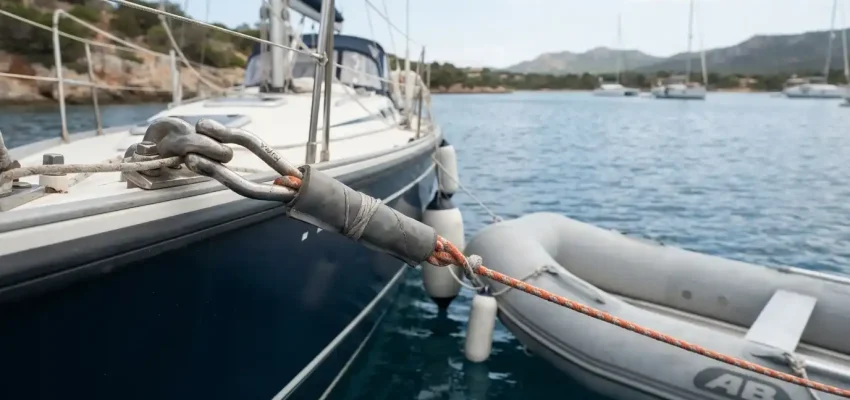

For sailors trying to balance reliability with cost, the goal is not simply to buy the cheapest shackle or the strongest rope. A better approach is to understand where chafe occurs, which materials make sense, how often components may need replacement, and when spending more initially can reduce maintenance costs later.
This guide breaks down the practical cost considerations surrounding dinghy painter shackles, chafe protection, rope selection, installation, maintenance, and replacement so you can build a dependable setup without paying for unnecessary hardware.
What Is a Dinghy Painter?
A dinghy painter is the line used to secure a dinghy to a yacht, dock, mooring point, or another suitable attachment location. Depending on how the dinghy is used, the painter may serve as a simple securing line or form part of a larger towing arrangement.
The distinction matters because a painter intended mainly for securing a dinghy does not necessarily need the same configuration as a dedicated towing system. Combining both functions without considering the loads and movement involved can increase wear and create unnecessary complications.
When planning a boating trip, the same principle applies to the wider equipment setup: simple components should have a clear purpose and be selected according to how they will actually be used.
For travelers researching destinations before planning time on the water, guides such as tropical places in the US to visit and the best places to visit in the South USA can also provide ideas for combining boating with broader travel plans.
What Does a Chafe Shackle Do?
Chafe is gradual material damage caused by repeated rubbing, movement, friction, or contact with another surface. Around a dinghy painter, chafe can occur where rope meets hardware, where hardware contacts an attachment point, or where the line repeatedly moves under load.
A chafe-protected shackle connection is intended to reduce this wear and protect the components that experience repeated movement.
The exact arrangement depends on the dinghy, painter diameter, attachment point, and intended use. A practical setup may include floating rope, a suitable marine-grade shackle, and a protective sleeve or other chafe-resistant material at high-wear locations.
Why Chafe Protection Matters
The cost of a small piece of protective material can be insignificant compared with the inconvenience of replacing a damaged painter or recovering a dinghy that has separated from its intended securing point.
Chafe protection is particularly important when the painter remains attached for long periods. Every movement of the dinghy can create small amounts of friction. Over time, thousands of minor movements can become significant wear.
This is why sailors should inspect the connection rather than judging its condition solely by how the rope looks from a distance.
Dinghy Painter Chafe Shackle Cost Factors
There is no single price that applies to every dinghy painter chafe shackle setup. Total cost depends on several components.
1. Rope Material
The painter itself is often one of the largest components of the overall cost. Common choices include polypropylene, nylon, and polyester-based lines, with each material offering different characteristics.
Floating polypropylene can be attractive for dinghy applications because keeping the line on the water’s surface can reduce the risk of it becoming entangled with a propeller. Other materials may provide advantages in handling, stretch, abrasion resistance, or longevity.
2. Shackle Material
Marine hardware is available in different materials and finishes. Stainless steel is a common choice for applications where corrosion resistance and durability matter.
The cheapest available shackle is not automatically the best value. A component exposed to salt water, movement, and repeated loading needs to be appropriate for the environment in which it will be used.
3. Chafe Protection
Chafe protection may be as simple as a protective sleeve or a carefully positioned section of durable material. The cost varies depending on the material and installation method.
For a budget-conscious sailor, this is one area where a small amount of preventative spending can make sense because the protection is intended to extend the service life of the more important components.
4. Splicing or Termination
The way the painter connects to the hardware can affect both cost and durability. A professionally made termination costs more than a basic knot but may offer a cleaner and more permanent solution.
DIY sailors who already have the necessary skills and tools can potentially reduce labor costs, but the finished connection still needs to be appropriate for its intended load.
Typical Budget Categories
Instead of thinking about one fixed price, it is more useful to divide a dinghy painter setup into three budget levels.
| Setup | Typical Approach | Best For |
|---|---|---|
| Budget | Basic floating rope, suitable shackle, simple chafe protection | Occasional use and cost-conscious sailors |
| Mid-range | Higher-quality line, corrosion-resistant hardware, improved chafe protection | Regular cruising and frequent dinghy use |
| Premium | High-quality marine rope, premium hardware, professionally finished connections and dedicated protection | Heavy use and long-term cruising |
The right choice depends more on usage than on the price tag. A sailor who uses a dinghy every day may benefit more from durable components than someone who only uses a dinghy occasionally.
How to Choose the Right Painter Rope
Rope selection should begin with the intended function rather than appearance.
Floating Rope
Floating line can be particularly useful around powered vessels because a line that remains on the surface is less likely to drop directly into a propeller’s path.
For sailors who regularly combine boating with coastal travel, choosing destinations carefully can also make equipment planning easier. Resources covering places to visit in the US in fall and tropical US destinations can help when planning different types of seasonal trips.
Polypropylene
Polypropylene is commonly considered for applications where flotation is important. It can be economical and practical, although UV exposure and long-term degradation should be considered.
Polyester
Polyester can provide useful abrasion resistance and good handling characteristics. It may be appropriate where durability and controlled stretch are more important than flotation.
Nylon
Nylon offers useful elasticity, which can help absorb sudden loads. However, its stretch characteristics and resistance to repeated abrasion should be considered when selecting it for a particular painter configuration.
How Much Should You Spend on a Chafe Shackle?
For most sailors, the best approach is to spend enough to obtain reliable marine-grade components without paying for specifications that provide little practical benefit.
A sensible budget should account for the complete system rather than the shackle alone. Rope, termination, protective material, attachment hardware, and replacement frequency all contribute to the real cost.
For example, saving a few dollars on a low-quality connection may not be worthwhile if the component requires frequent replacement. Conversely, buying highly specialized hardware for a lightly used dinghy may provide little additional value.
Cost vs. Replacement Frequency
The cheapest initial purchase is not always the cheapest long-term option.
Consider a basic painter that costs less but requires frequent replacement because of UV exposure and chafe. A more durable configuration may cost more initially while lasting considerably longer.
This is the same principle used when planning a broader travel budget. A low upfront price should always be considered alongside durability, maintenance, convenience, and replacement costs.
If your boating plans include road trips and destination stops, guides such as places to visit in the Finger Lakes, the best places to visit in Oregon, and places near Joshua Tree National Park can be useful for building a wider itinerary around outdoor activities.
Where Does Chafe Usually Occur?
Before buying additional protection, identify exactly where the wear is happening.
- At the painter’s attachment point
- Where rope passes through or around hardware
- At the bow connection
- Where the painter contacts a towing point
- At areas that rub against the dinghy
- At points exposed to repeated movement while towing
Different wear patterns require different solutions. Adding material everywhere may increase bulk without solving the actual problem.
How to Inspect a Dinghy Painter
A regular inspection takes only a few minutes and can help identify problems before they become serious.
Check the Rope
Look for fraying, flattening, discoloration, stiffness, melted fibers, cuts, and areas where the outer fibers appear significantly worn.
Check the Shackle
Inspect the body, pin, threads, and connection point. Look for corrosion, deformation, unusual movement, or damage.
Check the Chafe Protection
Protective material is itself a wear item. If it has become thin, split, displaced, or compressed to the point where the underlying rope is exposed, replace or reposition it.
Check the Dinghy Attachment
Do not inspect only the rope and shackle. The attachment point on the dinghy also deserves attention. A strong painter cannot compensate for a damaged or weakened attachment point.
Dinghy Painter vs. Dedicated Towing Line
A painter used for securing a dinghy does not necessarily need to perform the same job as a dedicated towing line.
Separating these functions can make the system easier to inspect and manage. A shorter painter can remain attached for everyday securing while a dedicated towing arrangement can be installed when the dinghy needs to be towed for longer distances.
This approach can also reduce unnecessary wear on a single line that would otherwise be expected to perform every function.
When Should You Replace the Painter?
Replace the painter when there is significant fiber damage, severe abrasion, cuts, contamination that cannot be cleaned, substantial UV degradation, or any uncertainty about its remaining strength.
Hardware should also be replaced when corrosion, deformation, damaged threads, or other defects compromise its reliability.
Waiting until a component completely fails is usually a poor maintenance strategy. A painter is inexpensive compared with the potential inconvenience and risk associated with losing control of a dinghy.
Smart Ways to Reduce Dinghy Hardware Costs
Buy for the Actual Application
Do not automatically purchase the most expensive marine hardware available. Match the rope, shackle, and protection to the dinghy’s size and intended use.
Protect High-Wear Areas
A relatively inexpensive chafe protector can extend the life of a much more expensive rope or hardware assembly.
Inspect Before Every Major Trip
A quick inspection before a longer journey can identify wear while replacement is still convenient.
Keep a Spare
Carrying a spare painter or suitable replacement components can be particularly useful during extended cruising or remote travel.
If you’re planning outdoor travel beyond boating, destinations such as Yellowstone National Park, the Oregon Coast, and San Diego illustrate why versatile travel equipment and careful preparation matter when building longer itineraries.
Common Mistakes to Avoid
- Using damaged rope because it still appears usable
- Ignoring small areas of repeated chafe
- Using unsuitable hardware simply because it is inexpensive
- Assuming the strongest component automatically creates the safest system
- Failing to inspect the dinghy’s attachment point
- Allowing the painter to become vulnerable to propeller entanglement
- Using one line for every towing and securing task without considering the different loads
- Replacing components only after complete failure
How to Build a Cost-Effective Setup
A practical dinghy painter system does not need to be complicated. Start with a suitable floating or purpose-appropriate line, add reliable marine-grade hardware, protect the locations where movement causes wear, and inspect everything regularly.
For sailors who travel frequently, equipment decisions should also be considered as part of the overall trip rather than as isolated purchases. Planning destinations, transport, accommodation, and onboard equipment together can make longer trips more efficient.
For additional destination planning, you can explore popular places in Los Angeles, Savannah, Georgia, California in the fall, and places near Chicago O’Hare Airport when combining boating plans with wider travel.
Final Thoughts
The real value of a dinghy painter chafe shackle setup is not measured by the lowest purchase price. It is measured by how reliably the complete system performs, how well it handles repeated movement and environmental exposure, and how long its components remain serviceable.
For smart sailors, the best strategy is to choose appropriate rope, use dependable hardware, protect areas exposed to chafe, and inspect the entire connection regularly. A modest investment in preventative maintenance can reduce replacement costs and make dinghy handling much more predictable.
Whether you’re preparing for local sailing or a longer adventure, equipment reliability should always be part of the planning process. Thoughtful preparation leaves more time to enjoy the journey and less time dealing with preventable equipment problems.