
If your home still has outdated wiring — knob and tube from the 1940s, aluminum wiring from the 1970s, or simply an electrical system that cannot handle modern demands — you are probably wondering: how much does rewiring a house cost in USA in 2026? A full home rewire typically runs $8,000 to $15,000 for a standard 1,500 to 2,500 square foot home, with most homeowners paying around $10,000 to $12,000 including materials, labor, permits, and drywall repair.
The rewiring house cost USA varies dramatically based on your home’s size, age, accessibility, and local labor rates. This comprehensive guide breaks down every cost factor, what the rewiring process involves, signs your home needs rewiring, and how to save money without compromising safety.
Average Cost to Rewire a House in USA 2026
Electricians typically charge $6 to $10 per square foot for a full home rewire, which includes removing old wiring, running new copper wiring, installing new outlets and switches, upgrading the electrical panel if needed, and bringing everything up to current code. For a 1,500 square foot home, that translates to $9,000 to $15,000. A smaller 1,000 square foot home might cost $6,000 to $10,000, while a large 3,000+ square foot home can exceed $20,000.
These figures assume standard accessibility — unfinished basements, accessible attics, and walls that can be fished without excessive drywall removal. Homes with plaster walls, limited attic access, or finished basements cost more because the electrician must cut more drywall to run new wires. Drywall repair and repainting alone can add $2,000 to $5,000 to the total rewiring house cost USA.
Regional variations are significant. In high-cost metros like New York, San Francisco, Boston, or Seattle, electrician rates run $100 to $200 per hour, pushing rewire costs 30 to 50 percent above average. In the Midwest and Southeast, rates of $60 to $100 per hour keep costs lower. Always get at least three detailed quotes from licensed electricians. Our how to hire an electrician in USA checklist helps you vet contractors properly.
Rewiring Cost by Home Size
Small Home (1,000 sq ft): $6,000–$10,000
Condos, small bungalows, and cottages cost less simply because there is less wiring to replace. However, the per-square-foot cost may be slightly higher because the electrician still needs to set up, pull permits, and coordinate inspections — fixed costs spread over fewer square feet. Expect 5 to 7 days of work.
Medium Home (1,500–2,000 sq ft): $9,000–$15,000
The most common USA home size falls in this range. A full rewire takes 7 to 12 days depending on accessibility. This is the sweet spot where per-square-foot costs are most predictable. Most homeowners in this category pay $10,000 to $12,000 all-in.
Large Home (2,500–3,500 sq ft): $15,000–$25,000
Larger homes have more circuits, more outlets, more switches, and often more complex layouts. Two-story homes cost more than single-story because running wires between floors is labor-intensive. Expect 2 to 3 weeks of work. Homes over 3,500 square feet or with luxury finishes can exceed $30,000.
What Is Included in a Full House Rewire?
Understanding what the rewiring house cost USA covers helps you compare quotes accurately. A complete rewire should include removal of all old wiring (knob and tube, aluminum, or outdated copper), installation of new copper wiring throughout (typically 12-gauge for outlets and 14-gauge for lighting), new outlets and switches in every room (usually 1 outlet per 12 feet of wall per code), GFCI outlets in kitchens, bathrooms, garages, and outdoor areas, AFCI protection for bedroom circuits (required by current code), new light fixtures or preparation for homeowner-supplied fixtures, dedicated circuits for major appliances (kitchen, laundry, HVAC), grounding system upgrade, permit fees and inspection coordination, and basic drywall patching (though full repainting is usually extra).
What is typically NOT included: full drywall repair and repainting beyond basic patching, new light fixtures (you supply these), smart home devices or upgrades (though wiring can be roughed in for future), electrical panel upgrade if your panel also needs replacement (often $1,500–$3,000 additional), and landscaping repair if trenching was needed for service entrance upgrades.
Ask each electrician for an itemized quote so you can compare apples to apples. The cheapest quote is not always the best — verify that all code-required work is included. An electrician who skips AFCI protection or GFCI outlets to lower the price is cutting corners on safety.
Signs Your Home Needs Rewiring
Not every old home needs a full rewire, but these warning signs indicate your rewiring house cost USA investment may be necessary for safety.
Frequent breaker trips or blown fuses. If your tripped breaker keeps tripping, your wiring may be undersized for modern electrical loads. This is especially common in homes wired before the 1980s when households used far less electricity.
Discolored or warm outlets and switches. Brown marks around outlets, outlets that feel warm to the touch, or a burning smell near electrical devices are serious warning signs. Turn off the breaker and call an electrician immediately — this indicates overheating that could cause a fire.
Knob and tube wiring. Common in homes built before 1950, knob and tube wiring has no ground wire, the insulation deteriorates with age, and it was never designed for modern electrical loads. Most insurance companies refuse to insure homes with active knob and tube. See our knob and tube wiring replacement cost USA guide for specifics.
Aluminum wiring. Used widely from 1965 to 1975 during a copper shortage, aluminum wiring expands and contracts more than copper, loosening connections over time. Loose connections cause arcing and overheating — a leading cause of electrical fires. Our aluminum wiring repair options USA guide covers remediation approaches.
Two-prong outlets throughout. If your home still has two-prong outlets (no ground), your wiring predates modern safety standards. While adapters exist, they do not provide real grounding protection for your electronics and appliances.
Flickering or dimming lights. Lights that flicker when appliances turn on, or dim noticeably, suggest undersized wiring or loose connections. This is more than an annoyance — it indicates your electrical system is struggling.
Factors That Increase Rewiring Costs
Several factors can push your rewiring house cost USA above the average range. Understanding these helps you anticipate expenses.
Plaster walls are harder to work with than drywall. Cutting and patching plaster takes more skill and time, adding 20 to 30 percent to labor costs. Historic homes with plaster walls and decorative moldings require extra care to preserve original features.
Limited access dramatically increases labor. Homes with finished basements, no attic access, or cathedral ceilings force electricians to cut more drywall to fish wires. Each additional drywall cut means more patching and painting. Homes on slab foundations (common in the South and Southwest) have no basement or crawl space access, making rewiring particularly challenging.
Code upgrades add cost but are non-negotiable. Current electrical code requires more outlets per room, GFCI protection in wet areas, AFCI protection in bedrooms, and dedicated circuits for appliances — all of which exceed what older homes have. Bringing a 1960s home up to 2026 code essentially means adding 30 to 50 percent more outlets and circuits than originally installed.
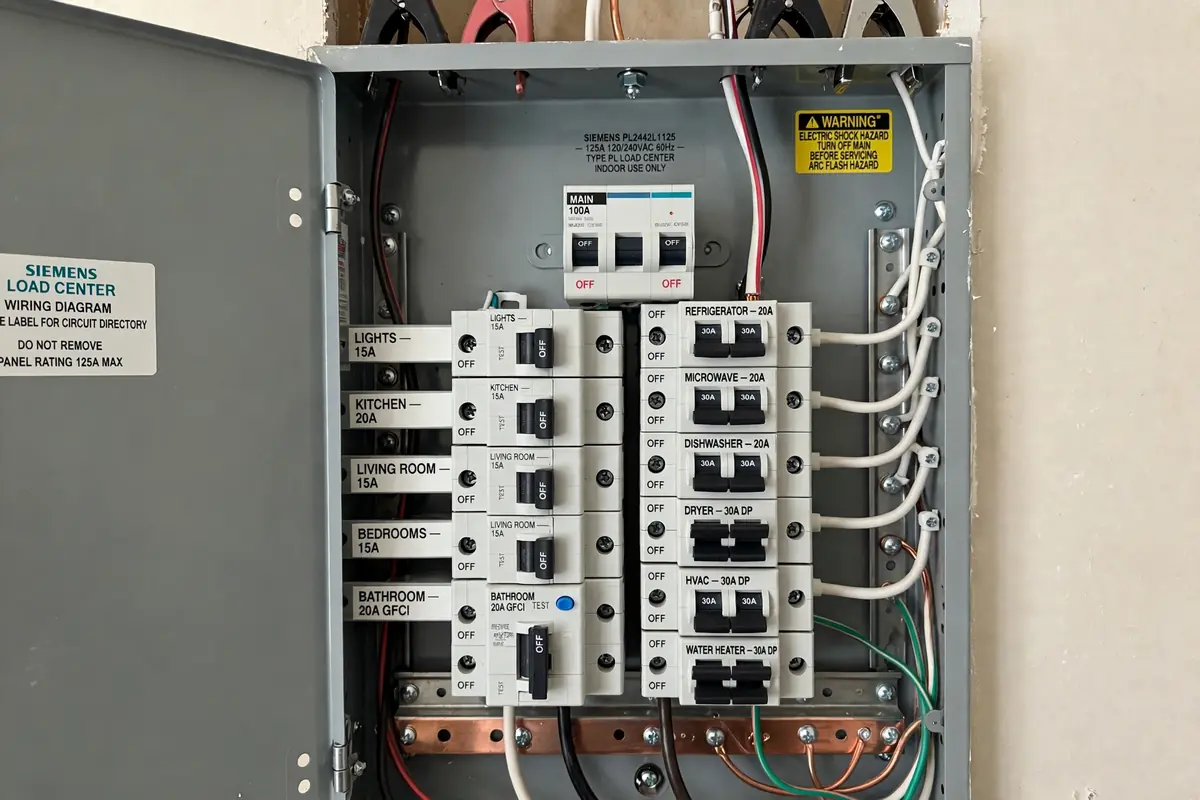
Panel replacement is often needed alongside rewiring. If your panel is outdated, undersized, or a known fire risk (Federal Pacific, Zinsco, or Challenger panels), it must be replaced. This adds $1,500 to $3,000 but is essential for safety. Our electrical panel upgrade cost USA 2026 guide covers this in detail.
Partial Rewiring: A Cost-Saving Alternative
A full rewire is not always necessary. If most of your wiring is sound copper but specific areas are problematic, partial rewiring can address safety concerns at a fraction of the rewiring house cost USA for a full job.
Common partial rewire scenarios include replacing only knob and tube circuits while leaving modern copper intact ($3,000–$6,000), rewiring a single floor or addition ($4,000–$8,000), upgrading kitchen and bathroom circuits to meet current code ($2,000–$5,000), or replacing aluminum wiring connections with COPALUM crimps or AlumiConn connectors ($1,500–$3,000 for a whole house — see aluminum wiring repair options).
However, partial rewiring has limitations. Mixing old and new wiring can complicate troubleshooting. Insurance companies may still flag remaining old wiring. And if you are opening walls anyway for a remodel, the marginal cost of a full rewire is often worth it. Discuss the tradeoffs honestly with your electrician.
The Rewiring Process: What to Expect
Understanding the process helps you prepare for the disruption of a full home rewire. Here is the typical sequence.
Phase 1: Planning and permits (1–2 weeks). Your electrician maps every circuit, plans new outlet and switch locations, calculates load requirements, and pulls permits. This is also when you should decide on outlet placement, switch locations, and any smart home pre-wiring. Changes after work starts cost extra.
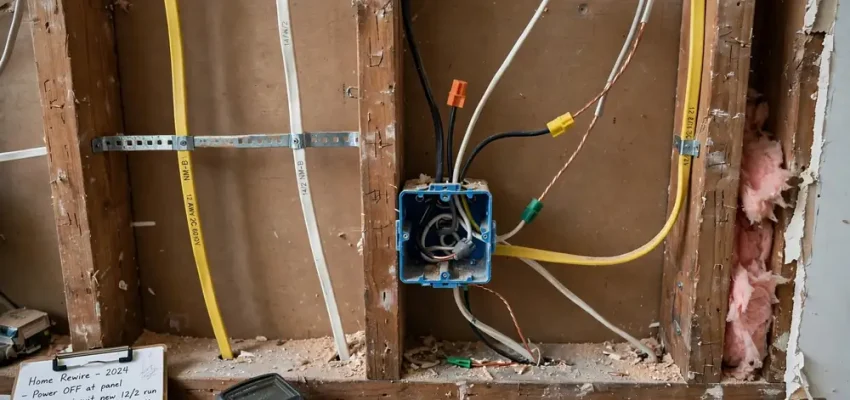
Phase 2: Rough-in (5–10 days). The electrician removes old wiring, runs new cables, installs boxes for outlets and switches, and wires the panel. This is the messiest phase — expect drywall cuts in every room, dust, and noise. You can usually stay in your home, but it will be disruptive. Plan for limited electrical access during work hours.
Phase 3: Inspection. The rough-in must pass inspection before walls are closed. Your electrician coordinates this. If the inspector finds issues, corrections are made and re-inspected. This typically adds 2 to 5 days to the timeline.
Phase 4: Finish work (3–5 days). After drywall repair, the electrician installs outlets, switches, cover plates, and connects fixtures. A final inspection verifies everything works correctly and meets code.
Phase 5: Drywall and paint. Unless your electrician includes full drywall finishing, you will need a drywall contractor and painter. Budget $2,000 to $5,000 for this phase depending on the extent of wall cuts.
How to Save on House Rewiring Costs
While safety should never be compromised, smart planning can reduce your rewiring house cost USA without cutting corners.
Time it with a remodel. If you are already opening walls for a kitchen or bathroom renovation, the marginal cost of rewiring those areas is minimal. Coordinating electrical work with other trades saves on drywall repair because walls are already open. This is the single biggest cost saver.
Do your own drywall repair. If you are handy, patching drywall holes yourself can save $2,000 to $4,000. The electrician makes the cuts; you patch, tape, mud, sand, and paint. This is labor-intensive but straightforward work that does not require electrical expertise.
Get multiple quotes. Rewiring quotes for the same home can vary by $3,000 to $5,000 between electricians. Get at least three detailed, itemized quotes. Be suspicious of quotes significantly below the others — they may exclude code-required work or use unlicensed labor.
Ask about financing. Many electrical contractors offer financing for large projects. Home equity loans typically offer the best rates. Some USA states offer low-interest loans for electrical safety upgrades — check the DSIRE database.
Frequently Asked Questions
How long does it take to rewire a house?
A standard 1,500 to 2,000 square foot home takes 7 to 12 working days for the electrical work, plus 1 to 2 weeks for drywall repair and painting. Larger or more complex homes can take 3 to 4 weeks total.
Can I stay in my home during rewiring?
Yes, most homeowners stay. Expect noise, dust, and drywall cuts in every room. If you work from home, plan for disruption during work hours.
Will rewiring increase my home value?
Yes. Updated electrical systems are a major selling point that eliminates a common inspection objection. While you may not recoup 100 percent at resale, it significantly improves marketability.
Does homeowners insurance cover rewiring?
Generally no — insurance covers sudden damage, not wear and tear. However, updating your wiring often REDUCES premiums by 5 to 15 percent because it lowers fire risk. Some insurers refuse to cover homes with knob and tube or aluminum wiring, making rewiring effectively mandatory for coverage.
Understanding how much does rewiring a house cost in USA markets helps you budget for this critical safety investment. While the price tag is significant, updated wiring protects your family, enables modern electrical demands, and increases home value. Get multiple quotes from licensed electricians and do not compromise on code compliance. For more USA home electrical guides, see our articles on electrical panel upgrade cost, knob and tube replacement, and electrical inspection cost for home purchase.