
If you are searching for the best place to visit in Tokyo during autumn, there is no single answer. The right destination depends on whether you want colorful gardens, historic temples, peaceful walks, dramatic city scenery, or an easy day trip. This guide covers some of the most worthwhile places to add to an autumn Tokyo itinerary.
When Is the Best Time to See Autumn Leaves in Tokyo?
Autumn arrives gradually in Tokyo. September can still feel quite warm, while October generally brings more comfortable sightseeing conditions. November is particularly important for foliage seekers because many of Tokyo’s famous ginkgo and maple locations become increasingly colorful.
Foliage timing can vary from year to year depending on weather and location. Higher or more rural areas around Tokyo can change earlier than some central-city locations. For travelers primarily interested in colorful leaves, keeping your schedule flexible is useful.
Late autumn also brings a different atmosphere to the city. Some gardens and streets offer evening illuminations, allowing visitors to experience foliage after sunset rather than limiting sightseeing to daylight hours.
15 Best Places to Visit in Tokyo During Autumn
1. Rikugien Garden
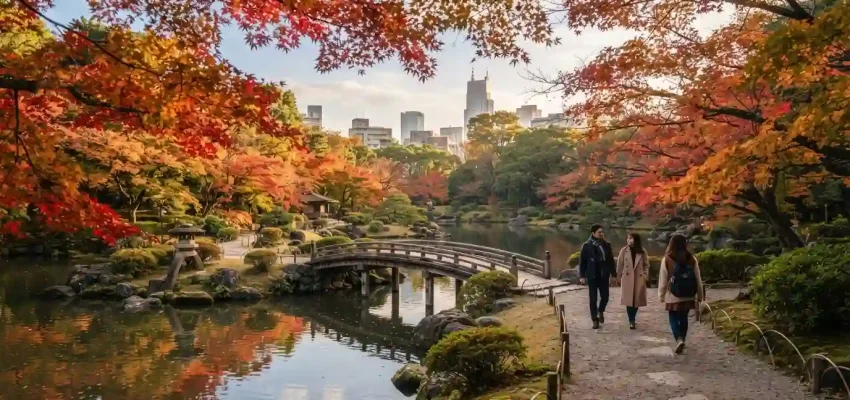
Rikugien Garden is one of the strongest choices for travelers who want a traditional Japanese garden experience during fall. Its landscaped paths, ponds, bridges, and carefully arranged vegetation create a peaceful setting that feels far removed from Tokyo’s busiest streets.
Maple trees are particularly attractive when their leaves turn red and orange. The garden can also be appealing after dark during seasonal illumination periods, although schedules and admission arrangements can change.
Best for: Traditional gardens, photography, peaceful walks, and autumn foliage.
2. Meiji Jingu Gaien
Meiji Jingu Gaien is famous for its long avenue lined with ginkgo trees. When the leaves turn yellow, the avenue creates one of Tokyo’s most recognizable autumn scenes.
The broad pedestrian-friendly setting makes it particularly attractive for visitors who want an easy foliage walk without leaving central Tokyo. The contrast between golden trees and the surrounding urban environment also makes this a great photography location.
Best for: Ginkgo leaves, city photography, walking, and central Tokyo sightseeing.
3. Shinjuku Gyoen National Garden
Shinjuku Gyoen combines several landscape styles within one large green space, making it an excellent choice when you want variety in a single destination. During autumn, different trees develop different shades, creating a mixture of gold, orange, red, and brown.
Its location near Shinjuku also makes it easy to combine a morning or afternoon garden visit with shopping, dining, and entertainment elsewhere in the district.
Best for: Families, photographers, relaxed walks, and travelers staying around Shinjuku.
4. Koishikawa Korakuen Gardens
Koishikawa Korakuen Gardens offers another opportunity to enjoy traditional Japanese landscaping in central Tokyo. The garden features ponds, bridges, walking paths, and carefully designed scenery that becomes particularly atmospheric during the fall season.
Its relatively compact layout makes it suitable for travelers who want to add a garden visit to a broader Tokyo sightseeing day.
Best for: Traditional scenery, architecture, gardens, and cultural sightseeing.
5. Yoyogi Park
Yoyogi Park is one of Tokyo’s most accessible green spaces and sits close to major attractions around Harajuku and Shibuya. Autumn brings cooler temperatures and changing foliage, making the park enjoyable for a casual walk or relaxed afternoon.
Unlike formal Japanese gardens, Yoyogi Park has a more open and informal atmosphere. It works well for travelers who want to combine nature with nearby shopping, food, and cultural attractions.
Best for: Casual walks, families, Harajuku sightseeing, and combining nature with city activities.
6. Ueno Park
Ueno Park is another convenient autumn destination in central Tokyo. The extensive park grounds provide space for walking while nearby museums and cultural attractions make it easy to build a full day around the area.
Its combination of greenery, seasonal scenery, museums, and historic attractions makes Ueno particularly useful for first-time visitors who want more than foliage alone.
Best for: Families, museums, cultural attractions, and convenient sightseeing.
7. Senso-ji and Asakusa
Asakusa offers a different type of autumn experience. Rather than visiting only for a large park, travelers can combine historic streets, temples, traditional architecture, food, and seasonal scenery in one neighborhood.
Senso-ji is one of Tokyo’s most recognizable temples. Visiting the area during the cooler months can make walking through Asakusa’s historic surroundings more comfortable, especially when paired with nearby gardens or riverside areas.
Best for: History, traditional culture, photography, food, and first-time visitors.
8. Zojo-ji Temple and Tokyo Tower Area
Zojo-ji provides an interesting contrast between traditional Japanese architecture and modern Tokyo. The temple sits close to Tokyo Tower, allowing visitors to experience historic and contemporary city landmarks during the same outing.
Autumn foliage can add another visual layer to the temple grounds, while the surrounding neighborhood offers plenty of opportunities for photography and sightseeing.
Best for: Architecture, photography, temples, and iconic Tokyo views.
9. Mt. Takao
If your idea of autumn sightseeing includes hiking, Mt. Takao is one of the strongest options around Tokyo. The mountain provides a completely different experience from central-city parks, with forested trails and elevated views.
It is especially appealing to travelers who want to spend part of their Tokyo trip outdoors. Hiking conditions can vary, so appropriate footwear and weather checks are important.
Best for: Hiking, mountain scenery, active travelers, and fall foliage.
10. Mt. Mitake
Mt. Mitake offers another way to experience Tokyo’s more natural side. Located in the western part of the Tokyo metropolitan area, it provides access to mountain landscapes, walking routes, and autumn scenery.
The journey takes more planning than visiting a central park, but that extra travel can be worthwhile for visitors who prefer forests and outdoor exploration to busy urban neighborhoods.
Best for: Nature lovers, hikers, photography, and outdoor adventures.
11. Okutama
Okutama is an excellent choice for travelers who want to see a much greener and more mountainous side of Tokyo. The area includes forests, rivers, lakes, and hiking opportunities, creating a strong contrast with the metropolitan center.
Autumn is especially attractive here because the surrounding foliage changes into shades of red, orange, and yellow. It is a good option for visitors willing to travel farther for a more immersive nature experience.
Best for: Outdoor adventures, hiking, lakes, forests, and escaping the city center.
12. Showa Kinen Park
Showa Kinen Park in Tachikawa is a spacious destination for autumn sightseeing. Its large grounds provide plenty of room for walking, cycling, photography, and seasonal outdoor activities.
The park is particularly useful for families because visitors can combine foliage viewing with recreational activities rather than spending the entire day simply walking through a garden.
Best for: Families, cycling, open spaces, photography, and outdoor recreation.
13. Inokashira Park
Inokashira Park in Kichijoji offers a relaxed combination of greenery, water, walking paths, and neighborhood culture. The park’s pond and surrounding trees create attractive scenery during autumn.
After exploring the park, visitors can continue through Kichijoji to discover cafes, restaurants, independent shops, and local streets.
Best for: Couples, relaxed walks, local neighborhoods, and photography.
14. Hama-rikyu Gardens
Hama-rikyu Gardens provides a historic garden setting surrounded by modern Tokyo. Its ponds, landscaped grounds, and traditional features create an interesting contrast with the city’s contemporary skyline.
The location is convenient for travelers exploring the waterfront and central Tokyo, making it possible to combine gardens with other sightseeing stops in the same day.
Best for: Historic gardens, city views, photography, and central Tokyo itineraries.
15. Tokyo’s Western Tama Region
Travelers with additional time should consider exploring the western Tama region. This part of Tokyo extends well beyond the dense urban core and includes forests, mountains, lakes, and outdoor destinations.
The region is particularly suitable for autumn because cooler weather makes outdoor activities more comfortable and the surrounding natural landscape provides a much more immersive foliage experience.
Best for: Nature, hiking, scenic drives, outdoor photography, and longer day trips.
Which Tokyo Autumn Destination Is Best for You?
The best place depends on your travel style. If you want classic Japanese garden scenery, Rikugien and Koishikawa Korakuen are excellent choices. For iconic yellow ginkgo trees, Meiji Jingu Gaien is a standout.
Travelers who prefer convenient central locations can choose Shinjuku Gyoen, Ueno Park, Yoyogi Park, or Asakusa. If you want mountains and deeper autumn scenery, consider Mt. Takao, Mt. Mitake, or Okutama.
| Destination | Best For | Experience |
|---|---|---|
| Rikugien Garden | Traditional scenery | Garden and maple foliage |
| Meiji Jingu Gaien | Ginkgo leaves | Urban autumn walk |
| Shinjuku Gyoen | Families and photography | Large landscaped garden |
| Mt. Takao | Hikers | Mountain foliage |
| Okutama | Nature lovers | Forests, lakes, and outdoor activities |
| Senso-ji | Culture | Temple and historic neighborhood |
How to Plan a Tokyo Autumn Trip
Check Foliage Conditions Before You Go
Autumn colors do not appear everywhere at exactly the same time. Check current local foliage information before choosing the final dates for your itinerary, especially if seeing peak colors is your main reason for visiting.
Plan Around Your Location
Central Tokyo gardens can often be combined with other attractions on the same day. Mountain destinations such as Mt. Takao and Okutama require more travel time, so they are better treated as dedicated outdoor excursions.
Start Early at Popular Locations
Popular foliage locations can become busy during peak autumn periods. Arriving earlier can make it easier to enjoy scenic paths and take photographs before the busiest periods of the day.
Dress for Changing Temperatures
Autumn weather can vary throughout the day. Layered clothing is practical because mornings and evenings can feel considerably cooler than the afternoon. Comfortable walking shoes are also important because many of Tokyo’s best autumn experiences involve substantial walking.
Leave Room for Seasonal Events
Autumn in Tokyo is about more than leaves. Seasonal food, cultural events, exhibitions, festivals, and evening illuminations can add variety to an itinerary. Keeping some flexibility in your schedule allows you to take advantage of events taking place during your visit.
Best Tokyo Autumn Experiences by Traveler Type
For Couples
Rikugien, Inokashira Park, and Hama-rikyu Gardens are good choices for couples who prefer scenic walks and a slower pace. Evening illuminations can also create a memorable atmosphere when available.
For Families
Shinjuku Gyoen, Ueno Park, Yoyogi Park, and Showa Kinen Park offer space to explore without requiring a demanding hike. Families can also combine sightseeing with nearby museums, restaurants, and entertainment.
For Photographers
Meiji Jingu Gaien is ideal for ginkgo photography, while Rikugien and Koishikawa Korakuen offer traditional garden compositions. Asakusa and Zojo-ji are useful when you want to combine autumn scenery with historic architecture.
For Hikers
Mt. Takao, Mt. Mitake, and Okutama are better suited to travelers who want an active autumn experience. These locations provide access to forests and mountain scenery beyond central Tokyo.
What to Pack for Tokyo in Autumn
- Comfortable walking shoes
- Light layers for changing temperatures
- A compact rain jacket or umbrella
- Portable phone charger
- Camera or smartphone for autumn photography
- A small day bag for longer sightseeing days
- Water for hiking or extended outdoor excursions
Frequently Asked Questions
What is the best place to visit in Tokyo during autumn?
Rikugien Garden is one of the strongest choices for traditional autumn scenery, while Meiji Jingu Gaien is especially well known for its ginkgo-lined avenue. Shinjuku Gyoen is another excellent all-around option.
What month is best for autumn leaves in Tokyo?
November is generally an important month for autumn foliage in Tokyo, although exact timing varies by location and weather. Some areas begin changing earlier, while peak color can extend into later autumn.
Is Tokyo worth visiting in autumn?
Yes. Autumn combines seasonal foliage, more comfortable sightseeing conditions, cultural attractions, seasonal food, and events. It is particularly appealing for travelers who want to explore both Tokyo’s urban neighborhoods and green spaces.
Where can I see yellow ginkgo leaves in Tokyo?
Meiji Jingu Gaien is one of the city’s most recognizable locations for yellow ginkgo foliage. Other parks and streets across Tokyo can also provide seasonal ginkgo scenery.
Can I see autumn foliage without leaving central Tokyo?
Yes. Locations such as Rikugien, Shinjuku Gyoen, Koishikawa Korakuen, Meiji Jingu Gaien, Ueno Park, and Hama-rikyu Gardens allow visitors to experience seasonal scenery without making a long trip outside the city center.
Is Mt. Takao good for autumn foliage?
Mt. Takao is a strong choice for travelers who want to combine hiking with autumn scenery. It provides a more natural experience than the formal gardens and parks in central Tokyo.
Final Thoughts
The best place to visit in Tokyo during autumn depends on what you want from the season. For classic Japanese garden scenery, choose Rikugien or Koishikawa Korakuen. Iconic golden ginkgo trees, visit Meiji Jingu Gaien. For a convenient combination of greenery and major attractions, Shinjuku Gyoen and Ueno Park are excellent choices.
If you have more time, expand your itinerary beyond central Tokyo and explore Mt. Takao, Mt. Mitake, Okutama, or the wider Tama region. These areas reveal a greener and more mountainous side of Tokyo that many first-time visitors overlook.
With flexible planning, comfortable clothing, and a little research into current foliage conditions, an autumn trip can combine Tokyo’s modern energy with some of Japan’s most beautiful seasonal scenery.
Related Travel Guides
For more destination ideas and seasonal travel inspiration, explore related guides on autumn trips, international destinations, family travel, and places worth adding to a wider itinerary.
- places to visit in the US in fall
- best places to visit during fall in California
- best fall places to visit in Illinois
- best places to visit in Norfolk and Suffolk
- best place to visit in Savannah, Georgia
- unique places to visit in San Diego
- places to visit near Universal Studios Los Angeles
- most visited places in Los Angeles, California
- top places to visit outside the US
- most desirable places to visit in the world
- top amazing places to visit in the world
- best nature places to visit in the world
- best places to visit in Thailand
- best places to visit in Bangkok and Pattaya
- places to visit in Malaysia
- top places to visit in New Zealand’s South Island
- Lord of the Rings places to visit in New Zealand
- top places to visit in Ho Chi Minh City