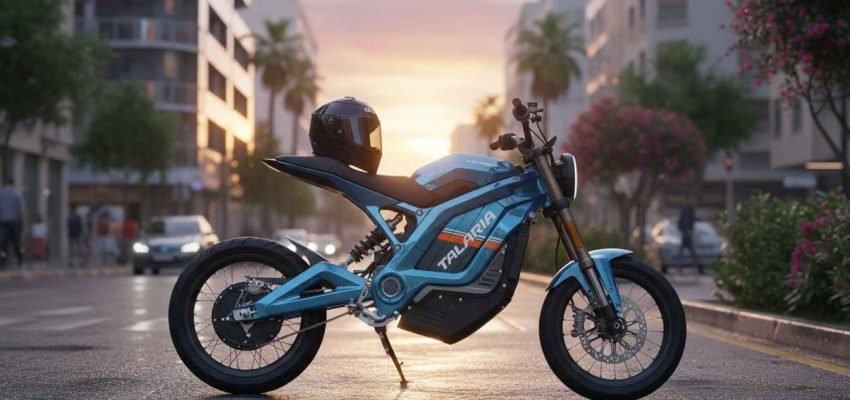
If you have been considering a Talaria electric motorcycle, one question matters before you take it onto a public road: are Talarias street legal? The short answer is that it depends on the specific Talaria model, how it was manufactured and certified, and the laws of the state where you intend to ride.
Talaria bikes are popular because they combine the compact proportions of a dirt bike with the performance and instant torque of an electric motorcycle. That makes them attractive for recreation, commuting, trail riding, and urban transportation. However, a bike being sold as an electric motorcycle or off-road vehicle does not automatically mean it can legally be operated on public streets.
Street legality involves several separate questions. You need to consider the vehicle’s federal compliance status, equipment, vehicle identification information, registration, insurance, motorcycle licensing requirements, helmet rules, and your state’s definition of an electric motorcycle or similar vehicle.
This guide explains what to check before riding a Talaria on public roads in the United States and why simply adding mirrors, lights, or turn signals may not be enough.
What Does “Street Legal” Mean for a Talaria?
A street-legal vehicle must satisfy the requirements that apply to its classification and intended road use. For a Talaria, that can involve both federal vehicle-safety requirements and state rules governing registration and operation.
This distinction is important because federal and state responsibilities are not identical. Federal requirements can affect how a motor vehicle is manufactured and certified, while states generally control matters such as registration, licensing, insurance, equipment requirements, and operation on public roads.
That means there is no universal answer that makes every Talaria legal everywhere in the country.
A bike that can legally be registered in one jurisdiction may face different requirements somewhere else. Before purchasing or modifying one, riders should identify the exact model and check the rules that apply in their state.
Are All Talaria Models Street Legal?
No. You should never assume that every Talaria is street legal simply because it has an electric motor, headlights, or other road-style equipment.
The exact model matters. Some electric motorcycles are designed and certified for road use, while others are intended primarily for off-road riding. A vehicle manufactured as an off-road cycle may not automatically become a federally compliant street motorcycle just because an owner adds equipment after purchase.
This is one reason buyers should examine the vehicle’s original documentation before making a purchase. Look for information concerning the manufacturer’s certification, vehicle classification, VIN, title eligibility, and intended use.
If the bike lacks the documentation required by your state’s registration process, modifications alone may not solve the problem.
Federal Requirements vs. State Requirements
One of the most confusing parts of Talaria ownership is the difference between federal compliance and state road-use rules.
Federal compliance
Federal motor vehicle safety standards establish requirements for applicable motorcycles and other motor vehicles. Depending on the vehicle classification, these requirements can involve items such as lighting, braking systems, mirrors, tires, controls, displays, and identification.
For road-oriented motorcycles, the original manufacturer’s certification is particularly important. A vehicle intended for public-road use may need to have been manufactured and certified as complying with applicable federal safety standards.
State requirements
Your state can impose additional requirements concerning registration, title, licensing, insurance, inspection, equipment, helmet use, and where the motorcycle may legally operate.
That is why searching only for “Talaria street legal” is not enough. You should also search for the rules issued by your state’s motor vehicle agency and review the requirements for the exact vehicle classification.
For readers researching broader Texas vehicle laws, our guide to Texas legal frameworks can provide additional general legal context.
Why the VIN and Manufacturer Certification Matter
A VIN is more than a number stamped onto the motorcycle. It is an important part of the vehicle’s identity and can affect title and registration procedures.
When evaluating a Talaria for road use, verify that the vehicle has the appropriate VIN and documentation. You should also determine whether the motorcycle carries the manufacturer’s certification information applicable to road use.
Do not rely solely on a seller’s statement that a particular Talaria is “street legal.” Ask for documentation that your state will accept for registration.
This is especially important when buying a used bike, importing a vehicle, or purchasing a model originally marketed for off-road use.
Can You Make an Off-Road Talaria Street Legal?
This is where many prospective owners encounter problems.
Some riders assume that installing road equipment automatically converts an off-road motorcycle into a street-legal vehicle. In reality, state registration rules and federal manufacturing requirements can be much more complicated.
Depending on the jurisdiction, required equipment may include:
- Headlights
- Taillights
- Brake lights
- Turn signals
- Rearview mirrors
- A horn
- Appropriate tires
- Speedometer or other required instruments
- Reflectors
- Compliant braking equipment
- A valid VIN and title documentation
- Other state-specific safety equipment
However, having these components does not automatically guarantee that the vehicle qualifies for registration.
Before spending money on modifications, contact the appropriate state vehicle-registration authority and ask whether your specific Talaria model and documentation can qualify for road registration.
Does Adding Lights and Mirrors Make a Talaria Legal?
Not necessarily.
Lights and mirrors are important road-safety components, but street legality is not determined by appearance alone. A motorcycle can look almost identical to a road-legal model while still having a different legal classification or lacking the certification needed for registration.
This distinction can save buyers a significant amount of money. Instead of purchasing an off-road Talaria and assuming it can be converted later, determine whether the model is eligible for road use before buying it.
If you are also comparing general vehicle-maintenance considerations, our articles about tire and vehicle care and professional tire service provide useful background on why road-ready tires and proper vehicle maintenance matter.
Do You Need a Motorcycle License to Ride a Talaria?
In many cases, yes.
If your Talaria is legally classified as a motorcycle and you intend to ride it on public roads, you should expect motorcycle licensing or endorsement requirements to apply. The exact process varies by state.
A standard driver’s license should not automatically be treated as permission to operate every type of motorcycle.
Depending on the state, riders may need to obtain a motorcycle endorsement, motorcycle license, learner permit, or complete a motorcycle safety course.
Always verify the licensing requirement for your state before riding on public roads. Licensing rules can also vary according to age, experience, vehicle classification, and permit status.
Does a Talaria Need to Be Registered?
If the vehicle is being operated as a motorcycle on public roads, registration will generally be an important part of legal operation.
The registration process can require several documents, such as:
- Proof of ownership
- Manufacturer documentation
- VIN information
- Title documentation
- Proof of insurance
- Safety or equipment inspection documents where required
- Applicable registration fees
The exact list varies by state.
Do not assume that an off-road title, bill of sale, or dealer receipt automatically qualifies the motorcycle for normal road registration. If the vehicle was not originally manufactured or documented for public-road use, registration can become considerably more complicated.
Do You Need Motorcycle Insurance?
Insurance is another important part of the street-legal equation.
Where motorcycle liability insurance is required, you generally need an insurance policy that specifically covers the vehicle you intend to operate. Some insurers may have restrictions concerning electric motorcycles, modified motorcycles, off-road models, or vehicles without conventional manufacturer documentation.
Before purchasing a Talaria, contact an insurer and provide the exact model information. Ask whether the motorcycle can be insured for public-road use and what documentation the insurer needs.
It is also important to distinguish between insurance availability and legal registration. Having an insurance policy does not by itself make an otherwise ineligible motorcycle street legal.
If you’re researching insurance-related topics on AnchorEra, you can also explore our guides on insurance coverage considerations and insurance protection.
What Equipment Does a Street-Legal Talaria Need?
Exact equipment requirements differ by jurisdiction, but a road-going motorcycle may need a combination of safety and visibility equipment.
Lighting
Proper headlights, tail lamps, brake lights, and turn signals may be required. Their positioning, visibility, and operation can also be regulated.
Mirrors
Rearview mirrors help riders monitor surrounding traffic and may be required by state law.
Horn
A functioning horn may be required for motorcycles operating on public roads.
Tires
Tires should be appropriate for the intended road use and meet applicable requirements. Using aggressive off-road tires on public pavement can also affect handling, braking, and overall safety.
For additional automotive maintenance context, see our guides covering vehicle care and maintenance and safe vehicle operation.
Brakes
A road-going motorcycle needs reliable braking performance. Riders should regularly inspect brake components and have problems addressed before using the vehicle in traffic.
Reflectors and Other Equipment
Some jurisdictions require specific reflectors, equipment locations, or additional safety features. The requirements should be checked against the applicable state vehicle code rather than assumed from another state’s rules.
Are Talarias Legal on Highways?
A Talaria that is legal for some public-road use is not necessarily legal on every road.
States and local jurisdictions can place restrictions on where certain motorcycles, low-speed vehicles, mopeds, electric bicycles, or other specialized vehicles may operate.
High-speed highways and limited-access roads may have separate restrictions based on vehicle capability and classification.
Before planning a route, check whether your motorcycle is permitted on the specific type of roadway. This is particularly important if your Talaria has a limited top speed or falls into a specialized state vehicle category.
Are Talarias Legal on City Streets?
Potentially, but only when the specific vehicle and rider meet the applicable requirements.
City streets are still public roads, so registration, licensing, insurance, equipment, and other state or local requirements can apply.
Some municipalities may also impose local rules affecting parking, noise, trails, sidewalks, or access to specific areas.
Never assume that a private-property riding permit or off-road designation allows you to ride the same vehicle on public city streets.
Can You Ride a Talaria on Sidewalks?
Generally, you should not assume that a Talaria can be operated on a sidewalk simply because it is electric.
Sidewalk rules can be different from ordinary roadway rules and may be especially restrictive for motorcycles and high-powered electric vehicles.
If your goal is short-distance urban transportation, determine whether your vehicle is legally classified as a motorcycle, moped, electric bicycle, or another type of vehicle before choosing where to ride.
Talaria vs. Electric Bicycle Classification
One reason Talaria legality can be confusing is that electric bicycles and electric motorcycles are regulated differently.
Federal and state definitions can distinguish electric bicycles from motorcycles based on factors such as pedals, motor power, speed capability, and vehicle design.
A high-powered electric motorcycle should not automatically be treated as an e-bike simply because it has an electric motor.
This matters because the classification can affect registration, licensing, equipment, insurance, and where the vehicle can legally operate.
What Happens If You Ride an Unregistered Talaria?
The consequences depend on the jurisdiction and circumstances, but operating an improperly registered or otherwise noncompliant motorcycle can expose the rider to legal and financial problems.
Potential consequences can include:
- Traffic citations
- Fines
- Vehicle impoundment
- Registration problems
- Insurance complications
- Personal liability following a crash
- Additional penalties for operating without the required license or endorsement
The financial risk can be much greater than the cost of researching the requirements before riding.
If your situation involves a dispute, citation, registration issue, or another legal question, consider obtaining advice from a qualified attorney familiar with your state’s motor vehicle laws. Our legal services guide offers additional context on seeking professional legal assistance.
Can You Ride a Talaria on Private Property?
Private-property use is different from public-road use.
An off-road Talaria may be perfectly appropriate for certain private properties, tracks, and designated riding areas even when it cannot legally be registered for ordinary street use.
However, private-property permission does not automatically extend to public roads. The moment you move from private land onto a public roadway, the applicable road-use requirements can change.
Always respect property rules, local restrictions, and any requirements imposed by the owner or riding facility.
What About Talaria Modifications?
Modifying a Talaria can improve its practicality, but modifications should be approached carefully when public-road legality is the goal.
Common modifications can include:
- Street-oriented tires
- Additional lighting
- Mirrors
- Turn signals
- Horn installation
- Upgraded brakes
- Different handlebars
- Suspension changes
- Performance controllers
- Battery upgrades
Performance modifications deserve particular attention. Increasing speed or power can affect how the vehicle is classified, insured, inspected, or operated under local law.
Before making major changes, verify whether the modification is permitted and whether it could interfere with the vehicle’s original compliance status.
Why Performance Modifications Can Create Legal Problems
It can be tempting to modify an electric motorcycle for more acceleration or higher top speed. However, road legality is not simply a question of whether the motorcycle can physically travel faster.
A modification that changes the motorcycle’s performance characteristics can create questions about its legal classification and whether the vehicle remains within the requirements under which it was originally approved or registered.
Owners should therefore separate two goals: making a motorcycle perform better and making it legally suitable for public-road use. They are not always the same thing.
For readers interested in technology and vehicle-related innovation, AnchorEra also covers topics such as modern electric and technology-driven transportation products and new technology innovations.
How to Check Whether Your Talaria Is Street Legal
If you already own a Talaria or are planning to purchase one, use a documentation-first approach.
Step 1: Identify the Exact Model
Record the complete model name and year. Do not rely on generic descriptions such as “Talaria electric bike.” Different versions can have different specifications and intended uses.
Step 2: Check the Vehicle Documentation
Review the VIN, manufacturer’s information, title documents, bill of sale, and any certification labels supplied with the motorcycle.
Step 3: Check Your State’s Vehicle Classification
Determine whether your state considers the vehicle a motorcycle, motor-driven cycle, moped, electric bicycle, or another category.
Step 4: Confirm Registration Eligibility
Ask the appropriate state agency whether the specific vehicle and its documentation are eligible for registration and title issuance.
Step 5: Verify Equipment Requirements
Check the state’s requirements for lights, signals, mirrors, brakes, tires, reflectors, horn, speedometer, and other required equipment.
Step 6: Confirm Your License Requirements
Determine whether you need a motorcycle endorsement, motorcycle license, learner permit, or other authorization.
Step 7: Confirm Insurance
Speak with an insurer before riding. Confirm that the exact motorcycle is eligible for the coverage required by your jurisdiction.
Step 8: Check Road Restrictions
Once registration and licensing are confirmed, check whether your motorcycle can legally use the roads you intend to travel.
Questions to Ask a Talaria Seller Before Buying
If you are purchasing a Talaria from a dealer or private seller, ask specific questions instead of accepting a simple “yes” when you ask whether it is street legal.
- What is the exact model and model year?
- Is this model intended for on-road or off-road use?
- Does it have the documentation required for road registration?
- Does it have a VIN that can be used for title and registration?
- Has it previously been registered for public-road use?
- Can you provide the title or other ownership documents?
- What equipment was installed by the original manufacturer?
- Has the motorcycle been modified?
- Will the documentation be accepted by my state’s vehicle agency?
- Can an insurance company insure this exact vehicle for road use?
Written documentation is much more valuable than an informal claim about legality.
Common Mistakes Talaria Owners Should Avoid
Assuming Every Talaria Is Street Legal
Model differences matter. Always verify the exact vehicle.
Relying on Social Media Advice
Online communities can provide useful owner experiences, but a rider’s experience in one state does not establish the law in another.
Buying First and Checking Registration Later
This can be an expensive mistake. Check registration eligibility before purchasing the motorcycle whenever possible.
Confusing Equipment With Certification
Installing mirrors, lights, and signals may satisfy some equipment requirements but does not necessarily resolve classification or certification issues.
Ignoring Insurance
A motorcycle that cannot be properly insured for road use can create significant financial exposure after an accident.
Assuming a Dealer’s Claim Is Enough
Ask for documentation and verify the information with the appropriate state authority.
Talaria Street-Legal Checklist
Before taking a Talaria onto public roads, work through this checklist:
- Exact model identified
- VIN verified
- Manufacturer documentation reviewed
- Road-use eligibility confirmed
- State classification confirmed
- Title requirements confirmed
- Registration completed where required
- Required equipment installed and functioning
- Motorcycle license or endorsement obtained
- Required insurance obtained
- Helmet and protective-equipment rules reviewed
- Road and highway restrictions checked
- Any modifications reviewed for compliance
If all of these items are properly addressed, you are in a much stronger position to operate the motorcycle legally and responsibly.
Are Talarias Worth It for Street Riding?
For riders who want the feel of a lightweight electric motorcycle, a Talaria can be appealing. The combination of electric torque, compact dimensions, and relatively simple power delivery makes these bikes attractive for recreational and transportation purposes.
But the right buying decision depends on how you intend to use the motorcycle.
If your primary goal is legal commuting on public streets, prioritize a model and configuration with clear road-use documentation. If your primary goal is trail or private-property riding, an off-road configuration may make more sense.
The most important factor is matching the motorcycle to your intended use before spending money on modifications or accessories.
Final Verdict: Are Talarias Street Legal?
Are Talarias street legal? There is no single nationwide yes-or-no answer for every Talaria.
Street legality depends on the exact model, its original manufacturer documentation and compliance status, your state’s vehicle classification, registration requirements, licensing rules, insurance requirements, equipment standards, and road restrictions.
The safest approach is to verify the motorcycle before riding it on public roads. Identify the exact model, examine its VIN and documentation, confirm registration eligibility with the appropriate state authority, obtain the required motorcycle license and insurance, and make sure the vehicle meets applicable equipment requirements.
Do not assume that an electric motor makes a motorcycle an electric bicycle, and do not assume that adding street equipment automatically transforms an off-road motorcycle into a legally registered road vehicle.
If you are serious about owning a Talaria for public-road use, documentation should come before modifications. A few minutes of verification can prevent expensive registration problems, unexpected insurance issues, and potentially serious legal consequences.
For broader transportation and automotive topics, you can also explore AnchorEra’s coverage of modern transportation systems, transportation and logistics, and automotive service careers.
Ultimately, the best Talaria for public-road riding is not simply the fastest or most heavily modified model. It is the one that you can properly document, register, insure, license, and operate within the laws of your jurisdiction.