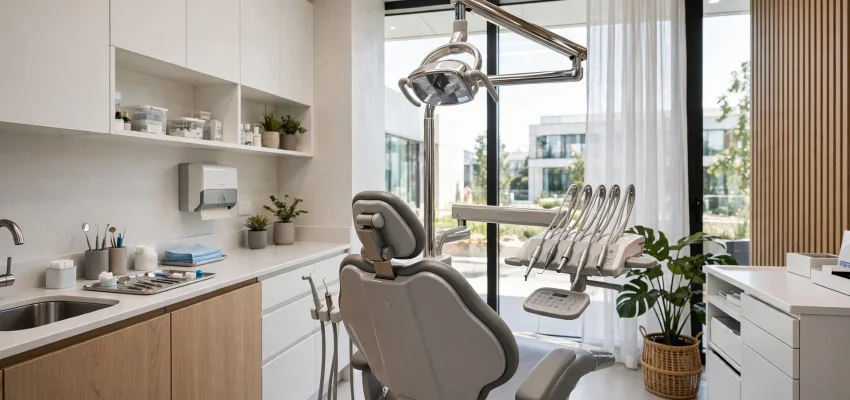

A routine checkup, a sudden toothache, or a treatment plan that runs into the thousands, dental care is one of the most common, and most confusing, healthcare expenses Americans face. So how much does dental care actually cost in the USA in 2026? From cleanings to crowns, this guide breaks down average prices, what drives them, and practical ways to save, because good oral health should never be a luxury.
Average Dental Care Costs in 2026
A routine dental checkup with cleaning costs $100 to $300 without insurance in most US markets. With dental insurance, preventive visits are often fully covered. But costs climb quickly for restorative work: a filling runs $150 to $400, a crown $800 to $2,500, and a single implant $3,000 to $6,000. The wide ranges reflect differences in materials, provider type, and geography, which we will unpack below.
Common Dental Procedures and Their Prices
Exam and Cleaning: $100 to $300
A standard six-month checkup with X-rays and professional cleaning runs $100 to $200 at most practices, up to $300 in high-cost cities. This is the single best value in dentistry, catching problems when they are cheap to fix.
Filling: $150 to $400
Composite (tooth-colored) fillings cost $150 to $300 for one surface, up to $400 for larger restorations. Amalgam fillings are cheaper but increasingly rare.
Root Canal: $700 to $1,500
Front teeth cost $700 to $1,000; molars run $1,000 to $1,500 due to complexity. A crown is usually needed afterward, adding $800 to $2,500.
Crown: $800 to $2,500
Porcelain and zirconia crowns cost $1,000 to $2,500; porcelain-fused-to-metal runs $800 to $1,500. Same-day CEREC crowns often carry a premium.
Tooth Extraction: $150 to $600
Simple extractions cost $150 to $300. Surgical extractions, including wisdom teeth, run $300 to $600 per tooth.
Dental Implant: $3,000 to $6,000 per Tooth
Implants are the gold standard for tooth replacement but the priciest option: $3,000 to $6,000 all-in per tooth, including the crown. Full-arch restorations (All-on-4) run $15,000 to $30,000 per arch.
Braces and Clear Aligners: $3,000 to $8,000
Traditional braces cost $4,000 to $8,000; clear aligners like Invisalign run $3,000 to $7,000 depending on case complexity.
What Affects Dental Costs?
- Geography: Dental fees in New York, Boston, and San Francisco can run 30 to 50 percent above the national average; the South and Midwest tend to be most affordable.
- Provider type: Specialists (oral surgeons, endodontists, periodontists) charge more than general dentists. Corporate dental chains often undercut private practices on price but vary in continuity of care.
- Materials: Zirconia and porcelain cost more than basic composites and metals, but look better and often last longer.
- Insurance: Dental insurance typically covers 100% of preventive care, 70 to 80% of basic work (fillings), and 50% of major work (crowns, implants), up to an annual maximum of $1,000 to $2,000.
- Complexity: A straightforward filling costs far less than a molar root canal with complications.
Dental Insurance vs. Discount Plans vs. Self-Pay
Dental insurance ($20 to $60/month in premiums) makes sense if you need regular care, but annual maximums mean it helps less with major work. Dental discount plans ($100 to $200/year) are not insurance but give 10 to 60% off at participating dentists, with no caps or waiting periods. Self-pay works for the disciplined: many dentists offer 5 to 15% discounts for paying cash upfront. Always ask, the worst they can say is no.
Smart Ways to Save on Dental Care
- Never skip preventive visits. A $150 cleaning that catches a cavity early saves a $1,500 root canal later. Prevention is the ultimate discount.
- Get a second opinion on major work. Treatment plans and pricing vary enormously. A $2,500 crown quote elsewhere might be $1,400 at another quality practice.
- Consider dental schools. Accredited dental schools offer supervised student care at 30 to 60% below private practice rates.
- Ask about payment plans. Many practices offer in-house financing or partner with healthcare lenders for interest-free periods.
- Time major work strategically. If you have insurance, schedule expensive treatment early in the benefit year, and split multi-phase work across calendar years to use two annual maximums.
- Look into community health centers. Federally qualified health centers provide sliding-scale dental care based on income.
Oral Health Is Whole-Body Health
Dental care is not just about teeth. Research links gum disease to heart disease, diabetes complications, and adverse pregnancy outcomes. Regular dental visits are a core part of overall wellness, alongside the quality medical care you receive from your primary providers. Employers increasingly recognize this too, which is why preventive health services often include dental screenings. And as healthcare innovation brings teledentistry and AI-assisted diagnostics into the mainstream, access keeps improving, while home healthcare services extend professional support to patients who cannot easily visit a clinic.
When to See a Dentist Immediately
Do not wait for your next checkup if you experience: severe tooth pain, swelling of the face or gums, a knocked-out tooth (keep it moist and get to a dentist within an hour), uncontrolled bleeding, or signs of infection like fever with dental pain. Dental emergencies escalate fast and get more expensive the longer you wait.
Final Thoughts
In 2026, expect $100 to $300 for a checkup and cleaning, $150 to $400 for fillings, $800 to $2,500 for crowns, and $3,000 to $6,000 per implant. Geography, materials, and provider type drive the final bill. Prioritize prevention, compare quotes on major work, explore dental schools and discount plans, and treat oral health as the whole-body health investment it truly is.