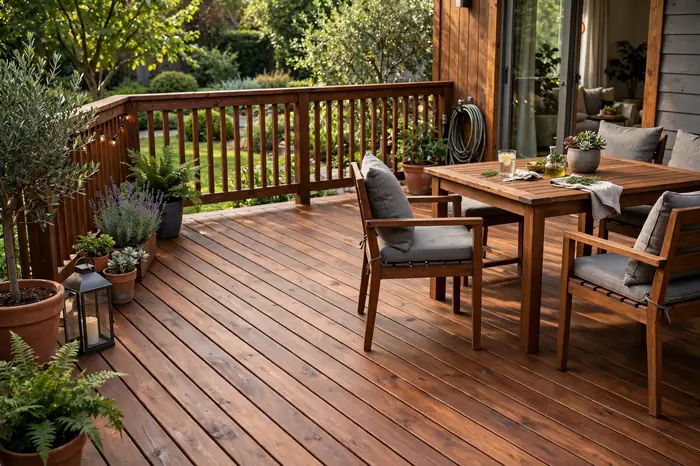
Planning an elevated outdoor space? The deck building cost USA homeowners face in 2026 typically ranges from $8,000 to $25,000 for a professionally built deck, with most projects landing near $15,000. That works out to roughly $25 to $60 per square foot, depending on the material, the deck’s height and complexity, and your local labor market.
Decks are especially popular where yards slope, where homeowners want an elevated view, or where a ground-level patio just isn’t practical. A well-built deck adds genuine living space and strong resale value — but material prices and design choices can swing the budget by tens of thousands, so it pays to understand the numbers before you sign a contract.
Deck Building Cost USA 2026: National Averages
For a standard 300- to 400-square-foot deck attached to the house, expect $9,000 to $24,000 professionally installed. Smaller 12-by-12-foot decks start around $5,000 to $8,000 in pressure-treated wood, while large multi-level composite decks with premium railings can exceed $40,000.
Costs run highest in the Northeast and on the West Coast, where labor rates and material delivery push prices 20 to 40 percent above the national average. The Southeast and Midwest tend to be the most affordable regions for deck construction.
Cost by Decking Material
Your choice of decking material is the biggest cost driver after size. Here is the 2026 breakdown per square foot, installed:
Pressure-Treated Wood: $25 to $40 per Square Foot
The classic budget option. Pressure-treated pine is affordable, widely available, and easy to work with. The trade-off is maintenance: it needs cleaning and staining or sealing every 1 to 3 years, and boards typically last 15 to 20 years. Ongoing deck maintenance costs add $500 to $1,500 every few years, which narrows the long-term savings gap.
Cedar and Redwood: $30 to $50 per Square Foot
Naturally beautiful and resistant to rot and insects, cedar and redwood are favorites in the West and Pacific Northwest where the lumber is sourced. They still need periodic sealing to prevent graying and splitting, and material prices have stayed elevated since the lumber volatility of recent years.
Composite Decking: $40 to $60 per Square Foot
Composite boards (brands like Trex and TimberTech dominate the US market) cost more upfront but need almost no maintenance — no staining, no sealing, no splintering. They resist fading, mold, and insects, and most carry 25-year warranties. For homeowners who want a deck they never have to think about, composite is the clear winner despite the higher initial price.
PVC and Aluminum: $45 to $70 per Square Foot
Premium options for maximum durability. PVC decking won’t absorb moisture at all, making it ideal for poolside decks and humid Gulf Coast climates. Aluminum decking stays cool underfoot and lasts 30-plus years but costs the most and has a more modern look that doesn’t suit every home.
What Drives the Final Price
Deck Size and Height
Size is straightforward — more square feet, more money. Height matters too: a ground-level deck needs minimal structure, while a second-story deck requires taller posts, deeper footings, stronger beams, and often engineered plans, adding 20 to 40 percent to the cost.
Footings, Framing, and Permits
Footings must extend below the frost line — 36 to 48 inches deep in northern states like Minnesota and Wisconsin, shallower in the South. Almost every US municipality requires a building permit for an attached deck, typically $200 to $600, plus inspections. Skipping permits is a common and costly mistake; unpermitted decks can kill a home sale.
Railings, Stairs, and Extras
Railings add $30 to $80 per linear foot depending on material — wood is cheapest, cable rail and glass panels are premium. Stairs run $200 to $500 per step professionally built. Popular extras include built-in benches ($500 to $1,500), a pergola ($2,000 to $6,000), and under-deck drainage systems ($1,500 to $4,000) that create dry storage or patio space below.
Lighting and Electrical
Deck lighting transforms the space after dark and adds safety on stairs. Low-voltage LED stair and post-cap lights run $1,000 to $3,000 installed. If you’re adding a hot tub to the deck, budget for upgraded electrical work — review hot tub electrical requirements early, since the panel and wiring must be planned before framing.
Deck vs Patio: Which Costs Less?
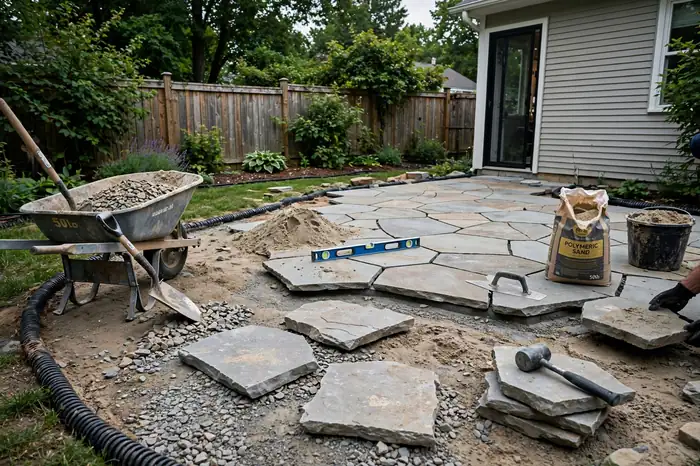
On flat ground, a patio almost always costs less — compare patio installation costs in the USA to see the difference. A 400-square-foot paver patio might run $6,000 to $10,000 versus $12,000 to $20,000 for a comparable wood deck. Patios also need far less maintenance over their lifetime.
Decks earn their premium on sloped lots, where a patio would require expensive retaining walls (see retaining wall costs), and when you want elevation — a second-story deck off the master bedroom, for instance. Many homeowners pair the two: a deck off the back door stepping down to a patio with a fire pit below.
DIY vs Hiring a Professional Deck Builder
A DIY deck can save 40 to 60 percent on labor, which is the largest cost component. A 300-square-foot pressure-treated deck might cost $4,000 to $6,000 in materials versus $10,000 to $14,000 professionally built. But deck construction is structural work — mistakes in footings, ledger attachment, or joist spans can cause collapse.
The ledger board connection to the house is the number one failure point in deck collapses, and it requires proper flashing and lag bolts or through-bolts. If you’re not experienced with structural framing, hire a licensed contractor. DIY makes sense for simple, low-to-the-ground freestanding platforms; anything attached to the house or more than 30 inches off the ground deserves a pro. When hiring, vet builders the way you’d choose a landscaping company — license, insurance, references, and a detailed written contract.
Ways to Keep Deck Costs Down
Keep the design simple: a single-level rectangle costs far less than multi-level or curved designs. Choose pressure-treated wood over composite if budget is tight. Build in the off-season — contractors in northern states often discount winter and early-spring work. Handle the staining or sealing yourself, and skip premium railings in favor of standard wood balusters.
Phase the project if needed: build the main platform now and add the pergola, lighting, or built-in seating next year. Just make sure the framing is designed to support future additions. If an outdoor kitchen is in your long-term plans, have the builder add blocking in the framing for future counter supports and run a gas line stub before the decking goes down — retrofitting under a finished deck costs three times as much. And if your yard needs work around the deck, plan it together — a backyard design plan that coordinates the deck, plantings, and paths avoids rework.
Maintenance Costs to Budget For
A deck isn’t a one-time expense. Wood decks need professional cleaning ($200 to $400) and staining ($800 to $1,500) every 2 to 3 years. Budget for occasional board replacement as well — even well-kept wood decks need repairs after 10 to 15 years. Set aside a small annual reserve so these recurring costs never catch you off guard. Composite decks need only soap-and-water cleaning, which is a major reason their lifetime cost often beats wood despite the higher upfront price.
In northern climates, plan for winterizing — clearing debris from between boards, checking drainage, and storing furniture. In termite-prone regions like the Southeast and Texas, keep up with termite prevention around deck footings and wooden posts.
Frequently Asked Questions
What is the deck building cost USA homeowners pay for a 16×20 deck?
A 16-by-20-foot (320 sq ft) deck costs roughly $8,000 to $13,000 in pressure-treated wood, $10,000 to $16,000 in cedar, and $13,000 to $19,000 in composite, professionally installed. Second-story versions add 20 to 40 percent.
Is it cheaper to build a deck or pour concrete?
Pouring a concrete patio is almost always cheaper than building a deck of the same size. Concrete runs $8 to $18 per square foot installed versus $25 to $60 for a deck. Choose the deck when you need elevation or your lot slopes.
How long does it take to build a deck?
A professional crew builds a standard 300- to 400-square-foot deck in 1 to 2 weeks, including footings, framing, decking, and railings. Permit approval beforehand can add 2 to 6 weeks depending on your municipality.
Do I need a permit to build a deck?
In nearly all US jurisdictions, yes — for any deck attached to the house or more than 30 inches above grade. Expect $200 to $600 in permit fees plus inspections. Freestanding ground-level platforms sometimes escape permitting, but check local rules first.
What is the cheapest decking material?
Pressure-treated pine is the cheapest upfront at $25 to $40 per square foot installed. However, composite often wins on lifetime cost because it eliminates the recurring staining, sealing, and repair bills that wood demands.
A deck is a bigger commitment than a patio — more money, more maintenance, more planning — but it unlocks outdoor living where nothing else can. Price the materials honestly, don’t skimp on footings and flashing, pull the proper permits, and either hire a qualified builder or be brutally honest about your DIY skills. Done right, your deck will be the most-used room of the house every summer for the next twenty years.