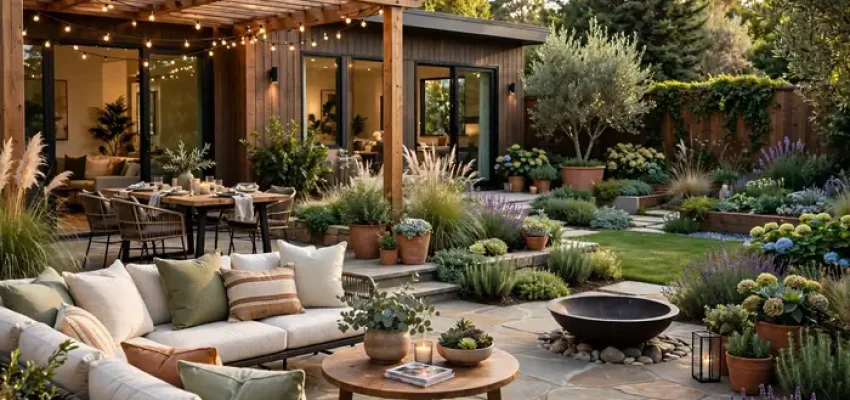

Designing a backyard that actually works for your family takes more than picking a few pretty plants from the garden center. This design backyard USA guide walks you through the full process — from measuring your lot and understanding your climate zone to choosing layouts, materials, and features that fit your budget. Whether you own a quarter-acre suburban lot in Dallas or a compact urban yard in Chicago, a smart plan saves you from costly mistakes and rework down the road.
American backyards serve a lot of jobs: play space, entertaining area, garden, pet zone, and quiet retreat. A well-designed backyard can add 10 to 15 percent to your home’s resale value, according to real estate surveys — but only if the design feels intentional rather than thrown together.
Start With a Site Assessment
Before you sketch a single idea, study what you already have. Walk your yard at different times of day for a week and take notes. Where does the sun hit at noon versus 5 p.m.? Where does water pool after a rainstorm? Which spots get blasted by wind? These observations shape every decision that follows, from patio placement to plant selection.
Measure and Map Your Space
Grab a tape measure and record your lot’s dimensions, including the house footprint, setback distances, and the location of trees, utilities, and easements. Note where underground gas lines and electrical cables run — you can call 811 for a free utility locate before any digging. A simple hand-drawn map on graph paper works fine; you don’t need landscape software at this stage.
Test Your Soil and Drainage
Soil type varies wildly across the United States. Clay-heavy soil in parts of Texas and Georgia drains poorly, while sandy Florida soil drains almost too fast. A $20 soil test kit reveals pH and nutrient levels. Poor drainage areas need French drains or grading fixes before you invest in plantings — many homeowners planning a yard leveling project discover that fixing slopes first prevents years of water headaches.
Define Your Goals and Set a Realistic Budget
List everything you want the yard to do: outdoor dining for eight, a play area for the kids, space for the dog, a vegetable garden, a quiet reading corner. Then rank them. Most families can’t fit everything, and prioritizing now prevents a cramped, cluttered result.
Budget-wise, a modest backyard refresh runs $3,000 to $8,000, a mid-range redesign with a patio and plantings lands between $10,000 and $25,000, and a full professional design-build project easily tops $40,000 to $75,000 in most US markets. Leave a 10 to 15 percent contingency for surprises — buried concrete, drainage issues, and permit fees are the usual suspects.
Create Functional Zones
The best backyards are divided into zones, each with a clear purpose. Think of it like rooms in a house: an outdoor living area near the back door, a dining space, an activity zone, and planting beds that tie everything together. Zones make even a small yard feel bigger because each area has its own job.
Outdoor Living and Dining Areas
Place seating and dining close to the kitchen door for convenience. A 12-by-14-foot patio comfortably holds a dining table and a small lounge set. If you love cooking outside, plan for an outdoor kitchen build with counter space, a grill, and storage — it adds cost but becomes the heart of summer entertaining. Shade matters too: a pergola, sail shades, or a well-placed tree keep the space usable through July and August.
Play, Pets, and Activity Space
Keep play equipment on a level spot visible from the house. A 20-by-20-foot lawn area handles most swing sets and games of catch. For dogs, plan a durable ground cover — many homeowners researching sod versus seed find that a tough grass variety or artificial turf in a dedicated dog run saves the rest of the lawn.
Quiet Corners and Garden Beds
Not every zone needs a big function. A curved planting bed with a bench, a hammock between two trees, or a small water feature gives the yard depth and a sense of retreat. Curved bed edges look more natural than straight lines and are easier to mow around.
Choose a Layout Style That Fits Your Home
Match the backyard’s style to your house’s architecture. A modern home pairs well with clean lines, geometric beds, and minimal plant palettes. A craftsman or farmhouse looks best with cottage-style plantings, a picket-style fence, and natural stone. Mediterranean and Spanish-style homes in California and the Southwest suit gravel, terracotta, and drought-tolerant plantings — a natural fit if you’re exploring drought-tolerant landscaping options.
Don’t chase trends that clash with your neighborhood. In a traditional suburb of Atlanta or Charlotte, an ultra-modern concrete-and-gravel yard can look out of place and hurt resale. Walk your street and note what works on similar lots.
Pick Plants for Your Climate Zone
This is where many DIY designs fail. The USDA plant hardiness map divides the US into zones — Miami sits in zone 10b while Minneapolis is zone 4b, and a plant that thrives in one will die in the other. Always check the zone rating on plant tags against your zip code before buying.
Go Native Where You Can
Native plants adapted to your region need less water, less fertilizer, and less pest control. In the Southeast, that means oakleaf hydrangea and muhly grass; in the Southwest, agave and desert marigold; in the Pacific Northwest, salal and sword fern. Natives also support local pollinators, which matters if you want a lively, healthy yard ecosystem.
Layer for Year-Round Interest
Plan for all four seasons: spring bulbs and flowering shrubs, summer perennials, fall color from maples or grasses, and winter structure from evergreens or ornamental bark. A yard that looks good in February as well as June feels professionally designed. Mix heights — tall background plants, mid-layer shrubs, and low groundcovers — to create depth.
Plan Your Hardscaping: Patios, Paths, and Walls
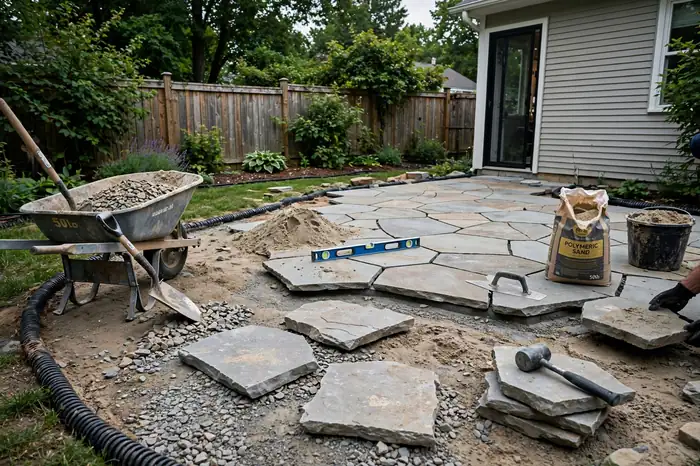
Hardscaping — the non-living elements — usually eats the biggest chunk of the budget, so plan it carefully. A patio is the foundation of most backyard designs; concrete pavers are the most popular choice in the US, with natural stone and stamped concrete as upgrades. Get familiar with current patio installation costs in the USA before you commit to a size and material, since prices vary a lot by region.
Paths should connect zones logically — front to back, patio to garden, gate to shed. Make primary paths at least 4 feet wide so two people can walk side by side. Retaining walls are both functional and attractive on sloped lots; check current retaining wall costs if your yard needs terracing, because walls add up fast on steep grades.
Don’t Forget Lighting and Water
Landscape lighting extends your yard’s usable hours and adds security. Low-voltage LED kits are DIY-friendly and cheap to run. Focus on path lights, accent lights for trees, and task lighting over the grill. A properly sized landscape lighting transformer keeps the system safe and reliable.
Water features range from a $200 bubbling urn to a $5,000-plus pond. Even a small fountain adds sound that masks traffic noise. If you install a pond, plan for filtration and winter care. And if you’re watering a bigger landscape, an automated system pays for itself in convenience — review sprinkler system installation costs when you budget the irrigation side of the project.
Design Backyard USA Guide: Cost Breakdown
Here is what typical US homeowners spend on common backyard design elements in 2026. Prices assume professional installation in a mid-cost market like Denver or Raleigh; expect 20 to 40 percent more in high-cost metros like Seattle or Boston.
Design fees: A landscape designer charges $500 to $2,500 for a concept plan, or $75 to $150 per hour. Full design-build firms often roll design into the project cost.
Patios and walkways: $12 to $25 per square foot for pavers; $8 to $15 for basic concrete. A 300-square-foot patio runs $3,600 to $7,500 in pavers.
Plantings: $2,000 to $6,000 for a full bed planting on an average lot, including soil prep, mulch, and mid-size shrubs and perennials.
Lawn: Sod runs $1.50 to $4 per square foot installed; seed is far cheaper but slower. Annual lawn care costs add $1,000 to $2,500 a year for professional service.
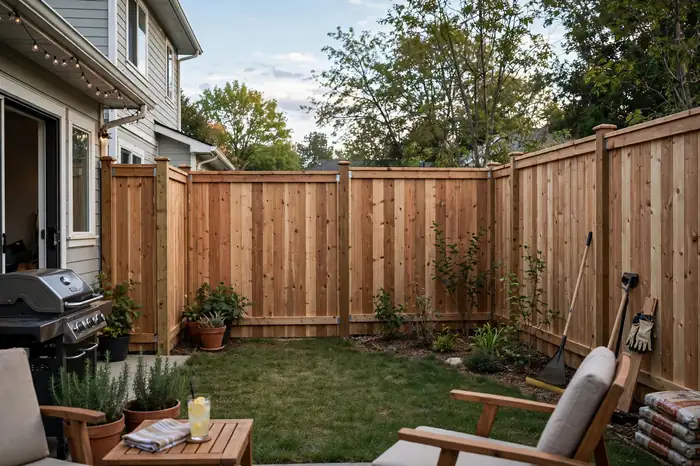
Fencing: $15 to $45 per linear foot depending on material — see current fence installation costs in the USA for a full material-by-material breakdown.
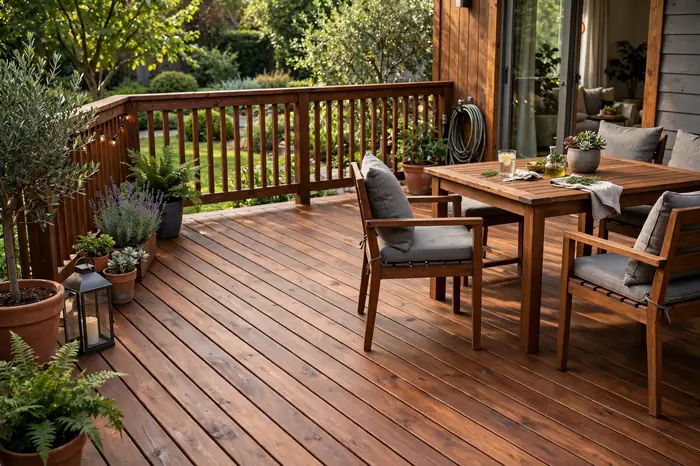
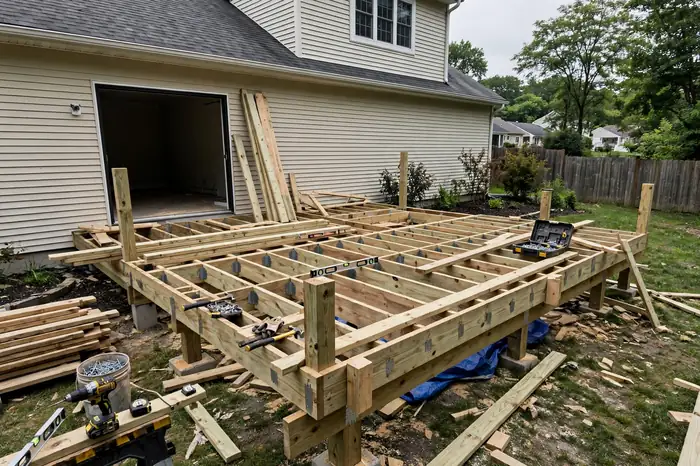
Decks: $25 to $60 per square foot installed, depending on wood versus composite. Compare deck building costs if you’re weighing a deck against a patio.
Fire features: A simple portable fire pit costs $150 to $600; a built-in gas fire pit runs $2,000 to $5,000. Review a fire pit installation guide before choosing fuel type and placement.
DIY vs Hiring a Professional
Some parts of a backyard design are great DIY projects: planting beds, mulching, laying sod, installing path lighting, and building simple raised garden beds. These save labor costs and are forgiving of beginner mistakes.
Design Backyard USA Guide: Phasing Your Project
Follow this design backyard USA guide in phases if the budget is tight: phase one covers grading and the patio, phase two adds plantings, and phase three finishes with lighting and extras.
Seasonal Care and Long-Term Maintenance
Design for the maintenance level you’ll actually sustain. A low-maintenance yard uses mulch beds, native plants, and drip irrigation; a high-maintenance yard has expansive lawns, roses, and vegetable beds. Be honest about your available weekends — an overgrown design looks worse than a simple one.
Plan seasonal tasks into the design: leave access for mowing, keep beds edged, and choose plants whose pruning needs match your willingness. In northern states, build yard winterizing into your fall routine — shutting down irrigation, protecting tender plants, and storing furniture. A little planning now prevents a lot of repair work later.
Frequently Asked Questions
How much does it cost to design a backyard in the USA?
A simple DIY refresh costs $3,000 to $8,000. A professionally designed and installed mid-range backyard runs $15,000 to $35,000. High-end projects with outdoor kitchens, pools, and extensive hardscaping can exceed $75,000. Design plans alone cost $500 to $2,500.
What is the cheapest way to design a backyard?
Start with a free hand-drawn plan, do the planting and mulching yourself, use seed instead of sod, and phase the project over two or three seasons. Buying smaller plants and letting them grow in saves 30 to 50 percent on nursery costs.
How do I design a small backyard?
Use vertical elements like trellises and wall planters, choose multi-function furniture, keep the lawn minimal or skip it, and create one strong focal point rather than many small ones. Light-colored hardscaping and simple plant palettes make small spaces feel larger.
Should I hire a landscape designer or a design-build firm?
Hire a designer if you want a plan you’ll implement yourself or bid out to contractors. Hire a design-build firm if you want one company to handle everything from plan to planting — it costs more but simplifies accountability.
What adds the most value to a backyard?
A usable patio or deck, mature-looking plantings, good lighting, and a fence consistently rank highest for resale value. Outdoor kitchens add value in warm climates like Florida and Southern California but return less in colder regions.
A great backyard doesn’t happen by accident — it comes from a plan that respects your site, your climate, and your budget. Start with the assessment, zone the space around how you actually live, pick plants that suit your region, and phase the work so your wallet survives the process. Do that, and you’ll end up with a yard that looks intentional, functions beautifully, and adds real value to your home for years to come.