The sod vs seed debate is one of the first decisions American homeowners face when establishing or renovating a lawn. Both methods can produce a beautiful yard, but they differ dramatically in cost, timeline, effort, and results. Sod gives you an instant lawn; seed requires patience but costs far less. This guide compares sod vs seed across every factor that matters so you can choose the right approach for your budget, timeline, and expectations.
What Is Sod?
Sod is pre-grown grass that is harvested with a thin layer of soil and roots, rolled up, and installed like carpet over prepared ground. Within hours, bare dirt becomes a finished lawn. Sod is grown on specialized farms under ideal conditions, so it arrives dense, weed-free, and healthy. Professional installation or careful DIY placement gives immediate results.
Sod is available in the grass varieties suited to your region — Bermuda and Zoysia in the South, Kentucky bluegrass and fescue blends in the North. When you buy sod, you know exactly what you are getting. There are no surprises about germination rates or weed contamination that sometimes plague seeding projects.
What Is Seeding?
Seeding involves spreading grass seed over prepared soil and nurturing it through germination and establishment. It is the traditional, budget-friendly way to grow a lawn. Modern seed blends are far superior to old varieties, offering improved disease resistance, drought tolerance, and appearance.
Seeding gives you access to the newest grass cultivars, including premium blends not available as sod. You can choose specific varieties for your exact conditions — shade tolerance, foot traffic resistance, or low water needs. For homeowners interested in drought-tolerant landscaping, specialized seed blends support water-wise lawns that thrive with minimal irrigation once established.
Sod vs Seed: Cost Comparison
Cost is where sod vs seed differs most dramatically. Professional sod installation costs $1.50 to $4.00 per square foot, meaning a 5,000-square-foot lawn runs $7,500 to $20,000 installed. DIY sod (materials only) costs $0.30 to $0.80 per square foot, or $1,500 to $4,000 for the same lawn.
Professional hydroseeding (sprayed seed mixture) costs $0.15 to $0.35 per square foot — $750 to $1,750 for 5,000 square feet. DIY seeding is remarkably cheap: quality seed costs $50 to $150 for the same area, plus soil amendments. For context on total yard investment, compare these figures with annual lawn care costs to understand the full financial picture. Even with equipment rental, DIY seeding rarely exceeds $500 total.
When comparing lawn care cost over time, remember that sod’s higher upfront investment does not guarantee lower maintenance. Both sod and seeded lawns need the same ongoing care once established — mowing, fertilization, and watering cost the same regardless of how the lawn started.
Sod vs Seed: Timeline
Sod wins on speed decisively. A professional crew can install sod on an average lawn in one day. You have a usable lawn immediately, though you should limit foot traffic for 2 to 3 weeks while roots establish. Within a month, sod is fully rooted and ready for normal use.
Seed takes patience. Germination requires 7 to 21 days depending on grass type and conditions. The lawn looks thin and patchy for weeks. Full establishment takes 2 to 3 months, and the lawn may not reach its prime until the following growing season. During this vulnerable period, proper seasonal care protects your investment. If you need a finished yard for an event or home sale, sod is the only practical choice.
Quality and Long-Term Results
Sod Advantages
Sod provides instant erosion control on slopes — critical where heavy rain could wash away seed. It establishes a weed-free lawn immediately because the dense turf crowds out weed seedlings. Sod can be installed almost any time the ground is not frozen, giving you scheduling flexibility that seeding does not offer.
Seed Advantages
Seeded lawns often develop deeper, stronger root systems because the grass grows in place from day one rather than adapting to transplanted soil. This can mean better long-term drought tolerance. Seeding also lets you customize your grass blend precisely, and you avoid the “transplant shock” that sometimes affects sod.
The Verdict on Quality
After one full growing season, a well-executed seeding job can equal or surpass sod in quality. The difference is the journey — sod looks perfect from day one, while seed requires months of careful nurturing. Consistent lawn maintenance during establishment is what separates success from disappointment. If you have the patience and commitment, seed delivers comparable long-term results at a fraction of the cost.
Best Conditions for Each Method
Choose Sod When
Sod is the better choice for slopes and erosion-prone areas, tight timelines (selling your home, upcoming events), shady areas where seed struggles to germinate, and situations where immediate appearance matters. Sod also works well for small patch repairs — a few rolls fix bare spots instantly.
Choose Seed When
Seed makes sense for large areas where sod cost would be prohibitive, when you have time to nurture establishment (3+ months), for custom grass blends tailored to your conditions, and when budget is the primary concern. Fall seeding in northern states produces excellent results because cool temperatures and natural rainfall favor germination.
Installation Process Compared
Sod Installation Steps
Both methods require proper soil preparation — this is non-negotiable. Remove old grass and weeds, till the soil 4 to 6 inches deep, add compost or topsoil amendments, level the surface, and apply starter fertilizer. For sod, lay rolls in a staggered brick pattern, butt edges tightly without overlapping, and roll the entire lawn to ensure root-to-soil contact. Water immediately and deeply.
Seeding Steps
After the same soil preparation, spread seed evenly with a broadcast spreader (apply half in one direction, half perpendicular for uniform coverage). Lightly rake to cover seed with 1/8 inch of soil, then roll to press seed into the ground. Mulch with straw or pelletized mulch to retain moisture. Water lightly and frequently — 2 to 3 times daily — until germination, then gradually reduce frequency while increasing depth.
Water Requirements During Establishment
New sod needs heavy watering: soak it thoroughly immediately after installation, then water daily for the first two weeks, keeping the sod and top inch of soil consistently moist. Gradually reduce to deeper, less frequent watering as roots establish. Expect significantly higher water bills during the first month.
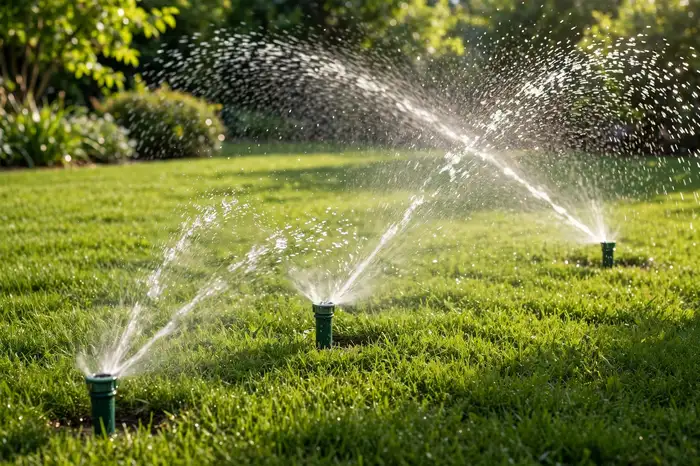
New seed needs light, frequent watering — sometimes 3 to 4 times daily in hot weather — to keep the top half-inch of soil moist without washing away seed. This intensive schedule continues for 3 to 4 weeks until germination completes. An automated system helps enormously; understanding sprinkler system installation cost is worthwhile if you are seeding a large area without irrigation. Alternatively, hiring a landscaping company for the establishment phase ensures professional-grade watering and care.
Common Mistakes to Avoid
In the sod vs seed decision, poor soil preparation is the number one cause of failure for both methods. Skipping soil testing, inadequate tilling, or failing to address drainage issues dooms the project regardless of which method you choose. If drainage is a persistent problem, consider whether yard leveling or seasonal yard preparation should come first. Invest in preparation — it determines 80 percent of your success.
For sod, the biggest mistake is letting it dry out before installation. Sod is perishable — install it within 24 hours of delivery, keep it shaded and moist until laid, and water immediately. For seed, the top mistake is planting at the wrong time. Spring seeding in the South often fails when summer heat arrives before roots establish; fall is better in most regions.
Hybrid Approach: The Best of Both
Many homeowners use a smart hybrid: sod in high-visibility areas (front yard, around the patio) and seed in less prominent areas (side yards, back sections). This balances instant curb appeal with budget savings. You can also sod the most erosion-prone slopes and seed the flat areas.
Another hybrid strategy is slit-seeding or overseeding an existing thin lawn rather than starting from scratch. If your current grass is just thin — not dead — overseeding in fall can transform it without the cost of full renovation. This middle path deserves consideration before committing to either extreme in the sod vs seed debate.
Frequently Asked Questions
Can I lay sod over existing grass?
No. Sod must contact bare, prepared soil to root properly. Laying sod over existing grass creates a thatch barrier that prevents rooting and leads to failure within weeks.
What is the best month to plant grass seed?
Early fall (September in most northern states, October in the South) is ideal for cool-season grasses. Late spring works for warm-season grasses. Avoid summer seeding — heat and drought stress kill seedlings.
How long before I can walk on new sod?
Limit traffic for 2 to 3 weeks. Test rooting by gently lifting a corner — if it resists, roots are establishing. Full normal use is safe after about a month.
Is hydroseeding better than dry seeding?
Hydroseeding (sprayed slurry of seed, mulch, and fertilizer) germinates faster and more evenly than dry seeding, with less erosion risk. It costs more than DIY dry seeding but far less than sod — a popular middle ground.
Should I hire a professional?
For sod installation on areas over 2,000 square feet, professional installation is worth considering — the physical labor is intense and timing is critical. For seeding, DIY is very achievable. Either way, choosing a landscaping company carefully matters if you hire out.
The sod vs seed choice ultimately comes down to your priorities: speed and certainty favor sod; budget and customization favor seed. Both produce beautiful lawns when done correctly. Assess your timeline, budget, and willingness to nurture a new lawn, then commit fully to whichever method you choose. Half-hearted execution fails with either approach — but done right, both paths lead to a yard you will enjoy for years.