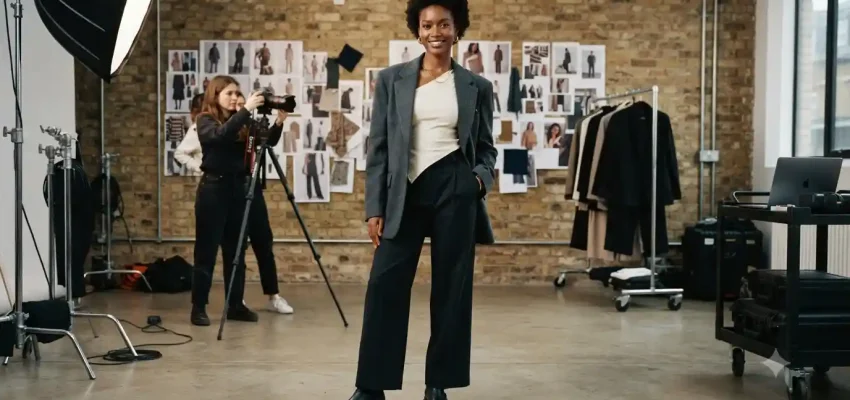

Modeling has traditionally been associated with appearance, photography, runway shows, campaigns, and the ability to communicate a designer’s vision through an image. But today’s modeling industry increasingly recognizes that models can contribute much more than their appearance. Finding and using their voice can help models define their identity, establish boundaries, influence creative work, and speak about issues that matter to them.
This shift is not entirely new. Models have always had individual personalities, interests, opinions, and ambitions. What has changed is the number of platforms available to express them. Social media, interviews, personal projects, activism, and creative collaborations have given models more opportunities to communicate directly with audiences.
A 2021 Vogue feature, Finding and Using Their Voice as a Model, explored this evolution through conversations with models including Kaia Gerber, Soo Joo Park, Precious Lee, Yumi Nu, Anok Yai, and others. The feature examined how models have navigated power, identity, social expectations, discrimination, and the growing importance of having a public voice.
What Does It Mean for a Model to Find Their Voice?
A model’s voice is not simply about speaking during an interview. It can include personal style, creative decisions, opinions, values, professional boundaries, advocacy, and the way a model chooses to participate in the fashion industry.
Finding a voice often begins with understanding what makes you different. That might be your perspective on fashion, your creative interests, your background, your approach to collaboration, or the causes you care about.
The goal is not to become louder than everyone else. A strong professional voice is often about being clear, consistent, and comfortable communicating who you are.
Why Voice Matters in the Modeling Industry
The fashion industry has historically placed significant emphasis on appearance. But a modern modeling career can involve much more than appearing in front of a camera.
Models may participate in campaign concepts, creative direction, styling, interviews, social-media content, brand collaborations, photography, and personal projects. A model who can communicate ideas and contribute creatively can therefore bring additional value to a team.
The Vogue feature highlighted this broader role. Kaia Gerber discussed how Cindy Crawford served as an example of a model who demonstrated intelligence and interests beyond simply posing. The feature also described how some contemporary models have become more involved in creative decisions and public conversations.
The Difference Between Having a Voice and Using It
Almost everyone has opinions, experiences, and perspectives. Using a professional voice means deciding when and how those ideas should be communicated.
A model might have strong opinions about a campaign but choose to express them constructively during the creative process. Another model may use social media to discuss an issue important to them. Someone else may express their perspective through photography, styling, design, writing, or another creative discipline.
Voice becomes valuable when it is connected to action and communication rather than simply being a collection of opinions.
Confidence Is Part of Finding Your Voice
Confidence does not mean believing that every opinion you have is automatically correct. Professional confidence means being willing to communicate your perspective while remaining open to other people.
This can be particularly important for models early in their careers. New talent may feel pressure to accept every request, avoid disagreement, or remain silent because they do not want to lose an opportunity.
Learning to communicate respectfully can help models develop healthier professional relationships while still maintaining their individuality.
Standing Up for Yourself Professionally
Using your voice can also mean establishing boundaries.
Models may need to ask questions about how an image will be used, clarify expectations before a shoot, communicate discomfort with a particular request, or request additional information before agreeing to a project.
Clear communication does not have to be confrontational. A professional model can be firm while remaining respectful.
The broader discussion around power in fashion has made these conversations increasingly important. Vogue’s 2021 feature connected models’ willingness to speak up with wider concerns about discrimination, harassment, and the historic imbalance of power within the industry.
Finding Your Identity Beyond the Camera
One of the most useful ways to develop a strong voice is to build an identity that is not completely dependent on modeling.
Fashion may be your profession, but it does not have to define your entire personality.
You might be interested in music, art, business, photography, fitness, writing, technology, education, or social issues. Those interests can become part of the perspective you bring to your modeling career.
This broader identity can also make your professional work more distinctive because audiences begin to understand the person behind the photographs.
Social Media Has Changed How Models Communicate
Social media has transformed the relationship between models, brands, photographers, and audiences.
In earlier generations, models often depended heavily on magazines, agencies, designers, and advertising campaigns to reach an audience. Today, a model can publish directly to followers through social platforms.
Soo Joo Park discussed this change in Vogue’s feature, noting that social media audience size and influence had become increasingly important to modeling careers.
This creates both opportunity and pressure. A model can communicate directly with an audience, but every post can also receive immediate public feedback.
Using Social Media With Purpose
A strong social-media presence does not require sharing every personal thought.
Instead, models can consider what they want their platforms to communicate. Some useful areas include:
- Professional work and campaigns
- Behind-the-scenes creative projects
- Personal fashion interests
- Artistic collaborations
- Industry observations
- Causes and issues they genuinely care about
- Personal creative projects
The most effective approach is usually consistency rather than trying to manufacture a personality for social media.
Why Authenticity Matters
Audiences can often recognize when a public personality feels overly manufactured. For models, authenticity can help create a stronger connection between professional images and the person behind them.
Authenticity does not mean sharing everything. Privacy remains important. Instead, it means making deliberate choices that are consistent with your actual personality, interests, and values.
A model can maintain professional privacy while still developing a recognizable public identity.
Using Your Voice in Creative Work
A model’s voice can appear directly in the creative process.
Instead of simply arriving on set and waiting for instructions, experienced models may contribute ideas about movement, styling, posing, mood, storytelling, or visual references.
This does not mean overriding the photographer, stylist, director, or client. A successful shoot depends on collaboration. The goal is to contribute ideas while understanding the roles and responsibilities of everyone involved.
Ask Questions
If you do not understand the concept, ask. Understanding the creative objective can help you make stronger decisions in front of the camera.
Bring References
Visual references can communicate an idea more effectively than a long explanation. Models developing a creative identity can maintain reference collections that reflect the aesthetics, poses, lighting, or storytelling styles they find interesting.
Experiment
Not every idea will work. Creative development requires experimentation. Trying different approaches can help you discover what feels natural and distinctive.
How Models Can Speak Up Without Damaging Professional Relationships
There is a difference between being assertive and being unnecessarily confrontational.
When a model disagrees with something, the way the concern is communicated can matter as much as the concern itself.
Instead of saying, “This is wrong,” a model might explain, “I have a concern about this direction because…” or “Could we try this alternative?”
This approach keeps the conversation focused on the work and creates space for collaboration.
Professional voice is strongest when it combines confidence with respect.
Voice and Personal Boundaries
Boundaries are an important part of professional identity.
Models should understand what they are comfortable doing and what requires additional discussion before agreeing to a project. This can include questions about wardrobe, physical contact, nudity, image usage, travel, working hours, payment, or other professional conditions.
Written agreements and clear communication can help prevent misunderstandings.
If something is unclear, asking for clarification before the shoot is generally better than assuming that everyone has the same expectations.
Using Influence Responsibly
Having an audience creates opportunities, but it also creates responsibility.
A model with a large following can influence conversations about fashion, culture, social issues, products, and public events. That influence should be used thoughtfully.
Kaia Gerber’s example in Vogue’s feature illustrates this approach. The article described her use of social media to raise awareness around issues she cared about, including anti-gun-violence rallies and voting-rights initiatives.
The broader lesson is that visibility becomes more meaningful when it is connected to something the person genuinely cares about.
Models Are More Than Their Follower Count
Social-media metrics can be useful for brands evaluating digital campaigns, but numbers should not become the only measure of a model’s professional value.
Strong modeling still involves skills such as posing, movement, expression, professionalism, punctuality, adaptability, communication, and the ability to understand a creative brief.
An audience can amplify a career, but it cannot replace professionalism.
Learning From Other Models
Studying established models can help emerging talent understand how different people have developed distinctive identities.
The important point is not to copy someone else’s personality. Instead, observe what makes their approach recognizable.
Ask yourself:
- What subjects do they consistently discuss?
- How do they communicate with creative teams?
- What visual style appears repeatedly in their work?
- What interests exist outside modeling?
- How do they handle public attention?
- What makes their work recognizable?
Then consider how those observations might inspire your own development.
Building a Personal Brand Without Becoming a Character
Personal branding is often misunderstood as creating a carefully manufactured persona. A stronger approach is to identify genuine characteristics and communicate them consistently.
For a model, that might mean developing a recognizable visual style, focusing on specific fashion categories, highlighting creative collaborations, or becoming known for a particular perspective.
Your personal brand should make it easier for people to understand what you bring to a project.
Finding Your Voice Takes Time
There is no single moment when a model suddenly discovers a perfect professional voice.
It develops through experience.
Early jobs may teach you what you enjoy. Difficult collaborations may teach you where your boundaries are. Successful campaigns may reveal your strengths. Creative experiments may uncover interests you did not previously recognize.
Over time, these experiences create a clearer understanding of who you are and how you want to work.
Related Fashion Content
Models developing their identity can also explore broader fashion topics on AnchorEra, including the idea of finding a new beginning through fashion and street style and its influence on personal expression.
These topics highlight an important part of fashion culture: style can be a form of communication, not simply a collection of clothes.
A Practical Voice-Building Exercise for Models
If you are an emerging model, try writing answers to these five questions:
- What do I want people to remember about me?
- Which fashion subjects genuinely interest me?
- What creative skills do I want to develop?
- Which professional boundaries are important to me?
- What do I want my platform to contribute beyond modeling?
Do not worry about creating perfect answers. The purpose is to identify recurring ideas. Those patterns can eventually help shape your portfolio, social-media presence, collaborations, and professional communication.
Final Thoughts
Finding and using a voice as a model is ultimately about becoming more than a passive participant in the fashion industry. It means understanding your identity, communicating clearly, contributing creatively, establishing professional boundaries, and deciding what you want your visibility to represent.
The experiences discussed in Vogue’s Finding and Using Their Voice as a Model demonstrate how models have increasingly used their platforms to express opinions, participate in creative decisions, challenge industry expectations, and advocate for issues that matter to them.
For emerging models, the lesson is not to imitate the loudest voice in the room. It is to develop a voice that is genuinely yours. With experience, confidence, thoughtful communication, and a clear sense of identity, that voice can become one of the most valuable parts of your modeling career.