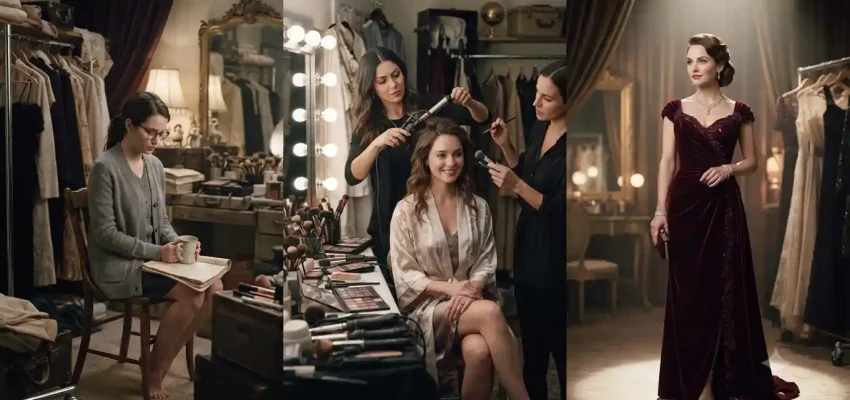

Few movie moments are as instantly recognizable as the makeover montage. A character walks into a salon, wardrobe room, or beauty studio looking completely different from the person we met earlier, and suddenly the soundtrack changes, the camera slows down, and everyone notices.
Hollywood has used this formula for decades. Sometimes the transformation is genuinely spectacular and becomes an important part of the character’s story. Other times, the so-called makeover amounts to little more than removing glasses, changing a hairstyle, or putting someone in a dress.
Vogue’s ranking of 20 memorable movie makeovers uses a simple idea: the strongest transformations should look genuinely different, have a reason within the story, and be entertaining to watch. Using that framework as a starting point, here is a refreshed look at 20 iconic cinematic makeovers, ranked from the least convincing to the most memorable.
What Makes a Great Movie Makeover?
A movie makeover works best when it does more than make a character look attractive. The transformation should communicate something about the character, advance the story, reveal a hidden side of their personality, or place them in a completely new social environment.
A convincing transformation usually has three ingredients:
- A noticeable visual change: The audience should immediately see that something has changed.
- A story-driven purpose: The makeover should make sense within the character’s situation.
- Entertainment value: The reveal should feel memorable rather than routine.
With those ideas in mind, let’s revisit 20 famous movie transformations.
20. She’s All That (1999)
Laney Boggs is presented as the stereotypical unpopular high-school girl before receiving Zack’s makeover. The problem is that the character is already visibly attractive, so the transformation relies heavily on familiar movie shorthand: glasses, casual clothing, and a hairstyle are treated as if they completely hide her beauty.
The final look is polished, but the transformation itself is one of the weaker examples because the visual difference is relatively limited.
Makeover rating: 1/5
19. The House Bunny (2008)
The women of Zeta Alpha Zeta turn to Shelley for help when their struggling sorority needs to become more popular. Their makeover sequence follows a familiar formula involving more dramatic hair, makeup, and clothing.
What saves the transformation is the film’s eventual reminder that appearance alone does not determine someone’s worth. The makeover is entertaining, but it is not particularly inventive.
Makeover rating: 3/5
18. Clueless (1995)
Tai’s transformation is one of the most recognizable teen-movie makeovers. Cher and Dionne introduce her to their version of fashionable school life, changing her hair, clothing, and overall presentation.
The makeover looks fun, but there is an interesting complication: Tai gradually starts adopting the social attitudes that come with her new image. Her transformation therefore becomes part of a larger story about popularity, identity, and influence.
Makeover rating: 2.5/5
17. Catwoman (2004)
Patience Phillips’ transformation into Catwoman is considerably more dramatic. Her ordinary appearance gives way to a bold superhero-inspired look involving leather, a mask, gloves, dramatic makeup, and a completely different attitude.
Whether the movie itself works for every viewer is another question, but the makeover certainly communicates a major change in character and purpose.
Makeover rating: 4/5
16. Jawbreaker (1999)
Fern is transformed into Violette after being brought into the orbit of her school’s popular clique. The change includes a new identity, blonde hair, and a carefully coordinated purple wardrobe.
The visual transformation is effective, but the underlying idea relies on the familiar movie assumption that changing someone’s appearance can instantly change their social status. The result is memorable, even if the concept is hardly revolutionary.
Makeover rating: 2.5/5
15. Grease (1978)
Sandy’s transformation near the end of Grease is one of the most recognizable movie style moments ever created. Her sweet, more conservative image is replaced by tight trousers, a leather jacket, dramatic hair, and a much more confident attitude.
The makeover works because it arrives at exactly the right moment. It is visually dramatic, instantly recognizable, and tied to Sandy’s newfound confidence.
Makeover rating: 4/5
14. Cinderella (1997)
Brandy’s Cinderella receives the classic fairy-tale transformation. Her worn clothing is replaced with an elegant blue gown, gloves, and a sparkling tiara as she prepares for the royal ball.
Unlike many modern makeover scenes, this transformation is intentionally magical. The visual contrast between Cinderella’s earlier circumstances and her formal appearance makes the reveal feel appropriately theatrical.
Makeover rating: 4/5
13. Freaky Friday (2003)
After the body-swap chaos of Freaky Friday, Anna’s personality influences the appearance she creates while living in her mother’s body. The hairstyle becomes shorter and more rebellious, while the clothing takes on a rock-inspired edge.
It is not the biggest transformation on this list, but the makeover works because it visually communicates personality. The character looks different because she feels different.
Makeover rating: 3/5
12. Mean Girls (2004)
Cady’s transformation into a member of the Plastics is about much more than clothes. Her wardrobe becomes increasingly aligned with the group’s style as she becomes more deeply involved in their social world.
The irony is that the makeover eventually becomes part of her downfall. She starts by studying the Plastics and gradually begins behaving like them, showing how appearance and identity can become connected.
Makeover rating: 3.5/5
11. Maid in Manhattan (2002)
Marisa’s wardrobe transformation plays an important role in the romantic misunderstanding at the center of the film. Jennifer Lopez’s character moves from her hotel-maid uniform into sophisticated clothing that allows her to be mistaken for a wealthy guest.
The most memorable part of the transformation is the glamorous formalwear that completes the illusion. It is classic romantic-comedy fashion fantasy.
Makeover rating: 4/5
10. Pretty Woman (1990)
Vivian’s transformation is one of Hollywood’s most famous fashion sequences. Her early wardrobe contrasts sharply with the elegant clothing she adopts after entering Edward’s wealthy social world.
The red evening dress is the major reveal, turning the makeover into a visual symbol of the character’s changing circumstances. The famous shopping sequence also gives the transformation a satisfying emotional payoff.
Makeover rating: 4/5
9. Last Holiday (2006)
Georgia Byrd’s makeover is particularly satisfying because it is connected to personal liberation. After believing that her life may be coming to an end, Georgia decides to stop holding herself back.
The wardrobe becomes more luxurious and expressive, but the real transformation is psychological. She begins acting like someone who believes she deserves to enjoy life.
Makeover rating: 4.5/5
8. The Stepford Wives (2004)
Joanna’s transformation into a stereotypically polished Stepford wife has a deliberately unsettling quality. Her darker, more independent appearance is replaced by carefully styled hair, glamorous clothing, and an ultra-feminine presentation.
The makeover works because the audience knows there is something deeply wrong beneath the perfect appearance. The beauty of the transformation becomes part of the film’s satire.
Makeover rating: 3.5/5
7. Mulan (2020)
Mulan’s transformation is different from the traditional Hollywood glow-up. Instead of simply becoming more glamorous, she changes her appearance to operate as a warrior and protect her family and country.
The clothing, hair, and overall presentation become more practical and battle-ready. The transformation therefore serves a clear narrative purpose and reflects the character’s growing determination.
Makeover rating: 4/5
6. My Fair Lady (1964)
Eliza Doolittle’s transformation is one of cinema’s foundational makeover stories. Her physical presentation changes alongside her speech, manners, and social education as Professor Higgins attempts to introduce her to high society.
The costumes are deliberately extravagant, making the transformation visually spectacular. Audrey Hepburn’s presence gives the sequence an additional level of elegance.
Makeover rating: 4/5
5. Cruella (2021)
Estella’s transformation into Cruella is practically a fashion show disguised as character development. The film gives the character an extraordinary collection of theatrical looks, dramatic makeup, two-tone hair, and deliberately provocative silhouettes.
The transformation is particularly effective because fashion becomes part of Cruella’s identity and rebellion. Her clothes are not simply decoration; they are part of how she challenges the fashion establishment around her.
Makeover rating: 5/5
4. Mrs. Doubtfire (1993)
Daniel Hillard’s transformation into Mrs. Doubtfire is less about becoming conventionally attractive and more about complete physical disguise. The character uses prosthetics, makeup, hair styling, clothing, and body shaping to create a believable elderly woman.
It is one of the most elaborate makeovers on the list because virtually every visible element of the character changes. The transformation also drives the entire story forward.
Makeover rating: 5/5
3. The Devil Wears Prada (2006)
Andy Sachs begins the film with little interest in fashion, but her job at Runway gradually changes her appearance. Designer clothing, accessories, hairstyling, and carefully coordinated outfits transform her into someone who looks comfortable inside the fashion world.
The brilliance of this makeover is that it is not simply a positive transformation. Andy becomes more stylish while simultaneously drifting away from parts of her original identity.
Fashion therefore becomes a visual storytelling device rather than simple decoration.
Makeover rating: 4/5
2. Miss Congeniality (2000)
Gracie Hart is an FBI agent who has to enter a beauty pageant undercover. Her transformation is therefore directly connected to the plot: she needs to convincingly become a pageant contestant while continuing to investigate a threat.
The makeover sequence goes far beyond a new outfit. Hair, grooming, styling, posture, presentation, and confidence all change. The final reveal is exaggerated in exactly the way a Hollywood makeover should be.
More importantly, Gracie remains the same capable investigator underneath the new appearance.
Makeover rating: 4/5
1. The Princess Diaries (2001)
Mia Thermopolis’ transformation is one of the most recognizable teen-movie makeovers. The shy teenager discovers that she is heir to the throne of Genovia and must learn how to present herself as royalty.
Her makeover includes hairstyling, eyebrow grooming, removing her glasses, improving posture, and learning how to carry herself with confidence. On paper, those changes may seem relatively simple, but the character’s overall transformation makes the sequence memorable.
What makes Mia’s makeover especially effective is that it combines appearance with behavior. She is not simply given a new outfit; she learns how to occupy a completely different role.
Makeover rating: 3.5/5
What These Movie Makeovers Have in Common
Looking across the 20 transformations reveals an interesting pattern. The best movie makeovers are rarely just about beauty.
Some are about confidence. Others are about disguise, identity, social mobility, professional ambition, rebellion, or personal liberation.
That is why a relatively simple transformation can sometimes be more memorable than an expensive wardrobe change. If the makeover tells the audience something meaningful about the character, it has a stronger reason to exist.
The Difference Between a Glow-Up and a Character Transformation
A glow-up usually focuses on appearance. A character transformation goes further.
For example, removing glasses and changing someone’s hairstyle may produce an immediate visual difference, but it does not necessarily tell us anything new about the character. By contrast, Gracie’s transformation in Miss Congeniality changes how she operates because she must function in a completely different environment.
Similarly, Andy’s fashion transformation in The Devil Wears Prada is important because it visually represents changes happening to her personality and priorities.
The strongest makeovers therefore connect outer appearance with inner development.
Why Movie Makeovers Remain So Popular
Audiences enjoy makeover sequences because they provide an immediate visual payoff. A character’s progress can be communicated within a few seconds, often accompanied by music, quick cuts, styling montages, and a dramatic reveal.
They also offer fantasy. Viewers can imagine what it would feel like to enter a completely different social environment, wardrobe, career, or lifestyle.
That fantasy explains why makeover scenes remain such a durable part of romantic comedies, teen movies, musicals, fashion films, fairy tales, and family entertainment.
The Problem With the Classic Movie Makeover
There is also a reason modern audiences sometimes question the makeover trope. Many older films suggest that a character becomes worthy, popular, successful, or desirable only after changing their appearance.
That idea can reinforce narrow beauty standards, especially when a character’s earlier appearance is treated as unattractive simply because they wear glasses, have unconventional clothing, or do not follow current fashion trends.
The most interesting modern interpretations tend to complicate the formula. A makeover can reveal confidence without suggesting that the character was worthless before. It can also show the consequences of changing yourself to satisfy other people’s expectations.
How Fashion Drives Movie Storytelling
Costume design can communicate character development without dialogue. A change from casual clothing to formalwear can signal social mobility. A darker palette can suggest a character’s changing mood. A dramatic hairstyle can mark a new stage in a character’s life.
This is one reason fashion and film are so closely connected. Clothing helps audiences understand who a character is, where they belong, and how they are changing.
Readers interested in the relationship between personal style and culture can also explore AnchorEra’s article on the best street style of 2022.
For another perspective on fashion and personal identity, see Finding and Using Their Voice as a Model.
Final Thoughts
Movie makeovers remain popular because they combine fashion, storytelling, humor, fantasy, and character development in one highly visual sequence. From Mia Thermopolis learning to look and behave like royalty to Cruella turning fashion into a weapon of self-expression, the most memorable transformations give audiences more than a new outfit.
The weakest makeovers often rely on simple Hollywood shortcuts, while the strongest ones have a clear purpose and make the audience feel that something meaningful has changed.
Ultimately, the best movie makeover is not necessarily the most expensive or glamorous. It is the one that makes the character’s transformation impossible to forget.