As energy systems become increasingly sophisticated, learners need opportunities to understand how gas infrastructure works, how operational decisions affect efficiency and safety, and how the sector fits into the broader transition toward more sustainable energy systems. This makes modern energy education an important part of preparing the workforce for the challenges ahead.
What Is Gas Education Utopia?
Gas Education Utopia can be understood as a vision for an advanced learning environment focused on gas systems, energy technology, operational safety, environmental awareness, and professional development. Instead of separating theory from practice, this approach connects technical concepts with realistic situations that energy workers and students may encounter in the field.
The idea also fits within the broader development of global climate change awareness. Energy education increasingly needs to explain not only how energy systems operate but also how resource use, emissions, efficiency, and environmental decisions influence communities and industries.
A modern energy-learning environment may therefore include interactive lessons, digital models, simulations, data-driven exercises, safety scenarios, and structured assessments. The goal is not simply to memorize terminology. It is to develop the ability to understand systems and make informed decisions.
Why Modern Gas Education Matters
Gas infrastructure involves complex systems, including production, processing, transportation, storage, distribution, monitoring, maintenance, and end-use applications. Each stage requires specialized knowledge and careful attention to operational procedures.
Traditional educational models can provide a strong theoretical foundation, but modern training can go further by allowing learners to explore situations before they encounter them in a real working environment. Simulated exercises can help students understand how pressure, flow, equipment conditions, monitoring systems, and safety procedures interact.
This educational shift is part of a wider movement toward technology-supported professional learning. Developments in chipset development and technological innovation, for example, contribute to the computing capabilities behind modern sensors, monitoring systems, automation platforms, and industrial devices.
Building a More Interactive Energy Learning Environment
One of the defining characteristics of modern energy education is interactivity. Instead of relying entirely on lectures and textbooks, learners can work through practical scenarios that imitate real operational challenges.
A virtual training environment might allow a learner to examine a simplified gas distribution network, identify an abnormal reading, investigate possible causes, and determine an appropriate response. Another exercise could involve analyzing energy consumption data and identifying opportunities for improved efficiency.
Interactive learning can also make complicated technical concepts easier to understand. Visual models can demonstrate how systems connect, while simulations can show how changing one variable can affect another. This approach creates a stronger relationship between theoretical knowledge and practical application.
The broader principles behind digital transformation and user-centered learning can also influence how energy education is designed. When educational technology is structured around the learner’s actual needs, information becomes easier to navigate and apply.
The Role of Digital Technology in Gas Education
Technology has become an important part of professional education across many industries. Energy training is no exception. Digital platforms can provide access to interactive courses, technical documentation, assessments, simulations, and performance tracking.
Artificial intelligence, data analytics, virtual reality, augmented reality, and cloud-based learning systems can potentially expand the ways energy concepts are taught. For example, a simulation can recreate a simplified industrial environment without requiring students to physically access operational infrastructure.
Technology education itself is also evolving. Readers interested in broader developments can explore the latest IT books and technology learning trends to understand how digital knowledge continues to influence professional development.
Similarly, digital transformation in modern education demonstrates how online platforms and technology-enabled learning can change the way information is delivered, accessed, and evaluated.
Gas Safety Education and Practical Skills
Safety should remain a central component of energy education. Gas systems require careful handling because operational mistakes can create serious consequences. A strong educational framework should therefore emphasize procedures, risk awareness, equipment knowledge, emergency response principles, and responsible decision-making.
Simulation-based training can provide learners with controlled environments in which they can study hypothetical incidents without exposing themselves or operational infrastructure to unnecessary risk. Exercises can include abnormal system readings, equipment failures, maintenance decisions, and emergency-response scenarios.
Practical education should complement—not replace—qualified instruction, established workplace procedures, and applicable safety requirements. The objective is to help learners understand why procedures matter and how different components of an energy system interact.
Connecting Energy Education With Environmental Awareness
Modern gas education should also address the environmental dimensions of energy production and consumption. Learners can study resource efficiency, emissions management, energy conservation, monitoring practices, and the relationship between conventional energy systems and the wider energy transition.
Understanding environmental issues requires a broader perspective. The topic of climate change and its global implications can provide useful context for understanding why energy efficiency and environmental responsibility are increasingly important subjects.
Energy education can also introduce learners to the relationship between industrial operations and environmental performance. This encourages future professionals to consider efficiency and environmental responsibility alongside technical and commercial objectives.
Developing Data and Analytical Skills
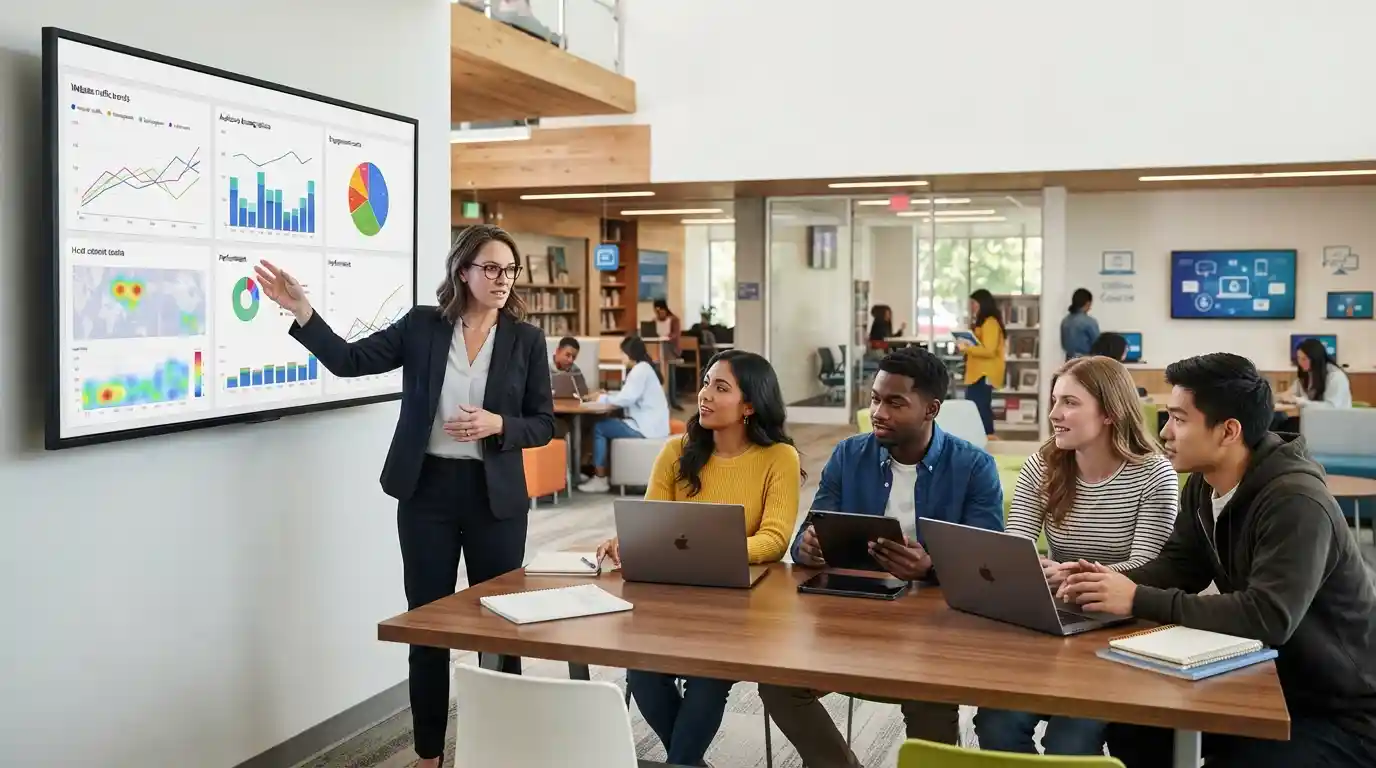
Modern energy professionals increasingly interact with data. Sensors, meters, monitoring platforms, maintenance systems, and operational dashboards can generate large amounts of information. Knowing how to interpret that information is becoming an important professional skill.
A forward-looking gas education program can therefore include basic data interpretation, trend analysis, performance monitoring, and problem-solving exercises. Students can learn how to recognize unusual patterns and understand what additional information may be required before making an operational decision.
This connects energy education with broader digital business practices. Topics such as high-output team productivity and timeline management demonstrate how structured information and organized workflows can improve decision-making across professional environments.
From Classroom Knowledge to Career Preparation
Energy education becomes more useful when learners can connect technical knowledge with real career requirements. Depending on their specialization, students may eventually work in engineering, operations, maintenance, safety, environmental management, data analysis, project management, or energy consulting.
A strong learning pathway can help students identify the knowledge and skills associated with different roles. It can also encourage continuous learning because energy technologies and workplace expectations continue to evolve.
The broader importance of lifelong learning can be seen through resources such as adult education and continuing learning opportunities. Energy professionals can benefit from the same principle by updating their knowledge as technologies, processes, and industry expectations change.
Education also increasingly involves specialized training. The discussion around specialized professional education and workforce development illustrates the broader importance of matching training pathways with the practical requirements of particular careers.
Energy Education and Business Transformation
The energy sector does not operate separately from the wider business environment. Energy companies rely on technology, logistics, finance, marketing, workforce planning, and operational management.
This means energy professionals can benefit from understanding broader business processes as well as technical subjects. Resources covering digital marketing and business services, for example, demonstrate how digital tools can support organizations beyond purely technical operations.
Likewise, modern business transformation and digital strategy provide a wider context for understanding how organizations adopt technology to improve communication, customer experiences, workflows, and decision-making.
For energy organizations, this broader perspective can help technical teams communicate more effectively with business leaders, technology departments, customers, and other stakeholders.
The Importance of Continuous Learning
Energy education should not end when a student completes a course. Technologies, regulations, equipment, digital platforms, and operational practices can change over time. Professionals therefore need learning systems that support ongoing development.
Continuous learning may include short courses, technical workshops, professional certifications, simulation exercises, internal training, technical reading, and supervised practical experience.
The same principle applies to digital industries. The future of technology-driven professional environments shows how specialized industries increasingly require workers to combine domain knowledge with digital skills.
How an Ideal Gas Education Program Could Work
A well-designed gas education pathway could combine several learning layers instead of relying on one teaching method.
- Foundational theory: Introduce energy systems, gas properties, infrastructure, terminology, and basic engineering concepts.
- Interactive simulations: Allow learners to explore simplified operational scenarios in a controlled environment.
- Data exercises: Teach learners how to interpret operational measurements and identify meaningful patterns.
- Safety training: Reinforce risk awareness, procedures, emergency concepts, and responsible decision-making.
- Environmental education: Explain efficiency, emissions, resource management, and sustainability considerations.
- Career development: Connect technical learning with potential professional pathways.
- Continuous assessment: Use practical exercises and knowledge checks to identify areas requiring additional study.
This layered approach can make education more flexible while helping learners understand how individual concepts fit into a larger energy system.
Energy Learning in a Connected Digital Future
The future of professional education is likely to become increasingly connected. Learners may access training from different locations, collaborate through digital platforms, analyze simulated datasets, and participate in virtual practical exercises.
At the same time, technology should remain a tool rather than the sole purpose of education. A sophisticated learning platform is valuable only when it helps students understand concepts, develop useful skills, and apply knowledge responsibly.
The wider evolution of technology can be explored through topics such as digital innovation and emerging technology and technology-driven business solutions. These developments illustrate the increasingly important relationship between technical expertise and digital capability.
Preparing the Next Generation of Energy Professionals
Gas Education Utopia represents more than a single course or classroom. It is a useful way to think about what energy learning could become when technical education, practical training, digital technology, environmental awareness, and professional development are brought together.
The future energy workforce will need people who can understand complex systems, work with data, follow safety procedures, communicate effectively, and adapt to technological change. Education has an important role in developing those capabilities.
As energy organizations continue to adopt new technologies and respond to changing environmental and business requirements, learning will remain an essential part of workforce development. The most useful educational environments will be those that connect knowledge with practical application while encouraging professionals to continue developing throughout their careers.
For organizations and educators, the opportunity is to create learning experiences that are technically rigorous, accessible, interactive, and relevant to real-world challenges. For learners, the opportunity is to build a foundation that can evolve alongside the energy sector.
Conclusion
Gas Education Utopia captures a forward-looking vision of energy education—one where classroom theory is supported by simulations, digital tools, practical exercises, safety training, data analysis, and environmental awareness.
As the energy landscape continues to evolve, education must evolve with it. Preparing professionals for the future requires more than teaching established concepts. It requires creating learning environments that encourage critical thinking, practical understanding, technological confidence, and continuous development.
By bringing these elements together, modern gas education can help learners better understand complex energy systems and prepare for the changing demands of the industry.