
Running out of space in your kitchen? You are not alone. American kitchens accumulate gadgets, cookware, and pantry items faster than almost any other room in the house, and cramped cabinets can make cooking feel like a chore. Learning how to maximize kitchen storage USA homeowners actually use can transform a cluttered, frustrating kitchen into an organized space where everything has a place. Whether you have a tiny galley kitchen in a New York apartment or a sprawling suburban kitchen in Texas, smart storage solutions make daily life easier and can even boost your home’s value.
The average American kitchen contains hundreds of individual items, from everyday dishes to specialty appliances used twice a year. Without a deliberate strategy to maximize kitchen storage, clutter takes over counters, cabinets overflow, and finding what you need becomes a daily treasure hunt. This guide covers proven storage ideas for every budget — from simple organizers under $20 to custom cabinetry upgrades — plus layout tricks that squeeze more function from the space you already have.
Start With a Kitchen Storage Audit
Before buying a single organizer, take stock of what you actually own. Pull everything out of one cabinet or drawer at a time and sort items into three groups: daily use, occasional use, and rarely or never used. Most USA households discover they own duplicate tools, expired pantry goods, and gadgets they forgot they had. Decluttering first means every storage solution you add afterward actually serves a purpose.
Pay attention to how you cook. If you bake weekly, your mixer and baking sheets deserve prime real estate. If you mostly reheat leftovers, prioritize easy access to microwave-safe containers. The goal of any plan to maximize kitchen storage USA kitchens need is matching storage to your real habits, not some idealized version of cooking. For broader kitchen planning context, our guide on how to plan a kitchen remodel USA walks through the full design process.
Maximize Kitchen Storage With Smarter Cabinets
Pull-Out Shelves and Drawers
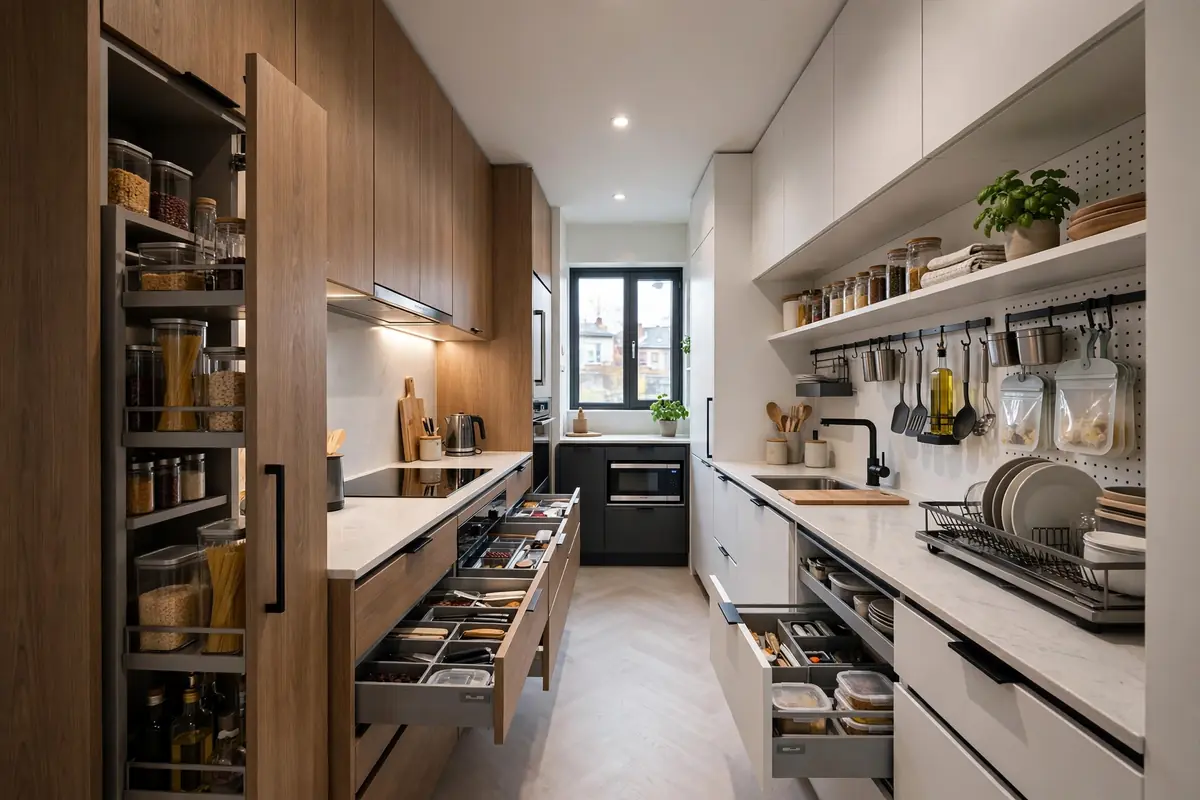
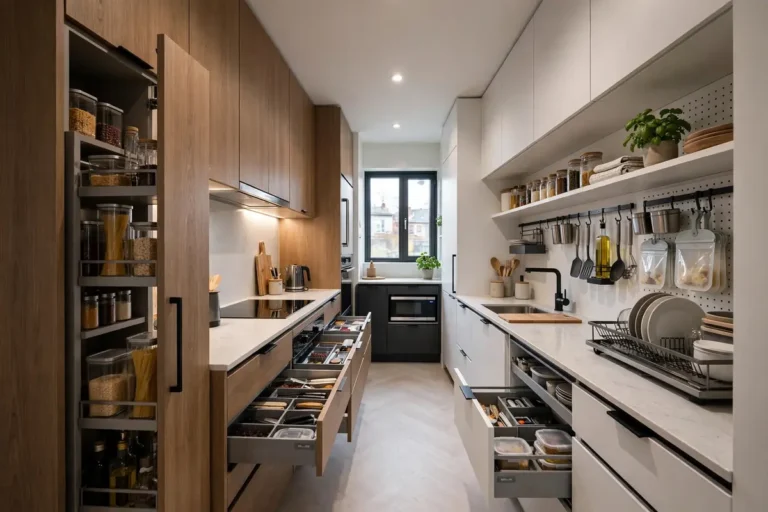
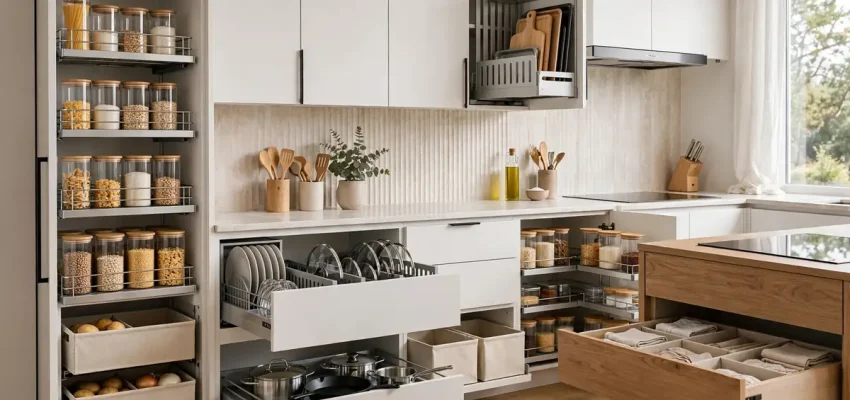
Standard base cabinets waste enormous space — items get lost in dark back corners, and you end up crouching to reach them. Pull-out shelves and drawers bring everything to you. Retrofit pull-out kits cost $50 to $150 per cabinet and install with basic tools, while custom pull-out drawers run $200 to $400 per cabinet professionally installed. For deep base cabinets, this single upgrade does more to maximize kitchen storage than almost anything else.
Focus first on the cabinets you use most: the ones holding pots, pans, and everyday dishes. Full-extension drawer slides (which pull completely out, unlike standard three-quarter slides) make a dramatic difference. If your cabinets are older, this is also a good time to assess whether kitchen cabinet refacing cost USA fits your budget — refaced cabinets with new pull-outs feel brand new at a fraction of replacement cost.
Vertical Dividers for Trays and Cutting Boards
Baking sheets, cutting boards, and serving trays are awkward to stack. Vertical dividers turn a single cabinet into organized slots where each item slides out easily. Tension-rod dividers cost under $15, while built-in vertical organizers run $40 to $80. Install them in the narrow cabinet beside your oven or in a deep drawer for instant improvement.
Lazy Susans and Corner Solutions
Corner cabinets are the Bermuda Triangle of kitchen storage — things go in and never come out. A lazy Susan turntable ($20 to $60 for retrofit, $150 to $300 for built-in) makes corner contents accessible with a spin. For blind corners, pull-out corner systems with kidney-shaped shelves ($200 to $500) are the premium solution that truly lets you maximize kitchen storage USA corner cabinets offer. Our best kitchen layouts for small spaces USA guide covers corner strategies in detail.
Use Your Walls to Maximize Kitchen Storage
Open Shelving
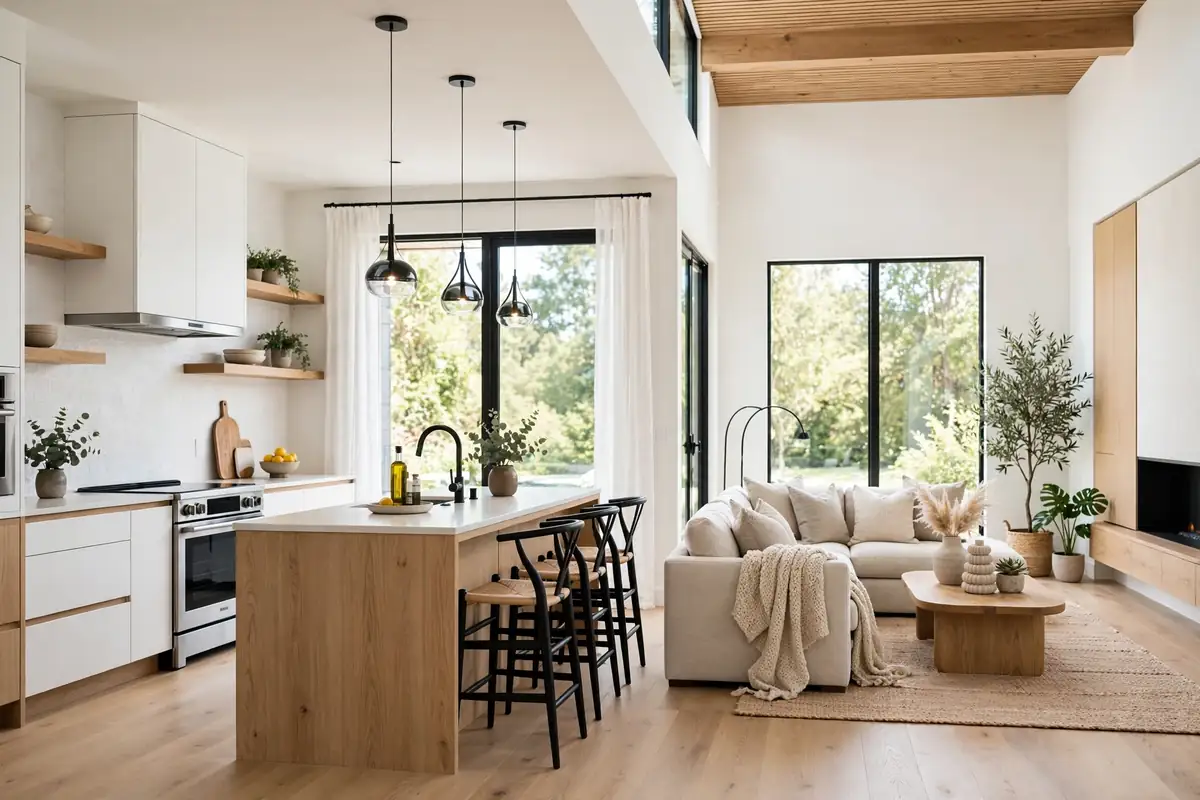
Replacing upper cabinets with open shelves — or adding shelves to an empty wall — creates accessible storage while making the kitchen feel larger. Floating wood shelves cost $30 to $100 each; bracketed shelves run even less. Display everyday dishes, glasses, and attractive cookware where you can grab them without opening doors. The tradeoff is dust: reserve open shelves for items you use weekly so they stay clean.
Pegboards and Rail Systems
A stainless steel rail with S-hooks ($25 to $50) mounted on a backsplash or empty wall holds utensils, pots, and pans within arm’s reach. Pegboard panels ($20 to $40) offer flexible organization for tools and small items. These systems work especially well in small kitchens where every inch of wall helps you maximize kitchen storage without major renovation. Pair wall storage with good task lighting — see kitchen lighting design guide USA for layout tips.
Magnetic Knife Strips and Spice Storage
Free up drawer and counter space with a magnetic knife strip ($15 to $30) mounted on the wall or inside a cabinet door. For spices, wall-mounted racks or magnetic tins on the refrigerator side keep 20+ spices visible and reachable. These small changes add up: the average USA kitchen can reclaim an entire drawer just by moving knives and spices to the wall.
Pantry Storage Ideas That Actually Work
The pantry is where kitchens either shine or collapse into chaos. Start with clear, airtight containers for dry goods — flour, sugar, rice, pasta. Decanting into uniform containers ($30 to $60 for a starter set) eliminates bulky packaging, keeps food fresher, and lets you see inventory at a glance. Label everything to prevent the mystery-container problem.
Add tiered shelf risers ($15 to $30) so cans and jars in back rows stay visible. Door-mounted racks ($20 to $40) turn the inside of a pantry door into storage for spices, wraps, and small bottles. For deep pantries, pull-out pantry towers ($200 to $600 installed) bring back items forward — the same principle as pull-out cabinet shelves, applied vertically. If you are planning a bigger overhaul, kitchen remodel cost in USA 2026 includes pantry upgrade budgeting.
Group pantry items by zone: breakfast together, baking together, snacks together. This simple habit does more to maximize kitchen storage USA pantries contain than any product — you stop buying duplicates because you can actually see what you own.
Maximize Kitchen Storage in Small Kitchens
Small kitchens demand creativity. Use the insides of cabinet doors: mount slim racks ($10 to $20) for lids, wraps, or cleaning supplies. Add a toe-kick drawer ($80 to $150) under base cabinets — that dead space at floor level fits baking sheets and flat items perfectly. Hang a pot rack from the ceiling ($40 to $120) to free an entire cabinet.
Choose multi-functional pieces: a rolling island ($150 to $400) adds prep space and storage that moves where needed. Nesting bowls, collapsible colanders, and stackable containers reduce the footprint of essentials. In galley kitchens under 100 square feet, these tactics can effectively double usable storage without moving a single wall. For layout-specific advice, our small kitchen remodel ideas USA guide dives deeper.
Consider the “one in, one out” rule for small kitchens: every new gadget means an old one leaves. It sounds strict, but it is the only sustainable way to maximize kitchen storage in truly compact spaces over the long term.
Island and Peninsula Storage Upgrades
If you have a kitchen island, make every side work. The seating side can hide shallow cabinets for placemats and napkins. Ends can hold wine racks or cookbook shelves. A standard 36-inch-deep island offers 12 inches of usable depth on the back side — perfect for items you need occasionally but want nearby.
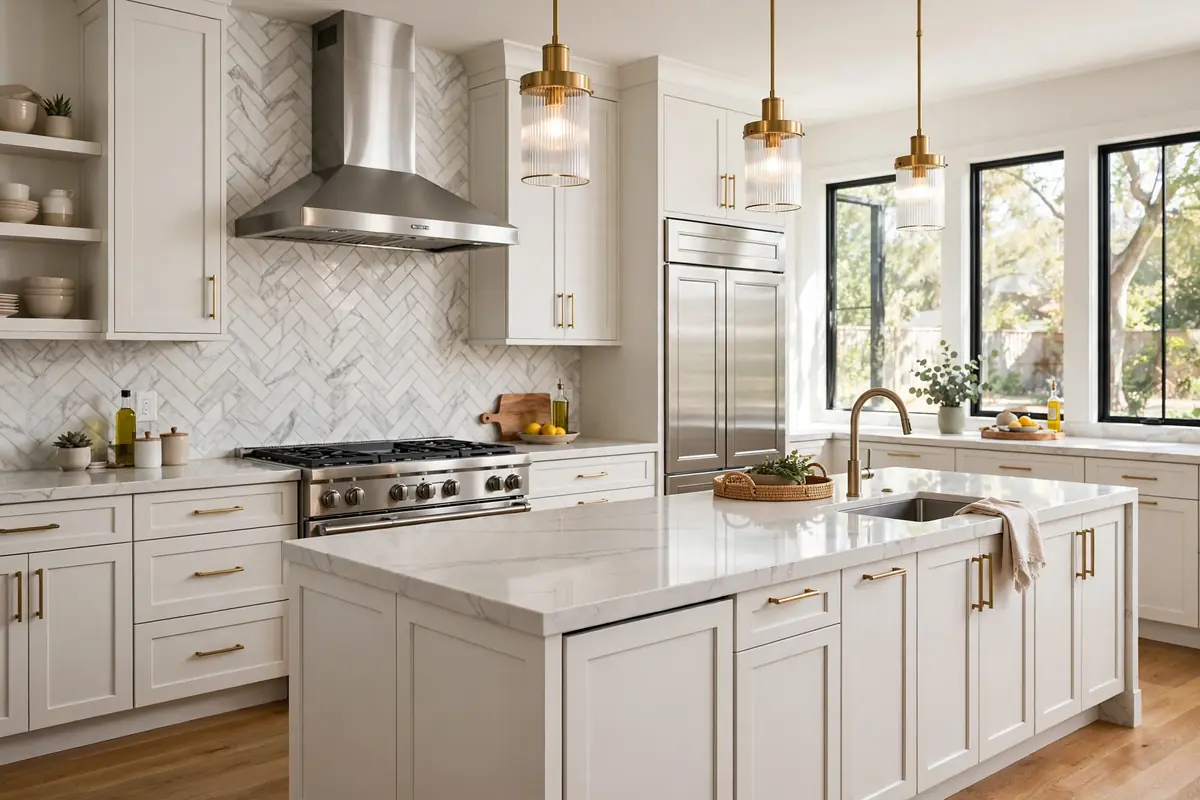
Island upgrades that maximize kitchen storage USA homeowners love include: pull-out trash and recycling centers ($150 to $300), deep drawers for pots and pans instead of doors, a microwave drawer ($400 to $800 for the appliance plus install) that frees counter space, and electrical outlets with USB ports built into the island ends. Planning an island from scratch? See kitchen island installation cost USA for full budgeting.
Under-Sink and Cleaning Supply Organization
The cabinet under the sink is prime real estate wasted in most kitchens. Install a pull-out caddy ($30 to $60) for cleaning supplies, add a tension rod across the top to hang spray bottles, and use stackable bins for sponges and brushes. Keep a small trash bin here for compost or recycling if space allows.
Protect the cabinet floor with a waterproof mat ($15 to $25) — leaks happen, and early containment prevents costly water damage. While organizing, check supply lines and the P-trap for slow drips; catching a leak now saves hundreds later. For related plumbing awareness, our kitchen sink installation cost USA 2026 guide covers what lies beneath.
Countertop Clutter: What Earns Its Space
To truly maximize kitchen storage, be ruthless about counters. The rule: only daily-use items earn counter space. For most USA households, that means the coffee maker, a knife block or strip alternative, and perhaps a fruit bowl. Everything else — toaster, blender, stand mixer — should have a cabinet or pantry home.
Appliance garages ($200 to $500 built-in) hide small appliances behind a retractable door, keeping them accessible but invisible. A dedicated appliance lift shelf ($150 to $300) inside a tall cabinet raises heavy mixers to counter height at the touch of a lever. These solutions keep counters clear for actual cooking while ensuring tools remain convenient.
Budget Breakdown: Maximizing Storage at Every Price
Under $100: Declutter aggressively (free), add door-mounted racks, tension-rod dividers, shelf risers, magnetic strips, and clear containers. This tier alone can maximize kitchen storage USA renters and owners need for daily function.
$100–$500: Retrofit pull-out shelves in 3–4 cabinets, add a rolling island or cart, install wall rail systems and open shelves, upgrade pantry with pull-outs and uniform containers.
$500–$2,000: Professional pull-out drawer installation throughout, toe-kick drawers, appliance garage, under-cabinet lighting to make storage visible and inviting.
$2,000+: Custom pantry tower, island storage rebuild, cabinet refacing with all-new organizational interiors. At this level, coordinate with how to choose a kitchen contractor USA to ensure the work meets your expectations.
Kitchen Storage and Your Remodel Budget
When you maximize kitchen storage USA style during a remodel, storage upgrades typically represent 10–15% of the total project budget — money well spent, since storage is the feature homeowners use every single day. Pull-out shelves, drawer organizers, and pantry systems installed during construction cost 30–40% less than retrofitting later, because the cabinets are already apart and labor is on-site.
Discuss storage explicitly with your contractor during planning. Many USA kitchen contractors default to standard shelving unless you specify upgrades — the kitchen contractor you hire should welcome detailed storage discussions. Bring your audit list (from the decluttering step) to design meetings so the cabinet plan reflects your actual inventory. If you are also updating plumbing fixtures during the remodel, our kitchen sink installation cost USA 2026 guide helps coordinate trades efficiently.
Finally, remember that the best storage system is the one you maintain. Revisit your organization every six months — habits drift, new gadgets arrive, and pantries creep toward chaos. A 30-minute quarterly reset keeps your kitchen functioning at the level you designed. Pair storage maintenance with seasonal home checkups like preventing frozen pipes in winter to keep the whole house in top shape.
Frequently Asked Questions
What is the cheapest way to maximize kitchen storage?
Declutter first (free), then add door-mounted racks, shelf risers, and tension dividers — all under $50 total. These three changes alone typically free 20–30% more usable space in the average USA kitchen.
How do I organize deep corner cabinets?
Install a lazy Susan turntable for round-corner cabinets or a pull-out blind-corner system for L-shaped cabinets. Both bring back-corner items within reach and prevent the black-hole effect that wastes corner storage.
Should I remove upper cabinets for open shelving?
It depends on your storage needs. Open shelves look great and improve access but hold less than cabinets and require frequent dusting. A hybrid approach — open shelves on one wall, cabinets elsewhere — gives you the aesthetic benefit while preserving the closed storage you need to maximize kitchen storage overall.
Learning how to maximize kitchen storage USA homes need is less about buying products and more about matching storage to your habits. Audit, declutter, then add targeted solutions where they matter most — pull-outs for deep cabinets, wall storage for tools, pantry systems for food. Do that, and even a modest kitchen can feel spacious, efficient, and genuinely enjoyable to cook in.