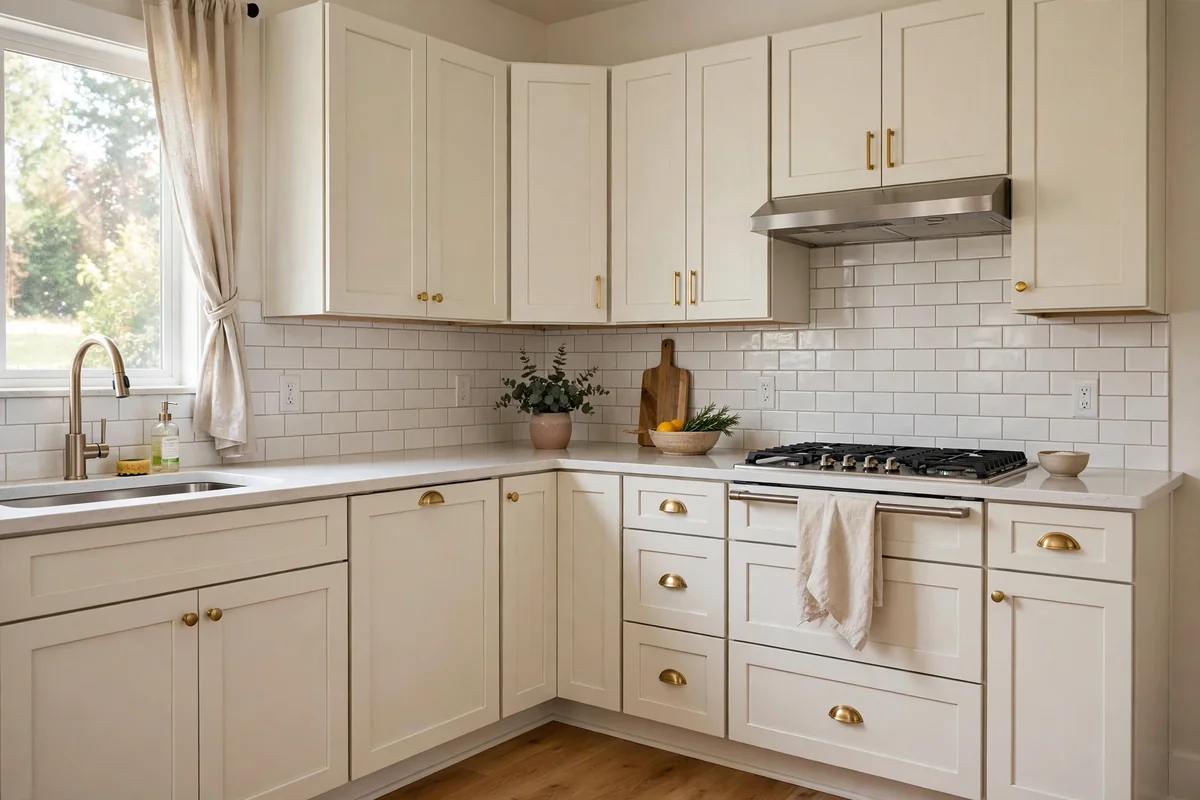
Your kitchen remodel is only as good as the contractor who builds it. Knowing how to choose a kitchen contractor in USA markets protects your investment, your timeline, and your sanity. The right contractor delivers craftsmanship, communicates clearly, and finishes on schedule. The wrong one delivers delays, disputes, and disappointment — stories every homeowner has heard, and no one wants to live.
This guide explains how to choose a kitchen contractor step by step: where to find candidates, how to vet them thoroughly, what to ask, how to compare bids, and the red flags that should send you running. Follow this process and you will hire with confidence.
Where to Find Kitchen Contractor Candidates
Start with 5 to 8 candidates from multiple sources. Ask friends, family, and neighbors who have remodeled recently — personal referrals remain the most reliable source. Check the National Association of the Remodeling Industry (NARI) and National Kitchen & Bath Association (NKBA) directories for certified professionals in your area.
Online platforms like Angi, Houzz, and Thumbtack provide reviews and project photos, but treat them as starting points, not verdicts. Cross-reference with Google reviews and the Better Business Bureau. Your local building department may know which contractors consistently pass inspections — a quiet but telling indicator of quality. Before reaching out, review kitchen remodel cost in USA 2026 so you can discuss budgets knowledgeably. Understanding typical costs for countertop materials compared and backsplash tile installation also helps you evaluate whether bids are realistic.
Verify Credentials: Non-Negotiable Checks
Learning how to choose a kitchen contractor in USA jurisdictions starts with licensing. Most states require general contractors to hold a license — verify it on your state licensing board’s website, checking that it is active and free of disciplinary actions. Requirements vary by state: California, for example, requires a B-General Building license for kitchen remodels over $500.
Confirm two insurance policies: general liability (minimum $1 million recommended — covers damage to your property) and workers’ compensation (covers crew injuries; without it, an injured worker could sue you). Ask for certificates of insurance directly from the insurer, not just copies from the contractor. Reputable contractors provide these without hesitation.
Check for professional certifications: Certified Kitchen & Bath Remodeler (CKBR) from NARI, or Certified Master Kitchen and Bath Designer (CMKBD) from NKBA. These are not required, but they signal advanced training and commitment to the trade.
The In-Person Interview: Essential Questions
Invite your top 3 to 4 candidates to see your kitchen in person. Phone estimates for remodeling are meaningless — accurate bids require seeing the space. During the visit, ask:
How many kitchen remodels have you completed in the past year? You want a contractor who does kitchens regularly, not occasionally. Specialists understand kitchen-specific challenges: appliance clearances, ventilation codes, plumbing configurations.
Can I see completed projects and speak with past clients? Visit at least one finished kitchen. Ask past clients: Did the project finish on time? Were there surprise costs? How did the contractor handle problems? Would you hire them again? Actually call the references — most homeowners skip this, which is exactly why it is such a powerful filter.
Who will be in my home every day? Distinguish between the salesperson who bids the job and the project manager and crew who do the work. Ask about the lead carpenter’s experience. High turnover or day-labor crews are warning signs.
How do you handle permits and inspections? The answer must be: “We pull all required permits and schedule inspections.” A contractor who suggests skipping permits is disqualified immediately. Permit costs ($500–$2,000 for kitchens) should be in the bid. For context on what triggers permits, see how to plan a kitchen remodel in USA.
What is your payment schedule? Standard practice: 10–20% deposit, progress payments tied to milestones, and 10% retainage held until final walkthrough approval. Never pay more than 30% upfront. Anyone demanding 50%+ before starting is a major red flag.
What warranties do you offer? Look for minimum one-year workmanship warranty; two years is better. Understand what is covered and the process for warranty claims.
Comparing Bids: Apples to Apples
A critical skill in how to choose a kitchen contractor is bid comparison. Insist on detailed written bids itemizing demolition, framing, plumbing, electrical, drywall, cabinets, countertops (see countertop materials compared), flooring, tile work (see backsplash tile installation cost USA), painting, fixtures, and cleanup. Vague lump-sum bids hide omissions that become expensive change orders later.
Be suspicious of bids 20%+ below the others. They typically exclude necessary work, use inferior materials, or underestimate labor — all of which surface as surprise charges mid-project. Conversely, the highest bid is not automatically the best; it may reflect overhead rather than quality. The middle bids from well-vetted contractors usually represent fair value.
Ask each bidder the same questions about how long a kitchen remodel takes (typically 6–12 weeks) and compare their schedules. Unrealistically short timelines suggest corner-cutting or overpromising.
Red Flags: When to Walk Away
No license or insurance. Immediate disqualification, no exceptions.
Cash-only or large upfront demands. Legitimate businesses accept checks and cards, provide receipts, and follow standard payment schedules.
No written contract. Every detail — scope, materials, timeline, payments, warranty, change-order process — must be in a signed contract. Verbal promises are worthless in disputes.
Pressure tactics. “Sign today for 20% off” or “I can start tomorrow” (reputable contractors book weeks out) signal desperation or scams.
Unwillingness to pull permits. As noted above, this is disqualifying. Unpermitted work can void insurance, complicate resale, and hide code violations.
Poor communication. If a contractor is hard to reach, vague, or dismissive during the bidding phase — when they are trying to win your business — imagine how they will communicate mid-project when problems arise.
The Contract: What Must Be Included
Your contract should specify: detailed scope of work with material brands and model numbers, start and completion dates, total price and payment schedule, permit responsibility, daily cleanup expectations, work hours and site access rules, change-order process (all changes in writing with pricing before work proceeds), warranty terms, and termination clauses. Never sign a contract with blank sections or vague allowances.
Understand allowances — budget placeholders for items you have not selected yet (e.g., “$3,000 for lighting fixtures”). Keep allowances realistic by researching actual costs beforehand using guides like kitchen lighting design guide USA. Lowball allowances are a classic trick: the bid looks cheap, but you blow past allowances immediately.
During the Project: Protecting Your Interests
Even after learning how to choose a kitchen contractor and hiring well, stay engaged. Visit the site regularly (without hovering). Document progress with photos. Address concerns immediately — small issues become big ones when ignored. Keep all change orders in writing with agreed pricing before authorizing extra work. Unexpected changes often involve kitchen sink installation adjustments or kitchen lighting additions, so budget a contingency for these common mid-project decisions.
Hold the final 10% payment until the punch list is complete: every item finished, site cleaned, and final inspection passed. Do a thorough walkthrough with your contractor, testing every drawer, door, outlet, and fixture. This is also the time to confirm you received all warranty documents and care instructions.
Frequently Asked Questions
Should I hire a general contractor or manage subcontractors myself?
Unless you have construction experience, hire a general contractor. Coordinating plumbers, electricians, tile setters, and painters — each with their own schedules — is a full-time job. The GC’s markup (typically 10–20%) pays for itself in avoided delays and mistakes.
How do I check a contractor’s license?
Every state has an online contractor license lookup — search “[your state] contractor license lookup.” Verify the license is active, check for complaints or disciplinary actions, and confirm the business name matches.
Mastering how to choose a kitchen contractor in USA markets is the highest-leverage step in your entire remodel. Invest the time upfront to vet thoroughly, and you will enjoy a smoother project, better craftsmanship, and a kitchen that exceeds your expectations.
How to Choose a Kitchen Contractor: Specialized vs. General
An important nuance in how to choose a kitchen contractor in USA markets is understanding the difference between kitchen specialists and general remodeling contractors. Kitchen specialists focus exclusively on kitchens — they know cabinet lines intimately, understand appliance specifications deeply, and have refined systems for kitchen-specific challenges. Their expertise often translates to smoother projects and better design guidance.
General remodeling contractors handle kitchens alongside bathrooms, additions, and other projects. The best ones deliver excellent kitchen work backed by broad construction knowledge — valuable when your kitchen project involves structural changes, for example. When evaluating either type, prioritize recent kitchen-specific experience: ask how many kitchens they completed in the past twelve months, and request to see those projects.
Design-build firms offer another model worth considering when learning how to choose a kitchen contractor. These companies handle both design and construction under one roof, providing single-point accountability. The integrated approach often produces more cohesive results and clearer communication, though design-build firms typically charge premium rates. For complex projects involving layout changes, the coordination advantages can justify the cost. Simpler projects may be better served by a skilled general contractor working from your independent design (see how to plan a kitchen remodel in USA for design guidance).
Evaluating Contractor Communication Style
Technical skill matters, but communication determines your daily experience during the weeks of construction. When mastering how to choose a kitchen contractor in USA homeowners should deliberately assess communication during the bidding phase — it only gets worse after signing, never better.
Note response times: does the contractor return calls within one business day? Are emails answered thoroughly or with vague one-liners? During the in-home visit, does the contractor listen to your goals or immediately push their preferred solutions? The best contractors ask probing questions about how you cook, entertain, and live — they design for your life, not their portfolio.
Ask specifically about project communication protocols. Will you receive weekly written updates? Is there a project management app where you can see schedules and photos? Who do you contact with concerns — and what is their typical response time? Contractors with systematic communication processes (rather than “just call my cell”) demonstrate the organizational maturity that keeps complex projects on track. This is especially important for longer timelines — see how long a kitchen remodel takes in USA to understand the communication marathon ahead.
Trust your instincts about personality fit. You will interact with this person and their crew daily for weeks. Professional respect matters more than friendship, but genuine rapport smooths the inevitable bumps. If something feels off during interviews — arrogance, dismissiveness, or evasiveness — keep looking. The right contractor relationship feels like a partnership from the first meeting.