
Countertops are the workhorse of your kitchen — and one of its most visible design features. With countertop materials compared in USA 2026 markets offering more choices than ever, from budget laminate to exotic natural stone, choosing the right surface feels overwhelming. This guide compares every major countertop material on cost, durability, maintenance, appearance, and suitability for American kitchens.
Whether you are doing a full renovation or simply replacing worn surfaces, having countertop materials compared side by side helps you balance budget, lifestyle, and style. Let us examine each option honestly — including the drawbacks manufacturers prefer not to mention.
Quick Comparison: Countertop Materials at a Glance
For a typical 50-square-foot kitchen in 2026: laminate $1,500–$4,000 installed; butcher block $2,500–$6,000; solid surface $3,000–$7,000; quartz $4,000–$9,000; granite $4,000–$10,000; marble $6,000–$14,000; concrete $5,000–$10,000; stainless steel $5,000–$9,000. These ranges assume professional installation, which is strongly recommended for all stone and solid-surface materials.
Quartz (Engineered Stone)
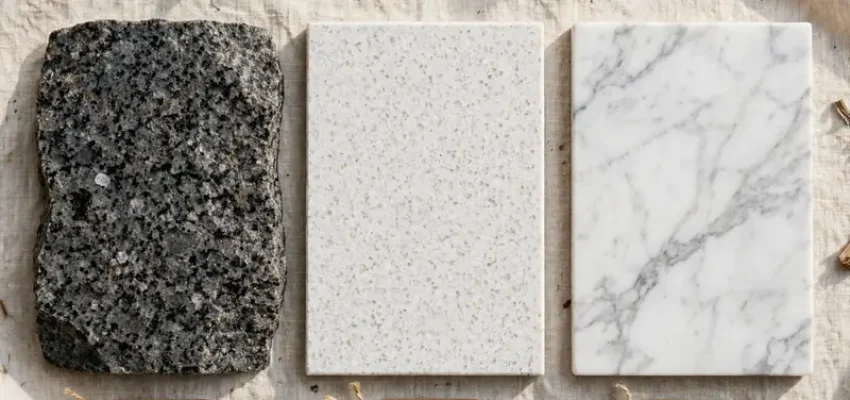
Cost: $75–$150 per square foot installed. The 2026 favorite: quartz dominates USA kitchen renovations for good reason. Made from 90–95% crushed quartz bound with resin, it delivers the look of natural stone with superior consistency and virtually zero maintenance.
Pros: Non-porous (no sealing ever), stain-resistant, huge color/pattern selection, consistent appearance slab to slab, strong and durable. Cons: Not as heat-resistant as natural stone (always use trivets), visible seams on large islands, premium patterns cost as much as granite. Best for: busy families who want beauty without maintenance. When budgeting your full project, see kitchen remodel cost in USA 2026.
Granite (Natural Stone)
Cost: $70–$175 per square foot installed. Each granite slab is unique — a selling point for homeowners who want one-of-a-kind character. With countertop materials compared on durability, granite remains among the toughest natural options.
Pros: Extremely hard and scratch-resistant, heat-resistant (hot pans are fine), unique natural patterns, adds resale value. Cons: Requires periodic sealing (annually), can stain if unsealed, limited color consistency between slabs, cold to the touch. Best for: cooks who want natural beauty and do not mind annual sealing. Pair with a quality kitchen sink installation — undermount sinks showcase granite’s polished edges beautifully.
Marble
Cost: $100–$250 per square foot installed. The luxury benchmark — nothing matches marble’s luminous depth and classic veining. But with countertop materials compared honestly, marble demands the most care of any popular option.
Pros: Unmatched elegance, naturally cool (ideal for baking), each slab unique, timeless appeal. Cons: Stains easily (wine, coffee, citrus etch the surface), scratches more readily than granite or quartz, requires regular sealing, highest cost. Best for: design-focused homeowners who accept patina as character, or as a statement island paired with durable perimeter counters.
Laminate
Cost: $25–$65 per square foot installed. Modern laminate has come a long way — premium brands now convincingly mimic stone, wood, and concrete at a fraction of the price. For budget renovations, having countertop materials compared must include today’s vastly improved laminate. Pairing affordable laminate counters with kitchen cabinet refacing and updated kitchen lighting design delivers a remarkable transformation on a modest budget.
Pros: Most affordable, huge design selection, easy to replace, forgiving installation. Cons: Scratches and burns show permanently, cannot be repaired (only replaced), seams visible, lower resale perception. Best for: budget remodels, rental properties, or temporary updates. An excellent pairing with kitchen cabinet refacing for maximum impact per dollar.
Butcher Block / Wood
Cost: $40–$100 per square foot installed. Warm, inviting, and endlessly renewable — wood countertops sand down to like-new condition. Maple, walnut, and cherry are USA favorites.
Pros: Warm natural beauty, renewable surface (sand out damage), doubles as cutting surface, relatively affordable. Cons: Requires regular oiling, water damage risk near sinks, can harbor bacteria if poorly maintained, dents and scratches accumulate. Best for: farmhouse and traditional kitchens, or as an accent island. Keep wood away from the main sink zone — review kitchen sink installation best practices for wet-area materials.
Solid Surface (Corian and Similar)
Cost: $50–$120 per square foot installed. Seamless, repairable, and available in hundreds of colors. Scratches sand out, and integrated sinks create a sleek one-piece look.
Pros: Seamless appearance, renewable (scratches buff out), integrated sinks possible, non-porous. Cons: Scratches more easily than stone, not heat-resistant, can look less “premium” than natural stone. Best for: contemporary kitchens prioritizing seamless design and easy repair.
Concrete
Cost: $80–$150 per square foot installed. Fully customizable — any shape, thickness, color, or embedded objects. Each pour is unique.
Pros: Unlimited customization, industrial-chic aesthetic, extremely durable when sealed. Cons: Requires expert installation, prone to hairline cracks, needs regular sealing, heavy (may need cabinet reinforcement). Best for: modern and industrial designs where customization justifies the complexity.
Stainless Steel
Cost: $80–$150 per square foot installed. The professional kitchen look — hygienic, heat-resistant, and virtually indestructible.
Pros: Most hygienic option, heat and stain proof, modern aesthetic. Cons: Shows fingerprints and scratches, noisy, can feel cold and commercial. Best for: serious cooks and ultra-modern designs. Consider noise-dampening underlayment.
How to Choose: Key Decision Factors
Lifestyle first. Young families need stain-resistant quartz or solid surface. Passionate bakers love marble’s cool surface. Budget renovators get remarkable value from premium laminate. Match the material to how you actually live, not how you wish you lived.
Maintenance tolerance. Be honest: will you seal annually (granite, marble, concrete)? Oil monthly (wood)? If not, choose quartz or solid surface and never think about it again.
Cohesion with cabinets. Your countertop must harmonize with cabinet color and flooring. Bring samples home and view them in your kitchen’s light at different times of day. What looks perfect in a showroom can clash at home. If cabinets are being updated too, coordinate decisions — see kitchen cabinet refacing cost USA for cabinet budgeting.
Edge profiles matter. A simple eased edge is standard; ogee, bullnose, and waterfall edges add $10–$30 per linear foot. Waterfall islands (stone continuing down the sides) are stunning but add $1,000–$3,000.
Frequently Asked Questions
What is the most popular countertop material in USA kitchens in 2026?
Quartz, by a wide margin — chosen in over 40% of USA kitchen renovations for its combination of beauty, durability, and zero maintenance.
Can I install countertops myself to save money?
Laminate and butcher block are DIY-friendly. Stone, quartz, solid surface, and concrete require professional fabrication and installation — mistakes are extremely expensive. The countertop materials compared on DIY feasibility strongly favor laminate and wood for handy homeowners.
How do I maintain quartz countertops?
Soap and water — that is it. No sealing, no special cleaners. Avoid abrasive pads and always use trivets for hot pans, as extreme heat can damage the resin.
With countertop materials compared across every factor that matters, you can choose confidently. Visit showrooms, bring home samples, and select the surface that fits your budget, lifestyle, and design vision — it is a decision you will live with (and on) every single day.
Countertop Materials Compared: Installation Considerations
Having countertop materials compared on installation requirements prevents costly surprises. Stone, quartz, and solid surface all require professional templating — precise measurements taken after cabinets are installed — followed by 10 to 15 business days of off-site fabrication. This lead time must be built into your project schedule (see how long a kitchen remodel takes in USA). Never schedule cabinet installation and countertop installation back-to-back without accounting for the templating gap.
Support requirements vary significantly. Natural stone and quartz need level, sturdy cabinets — shim and reinforce as needed before templating. Heavy materials like concrete and thick stone may require additional cabinet bracing. Overhangs beyond 10 inches need corbels or steel supports; beyond 15 inches requires professional structural assessment. Discuss these details with your installer during the quote phase, not on installation day.
Seam placement deserves attention with countertop materials compared for large kitchens. Stone slabs max out around 10 feet, so L-shaped and U-shaped kitchens need seams. Skilled fabricators place seams in inconspicuous locations and match veining across them — ask to review seam placement on the template drawing before fabrication begins. With quartz, consistent patterns make seams nearly invisible; with dramatic natural stone, seams are more noticeable, so placement matters more.
Countertop Materials Compared: Maintenance Schedules
Long-term satisfaction with countertop materials compared depends on honest maintenance expectations. Create a realistic care routine: quartz and solid surface need only daily wiping with soap and water — the ultimate low-maintenance choice for busy USA households. Granite and marble require annual sealing (a 30-minute DIY job with $20 sealer) plus prompt cleanup of acidic spills.
Wood countertops demand the most attention: monthly oiling with food-safe mineral oil, immediate wipe-up of standing water, and periodic sanding to refresh the surface. Concrete needs resealing every 1 to 3 years depending on the sealer type and usage intensity. Stainless steel requires only cleaning but shows every fingerprint — daily wiping with a microfiber cloth keeps it presentable.
Factor maintenance into your total cost of ownership, not just the countertop materials compared on purchase price. A marble countertop that needs professional resealing and stain treatment over its lifetime may cost more long-term than quartz that needs nothing. For homeowners who value simplicity, the maintenance-free options justify their premium many times over. When coordinating with other kitchen updates, our kitchen remodel cost in USA 2026 guide helps you allocate budget across all components wisely.
Pairing Countertops With Cabinet Styles
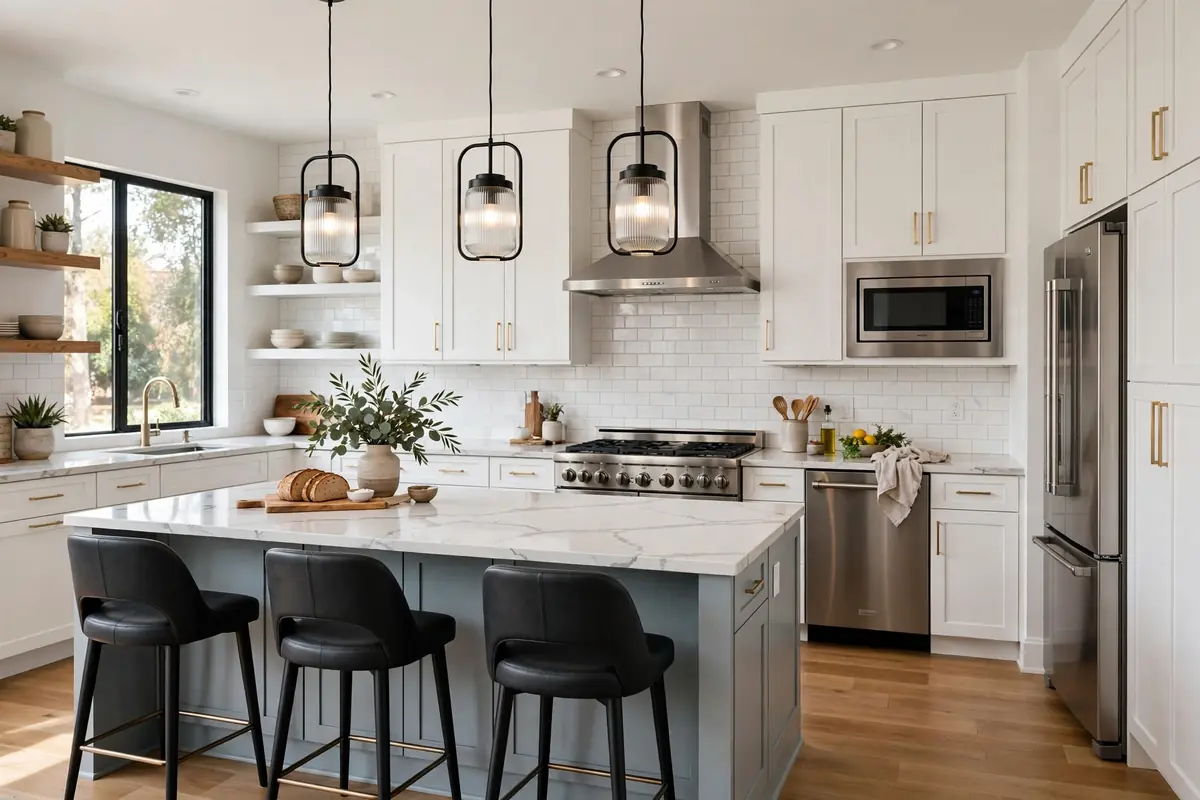
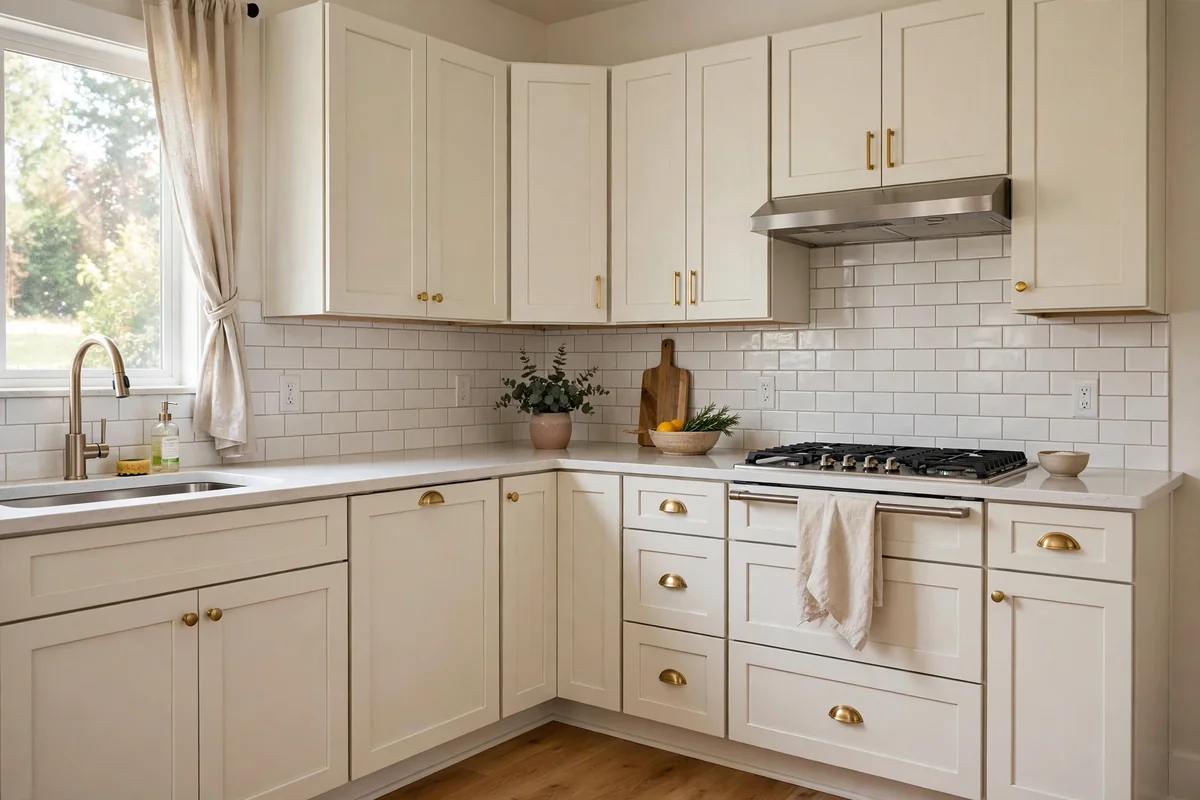
The most successful kitchens result from countertop materials compared alongside cabinet choices, not in isolation. White Shaker cabinets — the dominant USA trend — pair beautifully with almost everything: dramatic marble-look quartz for classic elegance, warm butcher block for farmhouse charm, or dark honed granite for striking contrast. Gray cabinets work well with white quartz or light marble.
Dark cabinets (navy, forest green, black) demand lighter countertops to avoid a cave-like feel — white quartz or light marble creates essential contrast. Natural wood cabinets pair best with simple, quiet countertops that do not compete with the wood grain. If you are updating cabinets too, review kitchen cabinet refacing cost USA for budget-friendly cabinet transformation options that free up funds for premium countertops.
Always view countertop and cabinet samples together in your kitchen’s actual lighting before deciding. Colors shift dramatically between showroom fluorescents and home LEDs. Borrow large samples, live with them for a few days, and observe them morning, noon, and night. This simple practice prevents the most common countertop regret: choosing based on a small chip viewed under artificial light. For lighting guidance that affects how materials appear, see our kitchen lighting design guide USA.