
Modern businesses depend on logistics networks that can move products efficiently, maintain inventory visibility, control transportation costs, and respond quickly when conditions change. JJDL Logistics Services represents the broader role that professional logistics providers can play in connecting transportation, warehousing, distribution, and supply chain coordination.
Logistics management covers activities such as transportation, warehousing, order fulfillment, inventory management, and coordination with third-party providers. The Council of Supply Chain Management Professionals distinguishes logistics management from the wider discipline of supply chain management while emphasizing how closely the two functions work together.
What Are JJDL Logistics Services?
JJDL Logistics Services can be understood within the modern logistics-services landscape, where businesses increasingly look for coordinated solutions rather than isolated transportation services. A complete logistics approach can connect freight movement, storage, inventory handling, distribution, shipment planning, and information flow.
The goal is straightforward: move the right products to the right destination at the right time while balancing service quality, operational efficiency, cost, and visibility.
For companies with multiple suppliers, warehouses, carriers, customers, or delivery locations, this coordination becomes especially important. A delay at one point can affect inventory availability, customer orders, production schedules, and revenue across the wider network.
Why Logistics Services Matter to Modern Businesses
Logistics is no longer simply about arranging a truck or booking a shipment. Modern supply chains involve multiple interconnected activities that need to operate together.
Professional logistics management can help businesses address several important objectives:
- Reliable transportation: Coordinate the movement of goods between suppliers, facilities, distribution centers, and customers.
- Better inventory control: Maintain greater awareness of where products are and when they are expected to arrive.
- Improved fulfillment: Support accurate and timely order processing and delivery.
- Cost management: Identify unnecessary transportation, storage, handling, and administrative expenses.
- Greater visibility: Improve access to shipment, inventory, and delivery information.
- Operational resilience: Prepare the network to respond to delays, capacity constraints, and unexpected disruptions.
These priorities align with the broader definition of logistics management provided by CSCMP, which includes transportation, warehousing, order fulfillment, inventory management, network design, and third-party logistics activities.
Key Components of a Seamless Logistics Solution
A strong logistics operation depends on several interconnected components. Businesses evaluating a logistics provider should therefore look beyond a single service and consider how the different pieces fit together.
Transportation Management
Transportation is one of the most visible parts of logistics. It includes planning how goods move between locations, selecting appropriate transportation modes, coordinating carriers, and managing delivery schedules.
Depending on the business model, transportation may involve trucks, rail, air freight, ocean freight, or combinations of multiple modes. Effective planning can help companies balance speed, reliability, capacity, and cost.
Warehousing and Storage
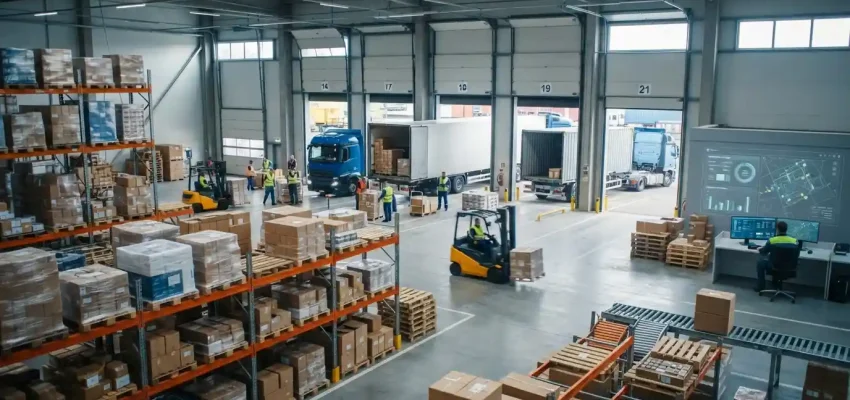
Warehousing provides an important connection between supply and demand. Products may need to be received, inspected, stored, picked, packed, consolidated, and prepared for final distribution.
A well-organized warehouse can reduce unnecessary handling and make inventory easier to locate. It can also support faster order fulfillment when inventory is positioned strategically near customers or important distribution markets.
Inventory Management
Inventory decisions have a direct effect on cash flow and customer service. Too much inventory can increase carrying costs, while insufficient inventory can result in stockouts and missed orders.
Modern logistics operations increasingly use real-time information and analytics to improve inventory decisions. Visibility into inventory levels, transportation status, and demand can help businesses make better decisions before problems become urgent.
Order Fulfillment
Order fulfillment connects inventory with customer expectations. Once an order is received, the logistics process may include inventory allocation, picking, packing, transportation planning, shipment tracking, and final delivery.
When these activities are coordinated effectively, businesses can reduce avoidable delays and provide customers with a more predictable purchasing experience.
Distribution and Last-Mile Delivery
The final stage of delivery can be particularly important because it directly affects the customer experience. Efficient distribution requires appropriate routing, scheduling, communication, and coordination between warehouses, carriers, and recipients.
For e-commerce businesses, retailers, manufacturers, and distributors, last-mile performance can influence both customer satisfaction and operating costs.
The Role of Supply Chain Visibility
Visibility is one of the most important characteristics of a modern logistics network. Businesses need to know what is moving through the supply chain, where it is located, and whether it is progressing according to plan.
ASCM explains that supply chain visibility can provide insight into inventory levels, transportation routes, delivery times, and other operational information. Real-time visibility can also help organizations identify bottlenecks and make faster, data-driven decisions.
Technology can support this visibility through tools such as GPS tracking, RFID, barcode scanning, connected sensors, analytics platforms, and integrated logistics systems.
For companies evaluating JJDL Logistics Services or any other logistics partner, visibility should therefore be considered a core capability rather than an optional feature.
Technology Is Changing Logistics Management
The logistics industry is becoming increasingly data-driven. Technology can connect information from vehicles, warehouses, inventory systems, carriers, suppliers, and customers to create a more complete operational picture.
Real-Time Tracking
Shipment tracking can provide businesses with more accurate information about cargo location and expected delivery progress. This can make it easier to communicate with customers and respond when a shipment falls behind schedule.
Data Analytics
Historical and real-time logistics data can reveal recurring delays, inefficient routes, inventory imbalances, and capacity problems. Businesses can use these insights to improve future planning rather than repeatedly solving the same operational problems.
IoT and Connected Logistics
Internet of Things technology allows connected sensors and devices to collect information about assets and shipments. Depending on the application, businesses can monitor location, temperature, humidity, and other conditions throughout the logistics process.
ASCM identifies IoT and related technologies as important tools for improving logistics tracking, visibility, and supply chain responsiveness.
Automation
Automation can streamline repetitive processes such as warehouse scanning, inventory updates, order processing, and shipment notifications. When implemented appropriately, automation can reduce manual work and allow logistics teams to focus on higher-value operational decisions.
How Logistics Services Can Improve Business Efficiency
One of the primary reasons businesses work with logistics specialists is to improve operational efficiency without having to manage every transportation and distribution function internally.
A coordinated logistics strategy can help organizations:
- Reduce avoidable transportation delays.
- Improve shipment planning.
- Use warehouse capacity more effectively.
- Increase inventory visibility.
- Improve communication between supply chain partners.
- Identify recurring operational bottlenecks.
- Support more predictable customer deliveries.
- Scale logistics operations as order volume increases.
However, the actual benefits depend on the provider’s capabilities, technology, network, service standards, and ability to understand the client’s specific requirements.
JJDL Logistics Services and Different Business Needs
Different businesses require different logistics models. A manufacturer moving pallets between facilities has different requirements from an e-commerce company shipping individual orders to consumers.
Manufacturers
Manufacturers may need coordinated inbound transportation, raw-material storage, production-support logistics, finished-goods distribution, and inventory planning.
Retailers
Retailers typically need dependable replenishment, warehouse coordination, store distribution, inventory visibility, and delivery scheduling.
E-Commerce Businesses
E-commerce companies often place greater emphasis on order fulfillment, inventory accuracy, parcel shipping, returns, and last-mile delivery.
Wholesalers and Distributors
Distributors may need a combination of warehousing, freight management, order consolidation, inventory control, and regional delivery services.
A logistics provider should therefore be evaluated according to how well its capabilities match the company’s operating model rather than simply by comparing headline prices.
What to Look for in a Logistics Provider
Choosing a logistics partner is an operational decision that can influence customer experience, inventory costs, and business continuity. Several factors deserve attention during the evaluation process.
Service Coverage
Determine whether the provider supports the geographic regions and transportation modes your business actually needs. A provider may be strong in one market but less suitable for another.
Technology and Visibility
Ask how shipment information is captured and shared. Tracking dashboards, automated notifications, inventory systems, and reporting tools can make a substantial difference when managing a complex network.
Reliability and Performance
Look for measurable service standards rather than relying only on promotional claims. Useful performance indicators may include on-time delivery, order accuracy, damage rates, response times, and claims resolution.
Scalability
Your logistics requirements may change as your business grows. A provider should be capable of supporting higher shipment volumes, additional locations, seasonal demand, or new distribution channels without creating unnecessary disruption.
Communication
Good logistics depends on timely communication. Businesses should understand who handles exceptions, how shipment problems are escalated, and how frequently operational updates are provided.
Security and Compliance
Logistics operations must protect cargo and comply with applicable transportation, customs, safety, and regulatory requirements. Security measures and documented processes should therefore be part of the provider evaluation.
Building a More Resilient Supply Chain
Supply chain resilience is about more than reacting to disruptions after they occur. Businesses can improve resilience by understanding vulnerabilities, increasing visibility, diversifying important relationships, and preparing response plans.
ASCM highlights visibility, technology, inventory strategies, and supplier relationship management as important elements of supply chain resilience. A logistics partner can support these efforts by improving information flow and helping coordinate transportation and distribution activities.
This is particularly valuable when businesses operate across multiple regions or depend on complex supplier networks. Better visibility can provide earlier warning when a shipment, supplier, or distribution node is experiencing difficulty.
Cost Efficiency Without Sacrificing Service
Reducing logistics costs does not necessarily mean choosing the cheapest transportation option. A lower freight rate can become expensive if it produces repeated delays, damaged products, poor visibility, or excessive inventory requirements.
A more effective approach is to evaluate total logistics performance. Businesses can examine transportation spend alongside delivery reliability, warehouse utilization, inventory carrying costs, order accuracy, claims, and customer service.
This broader perspective helps identify where logistics improvements can create meaningful business value instead of focusing on a single line item.
Why End-to-End Coordination Matters
Transportation, warehousing, inventory, and fulfillment should not operate as isolated functions. A change in one part of the network can affect several others.
For example, a transportation delay may cause a warehouse to hold less inventory than expected. That shortage can then affect order fulfillment and customer delivery. Similarly, poor inventory forecasting can create excess warehouse requirements and increase transportation activity.
End-to-end coordination helps businesses see these relationships more clearly and make decisions based on the overall supply chain rather than optimizing one department at the expense of another.
Related Logistics Resources
Businesses researching logistics providers can also explore related supply chain topics and logistics companies to better understand different operating models. AnchorEra’s logistics coverage includes resources on Schumacher Cargo Logistics reviews, Gillem Logistics Center, and AVTS Logistics.
Questions to Ask Before Choosing Logistics Services
Before signing a logistics agreement, businesses should ask practical questions about the provider’s capabilities and operating processes.
- Which transportation modes and regions do you support?
- How can customers track shipments?
- What happens when a shipment is delayed?
- How is inventory managed and reported?
- What warehouse services are available?
- Which performance metrics are reported?
- How are damaged shipments and claims handled?
- Can services scale during seasonal demand?
- How is customer data protected?
- Which compliance requirements apply to the services provided?
These questions can help businesses compare providers based on operational fit rather than marketing language alone.
The Future of Logistics Services
Logistics is moving toward greater visibility, automation, predictive analytics, connected devices, and integrated decision-making. Businesses increasingly expect supply chain partners to provide information as well as physical transportation.
Future-ready logistics networks will likely depend on their ability to combine reliable physical operations with accurate digital information. Real-time data can help organizations identify disruptions sooner, optimize resources, and improve coordination across partners.
For logistics providers, this means technology should support operational execution rather than simply exist as an added feature. The most useful systems are those that help people make better decisions and improve measurable supply chain outcomes.
Final Thoughts
JJDL Logistics Services reflects the broader evolution of logistics from basic freight movement toward coordinated, technology-enabled supply chain management. Businesses increasingly need solutions that connect transportation, warehousing, inventory, fulfillment, visibility, and customer service into one operational framework.
The right logistics partner can help businesses improve reliability, control costs, increase visibility, and respond more effectively to changing demand. However, choosing a provider requires careful evaluation of service coverage, technology, scalability, security, communication, and measurable performance.
As supply chains become more interconnected, seamless logistics will increasingly depend on both physical execution and accurate information. Companies that invest in visibility, coordination, and resilient logistics processes can put themselves in a stronger position to serve customers and adapt to future challenges.