
Flat, eggshell, satin, semi-gloss, high-gloss — paint sheen affects how your walls look, how they handle cleaning, and how long the finish lasts. This paint sheen guide for USA homes explains exactly which finish belongs where, why it matters, and the costly mistakes to avoid. Choosing wrong means walls that show every imperfection or finishes that cannot be cleaned.
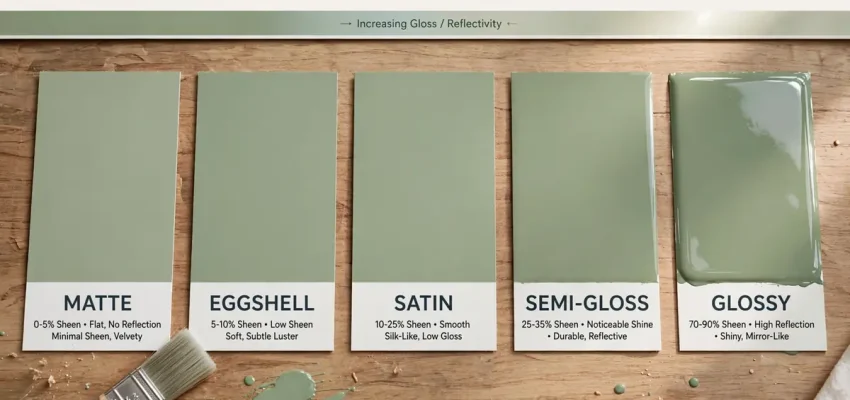
Sheen measures how much light paint reflects. Higher sheen = more reflective, more durable, more washable — but also more revealing of wall imperfections. The art is matching sheen to each surface’s needs: hide flaws where walls are imperfect, prioritize washability where hands and moisture hit.
Paint Sheen Guide USA: The Five Main Finishes
Flat/Matte: Zero to Minimal Shine
Flat paint absorbs light, hiding wall imperfections better than any other sheen. It delivers rich, velvety color depth. The tradeoff: least washable — scrubbing can burnish (create shiny spots) or remove paint. Best for: adult bedrooms, living rooms, dining rooms, and ceilings (always flat). Avoid in: kitchens, bathrooms, hallways, kids’ rooms — anywhere needing frequent cleaning.
Modern “washable flat” and “matte” formulas ($40 to $60 per gallon) offer improved cleanability over traditional flat, narrowing the gap. For low-traffic elegant spaces, they are excellent.
Eggshell: Soft, Subtle Sheen
Eggshell offers a gentle glow — like its namesake — with better washability than flat while still forgiving minor imperfections. The most versatile interior sheen and the professional default for living areas. Best for: living rooms, bedrooms, hallways, dining rooms. It handles light cleaning and looks sophisticated.
Satin: Velvety Sheen, Very Washable
Satin steps up durability significantly — scrubbable, moisture-resistant, with an attractive soft glow. The go-to for higher-traffic and higher-moisture areas. Best for: kitchens, bathrooms, laundry rooms, kids’ rooms, hallways. Also the professional standard for painting kitchen cabinets in USA homes. Slightly more revealing of imperfections than eggshell, so wall prep matters more.
Semi-Gloss: Noticeable Shine, Maximum Washability
Semi-gloss is highly durable, moisture-resistant, and easy to scrub — the traditional choice for trim, doors, and windows. It highlights architectural detail beautifully. Best for: trim, baseboards, crown molding, doors, window frames, and bathroom/kitchen walls in very high-moisture situations. Reveals every imperfection — surfaces must be smooth and well-prepped.
High-Gloss: Mirror-Like Reflective
High-gloss creates dramatic, lacquer-like finishes. Extremely durable but brutally revealing — every flaw magnified. Best for: front doors, furniture, accent pieces. Rarely used on walls except for dramatic powder rooms or dining rooms by design professionals. Our how to paint a front door USA guide covers high-gloss door application.
Which Paint Sheen Where: Room-by-Room Guide
Ceilings: Always flat. Ceilings show every flaw in raking light; flat hides them. Dedicated ceiling paint ($25 to $35 per gallon) is formulated for minimal spatter.
Living room / bedrooms: Eggshell or flat (adults) / satin (kids’ rooms). Eggshell is the safe default balancing beauty and practicality.
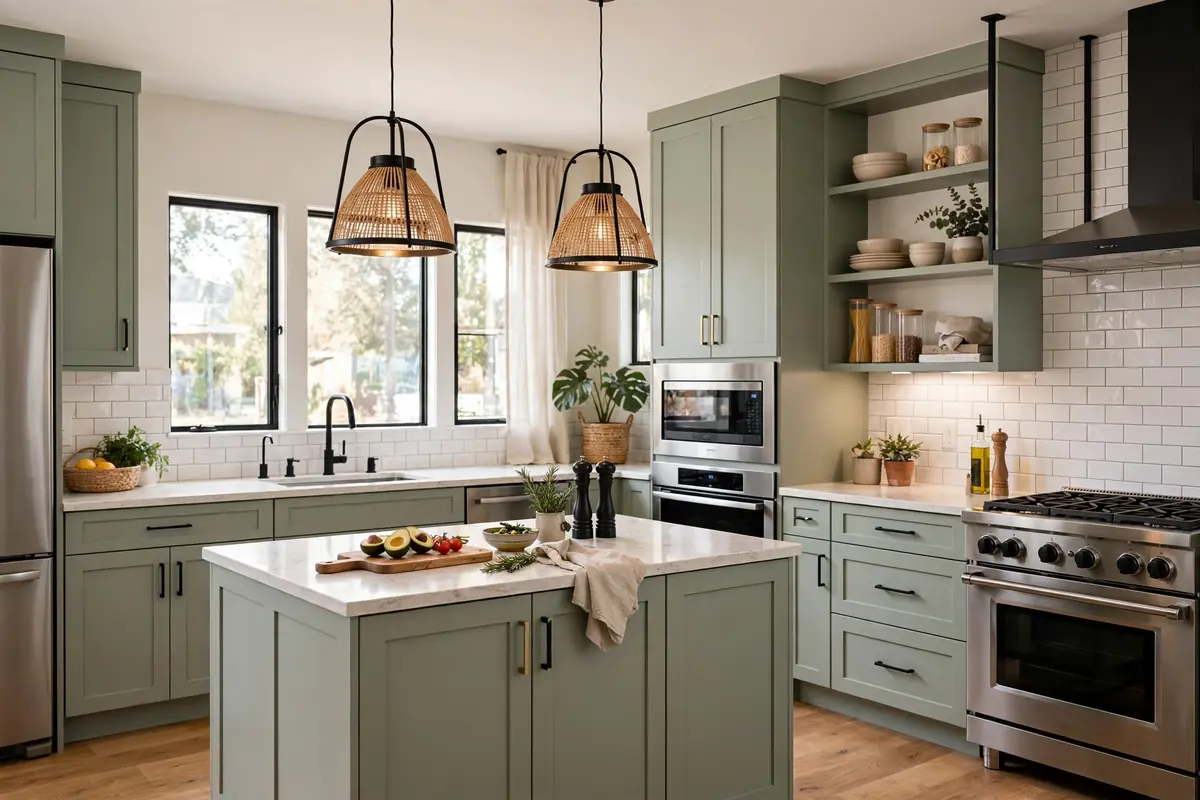
Kitchen walls: Satin or eggshell. Satin near cooking areas for grease wipeability; eggshell acceptable in eating areas. See kitchen remodel cost in USA 2026 for full kitchen project planning.
Bathrooms: Satin or semi-gloss. Moisture demands washability. Ensure good ventilation regardless of sheen — no paint survives constant condensation.
Hallways / stairwells: Satin or eggshell. Hallways take abuse from hands, bags, and furniture — satin cleans best. Eggshell works in low-traffic halls.
Trim / doors / baseboards: Semi-gloss (standard) or satin (modern matte-trim look). Consistency matters — use the same trim sheen throughout the home.
Cabinets: Satin (professional standard). See our cabinet painting cost in USA guide for finish considerations.
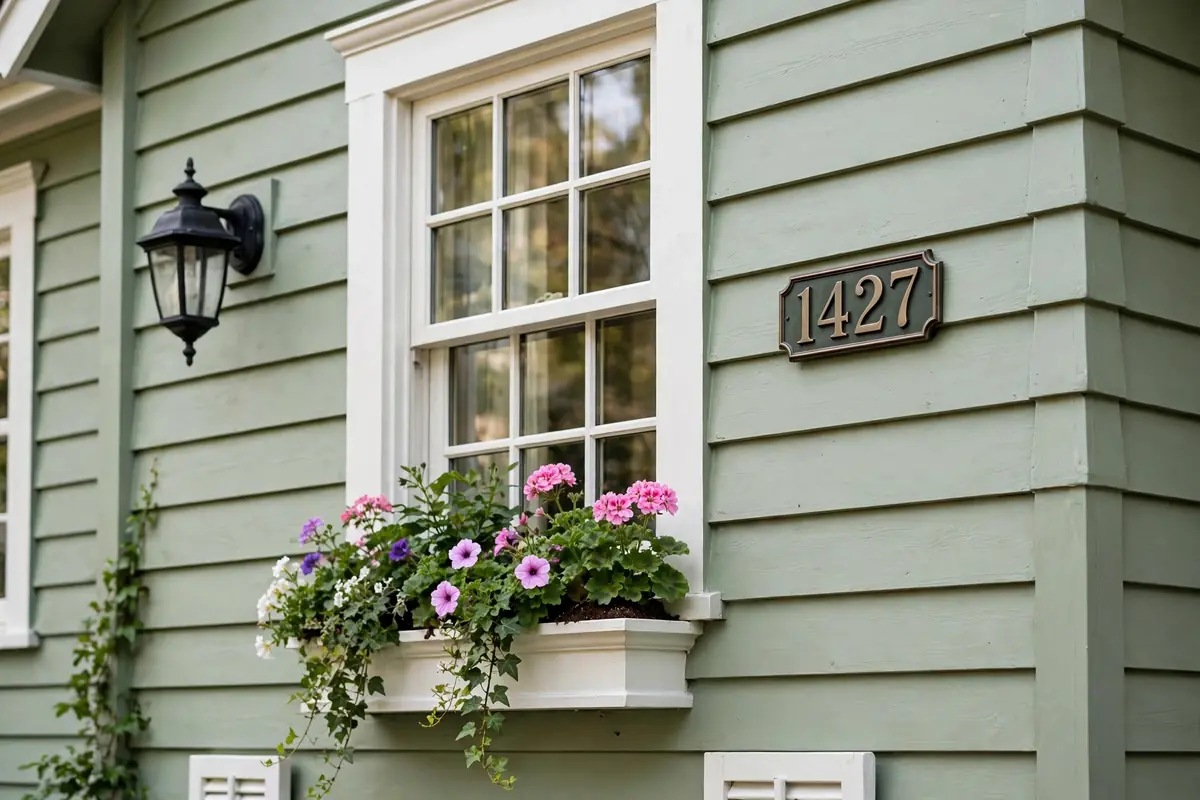
Exteriors: Satin or low-lustre for siding (hides imperfections, weathers well); semi-gloss for trim and doors. Flat exterior paint chalks faster. See exterior house painting cost in USA 2026 for exterior project details.
Common Sheen Mistakes to Avoid
Using flat in kitchens/bathrooms. The number one sheen mistake. Flat paint in moisture zones grows mildew, stains permanently, and cannot be scrubbed. Always satin minimum.
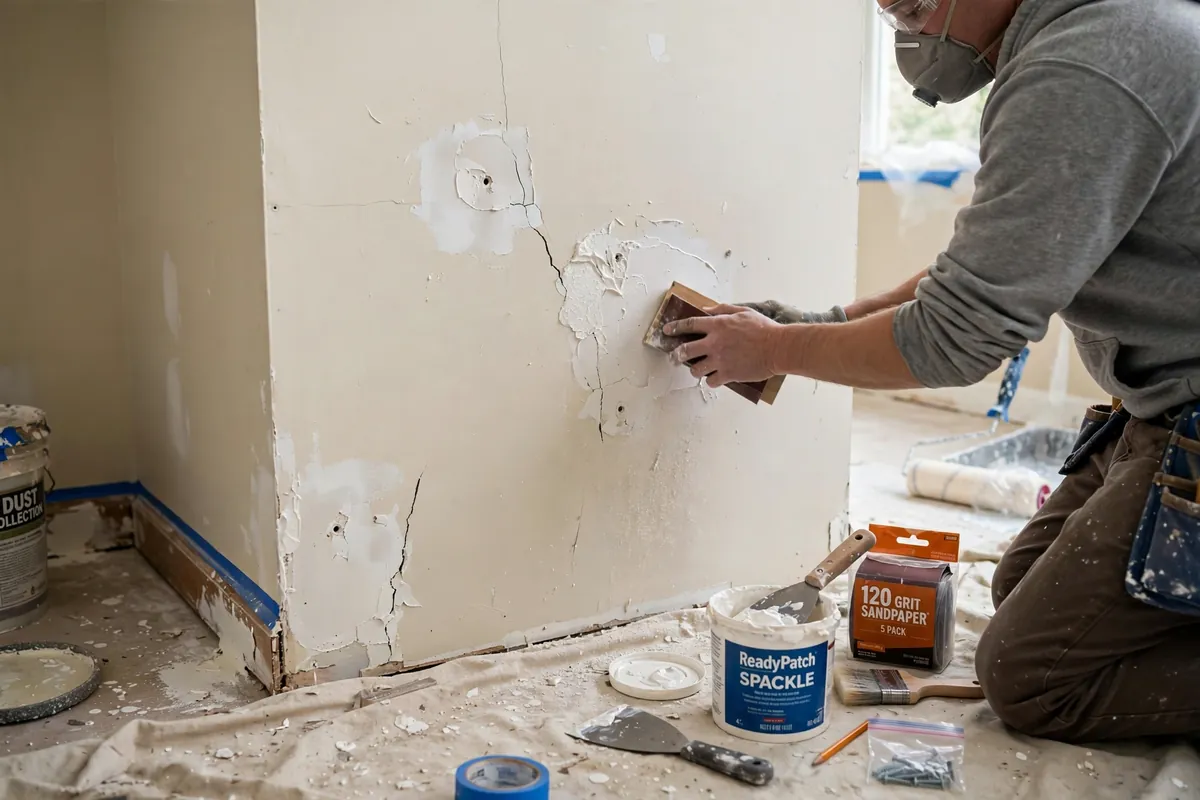
Semi-gloss on imperfect walls. High sheen on wavy drywall or patched walls looks terrible — every flaw highlighted. Either fix the walls properly (see how to prepare walls for painting USA) or drop to eggshell.
Mixing sheens unintentionally. Touch-ups with a different sheen (or even a different batch) create visible patches. Always keep labeled leftover paint and note the exact sheen.
High-gloss without pro prep. High-gloss demands near-perfect surfaces — skim-coated, sanded to 220-grit, tack-clothed. DIY high-gloss on unprepared walls disappoints.
Ignoring the ceiling. Painting walls eggshell but leaving a stained flat ceiling creates visual disconnect. Ceilings should be refreshed with flat white when walls are painted.
Sheen and Color Interaction
Higher sheens intensify color — the same paint color looks darker and richer in semi-gloss than in flat. When selecting colors, test in the intended sheen, not just the color chip (chips are typically eggshell). Dark colors in high sheen can look dramatically different than expected. For resale-focused color selection, see best paint colors for resale value USA.
Specialty Sheens and Formulas
Washable matte: Premium formulas offering flat appearance with satin-like cleanability. Ideal for living areas where you want elegance plus practicality. Costs $45 to $65 per gallon.
Chalky/matte decorative: Ultra-flat finishes for furniture and accent pieces. Not for walls — too fragile.
Metallic/pearl: Specialty finishes for accent walls and decorative effects. Require careful application; best left to professionals or experienced DIYers.
Sheen Consistency Across Your Home
Professional results come from a coherent sheen schedule: one wall sheen for main living areas (eggshell), one for wet/high-traffic zones (satin), one trim sheen throughout (semi-gloss), flat ceilings everywhere. This consistency looks intentional and simplifies touch-ups — you always know which can to grab.
Document your sheen schedule: room, brand, color, sheen. Tape a copy inside a closet door or save digitally. Future you (or your painter — see how to choose a house painter in USA) will be grateful.
Sheen for Specialty Spaces
Home offices: Eggshell or matte. Video calls look best against low-sheen backgrounds — high-gloss walls create distracting reflections on camera. If your office doubles as a guest room, eggshell balances professionalism and comfort.
Laundry rooms: Satin or semi-gloss. Humidity from washers and dryers plus frequent splashes demand washability. Semi-gloss on walls behind machines handles moisture best.
Mudrooms and entryways: Satin. These high-traffic transition zones take abuse from shoes, bags, pets, and weather. Satin’s scrubbability keeps them looking fresh. Eggshell shows wear within a year in busy mudrooms.
Nurseries and kids’ bedrooms: Satin or washable matte. Little hands touch everything — choose cleanability without sacrificing the soft look you want. Modern washable mattes ($45 to $60 per gallon) are ideal, offering flat appearance with surprising scrub resistance.
Basements: Eggshell or satin. Basement walls often have minor imperfections from concrete or older drywall — eggshell hides them while resisting the dampness basements tend toward. Ensure proper waterproofing first; no sheen compensates for water intrusion. For basement moisture issues, see water damage restoration cost in USA.
Exterior Sheen Selection
Exterior sheen follows similar logic with weather factored in. Siding: satin or low-lustre — hides imperfections, sheds water, and weathers gracefully. Flat exterior paint chalks and fades faster. Trim and doors: semi-gloss or high-gloss for crisp contrast and maximum durability against weather. Porch floors: satin or semi-gloss porch-and-floor enamel formulated for foot traffic.
Consistency matters outdoors too: use the same siding sheen on all elevations for uniform weathering. Mismatched sheens weather at different rates, creating patchy appearance within a few years. For exterior project planning, our exterior house painting cost in USA 2026 guide covers material and labor budgeting.
Sheen and Touch-Up Strategy
Higher sheens touch up more visibly — semi-gloss touch-ups often flash (show as dull or shiny spots). Flat and matte touch up invisibly, another reason they are preferred for large wall areas. If you anticipate frequent touch-ups (rental properties, kids’ homes), lean toward lower sheens for walls and reserve higher sheens for trim where full repaints are easier.
Pro tip: when touching up, use the exact same product — not just the same color and sheen, but the same manufacturer and line. Different brands’ “eggshell” can vary noticeably. Keep a detailed paint log: brand, line, color name and number, sheen, date applied, and room. Store it digitally where you will find it in five years. For hiring painters for touch-up work, our how to choose a house painter in USA checklist applies to small jobs too.
Frequently Asked Questions
Can I mix sheens in one room?
Yes, intentionally: e.g., eggshell walls with semi-gloss trim is standard and looks great. What to avoid is unintentional mixing — same surface, different sheens.
Does sheen affect paint cost?
Minimally — most brands price all sheens similarly within a product line. Higher sheens may need slightly better wall prep (labor cost), but material cost differences are negligible.
What sheen is best for old plaster walls?
Flat or matte — old plaster is rarely perfectly smooth, and flat hides a century of character. Avoid anything above eggshell on historic plaster unless walls have been skim-coated.
This paint sheen guide for USA homes boils down to a simple principle: match sheen to the surface’s job. Hide flaws with flat where beauty matters most, prioritize washability with satin where life happens hardest, and reserve semi-gloss for the trim that frames it all. Get sheen right and your paint looks better, lasts longer, and cleans easier — the trifecta of a successful paint project.