
If your home was built before 1978, it may contain lead-based paint — a serious health hazard, especially for children and pregnant women. Understanding lead paint testing for older homes in USA properties is essential before any renovation, repair, or repainting project. Federal law regulates how lead paint is handled, and disturbing it without proper precautions can contaminate your entire home. This guide covers testing methods, costs, regulations, and safe next steps.
Lead paint was banned for residential use in 1978, but an estimated 38 million USA homes still contain it. Lead dust from deteriorating or disturbed paint causes irreversible neurological damage in children — there is no safe exposure level. Testing is the critical first step: you cannot manage what you have not identified.
Lead Paint Testing for Older Homes USA: Methods Explained
XRF Testing (Professional, Recommended)
X-ray fluorescence (XRF) testing is the gold standard. A certified inspector uses a handheld XRF analyzer that reads lead content through paint layers without damaging surfaces. Results are immediate, quantitative (measured in mg/cm²), and legally defensible. A full home inspection tests all painted surfaces — walls, trim, windows, doors — inside and out.
Cost: $300 to $600 for a typical home. The inspector provides a detailed report mapping lead locations and concentrations. This is the method required for legal compliance in most regulated situations (real estate transactions, HUD housing, rental properties). For a pre-renovation assessment, XRF gives you the complete picture in a single visit.
Laboratory Paint Chip Analysis
A certified professional cuts small paint chip samples (including all layers down to substrate) and sends them to an accredited lab. Results take 3 to 7 days. Less expensive than XRF ($20 to $50 per sample, $200 to $400 for a home survey) but damages surfaces and takes longer. Useful for confirming specific areas or when XRF is unavailable.
DIY Swab Test Kits
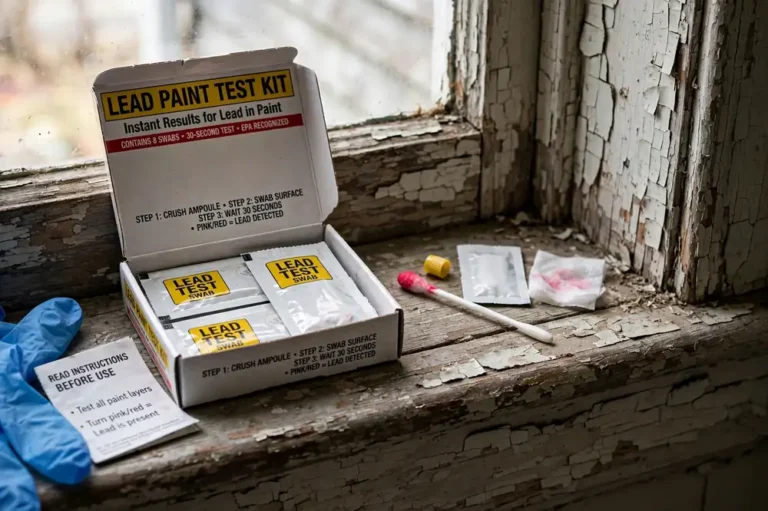
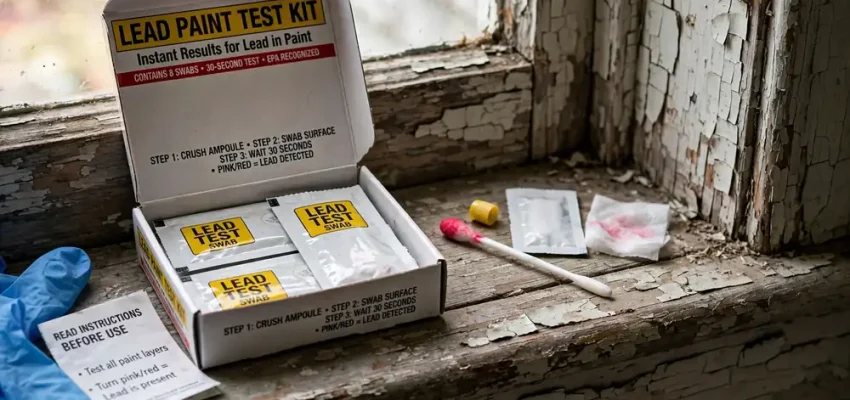
3M LeadCheck swabs ($25 to $30 for a multi-pack) give instant yes/no results on surface paint layers. They are EPA-recognized for the Renovation, Repair, and Painting (RRP) rule’s cleaning verification but have limitations: they only test surface layers (not deeper paint), can give false negatives on some paint types, and are not legally sufficient for most compliance purposes. Useful as a preliminary screen, not a definitive assessment.
Important: DIY kits cannot tell you lead concentration or test all layers. A negative swab on the surface does not mean no lead underneath. For renovation planning, professional testing is strongly recommended.
When Is Lead Paint Testing Required?
Before renovation: Federal RRP rules require lead-safe work practices for renovations disturbing more than 6 sq ft interior or 20 sq ft exterior paint in pre-1978 homes — unless testing proves no lead. Testing first can exempt you from costly RRP compliance if no lead is found.
Real estate transactions: Federal law requires sellers and landlords of pre-1978 housing to disclose known lead paint and provide EPA pamphlets. Many buyers test during inspection — 38 million homes potentially affected makes this standard due diligence.
Rental properties: Many states and cities (notably New York, Massachusetts, Rhode Island) require lead inspections for rental units, especially those housing children. Non-compliance carries severe penalties.
Child health concerns: If a child has elevated blood lead levels, health departments investigate the home environment. Proactive testing is far better than reactive investigation.
Before exterior painting: Scraping and sanding exterior lead paint without containment contaminates soil and neighboring properties. Professional exterior house painting contractors must be RRP-certified for pre-1978 homes — verify before hiring (see how to choose a house painter in USA).
Lead Paint Testing Cost Breakdown
Professional XRF inspection: $300 to $600 for a typical 3-bedroom home. Larger or complex homes: $600 to $1,000. This is the most cost-effective professional option per surface tested.
Lab sample analysis: $200 to $500 depending on sample count. Each additional sample: $20 to $50.
DIY swabs: $25 to $40 for a multi-pack. Cheap but limited — budget for professional follow-up if any swab tests positive or if you need definitive results.
Risk assessment (comprehensive): $500 to $1,000. Combines XRF testing with dust wipe sampling and a hazard assessment — recommended when children live in the home.
What Happens If Lead Is Found?
Finding lead paint is common in pre-1978 homes — it does not mean your home is uninhabitable. Intact, undisturbed lead paint (no peeling, chipping, or friction-surface wear) poses minimal risk and can be managed through encapsulation (special sealant coatings) and monitoring. The danger comes from deteriorating paint and dust generated during disturbance.
As homeowners navigate the complexities of maintaining older properties, understanding the implications of lead paint testing becomes intertwined with broader renovation considerations, including the longevity of exterior paint. The health risks associated with lead-based paint require careful attention, not only to ensure safety but also to preserve the integrity of the home during renovation activities. With the right precautions in place, homeowners can effectively manage lead hazards while also considering the practicalities of exterior maintenance. One important aspect to address is the durability of the paint used on the home’s exterior, which can significantly impact both aesthetic appeal and protection against the elements. To gain insights into the longevity of exterior finishes and how they withstand various weather conditions, it’s essential to explore the question of how long does exterior paint last, ensuring that any painting project aligns with both safety and long-term performance goals.
Interim Controls (Ongoing Management)
For intact lead paint: repair deteriorating sections using lead-safe practices, encapsulate with specialty coatings, clean regularly with HEPA vacuums and wet methods, and monitor friction surfaces (windows, doors) where paint wears. Annual visual inspections catch deterioration early. Cost: $500 to $2,000 for initial stabilization.
Abatement (Permanent Removal)
Full lead abatement — permanent elimination — methods include: component replacement (new windows, trim), enclosure (covering with new drywall), paint stripping (chemical or heat — never open-flame or uncontrolled sanding), and soil remediation for contaminated exterior soil. Abatement must be performed by certified contractors with containment, HEPA filtration, and clearance testing. Cost: $8,000 to $15,000+ for a typical home. Required in some jurisdictions for rental properties and after lead-poisoning incidents.
Renovation Under RRP Rules
If renovating a home with lead paint, your contractor must be EPA RRP-certified and follow lead-safe practices: containment barriers, no prohibited methods (open-flame burning, uncontrolled sanding/grinding), HEPA vacuuming, and cleaning verification. This adds 10 to 20 percent to renovation costs but prevents contamination. Unlicensed contractors who ignore RRP put your family at risk and face $40,000+ daily EPA fines.
Protecting Your Family: Immediate Steps
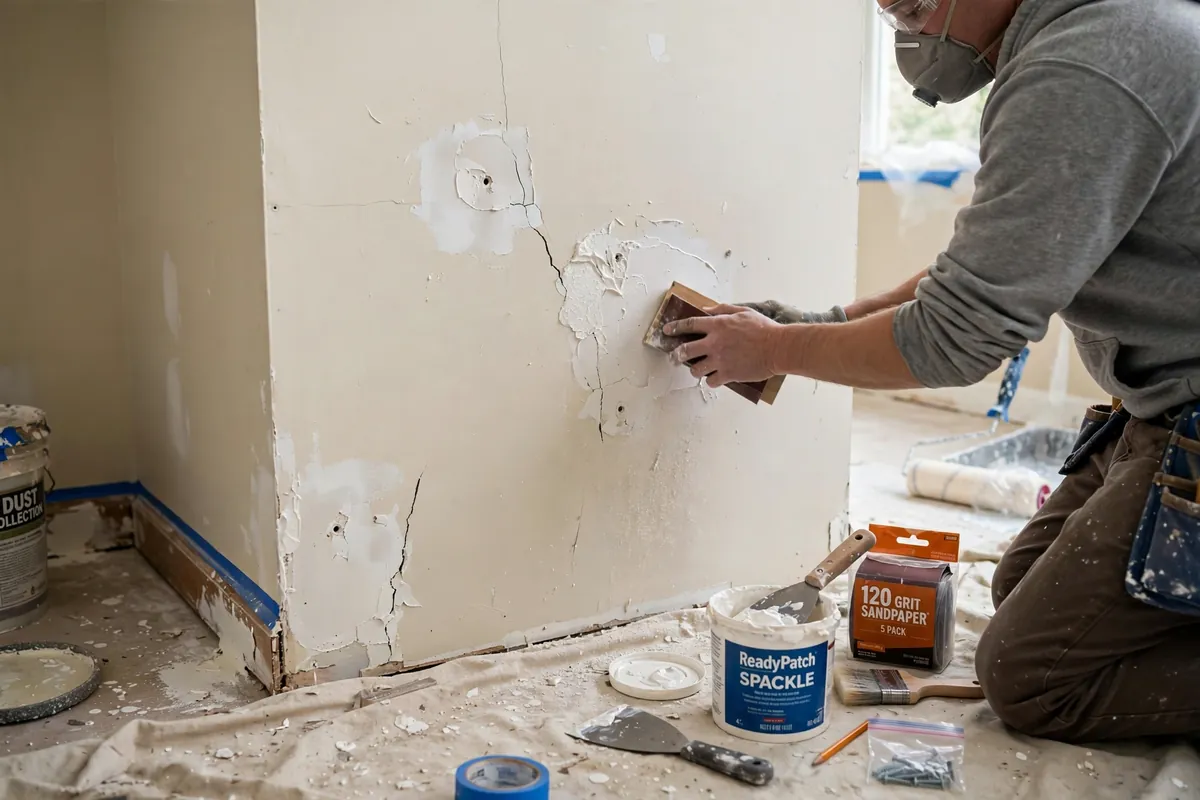
Do not disturb suspect paint. No scraping, sanding, or dry sweeping until testing is complete. If paint is already peeling, keep children away from the area and chips.
Clean smart. Wet-mop floors and wipe windowsills weekly — lead dust is the primary exposure route, not intact paint. Use HEPA vacuums, not standard vacuums that blow fine dust.
Address friction surfaces. Windows and doors that stick or grind create lead dust with every use. These are priority areas for stabilization or replacement.
Test children. The CDC recommends blood lead testing for children in high-risk environments. Early detection enables early intervention. There is no safe blood lead level in children.
Manage exterior soil. Lead paint chips from exteriors contaminate surrounding soil. Keep children from playing in bare soil near pre-1978 homes; cover with grass, mulch, or landscaping.
Choosing a Lead Testing Professional
Look for: state certification as a lead inspector or risk assessor (requirements vary by state); XRF equipment (not just swabs); detailed reporting with surface-by-surface results; and independence from abatement companies (avoid conflicts of interest). Your state health department maintains lists of certified professionals. Expect the inspection to take 2 to 4 hours for a typical home.
Lead Paint and Home Value: Market Realities
Discovering lead paint does not doom your home’s value, but it affects transactions. Savvy buyers in pre-1978 markets expect lead paint and factor management into offers — it is normalized in older housing stock. What hurts value is undisclosed lead paint discovered during inspection, which erodes buyer trust and triggers renegotiation. Proactive testing and disclosure, paired with a management plan, actually strengthen your position.
For sellers: test before listing, disclose per federal requirements, and address any deteriorating paint before showings. Intact, well-maintained painted surfaces — even with lead underneath — do not alarm buyers when properly disclosed. For buyers: factor testing ($300 to $600) into inspection budgets for any pre-1978 home, and negotiate credits for stabilization work if deteriorating paint is found. Our best paint colors for resale value USA guide covers cosmetic paint strategy that complements lead-safe practices.
Lead-Safe Renovation Practices for Homeowners
If your renovation disturbs lead paint, these practices protect your household even when hiring RRP-certified contractors. Containment: work areas sealed with plastic sheeting, HVAC vents covered, daily HEPA cleanup. Prohibited methods to watch for: open-flame burning, heat guns above 1100°F, and uncontrolled machine sanding — if you see these, stop work immediately. Verification: after completion, the contractor must perform cleaning verification (wet wipe comparison) or clearance testing.
Occupant protection: children and pregnant women should not be present during lead-disturbing work — arrange alternative accommodation. Belongings should be removed or sealed. Post-work: keep containment until verification passes, then wet-clean the entire area. These precautions apply to any project disturbing painted surfaces in pre-1978 homes, from interior repainting to window replacement. For window-specific lead concerns during replacement projects, see window replacement cost in USA 2026.
For homeowners planning broader renovations in older homes, these companion guides help: interior house painting cost in USA 2026 for budgeting repaints, how to choose a house painter in USA for finding RRP-certified contractors, how to prepare walls for painting USA for prep best practices, exterior house painting cost in USA 2026 for outdoor work, and home inspection cost in USA 2026 for full pre-purchase assessments.
Frequently Asked Questions
My home was built in 1980. Do I need testing?
Probably not for lead paint specifically — the 1978 ban means post-1978 homes are very unlikely to contain lead paint. However, if renovations incorporated salvaged materials (old doors, trim, windows), those components could contain lead. When in doubt, test.
Can I just paint over lead paint?
Encapsulation with specialty coatings is a recognized interim control — but only over intact, well-adhered paint. Encapsulating peeling paint fails. And future renovations still require lead-safe practices. Standard paint is not an approved encapsulant; use products specifically rated for lead encapsulation.
Does homeowners insurance cover lead abatement?
Generally no — lead abatement is considered maintenance, not a covered peril. Some policies explicitly exclude lead-related claims. Check your policy and consult your agent before assuming coverage.
Lead paint testing for older homes in USA properties is not just regulatory compliance — it is fundamental family protection. For a few hundred dollars, professional XRF testing maps exactly where lead exists in your home, enabling informed decisions about renovation, management, and abatement. If your home predates 1978, test before you renovate, before you scrape, before you sand. The health of your household — especially its youngest members — depends on knowing what is on your walls.