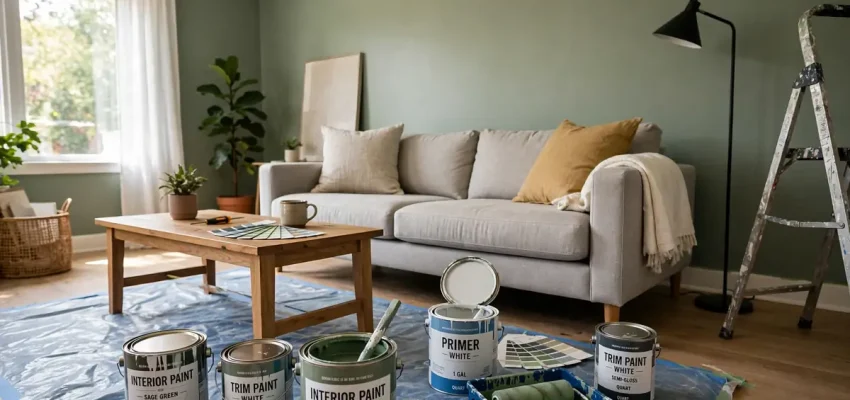

A fresh coat of paint is one of the fastest, most affordable ways to transform your home, but budgeting for the job starts with knowing the interior house painting cost in USA markets in 2026. Whether you are refreshing a single bedroom or repainting an entire house, prices vary based on square footage, ceiling height, wall condition, paint quality, and where you live. Understanding these factors helps you get fair quotes and avoid surprises.
In 2026, the average interior house painting cost in USA homes ranges from $1,000 to $7,500 for a full home, with most homeowners paying around $2,500 to $4,000 for a typical 1,500 to 2,500 square foot house. Per-room costs run $200 to $800 depending on size and detail. This guide breaks down every cost driver, room-by-room pricing, DIY versus professional tradeoffs, and proven ways to save without sacrificing quality.
Average Interior House Painting Cost in USA 2026
Professional painters in the USA typically charge $2 to $6 per square foot of floor space for interior painting, which translates to $1 to $3 per square foot of wall surface. For a 1,500-square-foot home with standard 8-foot ceilings, expect $2,500 to $4,500. A 2,500-square-foot home runs $4,000 to $7,500. These ranges include labor, paint, primer, and basic prep work.
Paint alone accounts for roughly 15 to 20 percent of the total cost. Quality interior paint costs $30 to $70 per gallon, and one gallon covers about 350 square feet per coat. Most jobs require two coats, so a 1,500-square-foot home needs 8 to 12 gallons of paint. Labor is the dominant expense — professional painters charge $25 to $100 per hour depending on region, with metro areas like New York, San Francisco, and Boston at the top of the range.
Regional differences are substantial. The interior house painting cost in USA coastal metros runs 30 to 50 percent above the national average, while the Midwest and Southeast come in 10 to 20 percent below. Always get three written estimates from licensed painters in your area. For related project planning, our guide on how to choose a house painter in USA walks through vetting contractors properly.
Interior House Painting Cost by Room
Room-by-room pricing helps you budget whether you are painting one space or prioritizing phases of a whole-home project.
Bedroom (10×12 ft): $300 to $800. A standard bedroom takes one day for a professional crew. Vaulted ceilings, accent walls, or extensive trim push costs higher. For master suites with sitting areas, budget $500 to $1,000.
Living room (15×20 ft): $500 to $1,200. Larger wall area and often higher ceilings increase labor. Two-story great rooms can exceed $1,500 due to scaffolding needs.
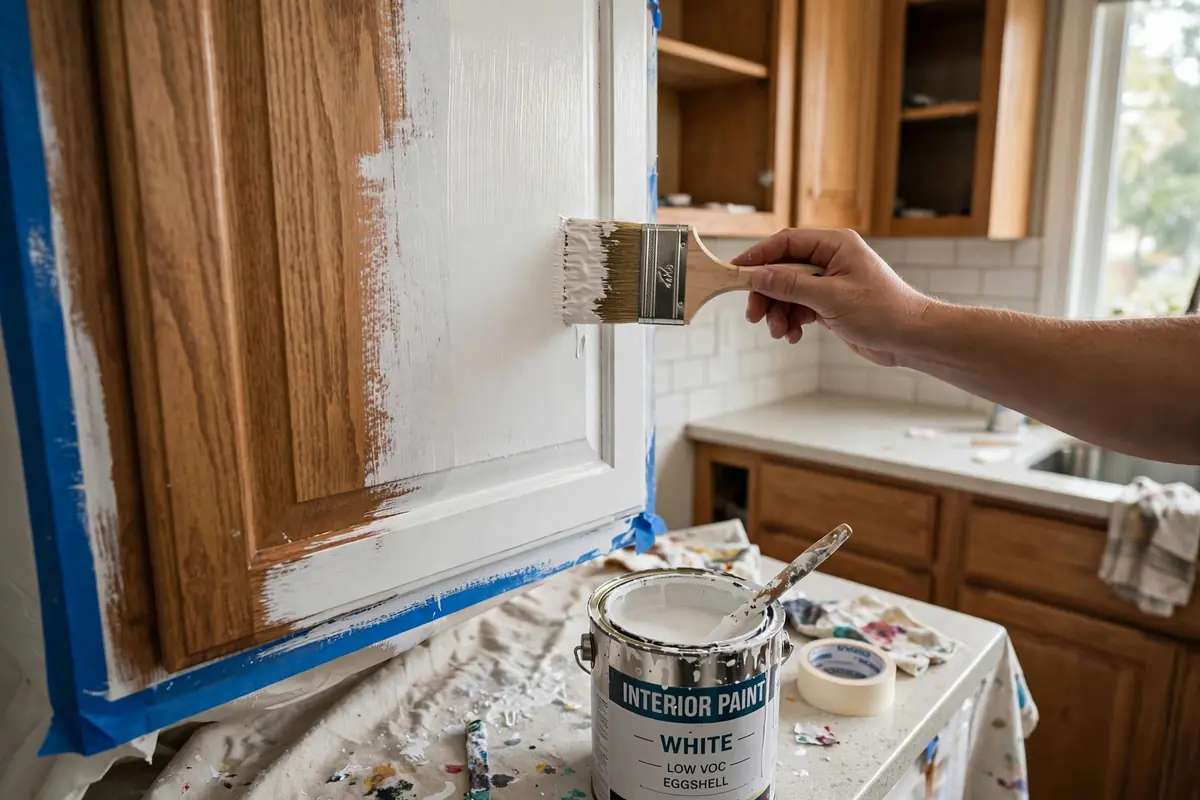
Kitchen: $300 to $700. Kitchens have less paintable wall area (cabinets and backsplash cover much of it), but cutting around cabinetry is fiddly, detail-oriented work. If you are refreshing cabinets too, see our how to paint kitchen cabinets USA guide and cabinet painting cost in USA for budgeting.
Bathroom: $200 to $500. Small area but moisture-resistant paint costs more per gallon. Proper ventilation and mildew-resistant formulas matter — cheap paint fails fast in bathrooms.
Hallways and stairwells: $200 to $600. Stairwells with high walls are labor-intensive despite modest square footage. Two-story foyers can run $800 to $1,500.
Whole-home repaint: $1,000 to $7,500 depending on home size, with the national average near $3,500 for a 2,000-square-foot home with standard ceilings.
What Drives the Interior House Painting Cost?
Wall Condition and Prep Work
Prep is where budgets quietly inflate. Walls with cracks, nail holes, water stains, or peeling paint need patching, sanding, and priming before a single drop of finish coat goes on. Heavy prep can add $200 to $800 to a whole-home job. Homes with textured walls (knockdown, orange peel) take longer to paint than smooth drywall. Our how to prepare walls for painting USA guide details what proper prep involves — and what to expect your painter to do.
Stain blocking is another common add-on. Water damage, smoke stains, and marker or crayon marks need specialty primers ($25 to $40 per gallon) before topcoating. If your walls have not been painted in 15+ years, expect more prep than a recently painted home.
Ceiling Height and Architectural Detail
Standard 8-foot ceilings are the baseline. Nine- and ten-foot ceilings add 15 to 25 percent in labor. Vaulted and cathedral ceilings can double the cost of a room due to scaffolding and slower production. Crown molding, wainscoting, chair rails, and intricate trim all require careful brush work that slows painters down — budget 20 to 40 percent more for rooms with heavy millwork.
Paint Quality and Number of Coats
Builder-grade paint at $20 per gallon versus premium paint at $60 per gallon makes a visible difference in coverage, durability, and color richness. Premium paints often cover in one coat over similar colors, while cheap paint may need three coats — erasing any savings. For most interiors, mid-range to premium paint ($35 to $55 per gallon) delivers the best value. Dark-to-light color changes always need two full coats plus primer; light-to-similar-color may need only one to two coats.
Color Changes and Accent Walls
Repainting the same color costs less than dramatic changes. Going from dark navy to warm white requires extra primer and coats. Accent walls add $100 to $300 per wall for the extra setup, taping, and paint. If resale is on your mind, our best paint colors for resale value USA guide covers which palettes maximize buyer appeal.
DIY vs Professional Interior Painting
DIY painting saves 60 to 75 percent of the professional interior house painting cost in USA projects — you pay only for paint and supplies ($200 to $600 for an average room versus $500 to $1,000 professionally). A single bedroom is a very achievable weekend project for a careful DIYer.
But whole-home DIY painting is a different proposition. Professionals paint faster (a crew does in two days what takes a homeowner two weeks), achieve cleaner lines, and handle high ceilings, stairwells, and repairs safely. The break-even question is your time value: if painting your whole house takes 80 hours of your weekends, professional help often wins.
Consider a hybrid approach: DIY the easy bedrooms and hire pros for the two-story foyer, stairwell, and detailed trim work. You save money where your skills suffice and pay for expertise where it matters most.
How to Save on Interior House Painting Cost
Paint in the off-season. Painters are busiest in spring and summer. Scheduling interior work in fall or winter can yield 10 to 20 percent discounts as crews look to fill calendars. Interior painting is year-round work, so there is no weather penalty.
Do your own prep. Moving furniture, removing outlet covers, and doing light patching yourself can shave $200 to $500 off a whole-home quote. Ask the painter exactly which prep tasks they will discount for.
Limit color changes. Keeping the same palette (or close to it) reduces coats needed. Every dramatic color shift adds material and labor.
Buy paint during sales. Major USA retailers run 30 to 40 percent off paint sales around Memorial Day, Labor Day, and Black Friday. If your project can wait a few weeks, the savings on 10+ gallons are meaningful.
Bundle rooms. Painters offer better per-room rates for whole-home jobs than single-room calls. If three rooms need paint, doing them together costs less per room than spreading them across separate visits.
What to Ask Your Painter Before Hiring
Get itemized written estimates from at least three painters. Each quote should specify: total square footage, number of coats, exact paint brand and line, prep work included, timeline, and warranty. Ask whether the painter is licensed and insured — requirements vary by state, but liability insurance is non-negotiable.
Key questions: How do you protect floors and furniture? What is your process for drywall repairs? Do you spray, roll, or brush — and why? What happens if I am unhappy with the finish? How do you handle lead paint if my home was built before 1978? (Homes of that era may need lead paint testing for older homes in USA before any work begins.)
Check reviews on Google and the Better Business Bureau, and ask for references from recent whole-home jobs — not just single rooms. A painter who excels at bedrooms may struggle with two-story foyers.
Understanding Paint Finishes for Interiors
Sheen affects both appearance and cost. Flat paint ($30 to $50 per gallon) hides wall imperfections and suits bedrooms and living rooms. Eggshell and satin ($35 to $55) offer subtle sheen and better washability for hallways and family rooms. Semi-gloss ($35 to $60) is standard for trim, doors, and bathrooms where moisture resistance matters. Our paint sheen guide for USA homes covers exactly which finish belongs where.
Do not mix sheens randomly — inconsistent sheen across a room looks amateurish. Your painter should recommend a coherent sheen schedule for walls, ceilings (always flat), and trim (semi-gloss or satin).
Timeline: How Long Does Interior Painting Take?
A professional two-person crew paints an average bedroom in 4 to 6 hours including prep. A whole 2,000-square-foot home takes 3 to 5 days. DIY timelines run 3 to 4 times longer. Factor drying time: latex paint dries to the touch in 1 to 2 hours but needs 4 hours between coats and 2 to 4 weeks to fully cure. Avoid scrubbing fresh paint for at least a month.
Frequently Asked Questions
How often should interiors be repainted?
Every 5 to 7 years for living areas, 3 to 5 years for kitchens and bathrooms (moisture and grease wear paint faster), and 7 to 10 years for low-traffic bedrooms. High-quality paint in good conditions can stretch these intervals.
Should ceilings be painted the same color as walls?
Standard practice is flat white or off-white ceilings regardless of wall color — it brightens rooms and hides imperfections. Painting ceilings the wall color works in small powder rooms for a cozy effect but can feel oppressive in larger spaces.
Does interior painting increase home value?
Yes — fresh neutral paint offers one of the highest ROIs of any home improvement, often returning 100+ percent at resale. It is the cheapest way to make a home feel updated. See best paint colors for resale value USA for palette guidance.
Understanding the interior house painting cost in USA markets puts you in control of your project. Get multiple itemized quotes, invest in quality paint, do not skimp on prep, and hire vetted professionals for the challenging spaces. If your project extends outdoors, our exterior house painting cost in USA 2026 guide covers budgeting for siding and trim. A well-executed interior paint job transforms how your home feels every single day — and the investment pays back in both enjoyment and resale value. For whole-home refresh planning, also review how to prepare walls for painting USA before your painter arrives.