
If you own a home with a septic system instead of a city sewer connection, one question comes up every few years: what is the septic tank pumping cost in the United States right now? Pumping is the single most important maintenance task for a septic system, and skipping it can lead to backups, drain field failure, and repair bills that run into the thousands. In this guide, we break down the septic tank pumping cost for 2026 across the USA, explain what drives the price up or down, how often you actually need it, and the warning signs that your tank is overdue for service.
Average Septic Tank Pumping Cost in the USA
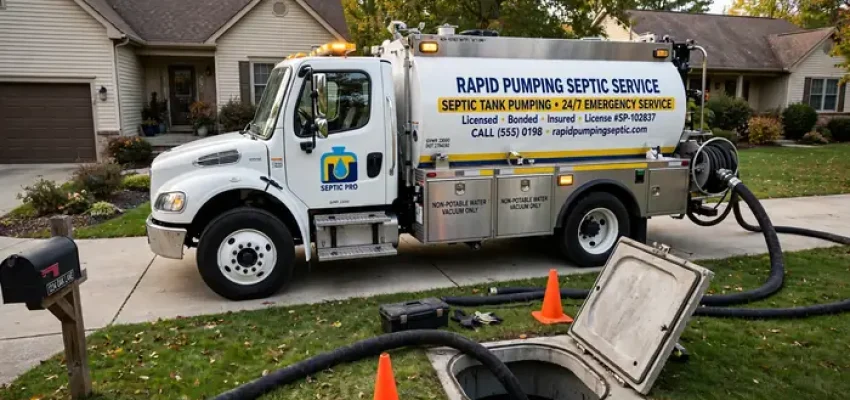
For a standard residential septic tank, most American homeowners pay between $300 and $600 for a routine pumping in 2026. The national average sits right around $420, according to figures reported by contractors across the country. That price usually covers the service call, pumping the tank, and lawful disposal of the waste at a licensed treatment facility. A small 750-gallon tank in a rural area with easy access might cost as little as $250, while a large 1,500-gallon tank or a tank that has not been pumped in a decade can push the bill to $800 or more.
Keep in mind that septic tank pumping cost varies a lot by region. Homeowners in the Southeast, including parts of Texas, Georgia, and Florida, often see prices at the lower end because competition among septic companies is strong. In the Northeast and on the West Coast, where disposal fees and labor rates are higher, a typical pumping can run $500 to $700. If your property is remote and the pumper truck has to travel a long distance, many companies add a mileage surcharge of $50 to $150.
Most quotes are flat-rate rather than hourly. A professional opens the tank, pumps out the solids and liquids, checks the baffles, and notes the tank’s condition. Some companies include a basic inspection; others charge an extra $75 to $150. Always ask what the quote includes, because a cheap phone quote sometimes leaves out the disposal fee.
What Drives Septic Tank Pumping Cost Up or Down
Tank size is the biggest factor. A 750-gallon tank holds less waste and takes less time to pump than a 1,500-gallon tank, so it costs less. A 1,000-gallon tank, the most common size for a three-bedroom American home, is the baseline most companies price against. If you have a larger tank serving a big household in a place like Houston or Phoenix, expect the quote to scale with the extra gallons.
Accessibility matters just as much. If the tank lid is buried two feet underground and the technician has to dig to find it, you will pay a digging fee of $50 to $200. Homeowners who install a riser — a short pipe that brings the access lid up to ground level — make every future pumping faster and cheaper. The drain cleaning cost guide explains similar access-related pricing, and the same logic applies here: easy access means lower labor charges.
The condition of the tank also plays a role. A tank pumped on schedule every three to five years is quick to service. A tank neglected for ten years may have hardened solids that take extra time and equipment to break up, and some companies charge an additional $100 to $250 for severely overdue tanks.
Regional Price Differences Across the USA
Where you live shapes the septic tank pumping cost more than most people expect. Rural counties in the Midwest, such as parts of Ohio, Indiana, and Iowa, tend to have the lowest prices because disposal sites are nearby and overhead is low. Suburban areas around growing cities like Denver, Atlanta, and Charlotte sit near the national average. Coastal metros — think Boston, the New York area, Seattle, and Los Angeles — routinely charge 20 to 40 percent more because of higher labor costs and stricter disposal regulations.
Disposal fees deserve attention too. Pumpers must deliver waste to a licensed treatment plant, and that tipping fee is passed on to you. In counties with few approved facilities, it can add $100 or more. Get two or three quotes: disposal fees are fairly fixed locally, so big differences between quotes are usually in the labor portion, which you can shop around.
Extras That Show Up on the Invoice
A routine pumping is straightforward, but several add-ons are common. Installing a riser and lid typically costs $200 to $400 and pays for itself over time. A filter clean-out, recommended for systems with an effluent filter, runs $75 to $150. Some companies offer bacterial additives for $25 to $50, although most septic professionals agree that a healthy system does not need them. If the technician finds a cracked baffle or a deteriorating concrete lid, minor repairs can add $100 to $300 to the visit. Larger pipe problems inside the home are a separate matter — see our repiping a house cost guide for what whole-house pipe replacement runs in the USA.
Be cautious about upsells you did not ask for. A reputable company will pump, inspect, and report — not pressure you into an immediate full system replacement. If you are told the drain field has failed, get a second opinion, since drain field work can cost $5,000 to $20,000 — a big-ticket job in the same league as a sewer line replacement cost project.
How Often Should You Pump Your Septic Tank?
The general rule for American homes is every three to five years, but the right interval depends on tank size and household size. A family of five with a 1,000-gallon tank fills it with solids faster than a retired couple with the same tank. The EPA’s widely used guideline table suggests that a 1,000-gallon tank serving four people needs pumping roughly every two and a half years, while the same tank serving two people can go about five to six years.
Understanding the costs associated with septic tank pumping is crucial for maintaining a healthy home environment, yet it’s only one component of broader plumbing maintenance. Homeowners often overlook the interconnectedness of their plumbing systems, leading to issues that can compound over time. For instance, neglecting routine septic maintenance can result in backups that affect not only the septic system but also the main drain line. If you experience persistent drainage issues, it may be essential to address them promptly to prevent escalation. Knowing how to unclog main drain line safely can save you from costly repairs and ensure that your entire plumbing system operates smoothly. Recognizing the signs of trouble early on allows homeowners to take proactive measures, thereby safeguarding their investment and ensuring the longevity of their plumbing infrastructure.
Garbage disposals change the math. Homes that grind food waste into the septic system add a significant solids load, and those tanks typically need pumping every one to two years. If you have a disposal and a septic system, consider limiting what goes down the drain — coffee grounds, grease, and fibrous vegetables are especially hard on the system. Our kitchen sink installation cost article covers disposal choices, and choosing a model you use sparingly is the septic-friendly move.
Warning Signs Your Septic Tank Needs Pumping Now
Do not wait for a sewage backup to tell you the tank is full. The earliest sign is usually slow drains throughout the house — not just one sink, but toilets, showers, and sinks all draining sluggishly at the same time. If only one fixture is slow, the problem is probably local to that drain, which is the kind of issue covered in our detect a water leak in your home and drain troubleshooting guides. When every drain is slow, the septic system is the prime suspect.
Other red flags include gurgling sounds in the plumbing, sewage odors inside the house or around the drain field, and unusually lush, green grass over the drain field area even during dry weather. Standing water or soggy soil above the drain field is a serious warning that wastewater is surfacing instead of filtering through the soil. Any of these signs means you should call a septic professional promptly rather than waiting for your next scheduled service — the same urgency logic that applies when you decide on an reliable plumber near me in USA for a plumbing emergency.
What Happens During a Septic Pumping Service
Knowing what the technician does helps you judge whether you got your money’s worth. The visit starts with locating and opening the access lid. The technician inserts a large vacuum hose and pumps out the liquid, sludge, and scum layers — a proper job removes everything, not just the liquid on top. Some less scrupulous operators pump only the liquid layer and leave the solids, which defeats the purpose, so a full pump-out is what you are paying for.
While the tank is open, a good technician inspects the baffles that keep solids from flowing into the drain field, checks the inlet and outlet pipes, and looks at the condition of the tank itself — concrete tanks can crack, and older steel tanks can rust through. The technician should also note the sludge and scum levels, which tell you whether your pumping interval is right. If the layers were very thick, shorten the interval; if the tank was nearly clean, you can stretch it a bit.
How to Keep Your Septic Tank Pumping Cost Low
The cheapest pumping is the one you do not need early. Conserve water with low-flow fixtures — a modern toilet installation cost guide shows how little new toilets use per flush, and every gallon you save is a gallon your septic system does not have to process. Fix leaky faucets and running toilets promptly, because a single running toilet can send hundreds of gallons a day into the tank.
Be careful about what goes down the drains. Never flush wipes, even ones labeled flushable, feminine products, paper towels, or cat litter. In the kitchen, keep grease, oils, and coffee grounds out of the sink. These habits reduce the solids load and keep your pumping interval at the long end of the range. An efficient water heater replacement cost upgrade also trims hot-water waste, which means less water flowing into the tank every day. If you are on a private well as well as septic, the same careful-water-use mindset protects both systems — see our water softener installation cost guide for how treatment equipment interacts with well and septic setups.
Finally, protect the drain field itself. Do not drive vehicles over it, do not plant trees nearby, and keep roof gutters and sump pump installation cost discharge lines routed away from it so the soil is not saturated. A failed drain field is the most expensive septic disaster, and it is almost always caused by neglect rather than bad luck. Regular pumping is cheap insurance by comparison.
FAQs About Septic Tank Pumping Cost
How much does it cost to pump a 1,000-gallon septic tank?
In 2026, pumping a 1,000-gallon tank — the standard size for a three-bedroom American home — typically costs $300 to $550, with a national average near $420. Prices run lower in rural Midwest and Southeast areas and higher in the Northeast and on the West Coast.
Can I pump my own septic tank to save money?
No. Septic pumping requires a licensed vacuum truck and legal disposal at a treatment facility, and most states prohibit homeowners from handling and transporting septage themselves. DIY attempts risk serious health hazards, environmental fines, and damage to the system.
What happens if I never pump my septic tank?
Solids eventually flow into the drain field, clogging the soil. The result is sewage backing up into your home or surfacing in the yard, followed by drain field replacement costing $5,000 to $20,000. Compared with a $300 to $600 pumping every few years, neglect is enormously expensive.
How do I find the septic tank on my property?
Check your county health department records, which usually have the original installation diagram. Otherwise, look for the main sewer line exiting the house and probe downhill from there, or hire a septic company — most will locate the tank for a modest fee, often waived if you book the pumping with them.
Conclusion
The septic tank pumping cost for most American homeowners in 2026 falls between $300 and $600 — a modest bill for the most important maintenance your septic system will ever receive. Pump every three to five years, keep solids and grease out of the drains, protect your drain field, and get multiple quotes when prices seem high. If you are seeing slow drains, odors, or soggy ground over the drain field, do not wait — call a licensed septic professional this week, because catching a full tank early is always cheaper than fixing the damage it causes.