Looking for the best places to visit in the south of Spain? Southern Spain combines historic cities, Moorish architecture, whitewashed villages, Mediterranean beaches, mountain landscapes, lively food scenes, and some of Europe’s most memorable cultural attractions.
Most of the region’s major destinations are found across Andalusia, Spain’s southernmost autonomous community. From the grand streets of Seville and the Alhambra in Granada to the beaches of Cádiz and the dramatic cliffs of Ronda, there is enough variety to build anything from a short city break to a two-week road trip.
This guide highlights the destinations that deserve the most attention, explains what makes each one special, and helps you decide where to go based on your travel style.
Why Visit Southern Spain?
Southern Spain is an especially appealing destination because several different types of travel can be combined in one region. You can spend the morning exploring historic monuments, enjoy tapas in the afternoon, and finish the day beside the Mediterranean or Atlantic coast.
The region is also known for its blend of Roman, Islamic, Jewish, Renaissance, and modern influences. That history is particularly visible in cities such as Córdoba, Granada, and Seville, while destinations including Ronda, Cádiz, and the Costa del Sol provide a different pace.
If you are comparing southern Spain with other international destinations, you may also enjoy our guide to the top places to visit outside the US for additional trip inspiration.
1. Seville
Best for: architecture, culture, food, nightlife, and first-time visitors
Seville is one of the strongest choices for anyone visiting southern Spain for the first time. As the capital of Andalusia, it combines monumental architecture with lively neighborhoods, traditional tapas bars, flamenco culture, and attractive public spaces.
The Seville Cathedral, Giralda tower, and Royal Alcázar are among the city’s defining attractions. Beyond the major landmarks, neighborhoods such as Santa Cruz are ideal for wandering through narrow streets and historic courtyards.
Seville is also a useful base for exploring other Andalusian destinations. Travelers can combine it with Córdoba, Cádiz, Ronda, or Granada to create a varied southern Spain itinerary.
2. Granada
Best for: history, Moorish architecture, mountain scenery, and romantic trips
Granada is home to one of Spain’s most recognizable landmarks: the Alhambra. The hilltop complex, with its palaces, gardens, courtyards, and views over the city, is a major reason to include Granada in any southern Spain itinerary.
The historic Albaicín neighborhood adds another layer to the experience. Its narrow streets, traditional architecture, and elevated viewpoints create a very different atmosphere from the newer parts of the city.
Granada is also close to the Sierra Nevada, making it an attractive option for travelers who want to combine cultural sightseeing with mountain scenery.
3. Málaga
Best for: beaches, museums, food, city breaks, and easy coastal travel
Málaga is one of the most versatile destinations in southern Spain. It offers a historic city center, museums, restaurants, beaches, and convenient access to other parts of the Costa del Sol.
Visitors can explore the Alcazaba, Roman Theatre, Málaga Cathedral, and the city’s museums before heading toward the waterfront. The combination of culture and seaside relaxation makes Málaga particularly useful for travelers who do not want to choose between a beach holiday and a city break.
It is also a practical arrival point for exploring destinations farther along the southern coast.
4. Córdoba
Best for: historic architecture, culture, and short city breaks
Córdoba is one of the most rewarding historic destinations in Andalusia. Its most famous attraction is the Mosque-Cathedral of Córdoba, a remarkable monument reflecting the city’s complex religious and architectural history.
The old quarter is equally important to the overall experience. Visitors can explore narrow streets, courtyards, historic bridges, and traditional neighborhoods at a relaxed pace.
Córdoba works particularly well as a day trip from Seville or as an overnight stop between Seville and Granada.
5. Ronda
Best for: dramatic scenery, white villages, photography, and road trips
Ronda is one of the most visually distinctive towns in southern Spain. Built around the dramatic El Tajo gorge, it offers spectacular viewpoints and a historic setting that makes it particularly popular with photographers and road-trippers.
The famous Puente Nuevo is the town’s signature landmark, but Ronda is more than a single viewpoint. Its old town, historic buildings, plazas, and surrounding countryside make it worth spending several hours or an entire day exploring.
Ronda can also be paired with other white villages in the province of Málaga for a scenic Andalusian road trip.
6. Cádiz
Best for: beaches, seafood, history, and Atlantic coast experiences
Cádiz offers a different side of southern Spain. Located on a peninsula surrounded by the Atlantic, the historic city combines old-world streets with beaches, seafood restaurants, plazas, and waterfront views.
It is an excellent choice for travelers who want history without giving up easy access to the sea. The city also provides a convenient gateway to other destinations along the Costa de la Luz.
For travelers building a broader European itinerary, Cádiz can add a coastal dimension to a trip that otherwise focuses on inland historic cities.
7. Marbella
Best for: upscale resorts, beaches, dining, and the Costa del Sol
Marbella is one of the best-known destinations on the Costa del Sol. It is particularly attractive to travelers looking for a combination of beaches, restaurants, shopping, resort accommodation, and a polished holiday atmosphere.
The historic center provides a contrast to the modern resort areas, with attractive streets and traditional Andalusian architecture. Marbella also works well as a base for exploring nearby coastal towns.
8. Nerja
Best for: beaches, coastal scenery, families, and relaxed holidays
Nerja is a strong option for travelers who prefer a smaller coastal destination rather than a major city. Its location along the eastern Costa del Sol provides access to beaches, sea views, and nearby natural attractions.
The town is especially appealing for travelers who want to slow down after visiting busier destinations such as Seville, Málaga, and Granada.
9. Frigiliana
Best for: whitewashed streets, village atmosphere, photography, and day trips
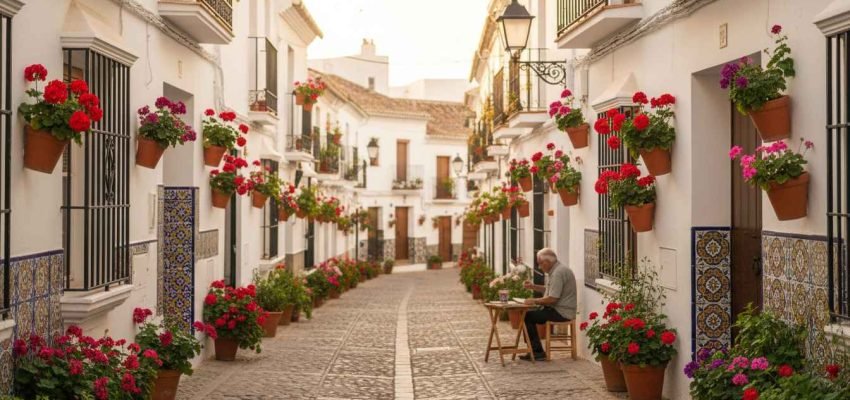
Frigiliana is one of the picturesque white villages associated with southern Spain. Its steep streets, whitewashed buildings, flower-filled details, and mountain setting make it a natural addition to a Costa del Sol itinerary.
Because it is relatively close to Nerja, the two destinations can easily be combined during the same day or short coastal stay.
10. Tarifa
Best for: beaches, wind sports, outdoor adventures, and a relaxed coastal atmosphere
Tarifa occupies a remarkable position at the southern tip of mainland Europe. It is especially well known for its beaches and wind conditions, making it popular with kitesurfers and other outdoor enthusiasts.
Even travelers who are not interested in watersports can enjoy Tarifa’s old town, beaches, cafés, and distinctive atmosphere. Its location also makes it an interesting stop for travelers exploring the Cádiz province.
11. Almería
Best for: unusual landscapes, beaches, history, and quieter travel
Almería is an excellent choice for travelers looking beyond the most famous Andalusian cities. The province combines Mediterranean coastline, historic attractions, rugged landscapes, and areas that feel significantly less crowded than some parts of the Costa del Sol.
The nearby Cabo de Gata-Níjar area is particularly appealing for travelers interested in natural scenery and beaches. The province’s distinctive landscapes also make it a good choice for photography and outdoor exploration.
12. Jaén and the Surrounding Countryside
Best for: olive landscapes, historic towns, castles, and rural experiences
Jaén is sometimes overlooked by first-time visitors to Andalusia, but it offers a different perspective on southern Spain. The province is strongly associated with olive cultivation and features historic towns, castles, mountain scenery, and traditional landscapes.
Travelers interested in heritage can consider combining Jaén with nearby Úbeda and Baeza, two destinations known for their historic architecture.
If you enjoy discovering less obvious destinations, compare this experience with some of the most desirable places to visit in the world to see how southern Spain’s quieter destinations fit into a wider travel list.
13. Huelva
Best for: Atlantic beaches, nature, history, and quieter coastal travel
Huelva sits in the western part of Andalusia near the Portuguese border. Its coastal position and surrounding natural areas make it an appealing choice for travelers who want to experience a less heavily marketed side of southern Spain.
The province also provides access to areas such as Doñana and the Atlantic coastline, giving nature lovers more reasons to include it in a longer Andalusian itinerary.
14. Costa Tropical
Best for: beaches, subtropical scenery, and coastal relaxation
The Costa Tropical, located along Granada’s Mediterranean coastline, is an excellent option for combining a visit to Granada with a beach stay.
The coastal area has a warmer, more relaxed character and provides an easy way to add seaside time after exploring Granada’s historic attractions.
It can be especially appealing for travelers who want a trip that combines culture, mountains, and beaches without moving to a completely different region.
15. Sierra Nevada
Best for: mountain scenery, hiking, winter sports, and outdoor adventures
Southern Spain is not only about beaches and historic cities. The Sierra Nevada provides dramatic mountain landscapes close to Granada and creates an opportunity to add outdoor activities to an Andalusian itinerary.
Depending on the season, visitors can explore mountain trails, scenic viewpoints, and winter sports areas. This makes the region a useful addition for active travelers who want more variety than a traditional city-and-beach vacation.
Best Places in Southern Spain by Travel Style
| Travel Style | Best Destination | Why Visit |
|---|---|---|
| First-time visitors | Seville | Culture, architecture, food, and nightlife |
| History lovers | Granada | Alhambra and historic neighborhoods |
| Beach and city combination | Málaga | Urban attractions plus Mediterranean beaches |
| Historic architecture | Córdoba | Mosque-Cathedral and old town |
| Scenic road trips | Ronda | Mountain setting and dramatic gorge |
| Atlantic beaches | Cádiz | Coastal scenery and historic city center |
| Luxury coastal holidays | Marbella | Resorts, dining, beaches, and shopping |
| Outdoor adventures | Tarifa | Beaches, wind sports, and coastal activities |
| Nature and quieter travel | Almería | Cabo de Gata and unusual landscapes |
| Mountain experiences | Sierra Nevada | Hiking, scenery, and seasonal activities |
Best Southern Spain Itinerary Ideas
3-Day Southern Spain Trip
For a short trip, focus on one major city rather than trying to cover the entire region. Seville works particularly well because you can spend several days exploring its historic center, food scene, and major attractions.
5-Day Itinerary
A five-day trip gives you enough time to combine two or three destinations. A practical route could include Seville, Córdoba, and Granada, with Córdoba serving as either a day trip or overnight stop.
7-Day Itinerary
With a full week, you can combine major cities with a smaller destination. Seville, Córdoba, Granada, Ronda, and Málaga provide a strong mix of architecture, culture, scenery, and coastline.
If you are planning a broader summer trip, our guide to the best places to visit in summer abroad can provide additional itinerary ideas.
10 to 14 Days
A longer trip allows you to slow down and include both inland and coastal destinations. You could combine Seville, Córdoba, Granada, Ronda, Málaga, Cádiz, Tarifa, and either Almería or the Costa Tropical.
This longer approach is particularly useful for travelers who prefer not to change hotels every night.
When Is the Best Time to Visit Southern Spain?
Spring and autumn are often excellent choices for travelers who want comfortable sightseeing conditions and a balance between outdoor exploration and city visits.
Summer is attractive for beach holidays, but inland destinations can become extremely hot during the middle of the day. If you travel during summer, plan major sightseeing for the morning or late afternoon and leave the hottest hours for relaxed meals, museums, or accommodation.
Winter can be a good option for travelers interested in cities and cultural attractions. Coastal areas generally offer a milder experience than many northern European destinations, while the mountains provide a very different winter environment.
How to Travel Around Southern Spain
Southern Spain can be explored by train, bus, rental car, or a combination of transportation options.
For major cities such as Seville, Córdoba, Málaga, and Granada, public transportation can be very convenient. A rental car becomes more useful when your itinerary includes Ronda, white villages, remote beaches, or rural areas.
Before booking a car, consider where you will stay. Parking in historic city centers can be inconvenient, while smaller towns and rural destinations are generally easier to navigate by car.
Travelers who enjoy planning routes can also explore our broader guide to the best places to visit in Oregon for another example of how regional road-trip destinations can be combined into one journey.
What to Eat in Southern Spain
Food is an important part of any trip through Andalusia. Tapas culture makes it easy to try several dishes without committing to one large meal.
Depending on where you travel, look for regional specialties such as gazpacho, salmorejo, grilled seafood, fried fish, Iberian pork, jamón, local cheeses, and olive-oil-based dishes.
Cádiz and other coastal destinations are particularly appealing for seafood, while inland cities offer a broader selection of traditional Andalusian dishes.
How Many Days Do You Need in Southern Spain?
If you only want to see one major city, three days can provide a satisfying introduction. However, 7 to 10 days is a better timeframe for experiencing several of the region’s most important destinations without rushing.
Travelers with two weeks can explore more of the coastline, add smaller towns, and spend more time in natural areas.
What Makes Southern Spain Different From Other European Destinations?
Southern Spain stands out because its attractions are unusually diverse within a relatively compact region. Historic cities sit within reach of Mediterranean and Atlantic beaches, while mountain landscapes and white villages provide a completely different experience.
The region’s cultural identity is another major attraction. Roman, Islamic, Jewish, Christian, and modern influences can be seen in architecture, food, festivals, neighborhoods, and historic landmarks.
If you are comparing destinations globally, you may also want to explore our guides to the best places to visit outside the US, amazing places to visit around the world, and the world’s most desirable destinations.
Final Thoughts
The best places to visit in southern Spain depend on the type of trip you want to create. Seville and Granada are excellent for culture and history, Málaga and Marbella work well for city-and-beach holidays, while Córdoba and Ronda are ideal for travelers interested in heritage and scenery.
Cádiz and Tarifa offer a different Atlantic perspective, Almería provides rugged natural landscapes, and Sierra Nevada adds mountains and outdoor adventures to the mix.
Rather than trying to see every destination in one trip, choose a few places that match your interests and build your route around them. That approach gives you more time to experience southern Spain rather than simply moving from one landmark to the next.