
A single lightning strike or utility power surge can destroy thousands of dollars of electronics in seconds — your HVAC control board, refrigerator compressor, home theater, and smart home devices, all fried at once. Understanding the whole house surge protector cost in the USA is the first step toward protecting your home’s increasingly electronic infrastructure.
A whole-house surge protector installed at your electrical panel guards every circuit in your home against external power surges. The whole house surge protector cost typically ranges from $300 to $800 installed in 2026, a fraction of what a single surge event can destroy. This guide covers types, costs, installation, and whether the investment makes sense for your home.
What Is a Whole House Surge Protector?
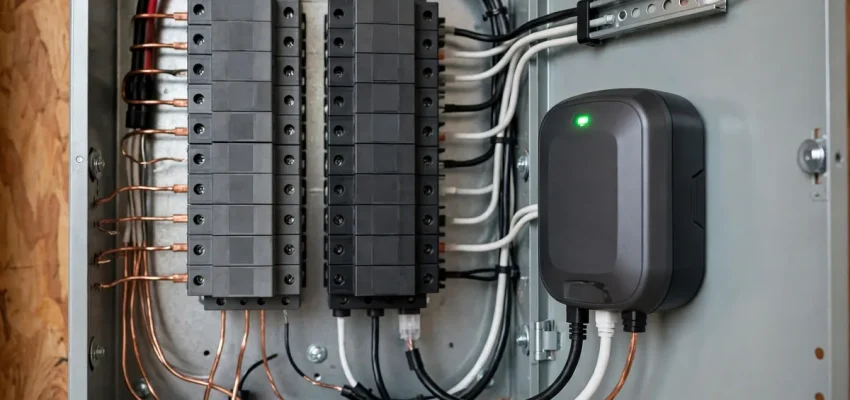
A whole-house surge protector (technically called a Type 1 or Type 2 Surge Protective Device, or SPD) mounts at your main electrical panel and diverts excess voltage safely to ground before it reaches your home’s circuits. Think of it as a bouncer for electricity — normal power passes through, but dangerous spikes get intercepted.
This is fundamentally different from the power strips you plug electronics into. Those point-of-use protectors guard individual devices but do nothing for hardwired equipment like your furnace, AC compressor, oven control board, or hot tub electrical control panel. A whole-house unit protects everything, including the appliances you cannot unplug.
Modern American homes are more vulnerable to surges than ever. The average home now contains dozens of microprocessor-controlled devices — smart thermostats, LED drivers, appliance control boards, EV chargers, solar inverters — all sensitive to voltage spikes that older electromechanical equipment would shrug off. A $500 surge protector guarding $20,000+ of electronics is simple math.
Average Whole House Surge Protector Cost in USA 2026
The total whole house surge protector cost breaks into equipment and labor. The device itself runs $100 to $400 depending on capacity and features. Professional installation adds $150 to $400. Most homeowners pay $300 to $600 all-in for a quality installation.
Budget option ($200–$350 installed): A basic Type 2 SPD with 40kA–80kA surge capacity, professionally installed. Adequate for most homes in areas with stable utility power and low lightning risk.
Mid-range ($350–$600 installed): A higher-capacity unit (80kA–108kA) from a major brand like Eaton, Siemens, or Square D, with indicator lights showing protection status. The sweet spot for most USA homeowners.
Premium ($600–$1,000+ installed): Top-tier protection with the highest surge ratings, sometimes paired with a second unit at a subpanel for layered defense. Recommended for homes with extensive electronics, home offices, or in high-lightning regions like Florida, Texas, and the Gulf Coast.
If your electrical panel is outdated or full, the electrician may recommend a electrical panel upgrade first, which adds $1,500 to $3,000. An SPD needs two adjacent breaker spaces, so a packed panel can complicate installation.
Types of Surge Protectors Compared
Type 1 SPDs: Service Entrance Protection
Type 1 devices install between the utility meter and your main panel (or at the meter itself, with utility cooperation). They handle the largest external surges — direct lightning strikes to nearby lines, utility switching events. Some utilities offer meter-based surge protection as a monthly service ($5–$10/month), which is convenient but adds up over time compared to owning your own device.
Type 2 SPDs: Panel-Mounted Protection
Type 2 devices mount inside or next to your main breaker panel and are the most common choice for homeowners. They protect against surges that get past the service entrance, including residual lightning energy and internally generated surges from large motors cycling (AC compressors, well pumps). Most residential installations use Type 2.
For maximum protection, electricians often recommend a layered approach: a Type 1 or robust Type 2 at the main panel, plus point-of-use protectors at sensitive electronics. This cascading defense catches what each layer misses. Homes with a detached garage or workshop subpanel may benefit from a second SPD there — see outdoor electrical considerations when planning.
Key Specs to Compare
Surge current rating (kA): Higher is better. Look for at least 40kA per phase for basic protection; 80kA+ for robust defense. This measures how much surge energy the device can handle.
Clamping voltage: Lower is better. This is the voltage at which the device activates — 400V or less for 120V circuits is good. Lower clamping means less spike reaches your devices.
UL 1449 listing: Non-negotiable. This safety standard ensures the device has been independently tested. Never install an unlisted surge device.
Warranty/connected equipment coverage: Many manufacturers offer $25,000 to $75,000 in connected-equipment warranty — they will pay for damaged devices if the SPD fails to protect. Read the fine print; these warranties have specific claim requirements.
What Causes Damaging Power Surges?
Lightning gets the headlines, but it causes only a fraction of surge damage. Understanding the real threats helps you evaluate whether the whole house surge protector cost is justified for your situation.
Utility grid events are the most common source. When the power company switches grids, restores power after outages, or experiences equipment failures, voltage spikes ripple through the lines. Every power restoration after an outage sends a surge — which is why electronics often fail “when the power came back on.”
Internal surges happen inside your own home dozens of times daily. Large motors starting and stopping — your AC compressor, refrigerator, well pump, or whole-home generator transferring — create small spikes. Individually harmless, but they degrade sensitive electronics over time, shortening lifespans.
Lightning is the catastrophic threat. A nearby strike can induce thousands of volts on power lines. No residential SPD can survive a direct strike to your home, but a quality whole-house unit handles the far more common nearby strikes and induced surges that destroy electronics across entire neighborhoods.
Installation: What to Expect
Installing a whole-house surge protector is a straightforward job for a licensed electrician, typically taking 1 to 2 hours. The electrician mounts the SPD next to your panel, connects it to a dedicated double-pole breaker, and wires it to ground. The device needs the shortest possible wire leads — every extra inch of wire reduces effectiveness — so placement matters.
The work requires shutting off your main power, so plan for a brief outage. Your electrician will also verify your home’s grounding system is adequate — a surge protector is only as good as the ground it diverts to. Homes with outdated grounding may need a ground rod upgrade first.
This is not a DIY project for most homeowners. Working inside a live panel is dangerous, and improper installation voids both the manufacturer’s warranty and the connected-equipment coverage. Hire a licensed electrician — our guide to hiring an electrician in USA covers how to vet one properly.
Is a Whole House Surge Protector Worth It?
Consider what a single surge can destroy: an HVAC control board ($500–$1,500), a refrigerator compressor ($600–$1,200), a smart TV ($500–$2,000), a garage door opener logic board ($200–$400), and the control panels in your oven, dishwasher, and washing machine ($200–$600 each). A moderate surge event easily causes $3,000 to $10,000 in damage.
Against that risk, the whole house surge protector cost of $300 to $600 is inexpensive insurance. It is especially worthwhile if you live in a lightning-prone area (Florida, Texas, Oklahoma, Kansas), experience frequent power outages, have a home office with critical equipment, own a EV charger or solar system, or have recently invested in smart home technology. Homes with hot tubs or other high-value electronics benefit doubly, since these devices have expensive control boards vulnerable to surges. If your panel is aging, review electrical panel upgrade costs first — the SPD installs cleanest on a modern panel. And if you are evaluating overall electrical safety, our home purchase electrical inspection guide explains what professionals check.
Check your homeowner’s insurance too. Some policies offer small discounts for installed surge protection, and having an SPD strengthens any claim for surge damage. Document the installation with photos and receipts.
Maintenance and Lifespan
Surge protectors are sacrificial devices — they absorb surge energy to protect your home, and each significant event degrades them slightly. Most quality SPDs last 5 to 10 years, though a single massive surge can exhaust one instantly.
Most units have indicator lights showing protection status. Check them every few months — if the “protected” light goes out, the device has sacrificed itself and needs replacement. Some premium models have audible alarms or smart notifications. After any known major surge event (nearby lightning strike, extended outage restoration), have your electrician verify the SPD is still functional.
Replacement is simple and cheaper than the initial install since the wiring is already in place — typically $150 to $300 including the new device. Think of it like replacing a smoke detector battery: routine maintenance for ongoing protection. If you are already having panel work done, ask your electrician about bundling — many homeowners combine SPD installation with breaker troubleshooting or finding a qualified electrician for other projects to save on trip charges.
Frequently Asked Questions
Will a whole house surge protector stop all surges?
No device offers 100% protection against every possible surge, especially direct lightning strikes. But a quality SPD stops the vast majority of damaging surges — utility events, nearby lightning, and internal spikes — which account for nearly all residential surge damage.
Do I still need plug-in surge protectors?
Yes, for your most sensitive and valuable electronics. A layered approach — whole-house SPD plus quality point-of-use protectors at your computer, home theater, and networking gear — provides the best defense. The whole-house unit handles the big spikes; the plug-in units catch residual energy.
Can I install it on a subpanel instead?
You can, but the main panel is the priority — it protects everything downstream. A subpanel SPD is a good secondary layer for detached structures or workshops with expensive equipment, not a substitute for main-panel protection.
The whole house surge protector cost is one of the best value investments in home electrical protection. For a few hundred dollars installed, you shield tens of thousands of dollars of electronics and appliances from the surges that strike every American home. Get quotes from licensed electricians, choose a UL-listed device with strong specs, and enjoy the peace of mind.