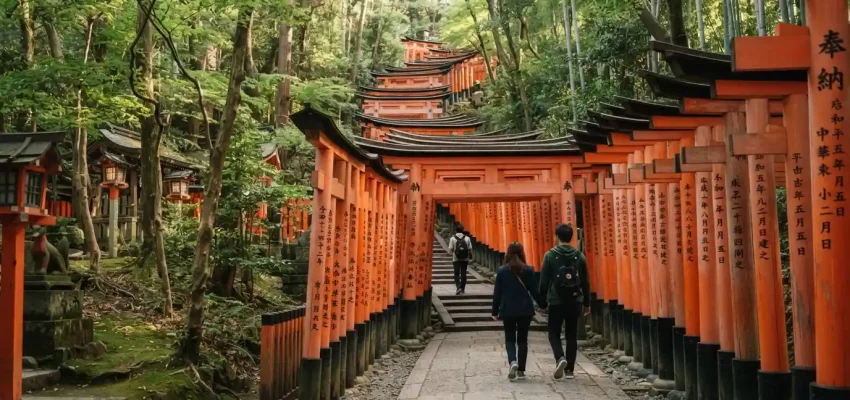

If you are searching for places to visit near Fushimi Inari Shrine, you can easily build a full day around the area instead of visiting the torii gates and immediately returning to central Kyoto. Several worthwhile attractions are within a short train ride or a convenient continuation of your Kyoto itinerary.
From peaceful temple grounds to famous cultural districts, these nearby destinations make it easier to experience a broader side of Kyoto. Travelers planning other Japan trips can also explore our guides to visiting Tokyo in autumn and Fushimi Inari Shrine when building a wider itinerary.
Why Visit Attractions Near Fushimi Inari Shrine?
Fushimi Inari is located in southern Kyoto, making it a useful starting point for exploring several historic and cultural attractions. The shrine itself can take several hours if you walk beyond the lower torii gates and continue toward the summit of Mount Inari.
Rather than treating Fushimi Inari as an isolated attraction, consider combining it with nearby temples, traditional neighborhoods, museums, and scenic areas. This approach can save travel time and give you a more varied Kyoto experience.
The area is also known for its connection to sake brewing, historic waterways, traditional architecture, and local food. That makes it particularly appealing to travelers who want more than Kyoto’s most photographed landmarks.
Best Places to Visit Near Fushimi Inari Shrine
1. Tofukuji Temple
Tofukuji Temple is one of the most convenient additions to a Fushimi Inari itinerary. The temple is especially well known for its autumn foliage, when its maple trees create dramatic seasonal scenery.
The temple complex also offers impressive traditional architecture and landscaped areas that provide a calmer atmosphere after the busy paths around Fushimi Inari. Its location makes it particularly practical for travelers moving between southern Kyoto and central Kyoto.
If you enjoy historic temples and seasonal scenery, Tofukuji is one of the first places worth considering after visiting Fushimi Inari.
2. Fushimi Sake District
Fushimi is one of Japan’s important sake-producing areas, and its reputation is closely connected to the area’s high-quality groundwater. The historic sake district features breweries, traditional buildings, restaurants, and places where visitors can learn more about Japanese sake culture.
A visit here provides a completely different experience from walking through the torii gates. Instead of hiking, you can explore the area’s streets, architecture, food, and brewing traditions.
Travelers interested in culinary tourism may want to leave several hours for Fushimi rather than simply passing through on the way to another Kyoto attraction.
3. Gekkeikan Okura Sake Museum
The Gekkeikan Okura Sake Museum is another worthwhile stop for visitors exploring the Fushimi area. It introduces the history and traditional production of sake while providing insight into one of the region’s most important industries.
This is particularly useful if you want to understand why Fushimi developed into such a significant sake-producing district. Combining the museum with a walk through the surrounding brewery area creates a well-rounded cultural experience.
4. Fushimi’s Traditional Canal Area
Fushimi’s canals provide a peaceful contrast to the crowds that can surround major Kyoto attractions. Historically, waterways played an important role in transporting goods through the district, helping Fushimi develop as a transportation and commercial center.
Today, visitors can enjoy scenic walks and, depending on the season and operating schedule, traditional boat experiences. The canal-side landscape is particularly attractive when seasonal colors add another layer to the historic setting.
It is an excellent choice if you want photographs and a slower-paced experience after exploring the shrine.
5. Teradaya Inn
History enthusiasts may want to add Teradaya Inn to their Fushimi itinerary. The historic inn is associated with important events during Japan’s turbulent late Edo period and provides another connection to the area’s historical identity.
Its significance is less about sightseeing in the conventional sense and more about understanding Fushimi’s role in Japanese history. Consider combining it with nearby canals and the traditional streets of the district.
6. Otesuji Shopping Street
For travelers who want food, local shopping, and everyday Kyoto atmosphere, Otesuji Shopping Street is an appealing stop. The shopping area provides opportunities to browse local products and enjoy casual food away from some of Kyoto’s busiest sightseeing zones.
Shopping streets can also be a useful part of a Kyoto itinerary because they provide a glimpse into local life rather than focusing entirely on historic monuments.
7. Kyoto Station
Kyoto Station is not immediately next door to Fushimi Inari, but it is one of the easiest places to combine with a visit because of the direct rail connection. The station is also a major transportation hub for exploring other parts of Kyoto and destinations beyond the city.
If you are arriving in Kyoto by train, consider visiting Fushimi Inari earlier in the day and returning toward Kyoto Station afterward. From there, you can continue to other attractions or connect with additional destinations.
8. Toji Temple
Toji Temple is another excellent option for travelers interested in Kyoto’s religious architecture. The temple is particularly recognizable for its five-story pagoda, which has become one of the city’s memorable landmarks.
Toji works well as part of a southern Kyoto itinerary because it can be combined with other attractions around Kyoto Station. Its historical importance and distinctive architecture make it worth considering if you have additional time after Fushimi Inari.
9. Higashi Honganji Temple
Higashi Honganji is located near Kyoto Station and offers another opportunity to explore Kyoto’s Buddhist heritage. Its large wooden structures and spacious temple grounds provide a different visual experience from the forested torii paths of Fushimi Inari.
Because of its location, it can be particularly convenient for visitors beginning or ending a sightseeing day around Kyoto Station.
10. Gion
If your main goal is to experience Kyoto’s traditional atmosphere, continue from southern Kyoto toward Gion. The historic district is known for traditional streets, teahouses, restaurants, shops, and its connection to Kyoto’s geisha culture.
Gion is farther from Fushimi Inari than the attractions in Fushimi itself, but it can still work well in a full-day itinerary if you plan your transportation efficiently.
For a broader look at Kyoto’s historic atmosphere and nearby sightseeing opportunities, travelers can also explore our guide to popular city sightseeing experiences for comparison when planning other international trips.
11. Kiyomizu-dera Temple
Kiyomizu-dera is one of Kyoto’s most famous temples and can be combined with Fushimi Inari when you want to see two major cultural attractions in one day.
The temple is famous for its large wooden stage and hillside setting. The surrounding Kiyomizu neighborhood also contains traditional streets, shops, cafés, and craft stores.
Because the area can become busy, starting your day early at Fushimi Inari and continuing toward Kiyomizu-dera can be a practical way to experience both locations.
12. Higashiyama
The wider Higashiyama area is filled with historic temples, traditional streets, gardens, and cultural attractions. It is a good choice for travelers who want to continue exploring Kyoto after visiting Fushimi Inari.
Higashiyama can easily fill several hours, so avoid trying to see every attraction in the district if you are visiting Kyoto for only one day.
13. Uji
Uji is a natural extension of a southern Kyoto itinerary and is particularly attractive to travelers interested in temples, tea culture, riverside scenery, and Japanese history.
The town is famous for its connection to Japanese green tea and is home to important cultural landmarks. If you have an additional half-day or full day, Uji can provide a refreshing change of pace from central Kyoto.
Travelers planning broader international sightseeing itineraries can also compare this type of cultural destination with our guides to the top places to visit in Santorini and best places to visit in Austria.
14. Nara
Nara is farther away, but it can be considered when you have enough time for a day trip from Kyoto. The historic city is known for major temples, traditional cultural sites, parks, and its famous deer.
Because Nara requires more travel time than the attractions immediately surrounding Fushimi Inari, it is better suited to a separate day rather than squeezing it into a short Fushimi itinerary.
15. Arashiyama
Arashiyama is located on the opposite side of Kyoto, so it is not a close attraction to Fushimi Inari. However, it is one of Kyoto’s most popular sightseeing areas and may be worth visiting on another day.
The district is known for its bamboo grove, temples, river scenery, traditional streets, and mountain views. Separating Arashiyama from your Fushimi itinerary can make your trip more comfortable and reduce unnecessary cross-city travel.
16. Nishiki Market
Nishiki Market is another popular Kyoto destination for travelers interested in food and local shopping. It is located in central Kyoto, making it more suitable as part of a wider city itinerary rather than a quick stop immediately after Fushimi Inari.
The market is particularly useful for experiencing Kyoto’s culinary side, with shops selling local ingredients, snacks, sweets, pickles, and other regional specialties.
Best Day Itinerary From Fushimi Inari Shrine
If you want to make the most of the area, consider starting early at Fushimi Inari Shrine. Walk through the main torii gate route and decide how far you want to climb Mount Inari.
After exploring the shrine, continue toward Tofukuji Temple. Spend some time exploring the temple grounds before moving into the broader Fushimi area.
In the afternoon, explore the Fushimi sake district and consider visiting the Gekkeikan Okura Sake Museum. You can then walk around the canals and traditional streets before returning toward central Kyoto.
If you still have energy, continue toward Gion or another central Kyoto attraction. This creates a balanced day that combines religious heritage, nature, food, history, and local culture.
How to Get Around From Fushimi Inari
Fushimi Inari is particularly convenient for travelers using Kyoto’s rail network. JR Inari Station is directly associated with the shrine, while Fushimi Inari Station on the Keihan Line is also within walking distance.
This makes the area easier to connect with other Kyoto neighborhoods than some attractions located deeper in the mountains or countryside.
For longer journeys, check your route before leaving and allow extra time during busy travel periods. Kyoto’s most popular attractions can become crowded, and walking between some locations may take longer than expected.
Best Time to Visit Places Near Fushimi Inari
Spring and autumn are particularly attractive seasons for exploring Kyoto because of seasonal scenery. Autumn can be especially beautiful around temple gardens and maple-covered areas, while spring brings blossoms and comfortable sightseeing conditions on many days.
Summer can be hot and humid, so early-morning sightseeing is often more comfortable. Winter generally brings fewer crowds, although temperatures can be cold and some seasonal attractions have different operating schedules.
Fushimi Inari itself can be busy throughout the year. Starting early is one of the simplest ways to enjoy the torii gates with fewer crowds.
What to Eat Near Fushimi Inari
The streets surrounding Fushimi Inari offer plenty of casual food options. You can find traditional Japanese dishes, snacks, sweets, noodles, rice dishes, and local specialties.
Inari sushi is particularly fitting for a visit to Fushimi Inari because of its traditional association with the shrine’s namesake deity. Kitsune udon, featuring fried tofu, is another familiar local-style choice.
When exploring the wider Fushimi district, consider making time for local restaurants and sake-related experiences rather than eating only around the shrine entrance.
Tips for Visiting Fushimi Inari and Nearby Attractions
- Start early: The shrine is popular, so an early arrival can make the main paths more enjoyable.
- Wear comfortable shoes: Exploring the mountain trails involves considerable walking and some uphill sections.
- Plan around trains: Rail connections make it easier to combine Fushimi Inari with southern and central Kyoto.
- Allow enough time: Do not underestimate how long it can take to walk through the shrine and up Mount Inari.
- Explore beyond the torii gates: Fushimi’s sake district, canals, shops, and temples provide additional experiences.
- Check seasonal schedules: Some attractions and special events operate differently depending on the season.
- Respect local customs: Fushimi Inari is an active religious site, so follow posted guidance and be considerate around worshippers.
More Travel Inspiration
If you enjoy building trips around distinctive cultural destinations, our travel guides can help you discover other places around the world. Explore our guide to New Zealand’s South Island, discover popular places in Norway, or plan a seasonal trip using our guide to places to visit in the U.S. in fall.
For family-oriented travel ideas, see places to visit in San Francisco with kids or family-friendly places in Utah. Nature lovers can also explore Yellowstone National Park and our guide to the best nature places to visit around the world.
Frequently Asked Questions
What is the closest major attraction to Fushimi Inari Shrine?
Tofukuji Temple is one of the most convenient major attractions to combine with Fushimi Inari because of its location in southern Kyoto and its rail accessibility.
How long should I spend at Fushimi Inari?
A quick visit to the lower shrine area can take considerably less time, but walking farther along the torii-gate route and exploring Mount Inari can take several hours.
Can I visit Fushimi Inari and other Kyoto attractions in one day?
Yes. Fushimi Inari can be combined with several southern or central Kyoto attractions. A practical itinerary might include Fushimi Inari, Tofukuji, the Fushimi district, and another central Kyoto neighborhood.
Is Fushimi Inari worth visiting early in the morning?
Yes. Early morning can provide a quieter sightseeing experience, particularly on the busiest sections of the shrine. It also leaves more time to explore nearby attractions afterward.
Is Fushimi Inari suitable for families?
Families can enjoy the shrine, but visitors should remember that the route up Mount Inari includes stairs, slopes, and substantial walking. Families with young children may prefer exploring the lower areas rather than completing the entire mountain route.
Conclusion
Fushimi Inari Shrine is much more than a quick photo stop. With historic temples, sake culture, canals, shopping streets, traditional neighborhoods, and easy rail connections nearby, the area can become one of the most rewarding parts of a Kyoto trip.
Whether you have a few hours or an entire day, choosing the right places to visit near Fushimi Inari Shrine can help you experience Kyoto’s history and culture at a more relaxed pace. Start with the shrine, add one or two nearby attractions, and leave enough time to enjoy the character of southern Kyoto rather than rushing from one landmark to another.