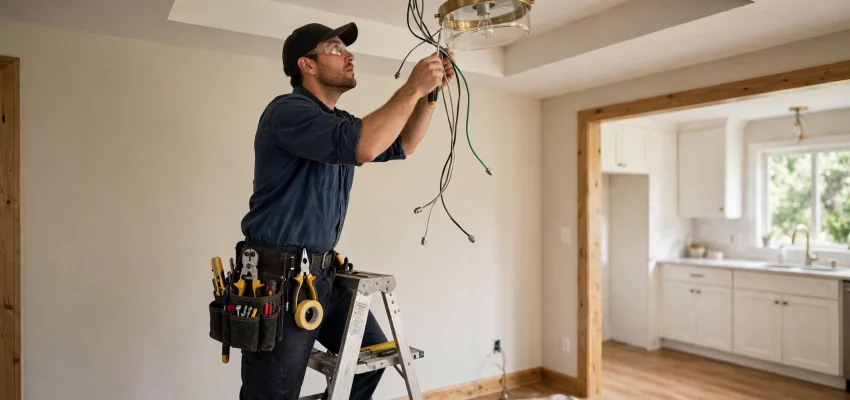

Flickering lights, a breaker that keeps tripping, or a dead outlet in the kitchen, electrical problems have a way of showing up at the worst possible time. When they do, most homeowners do exactly what you probably just did: type “electrician near me” into a search bar and hope for the best. But with dozens of listings competing for your attention, how do you tell a skilled, licensed professional from a risky gamble? This guide walks you through finding a reliable electrician in 2026, what fair pricing looks like, and the red flags that should send you running.
What Does an Electrician Cost in 2026?
Most US homeowners pay between $150 and $500 for a typical electrical job. Electricians generally charge $50 to $130 per hour, with most experienced pros landing in the $75 to $100 range, plus a service call fee of $50 to $100. Small tasks like replacing a faulty outlet or installing a ceiling fan usually run $150 to $300. Bigger projects, such as upgrading an electrical panel ($1,200 to $3,000) or rewiring a room ($500 to $2,000), cost considerably more.
Emergency electrical work, nights, weekends, and holidays, typically carries a premium of 50 to 100 percent above standard rates. If the situation is not an immediate safety hazard, scheduling during regular business hours can save you a significant amount.
Start With Licensing and Insurance
Never hire an electrician who cannot prove they are licensed and insured. Almost every US state requires electricians to hold a license, and many cities add their own requirements on top. A license tells you the electrician has completed the required training hours, passed competency exams, and is legally allowed to perform electrical work in your area.
Insurance matters just as much. Ask for proof of both general liability insurance and workers’ compensation coverage. If an uninsured worker is injured on your property or causes damage, you could be held financially responsible. Reputable electricians provide certificates of insurance without hesitation; anyone who dodges the question is not worth the risk.
Check Reviews the Smart Way
Online reviews are useful, but they require a critical eye. Look for electricians with a consistent pattern of positive reviews across multiple platforms, Google, Yelp, Angi, and the online home services marketplace, rather than a perfect score on just one site. Pay special attention to reviews that mention punctuality, cleanliness, clear communication, and whether the final bill matched the estimate.
Be wary of businesses with only a handful of glowing five-star reviews posted within a short window, or those with no online presence at all. Also check how the company responds to negative reviews. A professional, solution-oriented response says a lot about how they treat customers when things go wrong.
Get Detailed Written Estimates
Always get at least three written estimates for any job beyond a minor repair. Many home care companies now provide detailed digital quotes that spell out the scope of work, labor costs, materials, permit fees, and the expected timeline. Vague verbal quotes like “it’ll probably be around two hundred” are a recipe for disputes.
When comparing estimates, make sure each electrician is bidding on the same work. The cheapest quote is not always the best value; an unusually low bid can signal cut corners, unlicensed labor, or cheap materials that will fail early. Look for the estimate that offers the best balance of fair price, clear scope, and professional credentials.
Questions to Ask Before Hiring
Before you commit, ask every candidate these questions:
- Are you licensed in this state and city? Ask for the license number and verify it with your state licensing board.
- Do you carry liability and workers’ comp insurance? Request current certificates.
- Will you pull the required permits? Legitimate electricians handle permits for panel upgrades, rewiring, and new circuits.
- Do you guarantee your work? Working with vetted home service professionals typically means at least a one-year warranty on labor.
- Who will actually do the work? Some companies send apprentices unsupervised. Know who is coming to your home.
- How do you handle unexpected issues? A pro explains their change-order process upfront instead of surprising you with extra charges.
The same vetting approach works for other trades as well — for instance, Dallas homeowners can check our garage door repair cost Dallas guide to see fair 2026 prices before booking a garage door technician.
Red Flags to Watch Out For
Walk away from any electrician who:
- Demands full payment upfront. A deposit of 10 to 30 percent is normal; full prepayment is not.
- Refuses to provide a written estimate or contract.
- Cannot show a license or proof of insurance.
- Offers a “today only” discount to pressure you into an instant decision.
- Suggests skipping permits to save money. Unpermitted work can void your homeowners insurance policy and cause problems when you sell.
- Shows up without proper identification, branded vehicles, or professional tools.
Common Electrical Jobs Worth Hiring For
Some tasks are safe DIY projects, but electrical work is rarely one of them. Always call a licensed electrician for panel upgrades, new circuits, rewiring, EV charger installation, and generator hookups, especially when these are part of larger home improvement projects. The risk of fire, electrocution, or code violations far outweighs any potential savings. Minor tasks like swapping a light switch cover are fine, but when in doubt, hire the pro.
Final Thoughts
Finding a trustworthy electrician near you in 2026 comes down to a simple formula: verify the license, confirm insurance, read reviews critically, compare written estimates, and trust your instincts. Expect to pay $150 to $500 for typical jobs and more for major upgrades. Do the homework upfront, and you will get safe, code-compliant work at a fair price, without the stress of wondering whether you hired the right person. If you are pricing a job in a high-cost metro, see our guide to electrician cost in New York City.
If your home-security project also involves locks or rekeying, our 2026 guide to how much a locksmith charges breaks down typical prices.