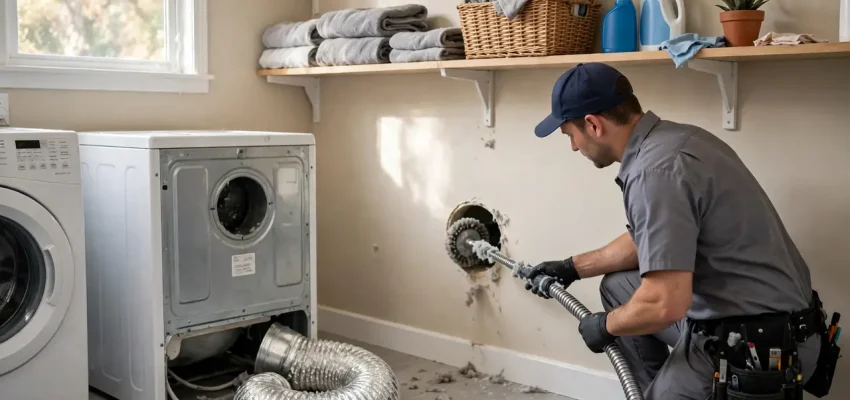

Your dryer works harder than almost any other appliance in your home, and most of the lint it collects never makes it into the lint trap. Understanding dryer vent cleaning cost is important for every USA homeowner, because a clogged dryer vent is not just an efficiency problem. It is a genuine fire hazard. Lint is extremely flammable, and when it builds up inside the vent duct, the hot air from your dryer turns that duct into a tinderbox.
Thousands of house fires each year are linked to dryers, and failure to clean the vent is the leading factor. Beyond safety, a clogged vent makes your dryer run longer, wear out faster, and drive up your energy bills. In this guide, you will learn what professional dryer vent cleaning costs in 2026, which factors move the price up or down, how to clean the vent yourself safely, the warning signs of a dangerous clog, and how often this maintenance should be done.
Average Dryer Vent Cleaning Cost in 2026
For most USA homes, professional dryer vent cleaning cost falls in a modest range, typically between one and two hundred dollars for a standard single-story home with an accessible vent. This is one of the most affordable professional home services, which is good news, because it is also one of the most important.
The price covers a technician’s visit, specialized rotary brush equipment that scrubs the inside of the duct, and high-powered vacuuming to remove all the loosened lint. Most appointments take under an hour. Many companies bundle dryer vent cleaning with other services or offer it as an add-on during HVAC maintenance visits, which can reduce the effective price. Because the cost is low and the safety payoff is high, this is a service worth scheduling regularly rather than postponing.
What Affects Dryer Vent Cleaning Cost
Several factors can push your price above or below the average. Vent length and routing matter most. A short, straight vent that exits through the wall right behind the dryer is quick and cheap to clean. A long vent that runs across the house, up through the attic, or out through the roof takes more time, more equipment, and sometimes a second technician, all of which raise the price.
Accessibility is the second major factor. If the dryer is stacked in a tight closet, located on an upper floor far from an exterior wall, or the exterior vent cap is on a steep roof, expect to pay more. The level of buildup also matters: a vent that has never been cleaned in ten years may require extra passes or even partial disassembly. Additional services add to the bill as well. Many technicians will offer to replace flimsy foil or plastic ducting with rigid metal duct, install a new exterior vent cap, or add a booster fan for very long runs. These upgrades are often worth the money, since rigid metal duct is safer and performs better than the flexible foil accordions found in many homes.
Warning Signs Your Dryer Vent Is Clogged
Your dryer will tell you when its vent is struggling. The most obvious sign is clothes taking much longer to dry than they used to, sometimes requiring two or three cycles for a single load. If the laundry room feels unusually hot and humid while the dryer runs, hot moist air is not escaping properly and is backing up into the room.
Check the exterior vent cap while the dryer is running. You should feel a strong flow of warm air. A weak trickle, or no airflow at all, means the duct is substantially blocked. Other red flags include a burning smell during operation, the top of the dryer feeling extremely hot to the touch, and excessive lint accumulating around the dryer or on clothes even after cleaning the lint trap. If you notice any of these symptoms, stop using the dryer until the vent is cleaned. Continuing to run a dryer with a severely clogged vent is asking for trouble. Homeowners who like to stay on top of routine upkeep can also review our guide to house cleaning services for keeping the whole home in shape.
Why a Clogged Dryer Vent Is So Dangerous
It is worth understanding exactly why this maintenance matters so much. Dryer lint is made of tiny fibers that ignite easily and burn fast. As lint accumulates inside the duct, it restricts airflow, which makes the dryer run hotter. The combination of built-up fuel and rising heat is what leads to fires, and these fires often start inside the wall or attic where the duct runs, so they can spread before anyone notices.
Even when fire does not occur, the restricted airflow forces the dryer’s heating element and motor to work much harder, shortening the appliance’s lifespan and sometimes tripping thermal safety fuses that require a repair visit. Energy waste is the quieter cost: a clogged vent can significantly increase the energy needed per load, and for households doing many loads a week, that adds up to real money over a year. Regular vent cleaning protects your home, your appliance, and your wallet at the same time.
How Often Should You Clean Your Dryer Vent?
For most households, professional dryer vent cleaning once a year is the right cadence. Larger families that run the dryer daily, homes with pets whose hair adds to the lint load, and households that dry lots of heavy items like towels and bedding may benefit from cleaning every six to nine months.
Between professional visits, clean the lint trap after every single load. This takes five seconds and is the most important habit for dryer safety. Once a month, vacuum around and behind the dryer and wipe down the lint trap housing with a brush to remove buildup the trap misses. These small habits extend the time between deep cleanings and keep the dryer running efficiently. If you have just moved into a home and have no idea when the vent was last cleaned, schedule a cleaning right away rather than guessing. New homeowners often bundle this with other move-in tasks such as rekeying, so check typical locksmith service costs too. The same proactive approach applies to other hidden maintenance: carpet cleaning and pest control also work best on a regular schedule.
DIY Dryer Vent Cleaning: Step by Step
Cleaning a dryer vent yourself is very doable if the vent run is short and accessible. You will need a dryer vent cleaning kit, which includes flexible rods and a brush head and is widely available for a modest price, plus a vacuum with a hose attachment and a screwdriver.
Start by unplugging the dryer or turning off its breaker, and if it is a gas dryer, turn off the gas supply valve as well. Pull the dryer away from the wall and disconnect the vent duct from the back of the dryer, catching any lint that spills. Vacuum out the dryer’s exhaust port and as much of the duct as you can reach. Then assemble the brush rods, insert the brush into the duct from inside the house, and rotate it as you feed it through, adding rods until you reach the exterior cap. Work the brush back and forth several times to scrub the duct walls.
Next, go outside and remove the exterior vent cap, clearing any lint packed around it by hand and with the brush. Reconnect everything securely with metal clamps, never just tape, and make sure the duct has no kinks or crushing where it bends behind the dryer. Run the dryer on a no-heat air cycle for a few minutes and check the exterior cap for strong airflow. If airflow is still weak, the blockage may be in a section you cannot reach, and it is time to call a professional. Also take the opportunity to inspect the duct material itself: if you find flimsy white plastic or foil accordion duct, plan to replace it with rigid metal, since the flexible types trap far more lint and are a known fire risk. For gas dryers, any work near the gas connection deserves extra caution, so review gas line installation safety guidance before you start.
When to Call a Professional Instead
DIY cleaning handles straightforward vents, but some situations call for a pro. If your vent runs through the attic, inside walls for a long distance, or exits through the roof, professional equipment and experience make the job safer and more thorough. Roof-exiting vents in particular are difficult to clean properly from inside and risky to access from outside.
Call a professional if you have tried DIY cleaning and airflow is still weak, if you discover damaged or disconnected duct sections inside the wall, or if the duct is made of materials that need replacing. Also bring in a pro if you smell gas at any point around a gas dryer: stop work immediately, leave the area, and call your gas utility. A home warranty plan sometimes covers appliance repairs resulting from vent issues, so check your coverage before paying for repairs out of pocket. And when hiring any home service professional, the same vetting rules apply: verify licensing and insurance, read recent reviews, and get the price in writing before work begins, just as you would when finding a reliable electrician.
Dryer Vent Upgrades Worth Considering
While you are thinking about your dryer vent, consider upgrades that make future maintenance easier and safer. Replacing flexible foil duct with rigid metal duct is the single best improvement: it has a smooth interior that resists lint buildup, it will not kink or crush, and it meets current building code recommendations.
Keep the vent run as short and straight as possible. Every bend adds resistance and creates a spot where lint collects. If a long run is unavoidable, a dryer duct booster fan can maintain proper airflow. Outside, make sure the vent cap has a working damper that opens freely and closes when the dryer is off, keeping out pests, rain, and cold air. Avoid vent caps with screens over the opening, since screens trap lint quickly; the damper alone is sufficient. These one-time improvements reduce your long-term dryer vent cleaning cost by making each cleaning faster and less frequent. Homeowners tackling exterior upgrades may also want to look at pressure washing to refresh siding and walkways, and detecting water leaks early is another high-value habit that prevents expensive damage.
Conclusion
Dryer vent cleaning cost is small compared to what a clogged vent can cost you: higher energy bills, a ruined dryer, or worst of all, a house fire. A professional cleaning once a year, lint trap cleaning after every load, and attention to the warning signs will keep your dryer safe and efficient.
Whether you tackle the job yourself with a brush kit or hire a professional for a long or roof-exiting vent, do not put this maintenance off. Check your exterior vent cap today, and if the airflow is weak or you cannot remember the last cleaning, schedule one this week. It is one of the simplest, cheapest ways to protect your home.