
Your carpet takes more abuse than almost anything else in your home. It absorbs muddy paw prints, spilled coffee, everyday dust, and the slow grind of thousands of footsteps — and after a while, vacuuming alone stops being enough. That is when most homeowners start asking about professional carpet cleaning cost and whether the results are worth the money.
In 2026, professional carpet cleaning in the USA typically costs $120–$350 for a whole home, or about $25–$75 per room. Most companies charge $0.25–$0.50 per square foot, with a minimum service fee of $100–$150. Steam cleaning (hot water extraction) costs a bit more than dry methods but delivers the deepest clean, and it is the method most carpet manufacturers require to keep warranties valid. This guide breaks down 2026 prices by method, room, and situation — plus how to get the best value from every appointment.
How Much Does Carpet Cleaning Cost in 2026?
The national average carpet cleaning cost for a typical 3-bedroom home (around 1,000–1,500 square feet of carpet) lands between $175 and $275 in 2026. Smaller jobs — a single bedroom or a living room — usually run $80–$150, while large homes or heavily soiled carpets can push past $400.
Most companies use one of two pricing models. Per-room pricing ($25–$75 per room) is simple and common for standard bedrooms and living rooms, though companies often define a “room” as up to 200–300 square feet — larger spaces may count as two rooms. Per-square-foot pricing ($0.25–$0.50 per square foot) is more precise and typical for large or commercial spaces. Either way, expect a minimum charge: few reputable companies will roll a truck for less than $100–$150.
Stairs usually cost extra at $2–$5 per step, and hallways are often priced like half a room. If your quote seems high, ask exactly how the company measures — the difference between “per room” and “per square foot” math can swing your total by 30% or more.
Carpet Cleaning Cost by Method
Steam Cleaning (Hot Water Extraction): $150–$350
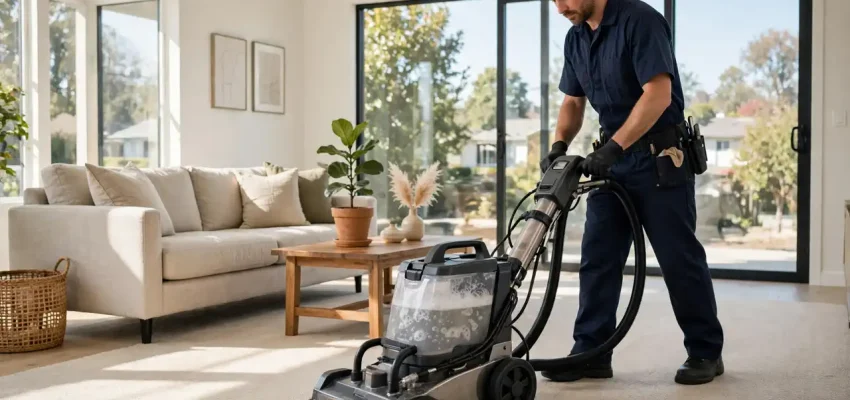
Steam cleaning — more accurately called hot water extraction — is the gold standard. Hot water and cleaning solution are injected deep into carpet fibers, then immediately extracted along with dissolved dirt, allergens, and residues. It costs $0.30–$0.50 per square foot, making it the priciest common method, but it is also the deepest clean and the one most manufacturers require for warranty compliance.
Drying takes 6–12 hours, so plan accordingly. The results, however, are dramatic: matted traffic lanes lift, embedded pet dander comes out, and carpets look years younger. For households with allergies, this method removes far more allergens than any other approach. It pairs well with a broader healthy-home routine that includes regular house cleaning services and HVAC maintenance to keep indoor air clean.
Dry Carpet Cleaning: $100–$300
Dry cleaning uses specialized machines and minimal moisture — usually a dry compound or encapsulation solution that binds to dirt and is then vacuumed away. At $0.20–$0.40 per square foot, it costs less than steam cleaning and carpets are usable within an hour or two, which makes it popular for offices and busy households.
The tradeoff is cleaning depth: dry methods refresh surface soil well but do not extract the deep-down grime that steam cleaning reaches. For lightly soiled carpets or maintenance cleanings between deep cleans, it is a solid, budget-friendly option.
Bonnet and Shampoo Cleaning: $80–$250
Bonnet cleaning (a rotary pad dampened with solution) and traditional shampooing are the budget options at $0.15–$0.35 per square foot. They are fast and cheap, which is why you see them in rental turnovers and commercial buildings. However, shampooing can leave residue that attracts dirt faster, and neither method extracts deeply. Think of these as cosmetic refreshes rather than restorative deep cleans.
What Affects Carpet Cleaning Cost?
Carpet condition. Heavily soiled carpets, matted traffic lanes, and set-in stains require pre-treatment, extra passes, and sometimes specialized spotting — adding 20–50% to the base price. Pet urine is a special case: enzyme treatment runs $25–$50 per affected area, and severe cases may need pad replacement underneath.
Carpet type. Delicate fibers like wool, silk blends, and some berbers need low-moisture methods and gentler chemistry, which costs more. Standard nylon and polyester are the easiest and cheapest to clean.
Home size and layout. More square footage means more time and solution. Furniture moving adds $25–$75 if the crew has to shift heavy pieces; clearing rooms yourself saves money. This is the same logic behind prepping for any home service — a little homeowner effort, like the prep you do before pressure washing day, keeps labor costs down.
Add-on treatments. Deodorizing ($20–$40 per home), stain protection like Scotchgard ($20–$50 per room), and anti-allergen treatments ($30–$60) are the most common upsells. Stain protection is genuinely worthwhile in homes with kids and pets; deodorizing is worth it only if odors are actually present.
Location. Like every trade, carpet cleaning costs more in high-cost metros. Expect to pay 20–30% above the national average in cities like New York, San Francisco, or Seattle, and below average in smaller markets.
DIY Carpet Cleaning vs Hiring a Pro
Renting a carpet cleaner from a home center costs $30–$50 per day plus $15–$30 for solution — tempting compared to a $200 pro visit. For light maintenance between professional cleanings, rental machines do a decent job. But they have weaker suction than truck-mounted pro equipment, which means carpets stay wetter longer and more residue remains behind. Over-wetting is the biggest DIY risk: it can cause mold or mildew under the carpet, turning a $40 rental into a mold remediation bill.
Buying a home carpet cleaner ($150–$350 for a good Bissell or Hoover) makes sense if you have pets or kids and plan to clean quarterly — the machine pays for itself within a year. For annual deep cleans, though, professional truck-mounted equipment still wins on results. Many homeowners use both: DIY maintenance every few months, pro deep clean once a year.
How Often Should You Clean Your Carpets?
Carpet manufacturers and the Carpet and Rug Institute recommend professional cleaning every 12–18 months to maintain warranties. Households with pets, kids, or allergy sufferers should go every 6–12 months. High-traffic rental properties often need cleaning between every tenant.
Waiting too long is a false economy. Ground-in soil acts like sandpaper on carpet fibers, permanently wearing them down — carpets cleaned regularly last 10–15 years, while neglected carpets may need replacement in 5–8 years. At $3–$7 per square foot installed, early carpet replacement dwarfs the cost of routine cleaning. Protective maintenance works the same way across your home: regular basement waterproofing checks and timely drywall repair both cost far less than the damage they prevent.
Questions to Ask Before You Book
Ask what cleaning method they use and whether it meets your carpet warranty requirements. Ask for the total price in writing — including trip fees, stain treatment, and any add-ons — before the crew starts. Ask how long drying takes and what you should do to help (running ceiling fans and the HVAC system speeds drying considerably).
Check reviews on Google and the Better Business Bureau, and be wary of “$99 whole house” coupons — that price rarely survives the upsell gauntlet at your door. A legitimate company explains its pricing clearly and does not pressure you into add-ons. The same vetting approach serves you well when hiring a general contractor or comparing house painting estimates.
Ways to Save on Carpet Cleaning Cost
Book during off-peak months — late winter and early spring are typically slower, and companies offer discounts to fill schedules. Bundle rooms: the per-room rate almost always drops when you do the whole house at once. Move furniture yourself and vacuum beforehand to avoid prep fees. Ask about first-time-customer or referral discounts. And maintain the results: vacuum weekly with a HEPA-filter machine, clean spills immediately, and use entry mats to cut soil tracked in from outside.
If you are already planning bigger updates, coordinate timing — cleaning carpets after a home addition is finished, or refreshing floors alongside pest control treatments, keeps your home healthier with fewer separate service calls.
Carpet Cleaning Cost FAQs
How much does it cost to clean 3 bedrooms?
Three standard bedrooms typically cost $100–$225 depending on size, soil level, and method. Steam cleaning runs higher; dry methods run lower.
Does professional carpet cleaning remove pet urine?
Yes, with enzyme pre-treatment ($25–$50 per area). Severe, long-standing urine that has soaked into the pad may require pad replacement, which your cleaner can assess with a moisture meter or blacklight inspection.
How long do carpets take to dry after steam cleaning?
Usually 6–12 hours. Good airflow, moderate heat, and low humidity speed things up. Avoid walking on damp carpet in street shoes — wear clean socks or shoe covers.
Is Stanley Steemer or a local company better?
Both can do excellent work. National chains offer consistent pricing and guarantees; well-reviewed local companies often provide more personalized service and flexible pricing. Compare written quotes either way.
The Bottom Line on Carpet Cleaning Cost
At $120–$350 for a typical home, professional carpet cleaning is one of the highest-impact, lowest-cost ways to refresh your living space — cleaner air, brighter rooms, and longer carpet life for less than the price of a single room of new flooring. Choose steam cleaning for the deepest clean and warranty compliance, dry methods for speed and budget, and always get the total price in writing before the crew unloads. Clean carpets do not just look better; like every part of a well-kept home — from the plumbing to the paint — they last longer when you maintain them on schedule instead of waiting for a crisis.