
If you are staring at a dented wall, a cracked ceiling, or a hole your doorknob punched through the plaster, you are probably wondering what drywall repair cost looks like in the USA in 2026. The short answer is encouraging: most Americans pay a national average of $613 for professional drywall repair, with typical jobs landing between $296 and $930, according to Angi’s September 2026 cost data. However, the final number on your invoice depends on the size of the damage, where you live, and whether the repair involves tricky extras like textured finishes or water damage.
Drywall is the most common wall material in American homes, and it is also one of the most fragile. Doorknobs, moving furniture, pets, kids, and leaky plumbing all leave their marks. Fortunately, fixing drywall is one of the more affordable home repairs — often costing less than professional painting costs or house cleaning services for a whole home. In this guide, we break down the 2026 national averages, per-square-foot pricing, the factors that push your bill up or down, and practical ways to save money without ending up with a visible patch.
How Much Does Drywall Repair Cost in 2026?
According to Angi’s September 2026 data, the national average drywall repair cost is $613, and most homeowners spend somewhere in the $296 to $930 range. Small cosmetic fixes fall below that range, while large projects involving water damage, ceilings, or textured walls can climb past $1,000. These figures cover labor and materials for a contractor-performed repair, but they do not always include repainting the finished wall — which is worth asking about before you sign anything.
Pricing varies a lot by region. Contractors in high-cost metros like New York, San Francisco, and Boston often charge 20 to 30 percent above the national average, while rural areas and smaller Southern and Midwestern markets tend to come in below it. Therefore, if your repair is not urgent, you may get a better quote in the slower winter months.
Drywall Repair Cost by Project Size
Contractors usually price drywall work by the size and complexity of the job rather than by the hour, although hourly rates of $60 to $100 are common for small tasks. Most contractors also charge a minimum service fee of $125 to $200 just to show up, which means even a tiny hole has a price floor. Here is how typical drywall repair cost breaks down by damage size.
Small Holes and Dents (Under 1 Square Foot)
Tiny nail holes, dents from furniture, and the classic doorknob punch-through are the cheapest repairs. A handyman will usually charge $125 to $200 — essentially the minimum call-out fee — to patch, sand, and blend a small hole. Many homeowners handle these themselves with a $10 to $55 patch kit from a hardware store, which includes the patch, joint compound, and sandpaper.
Medium Patches (1 to 4 Square Feet)
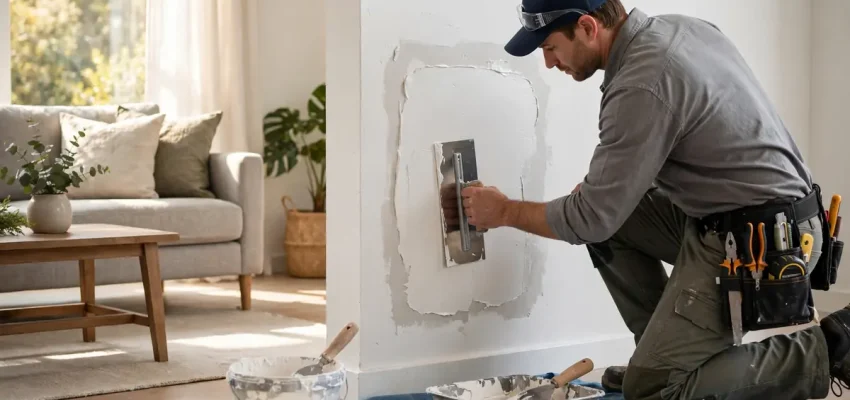
Holes from removed fixtures, medium dents, or small cracked sections typically cost $200 to $400 when a professional does the work. The contractor cuts out the damaged area, applies two or three coats of joint compound, sands it smooth, and primes it. For example, a 2-foot-by-2-foot patch in a hallway wall usually lands around $250 to $300. This is the sweet spot where hiring a pro makes sense: the work takes a few visits (compound needs drying time), but the result is invisible.
Large Sections (4+ Square Feet)
When damage covers a full wall section — say, from a burst pipe or a removed built-in — contractors switch to per-square-foot pricing. Standard wall section replacement runs $60 to $70 per square foot in 2026, so an 8-by-4-foot section (32 square feet) costs roughly $1,920 to $2,240. Meanwhile, if the damage is in a ceiling rather than a wall, expect to pay about 20 percent more because overhead work is slower and harder.
Drywall Repair Cost Per Square Foot in 2026
Per-square-foot pricing is the most transparent way to compare quotes. Here are the 2026 averages for the most common drywall repair cost categories, based on current national data:
- Basic patch repair: $50–$60 per square foot
- Standard wall section replacement: $60–$70 per square foot
- Ceiling repair: $70–$85 per square foot
- Textured wall repair: $70–$95 per square foot
- Water-damaged drywall replacement: $75–$100 per square foot
These rates generally include cutting out damaged drywall, hanging new panels, taping, mudding, and sanding. Painting and texture matching are usually separate line items: plan on an extra $1.50 to $3.50 per square foot for primer and paint. Always ask for an itemized quote — a quote that looks cheap may simply be leaving out the finishing work.
Factors That Affect Your Drywall Repair Cost
Two homeowners with similar-looking holes can receive very different quotes. Understanding the cost drivers helps you spot an inflated estimate.
Location of the Damage
Ceilings cost roughly 20 percent more than walls because overhead work is slower and requires extra equipment. High walls, stairwells, and vaulted ceilings add even more. In addition, bathrooms and kitchens often need moisture-resistant drywall, which costs more in materials and labor, and damage behind tile or cabinetry costs extra because fixtures must be removed and reinstalled.
Water Damage and Mold
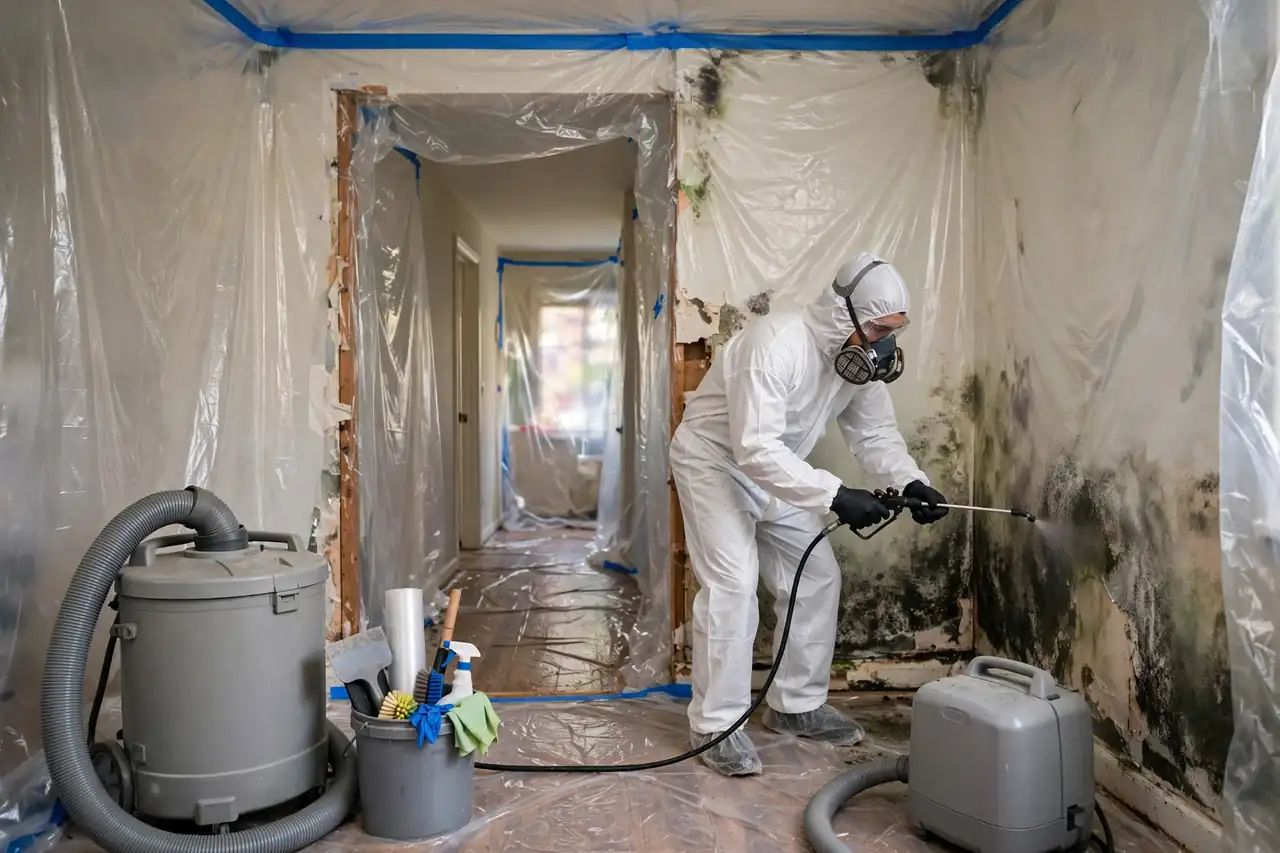
Water-damaged drywall is the priciest common repair at $75 to $100 per square foot, and for good reason. The contractor must find and fix the leak source first — which may mean plumber costs on top of the drywall bill — then remove all compromised material, replace wet insulation, check for mold, and install new drywall. Never simply patch over water-stained drywall; trapped moisture will keep spreading damage behind the wall.
Texture Matching
Matching an existing wall texture is a skilled art, and it shows in the price. Textured wall repair runs $70 to $95 per square foot, noticeably more than flat drywall. Orange peel, knockdown, skip trowel, and popcorn textures each require different techniques to blend invisibly, so ask to see photos of the contractor’s previous texture-matching work.
Asbestos in Older Homes
Homes built before the 1980s may have asbestos in joint compound or textured finishes. If testing confirms asbestos, certified abatement is required before any repair work begins, adding $4 to $20 per square foot. Disturbing asbestos without proper containment is dangerous and, in most states, illegal for unlicensed workers.
Labor Market and Timing
Where you live matters enormously. Coastal metros and fast-growing cities command premium labor rates, while smaller markets are cheaper. Emergency or same-week service also carries a premium — sometimes 25 to 50 percent above a standard quote. It is smart to get at least three quotes; estimates for the same job can differ by hundreds of dollars.
Drywall Repair Cost: DIY vs Hiring a Professional
One of the biggest decisions affecting your drywall repair cost is whether to do the work yourself. Here is an honest comparison to help you choose.
When DIY Makes Sense
Small nail holes, minor dents, and doorknob holes are ideal DIY projects. A complete patch kit costs just $10 to $55, and the process is simple: clean the hole, apply the patch, spread joint compound in thin coats, let it dry, sand it smooth, and paint. For example, filling a dozen nail holes before listing your home saves you a $125 to $200 minimum contractor fee. Just remember that joint compound shrinks as it dries, so apply two or three thin coats rather than one thick one.
When to Hire a Pro
Call a professional for anything larger than a dinner plate, any ceiling work, any textured surface, and any damage involving water or mold. Professionals have the taping knives, sanding tools, and — most importantly — the practiced hand to make seams disappear. A botched DIY patch on a visible living room wall often costs more to fix than the original professional quote would have.
Hidden Costs That Catch Homeowners Off Guard
The drywall itself is rarely the whole story. Watch for these add-ons that can inflate your final drywall repair cost:
- Painting and priming: $1.50–$3.50 per square foot on top of the repair, and sometimes a full wall must be repainted for the color to blend.
- Texture matching: specialty textures add labor time and material costs, especially popcorn or skip-trowel finishes.
- Insulation replacement: wet or damaged insulation behind the drywall must be replaced, adding $1–$4 per square foot.
- Mold remediation: a separate service entirely, priced by the scope of contamination.
- Electrical or plumbing access: if wires or pipes run through the damaged section, you may need an electrician or plumber — compare typical electrician costs before authorizing the work.
- Furniture moving and protection: some contractors charge extra to move heavy furniture or set up dust barriers.
- Permit fees: large repairs, especially those involving structural elements, may require a local permit.
A related surprise: drywall damage is sometimes a symptom of a bigger problem. Cracks that keep returning can signal foundation movement — in which case you should research foundation repair before patching the same crack for the third time. Similarly, ceiling stains often trace back to roof leaks, so check current roof repair pricing if the stain keeps coming back after rainstorms.
How Drywall Repair Fits Into Your Overall Home Maintenance Budget
Drywall repair is one of the most affordable trades, which makes it easy to bundle with other small jobs while a contractor is already on-site. Many handymen will discount a second or third task when they are already charging the $125 to $200 minimum visit fee. For instance, you might also get quotes for garage door repair, a seasonal HVAC maintenance visit, or a pest control inspection — pest damage is a common hidden cause of drywall holes.
It also pays to think about timing. If your drywall damage came from an aging HVAC system leaking condensation, fixing the wall without addressing the system sets up a repeat repair — compare AC replacement costs against the price of patching the same ceiling twice.
7 Ways to Save Money on Drywall Repair
These strategies can meaningfully lower your drywall repair cost without sacrificing quality:
- Get three written quotes. Drywall pricing is competitive, and bids for identical work routinely differ by 30 percent or more.
- Bundle small jobs. Combine the drywall fix with other minor repairs to spread the $125–$200 minimum visit fee across multiple tasks.
- Schedule during slow seasons. Late fall and winter (outside the holidays) are typically the cheapest times to book contractors.
- Handle prep and cleanup yourself. Moving furniture, laying drop cloths, and clearing the work area can shave labor time off the bill.
- DIY the painting. The repair itself needs skill, but rolling on primer and paint is easy — and paint labor is a big chunk of the total.
- Ask about offcut pricing. For medium patches, some contractors will use leftover drywall from another job and pass the material savings to you.
- Fix the root cause first. Repairing drywall over an active leak, pest problem, or foundation issue guarantees you will pay twice.
Conclusion
In 2026, the national average drywall repair cost is $613, with most homeowners paying between $296 and $930. Small holes can be handled for the $125 to $200 contractor minimum — or under $55 as a DIY project — while large section replacements run $60 to $70 per square foot, with ceilings, textures, and water damage pushing rates higher. Painting adds $1.50 to $3.50 per square foot, and underlying causes like leaks or foundation movement must be fixed first or the damage will return.
The smartest approach is straightforward: get three itemized quotes, confirm what finishing work is included, and never patch over an active problem. Knowing the 2026 price ranges puts you in control — and keeps a small wall repair from turning into a big budget surprise. A little research up front is the difference between a $200 patch and a $2,000 headache.
Found mold behind the damaged drywall? See our 2026 mold remediation cost guide for professional cleanup pricing.