
Cleaning gutters is one of those chores every USA homeowner dreads: the ladder, the soggy leaves, the muck, the wasps. Gutter guards promise to end that misery by keeping debris out of your gutters while letting rainwater flow through. But understanding gutter guards cost, and whether the investment actually pays off, is essential before you sign a contract, because prices vary enormously and not every product lives up to its marketing.
In this guide, you will learn what gutter guards cost in 2026 by type, the honest pros and cons of each style, how much maintenance you will still need, the situations where gutter guards are clearly worth it, and the red flags to watch for when dealing with gutter guard salespeople.
What Are Gutter Guards and How Do They Work?
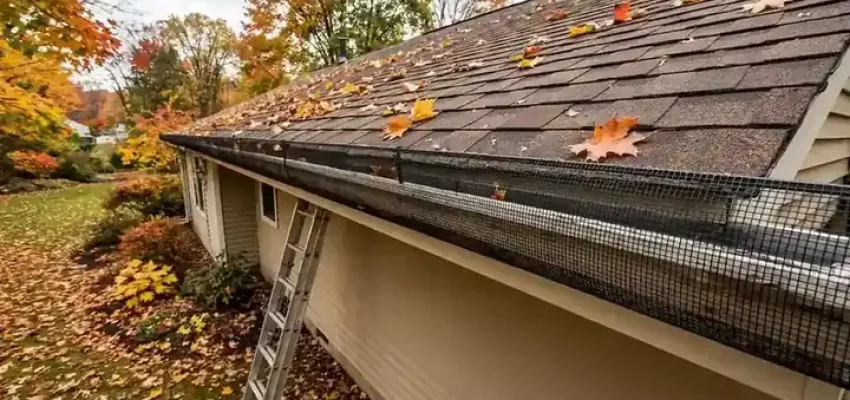
Gutter guards are covers, screens, or inserts that sit on top of or inside your gutters. Their job is simple: block leaves, twigs, pine needles, and other debris from entering the gutter trough while allowing rainwater to pass through into the downspouts. Without guards, debris accumulates, forms dams, and causes water to overflow, which can damage your fascia, siding, foundation, and landscaping.
There are five main types. Mesh guards use a fine stainless steel or aluminum mesh that blocks even small debris like pine needles and roof grit. Screen guards are similar but with larger openings, usually made of plastic or metal. Reverse-curve (or surface-tension) guards are solid covers with a curved edge that directs water into the gutter while debris falls off the edge. Foam inserts are porous polyurethane blocks that sit inside the gutter and filter water through. Brush guards are bristle brushes that sit in the trough and trap large leaves on top. Each type has a different gutter guards cost profile and different strengths, which we will break down next.
Average Gutter Guards Cost by Type
Gutter guards cost is usually priced per linear foot of gutter, including professional installation. For a typical USA home with 150 to 200 linear feet of gutters, total project costs range widely by type.
Foam inserts and brush guards are the cheapest options, often costing just a few dollars per linear foot installed, and they are the most DIY-friendly. Screen guards sit in the budget-to-midrange tier. Micro-mesh guards, widely considered the best-performing type, cost more per foot but deliver the finest filtration. Reverse-curve systems are typically the most expensive, sometimes costing several times more than basic screens, especially from national franchise installers with heavy marketing budgets.
Be aware that some national gutter guard companies quote prices far above the market rate and then offer dramatic same-day discounts. Always get multiple quotes, including from local gutter and roofing contractors, before committing. A local pro installing quality micro-mesh often costs far less than a national brand’s reverse-curve system while performing as well or better. If your gutters themselves are aging, compare this investment with our roof replacement cost guide, since roof and gutter work is often smartest to coordinate.
Pros of Installing Gutter Guards
The biggest advantage is obvious: far less gutter cleaning. With quality guards, the twice-a-year ladder ordeal often drops to an occasional quick inspection and light brushing. For two-story homes, elderly homeowners, or anyone uncomfortable on ladders, eliminating regular gutter cleaning is a genuine quality-of-life and safety improvement. Ladder falls injure thousands of homeowners every year, and avoiding that risk has real value.
Guards also protect your home by keeping water flowing properly. Clogged gutters overflow, and that overflow rots fascia boards, stains siding, erodes landscaping, and pours water against your foundation, where it can seep into basements and crawl spaces. By keeping gutters clear, guards reduce the risk of this water damage. They also deter pests: birds, squirrels, and mosquitoes love nesting and breeding in clogged, debris-filled gutters, and guards take away that habitat. For broader protection, see our pest control cost guide. In wildfire-prone areas, guards that keep dry leaves out of gutters remove a fuel source near the roofline. Homeowners dealing with foundation moisture should also review basement waterproofing costs and French drain installation pricing, since gutters and drainage work as one system.
Cons and Limitations of Gutter Guards
An honest discussion of gutter guards cost must include what guards cannot do. No gutter guard eliminates maintenance entirely. Fine debris like pine needles, seed pods, and roof shingle grit can still accumulate on top of guards or work through larger openings, and guards themselves need periodic brushing or blowing off to keep water flowing over them properly.
In heavy downpours, some guard types, particularly reverse-curve designs, can allow water to overshoot the gutter entirely, defeating the purpose. In cold climates, guards can contribute to ice dams by giving ice a surface to grip, though this varies by product and installation quality. Cheap foam inserts can deteriorate, trap seeds that sprout into plants, and become a soggy mess that is harder to clean than an open gutter. Brush guards catch large leaves effectively but let smaller debris through and can be tedious to clean. And critically, gutter guards do not fix underlying gutter problems: sagging, improperly pitched, or undersized gutters need repair or replacement first, or guards will just preserve a broken system. If your roof edge needs work too, check roof repair pricing for a sense of related costs.
Are Gutter Guards Worth It? Doing the Math
Whether gutter guards are worth it comes down to simple math and your personal situation. Start by estimating what you currently spend on gutter cleaning, whether that is the cost of hiring a service twice a year or the value of your own time and the risk of ladder work. Compare that annual figure against the installed gutter guards cost amortized over the product’s expected lifespan, which ranges from a few years for foam inserts to decades for quality metal mesh.
For a single-story home with few nearby trees, inexpensive screens or even diligent DIY cleaning may be the smarter financial choice. For a two-story home surrounded by mature oaks and pines, where professional cleaning is expensive and needed frequently, quality micro-mesh guards often pay for themselves within a few years while eliminating a hated chore. Factor in the avoided costs too: fascia repairs, foundation water issues, and landscape erosion caused by overflowing gutters all cost real money. Also consider your stage of life. For older homeowners planning to age in place, never climbing a ladder to clean gutters again is worth a premium that pure dollars-and-cents math understates. If your gutters overflow because the ground drainage is poor, guards alone will not solve it, so also look at sump pump installation for basement protection.
Gutter Guards vs Regular Gutter Cleaning
It helps to compare the two approaches directly. Regular professional gutter cleaning costs a modest amount per visit, with most homes needing one or two visits per year depending on tree cover. Over ten years, that recurring cost adds up to a figure you can compare directly against a one-time gutter guard installation.
Cleaning keeps your existing gutters working without any upfront investment, and a good cleaning service will also spot problems like loose hangers or leaking seams. The downside is the perpetual chore and cost, plus the damage risk if you miss a season and gutters clog. Guards flip the equation: higher upfront cost, minimal ongoing effort. Many homeowners choose a middle path, installing mid-range mesh guards themselves on a single-story home, which keeps gutter guards cost low while cutting cleaning frequency dramatically. Whichever route you choose, keep the rest of your home’s exterior in shape: pressure washing and reviewing landscaping tips for a lush yard protect your curb appeal alongside your gutters.
DIY vs Professional Gutter Guard Installation
Foam inserts, brush guards, and snap-in screens are genuinely DIY-friendly on a single-story home. You work from a ladder one section at a time, and the materials are light and simple. DIY installation can cut the total gutter guards cost dramatically, since labor is a large share of professional quotes.
Micro-mesh and reverse-curve systems are harder. They often require precise fitting under the roof’s drip edge or attachment to the fascia, and mistakes can void roof warranties or create water channels behind the gutter. Two-story homes add serious fall risk. For these products and heights, professional installation is worth the money. When hiring, get at least three quotes, ask exactly which product is being installed and its warranty terms, and be skeptical of high-pressure sales tactics like prices that expire today. Reputable local contractors will give you a written quote that stays valid while you decide. If the project expands into bigger exterior work, our home addition cost guide can help you budget, and house painting costs give a sense of what full exterior refreshes run.
Maintenance After Installing Gutter Guards
Guards reduce maintenance, they do not eliminate it. Plan to inspect your gutters at least once or twice a year, ideally in late fall after the leaves drop and in spring. From the ground with binoculars, or from a ladder if you are comfortable, check that water flows freely during rain and that no plants are growing in the guards.
Light debris on top of mesh guards can usually be cleared with a leaf blower or a soft brush from a ladder, or even from the ground with an extension pole. Check that downspouts are clear by running a hose into the gutter and watching the flow at the bottom. Keep trees trimmed back from the roofline to reduce the debris load in the first place. This light maintenance takes a fraction of the time of full gutter cleaning, which is exactly the payoff you paid for.
Conclusion
Gutter guards cost varies from budget-friendly DIY screens to premium professionally installed systems, and whether they are worth it depends on your home’s height, tree cover, and how much you dread gutter cleaning. For many USA homeowners, quality micro-mesh guards hit the sweet spot of performance and long-term value.
Get multiple quotes, favor reputable local installers over high-pressure national sales pitches, and remember that guards work best as part of a complete water management system: sound gutters, clear downspouts, and good ground drainage. Do that, and you may never scoop muck out of a gutter again.