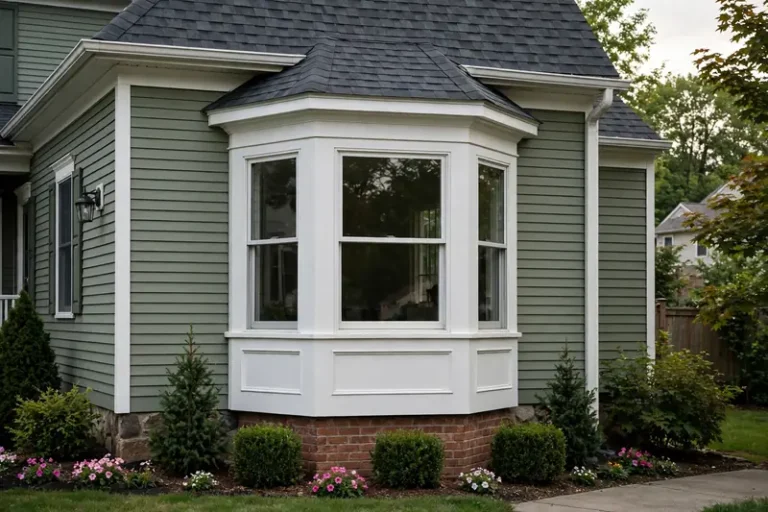
Bay window installation cost in the USA reflects the fact that you are not just replacing a window — you are adding architecture. A bay window projects outward from the house, creating extra interior space, panoramic light, and serious curb appeal. In 2026, American homeowners typically pay $1,500 to $5,000 installed for a bay window, with large or custom units reaching $7,000+. This guide covers every cost factor, style choice, and installation detail.
What Is a Bay Window?
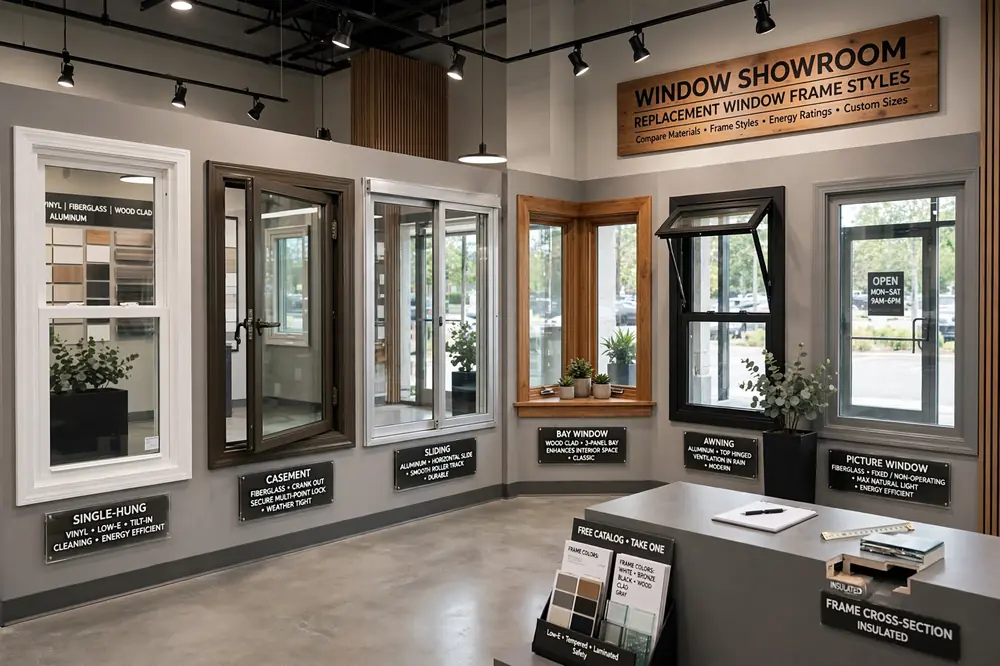
A bay window is a three-panel window assembly that angles outward from the exterior wall — typically a large fixed picture window in the center flanked by two operable windows (casements or double-hungs) at 30- or 45-degree angles. The projection creates a ledge inside that becomes a reading nook, plant shelf, or window seat. A bow window is the close cousin: four or more panels in a gentle curve rather than crisp angles. Both transform a flat wall into a three-dimensional feature.
Bay windows differ fundamentally from standard replacements in scope. The project involves structural framing, roofing over the projection, exterior siding integration, and interior finish carpentry — closer to a small addition than a window swap. That is why costs run multiples of standard window replacement and why installer skill matters enormously.
Bay Window Installation Cost Breakdown 2026
Standard Bay Windows ($1,500–$3,500)
Stock-size vinyl bay windows in standard configurations are the affordable entry point. These are pre-built units that fit common rough openings, keeping both material and labor costs down. Ideal for straightforward replacements where an old bay window already exists and the opening needs no structural changes.
Mid-Range Bay Windows ($3,000–$5,000)
Most new bay window installations land here: quality vinyl, fiberglass, or clad-wood units with Low-E glass, professional framing of a new opening (or enlargement), a proper small roof over the projection, and full interior/exterior finishing. This is the realistic budget for adding a bay window where none existed.
Premium and Custom Bay Windows ($5,000–$7,000+)
Large custom units, high-end wood interiors, copper roofing accents, window seats with storage, and complex structural work push costs higher. Historic homes or challenging installations (second floor, brick veneer, load-bearing walls) also land in this range. For these projects, the window is part of a broader architectural upgrade.
What Drives the Cost?
New Opening vs Existing Opening
Replacing an existing bay window in its current opening is the cheapest scenario — the structure, roofing, and framing already exist. Cutting a new opening in a wall adds $1,000 to $3,000 for framing, header installation, and structural engineering if load-bearing. Enlarging an existing flat window into a bay falls in between.
Materials
Vinyl bays ($1,500–$3,500 installed) offer the best value and are the most common. Fiberglass ($2,500–$5,000) provides superior strength for large projections and 30+ year durability. Clad wood ($3,500–$7,000) delivers the richest interior look for traditional homes. The material choice should harmonize with your home’s existing windows — see our replacement window selection guide for matching strategy.
Roofing Over the Projection
Every bay window needs a roof — typically a small hip or shed roof with shingles matched to the house. This adds $300 to $800 to the project and is a critical waterproofing detail. Poorly flashed bay roofs leak, and the leak shows up inside the house below the window. Insist on step flashing integrated with the house wrap, the same diligence our roof flashing guide demands for full roofs.
Interior Finishing
The interior of a bay window needs a finished seat or sill, drywall or paneling on the angled sides, trim, and often a custom cushion or storage bench. Finish carpentry runs $300 to $1,000 depending on ambition — a simple painted seat versus a hardwood window seat with storage drawers. This is where the project becomes furniture, not just fenestration.
Bay vs Bow Windows
Bay windows have three panels with angular lines — crisper, more traditional, and slightly cheaper. Bow windows use four to six panels in a smooth curve — more glass, more panoramic, more contemporary, and typically 10 to 20 percent more expensive due to extra panels and complex framing. Bows admit more light and offer a wider view; bays provide a deeper, more usable seat ledge. Structurally, bows need more support because of their width. Choose based on your home’s architecture: bays suit Colonial, Craftsman, and traditional styles; bows complement Victorian, contemporary, and ranch homes.
The Installation Process
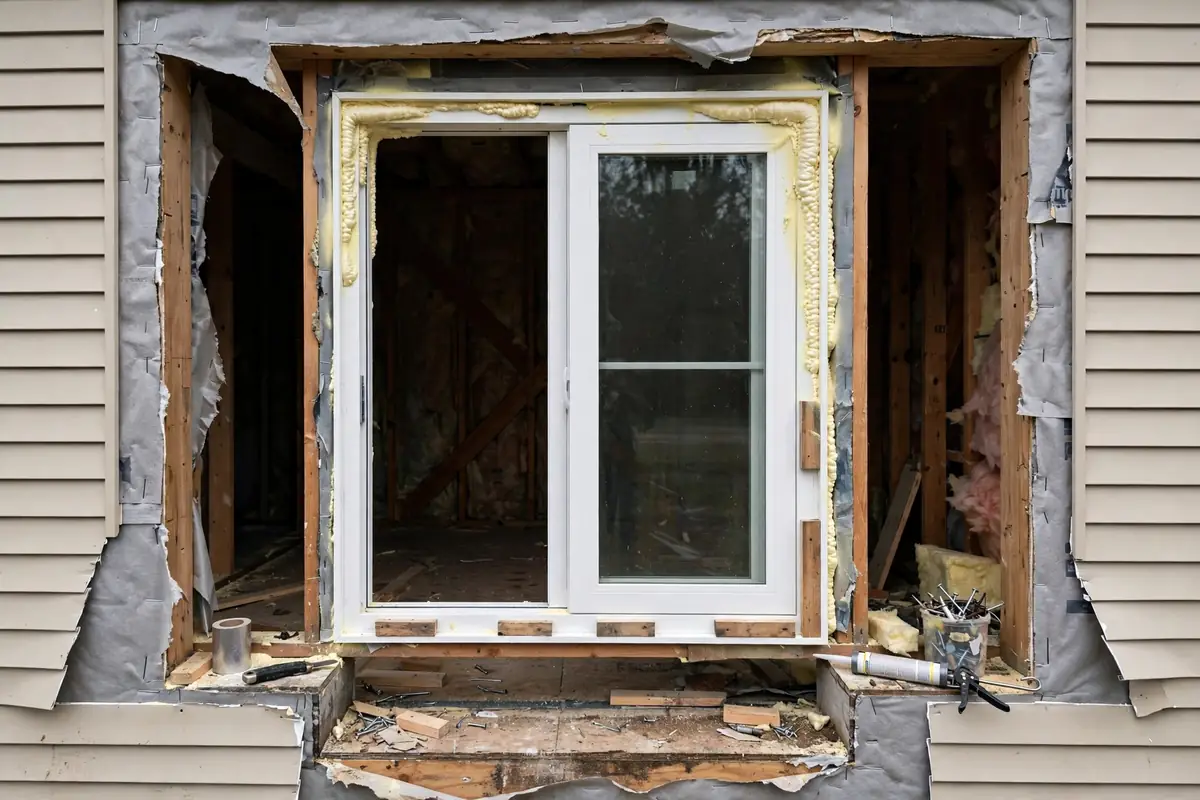
Expect the project to take two to four days for a professional crew. Day one: interior protection, removal of the old window or cutting of the new opening, structural framing with a proper header, and setting the bay unit — which often requires three or four people to lift. The unit must be perfectly level; even slight racking binds the operable sashes permanently.
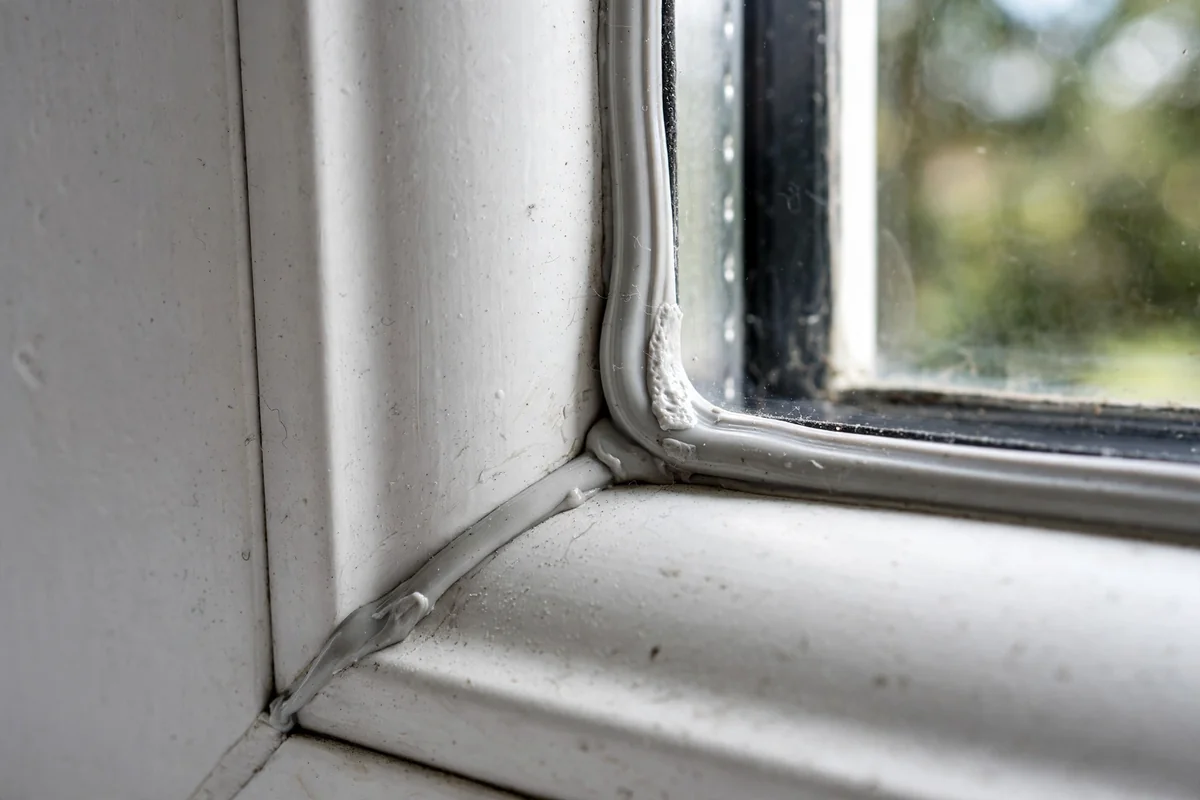
Day two: roofing over the projection, exterior siding integration, insulation of the seat cavity (critical — uninsulated bay seats are notorious cold spots), and exterior trim and caulking. Days three to four: interior finishing — seat, drywall, trim, paint. The insulation step deserves emphasis: the cantilevered seat hangs outside the home’s thermal envelope, and without thorough insulation and air sealing it becomes the coldest spot in the room. This is the bay-window version of the air-sealing discipline in our window installation guide, and skipping it ruins the comfort gains.
Structural support matters too. Wide bays need support brackets or knee braces underneath — both structural and aesthetic elements. Your installer should engineer this properly; a sagging bay window is a nightmare to fix after the fact.
Energy Performance Considerations
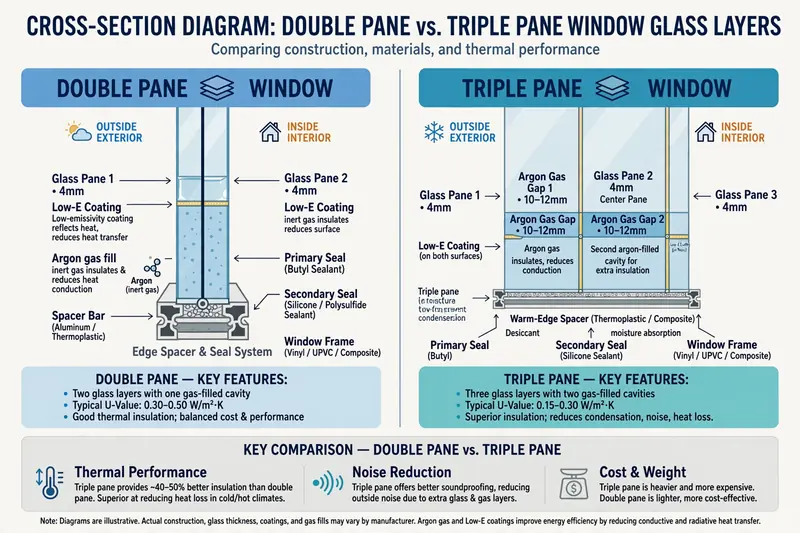
Bay windows have more glass area and more frame joints than flat windows, so they are inherently less efficient per square foot of opening. Mitigate this with Low-E glass, argon fill, and warm-edge spacers — the same high-performance package our double vs triple pane guide recommends. In cold climates, consider triple-pane for the large fixed center panel where weight is not an issue, and review cold-climate window choices for the full low-temperature strategy. And insulate the seat cavity aggressively — it is the most common comfort complaint with bay windows, easily prevented during installation but miserable to fix later.
Window treatments for bays cost more than standard — custom blinds, shades, or curtains for three angled panels run $300 to $1,000. Budget for this; bare bay windows are fishbowls at night. Cellular shades are the efficiency pick, adding an insulating air layer right where the glass needs it most.
ROI and Resale Value
Bay windows consistently rank among the highest-joy remodeling projects — homeowners love them daily, which is value beyond resale math. On resale, they recoup roughly 50 to 65 percent of cost while significantly boosting curb appeal and listing photos. The real return is lifestyle: the reading nook, the plant ledge, the flood of morning light. If you are also upgrading the home’s exterior, pairing a bay window with fresh exterior painting multiplies the curb-appeal impact dramatically.
Permits and Structural Concerns
Most jurisdictions require a permit for new bay window installations (though simple replacements in existing openings often do not). Cutting into a load-bearing wall requires a properly sized header and sometimes an engineer’s stamp — do not let anyone talk you out of this. Your contractor should handle permits; verify they do. Also check HOA rules — some associations restrict projection dimensions or exterior changes. Skipping permits risks stop-work orders and resale complications far exceeding the permit fee.
FAQs: Bay Window Installation Cost USA
How long does bay window installation take?
Two to four days for a professional crew: structural work and setting on day one, roofing and exterior on day two, interior finishing on days three to four. Custom work or structural surprises can extend this.
Can a bay window be installed on the second floor?
Yes, but it costs more — scaffolding, material handling, and structural support are all harder upstairs. Budget an extra 20 to 30 percent over ground-floor pricing.
Do bay windows leak?
Properly installed ones do not. Leaks come from poor roof flashing over the projection or inadequate caulking — both installer-quality issues, not inherent flaws. Vet your installer as carefully as our roofing contractor guide advises.
Are bay windows energy efficient?
Less efficient than flat windows of the same quality due to extra glass area and joints — but with Low-E glass, argon fill, and a well-insulated seat, a modern bay performs respectably. The comfort and light gains usually outweigh the modest efficiency penalty.
Can I convert a flat window to a bay window?
Yes — this is the most common bay window project. It requires cutting a wider opening, structural framing, roofing, and finishing. Budget $3,000 to $6,000 all-in for a quality job. Before committing, get precise numbers with our window measuring guide so your contractor quotes against accurate dimensions.
Conclusion
Bay window installation cost in the USA runs $1,500 to $5,000 for most projects, reaching $7,000+ for large custom units. You are paying for architecture, not just glass — structural framing, roofing, and finish carpentry make this a mini-addition. Choose materials that match your home, insist on proper flashing and seat insulation, and hire an installer with specific bay-window experience. Keep the glass sparkling with regular window cleaning to show off your investment. Done right, a bay window becomes the most loved spot in your house for decades.