
Double pane vs triple pane is the key glass decision for American homeowners choosing new windows in 2026. Double-pane windows have been the US standard for decades, but triple-pane — long dominant in Europe and Canada — is gaining ground as energy codes tighten and manufacturing costs fall. The right choice depends on your climate, your energy prices, and how long you plan to stay. This guide gives you the honest comparison.
How Window Glass Works
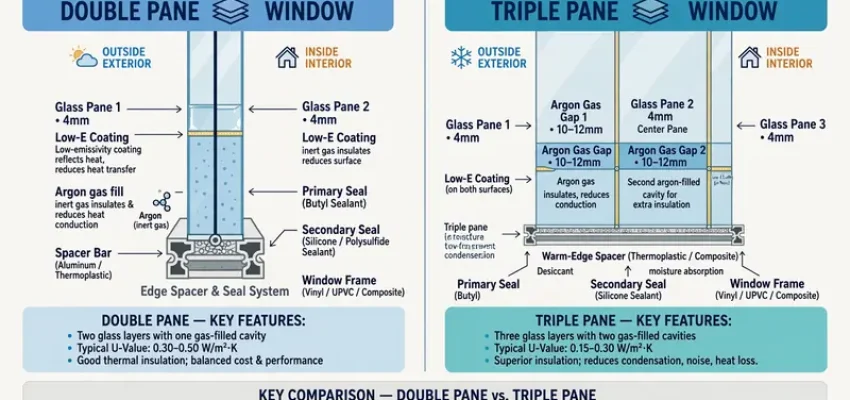
A pane of glass alone insulates poorly — heat flows right through it. Multi-pane windows trap air or inert gas (usually argon, sometimes krypton) between panes, and that trapped gas layer is what insulates. Low-E (low-emissivity) coatings — microscopically thin metallic layers — reflect infrared heat while letting visible light through. A double-pane window has two panes and one insulating gap; triple-pane has three panes and two gaps. More gaps mean less heat transfer, but also more weight, more cost, and slightly less light.
Understanding this physics helps you see through marketing claims. The frame, the installation quality, and the Low-E coatings often matter as much as the pane count — a well-made double-pane with premium Low-E can outperform a cheap triple-pane. Keep that in mind as you weigh the options, and review our how to choose replacement windows framework for the full decision.
Double-Pane Windows: The Proven Standard
Double-pane windows typically achieve U-factors of 0.25 to 0.30 — a massive improvement over single-pane’s ~1.0. They cost $100 to $200 less per window than triple-pane equivalents, weigh less (easier installation, less stress on frames and hardware), and admit slightly more visible light. For most of the USA — climate zones 1 through 4, covering the South, much of the Midwest, and the coasts — quality double-pane with Low-E and argon is the sweet spot that energy experts recommend.
Double-pane’s advantages are practical as well as financial. Lighter sashes operate more smoothly and put less wear on balances and hinges over decades. Replacement parts are ubiquitous and cheap. And in mild climates, the extra insulation of triple-pane simply does not pay back — the energy savings are too small to justify the premium. If you live in Texas, Florida, Georgia, or Southern California, double-pane is almost certainly your answer.
Triple-Pane Windows: Maximum Performance
Triple-pane windows reach U-factors of 0.15 to 0.22 — roughly 30 to 40 percent better insulation than double-pane. In cold climates (zones 5–7: New England, the Upper Midwest, the Mountain West), that difference is tangible: warmer interior glass surfaces mean less radiant cold, fewer drafts near windows, and virtually no winter condensation. Homeowners in Minnesota or Vermont often describe triple-pane as “the windows finally feel like walls.”
The comfort gains go beyond energy bills. Triple-pane dramatically reduces condensation — the interior pane stays warm enough that indoor humidity does not condense on it, preventing the mold and frame damage that plague cold-climate windows. Noise reduction is another major win: the extra pane and asymmetric glass thicknesses can cut perceived noise roughly in half compared to standard double-pane, a blessing for homes near highways or airports. For noise-focused buyers, combine triple-pane with laminated glass for the quietest residential windows available.
Head-to-Head Comparison
Energy Efficiency
Triple-pane wins clearly on paper — U-factors 30–40% lower. In cold climates, that translates to $50 to $150 per year in additional savings over double-pane for a typical home. In mild climates, the gap shrinks to $10 to $30 per year — not enough to justify the cost.
Cost
Triple-pane adds $100 to $200 per window over comparable double-pane. For a 15-window project, that is $1,500 to $3,000 extra. Double-pane wins on upfront cost everywhere; triple-pane must earn back its premium through energy savings and comfort.
Comfort and Condensation
Triple-pane wins decisively in cold weather. Interior glass stays 5 to 10 degrees warmer, eliminating the cold-radiation chill you feel near double-pane windows on frigid nights and preventing condensation that can damage sills and breed mold. In warm climates, this advantage is irrelevant.
Noise Reduction
Triple-pane wins, typically cutting 2 to 5 more decibels than double-pane — a noticeable difference. For maximum quiet, laminated triple-pane is the gold standard. If noise is your main driver, this alone can justify triple-pane even in moderate climates.
Weight and Durability
Double-pane wins — lighter sashes mean easier operation and less long-term wear on hardware. Triple-pane’s weight demands sturdier frames (fiberglass handles it best) and quality hardware. Cheap triple-pane in flimsy vinyl frames is a recipe for operational problems; if going triple, invest in the frame too.
Light Transmission
Double-pane admits slightly more visible light (VT ~0.50 vs ~0.40 for triple). The difference is subtle indoors but real — triple-pane rooms can feel a touch dimmer, worth considering for north-facing rooms that are already light-challenged.
The Payback Math by Climate
In cold climates (zones 6–7), triple-pane’s $1,500–$3,000 premium on a typical project pays back in roughly 10 to 15 years through energy savings — reasonable within a 30-year window life, and the comfort gains are immediate. In moderate climates (zones 4–5), payback stretches to 20+ years, making it a comfort and noise choice rather than a financial one. In warm climates (zones 1–3), payback may never come; spend the money on better Low-E coatings and shading instead.
These calculations assume average energy prices. If you heat with expensive propane or oil, or cool with high-cost electricity, the math tilts toward triple-pane. Also factor the federal 25C tax credit — qualifying high-performance windows can offset part of the premium. Our window replacement cost guide details current incentives.
What About Quad-Pane?
Quad-pane (four panes) exists but remains a niche product in the USA — very expensive, very heavy, and diminishing returns over triple-pane. Unless you are building a Passive House in Fairbanks, quad-pane is overkill. Triple-pane is the practical performance ceiling for nearly all American homes.
Making Your Decision
Choose triple-pane if: you live in climate zone 5+, plan to stay 15+ years, battle winter condensation, or noise bothers you. Choose double-pane if: you live in zone 4 or warmer, budget is tight, or your priority is value over maximum performance. Either way, prioritize Low-E coatings matched to your climate, argon fill, and — critically — quality installation. A perfectly installed double-pane beats a poorly installed triple-pane, a truth that applies to every aspect of window installation.
When getting quotes, ask installers to price both options — the actual premium varies by manufacturer and market. Some fiberglass window lines price triple-pane surprisingly close to double-pane, making the upgrade a no-brainer. And remember that windows are a system: the right choice pairs with good door weatherstripping and attic insulation for whole-home efficiency, not just better glass in isolation.
Glass Choice in the Bigger Efficiency Picture
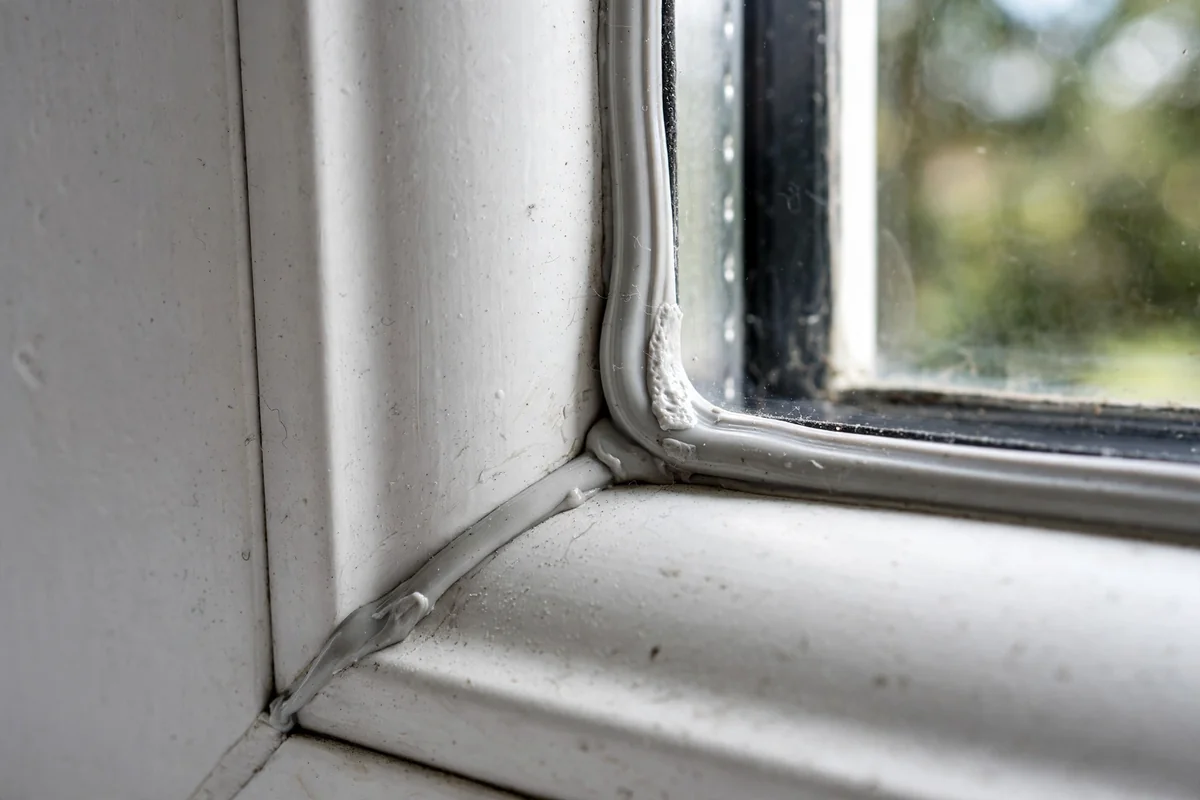
Windows get the spotlight, but they are one part of your home’s thermal envelope. Before spending thousands upgrading from double to triple pane, make sure the cheaper wins are captured first. Attic insulation and air sealing routinely deliver bigger energy savings per dollar than any window upgrade — a leaky attic wastes more heat than all your windows combined. Weatherstripped doors and caulked penetrations seal the easy leaks. Only when the envelope basics are solid does the double-vs-triple decision carry its full weight.
Think of it as an efficiency hierarchy. First, seal air leaks (caulk, weatherstripping) — cheapest, fastest payback. Second, insulate (attic, walls, garage) — biggest absolute savings. Third, optimize windows (glass, frames, installation) — the comfort and aesthetics upgrade that also saves energy. Homeowners who follow this sequence get the most comfort per dollar and avoid the disappointment of premium windows underperforming in a leaky house. If your windows are truly the weak link — single-pane, fogged seals, or rotted frames — then by all means invest in the best glass your climate justifies, and consider whether targeted draft repairs could bridge the gap while you save for the full project.
FAQs: Double Pane vs Triple Pane USA
Is triple-pane worth it in the Midwest?
In the Upper Midwest (zones 5–6), usually yes for comfort and condensation control, with reasonable payback. In the lower Midwest (zone 4–5), it is a judgment call — nice for comfort, marginal financially.
Do triple-pane windows prevent condensation?
They dramatically reduce it. The warm interior pane rarely drops below the dew point under normal indoor humidity. They cannot overcome extreme indoor humidity (above 45% in deep winter) — manage humidity too.
Are triple-pane windows heavier to operate?
Noticeably, yes — about 50% heavier sashes. Quality hardware handles it fine, but test-operate floor models before buying, especially for casements and double-hungs you will open often.
Can I mix double and triple pane in one house?
Absolutely — a smart strategy. Use triple-pane on north-facing and problem windows, double-pane elsewhere. Just keep exterior appearances consistent. This targeted approach is similar to prioritizing the draftiest windows for repair first — spend where the problem is worst.
Do triple-pane windows qualify for tax credits?
Many do — the federal 25C credit covers qualifying Energy Star windows. Triple-pane models often exceed the thresholds easily. Confirm the specific product’s qualification with your installer.
Conclusion
Double pane vs triple pane is not about which is “better” — it is about which fits your climate and priorities. Double-pane with quality Low-E remains the smart value choice for most of America. Triple-pane earns its premium in cold climates through superior comfort, condensation control, and noise reduction, with reasonable energy payback. Match the glass to your weather, invest in installation quality, and review our replacement window selection guide once more before signing — you will be comfortable with either choice for decades.