
In Phoenix, where summer temperatures regularly exceed 115°F, your roof is not just a weather barrier — it is a thermal battleground. The wrong roofing material in a hot climate cooks your attic, spikes cooling bills, and deteriorates years early under relentless UV assault. Choosing the best roofing materials for hot climates in the USA means understanding solar reflectance, thermal mass, ventilation, and how different materials perform when the thermometer will not quit. This guide ranks your options for the Sun Belt and beyond.
Nearly half of American homes sit in hot or mixed-hot climate zones — the entire South, Southwest, and much of California, Texas, and Florida. In these regions, cooling can account for 50-70% of summer electricity bills, and the roof is the primary heat gateway. The right roofing material does not just survive the heat; it actively fights it, keeping your home cooler and your energy bills lower for decades.
What Makes a Roofing Material Good for Hot Climates?
Solar Reflectance (Albedo)
The most important factor: how much solar energy the roof reflects versus absorbs. Measured as the Solar Reflectance Index (SRI), higher is better. A black asphalt roof has an SRI near 0 (absorbs almost everything); a white reflective roof approaches 100. In hot climates, every SRI point translates to real cooling savings. ENERGY STAR certifies “cool roof” products meeting minimum reflectance standards — look for the label.
Thermal Emittance
How efficiently the material radiates absorbed heat back to the sky. Most roofing materials emit well; some metal finishes vary. Combined with reflectance, emittance determines the roof’s surface temperature — which can differ by 50-80°F between the best and worst choices on a sunny day.
Thermal Mass and Airflow
Materials like tile create ventilated airspace that carries heat away before it reaches the deck. This “above-sheathing ventilation” is a powerful cooling strategy unique to certain profiles. Thermal mass (tile, concrete) also delays heat transfer, shifting peak attic temperatures to evening hours when cooling loads are lower.
UV and Heat Durability
Intense UV breaks down asphalt faster, dries out sealants, and fades colors. Hot-climate roofing must resist UV degradation for its full rated life — not just survive, but maintain performance. Warranties in hot regions should explicitly cover high-temperature performance.
The Best Roofing Materials for Hot Climates, Ranked
1. Clay and Concrete Tile: The Hot-Climate Champion
Tile is the gold standard for hot American climates, dominating upscale neighborhoods from Scottsdale to Miami for good reason. The curved profile creates natural ventilation channels that reduce heat transfer by up to 70% compared to direct-to-deck shingles. Thermal mass delays heat peaks. Class A fire rating matters in wildfire zones. Lifespan of 50-100 years means the energy savings compound for decades.
Choose light colors for maximum reflectance — white or light terracotta tiles can achieve SRI values above 70. The downsides are cost ($15,000-$35,000) and weight (structural assessment required). For the complete picture, read tile roof pros and cons in USA. If your budget allows tile in a hot climate, it is the best long-term choice.
2. Cool Metal Roofing: Reflective and Long-Lived
Metal roofing with cool-rated reflective coatings is exceptional in hot climates. Light-colored standing seam metal achieves SRI values of 60-70+, reflecting the majority of solar energy. Metal’s low thermal mass means it cools rapidly after sunset, unlike tile which releases stored heat into the evening. Lifespan of 40-70 years, excellent wind and fire resistance, and full recyclability round out the package.
Costs run $12,000-$25,000 for an average home — less than tile, more than shingles. Choose ENERGY STAR certified cool colors; even “dark” cool pigments reflect significantly more than standard dark finishes. For the metal vs shingle debate, see metal roof vs shingles cost comparison. In hurricane-prone hot climates (Florida, Gulf Coast), metal’s wind resistance is a major bonus — pair with hurricane roof preparation measures.
3. Cool Asphalt Shingles: The Budget-Friendly Option
Standard dark shingles are terrible in hot climates — surface temperatures can hit 170°F. But “cool” asphalt shingles with reflective granules achieve SRI values of 20-30+, a meaningful improvement. They cost only slightly more than standard shingles ($8,000-$15,000 installed) and install like normal shingles on any structure.
Cool shingles are the pragmatic choice for budget-conscious homeowners in hot climates. They will not match tile or metal performance, but they are dramatically better than conventional dark shingles. Look for ENERGY STAR certification and CRRC (Cool Roof Rating Council) ratings when comparing products.
4. TPO and PVC Membranes (Flat/Low-Slope Roofs)
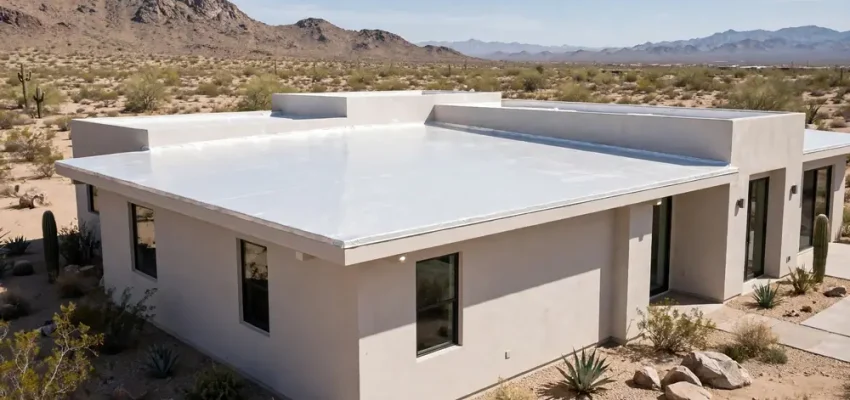
For flat or low-slope roofs common on Southwestern adobe-style and modern homes, white TPO or PVC membranes are the hot-climate standard. Their bright white surfaces achieve SRI values of 80-100+, the highest of any roofing. Heat-welded seams create monolithic waterproofing ideal for intense sun and thermal cycling. If you have a flat roof in a hot climate, white membrane is the clear answer — see flat roof replacement options for details.
5. Wood Shakes: Surprisingly Decent, With Caveats
Cedar shakes have natural insulating properties and the gaps between shakes allow some airflow. However, they are a poor fire choice (critical in the wildfire-prone West), require significant maintenance, and are banned by code in many hot-climate jurisdictions. Generally not recommended despite moderate thermal performance.
Materials to Avoid in Hot Climates
Dark asphalt shingles: The worst common choice — maximum heat absorption, accelerated aging, highest cooling loads. If budget forces shingles, at least choose cool-rated light colors.
Dark EPDM rubber (flat roofs): Black EPDM absorbs enormous heat. On flat roofs in hot climates, white TPO/PVC is vastly superior.
Uncoated built-up roofing: Traditional tar-and-gravel absorbs heat aggressively. Modern cool coatings can retrofit some improvement, but white membranes are better.
Beyond Materials: System Strategies for Hot Climates
Radiant Barriers
Installed in the attic (foil-faced sheathing or draped foil), radiant barriers reflect radiant heat away from living spaces. In hot climates, they reduce cooling costs 5-15%. Best installed during re-roofing (as roof sheathing) or as an attic retrofit. Cost: $1,500-$3,000 for an average attic. They complement any roofing material.
Above-Sheathing Ventilation
Creating an air gap between roofing and deck — standard with tile, achievable with metal via battens — allows convective cooling. This is one of the most effective hot-climate strategies, potentially reducing heat transfer more than reflectance alone. Discuss vented nail-base or batten systems with your contractor.
Attic Ventilation and Insulation
Even the best roof needs proper roof ventilation and insulation beneath it. In hot climates, ventilation exhausts superheated attic air (which can reach 150°F+), while insulation (R-38 minimum, R-49 preferred in the hottest zones) slows heat transfer to living spaces. These are non-negotiable companions to cool roofing.
Roof Color: Lighter Is Better
Regardless of material, lighter colors reflect more heat. The difference between white and black shingles can be 50°F+ in surface temperature. When aesthetics allow, choose the lightest acceptable color. Some HOAs restrict colors — check before committing, and advocate for cool-roof exceptions with energy data.
Cost vs Savings: The Hot-Climate Math
Cool roofing costs more upfront but pays back through energy savings. In Phoenix or Las Vegas, upgrading from dark shingles to a cool roof can save $300-$600 annually on cooling. Over a 20-year roof life, that is $6,000-$12,000 — often covering the upgrade premium entirely. Tile’s savings are even larger over its 50+ year life.
Many southwestern utilities offer rebates for cool roof installations ($0.10-$0.30 per square foot). Federal tax credits may apply to ENERGY STAR certified roofs (check 2026 IRS rules). Factor these incentives into your calculations — they significantly improve the economics.
Maintaining Hot-Climate Roofs
UV is the primary enemy: inspect sealants and flashing more frequently (every 1-2 years), as heat accelerates deterioration. Keep roofs clean — dirt reduces reflectance measurably. For tile, gentle cleaning per moss removal methods (moss is less common in hot, dry climates but occurs in humid Florida). Ensure gutters handle intense monsoon downpours common in the Southwest. Thermal cycling loosens fasteners over time — periodic professional inspections catch issues early.
Frequently Asked Questions
What is the coolest roofing material?
White TPO/PVC membranes (SRI 80-100+) are the coolest, followed by white metal and light tile. Among pitched residential options, light-colored tile with ventilation airspace and cool metal roofing are the top performers.
Do cool roofs work in humid hot climates like Florida?
Yes — reflectance benefits apply regardless of humidity. In humid climates, also prioritize moisture management: proper ventilation prevents condensation issues, and algae-resistant shingles combat the black streaking common in Florida.
Can I coat my existing roof to make it cooler?
Elastomeric cool roof coatings can improve reflectance on flat/low-slope roofs significantly ($1,000-$3,000). On pitched shingle roofs, coatings are less effective and may void warranties — replacement with cool-rated materials is better.
The best roofing materials for hot climates in the USA share a common trait: they reflect rather than absorb the sun’s fury. Whether you choose tile’s ventilated elegance, metal’s reflective longevity, or cool shingles’ pragmatic value, pairing the right material with proper ventilation, insulation, and color creates a roofing system that keeps you comfortable and saves money for decades under the hottest American skies. Start with a professional roof inspection to assess your current roof’s heat performance before deciding on upgrades.