
You just spent $15,000 on a new roof with a “50-year warranty.” Then a leak appears in year eight, and the manufacturer denies your claim. What went wrong? Understanding what a roof warranty actually covers in the USA — and the exclusions that void it — is essential before you sign any roofing contract. Roof warranties are complex legal documents with more fine print than most homeowners realize, and the gap between marketing promises and actual coverage surprises thousands every year.
There are three distinct types of roof warranty, each covering different things, issued by different parties, with different terms. Confusing them — or assuming one covers what another does — is the most common warranty mistake American homeowners make. This guide untangles manufacturer warranties, workmanship warranties, and extended warranties so you know exactly what protection you are buying.
The Three Types of Roof Warranty
1. Manufacturer Material Warranty (Covers Defects)
Issued by the shingle or roofing material manufacturer (GAF, Owens Corning, CertainTeed, etc.), this covers manufacturing defects — shingles that fail prematurely due to faulty materials or production. Standard coverage: 20-50 years depending on product tier. What it does NOT cover: installation errors (the most common cause of roof failure), storm damage, normal wear, or issues from poor ventilation.
Here is the critical catch: manufacturer defect claims are rare because true manufacturing defects are rare. When roofs fail early, the cause is almost always installation error or inadequate ventilation — neither covered by the material warranty. The warranty is real, but it covers the least likely failure mode. Keep your proof of purchase, product labels, and installation documentation; you will need them for any claim.
2. Contractor Workmanship Warranty (Covers Installation)
Issued by your roofing contractor, this covers installation errors — improper nailing, bad flashing, incorrect underlayment. Typical coverage: 1-10 years, with 5 years being common among reputable US contractors. Some premium contractors offer 10-25 year workmanship warranties.
This is arguably the more important warranty, since workmanship causes most premature failures. But it is only as good as the contractor backing it — if the company closes, the warranty is worthless. This is why vetting contractor longevity and stability (see how to choose a roofing contractor) matters as much as the warranty length itself. Get the workmanship warranty in writing with specific terms, not a verbal promise.
3. Extended / System Warranties (Covers Both, With Conditions)
Manufacturers offer enhanced warranties when their complete roofing system (shingles, underlayment, ventilation, accessories — all same brand) is installed by a factory-certified contractor. Examples: GAF Golden Pledge (50 years material + 25 years workmanship), Owens Corning Platinum Protection, CertainTeed SureStart Plus. These are the strongest warranties available — but they cost more (certified contractors charge premiums) and have strict requirements.
Extended warranties typically require: complete manufacturer system, installation by certified contractor, registration within 30-45 days, and passing a manufacturer inspection. Miss any requirement and you drop to standard coverage. If you want maximum protection and can afford the 10-20% premium, these are worth considering.
What Roof Warranties Actually Cover
Covered: Manufacturing Defects
Shingles with defective sealant strips, premature granule loss from manufacturing flaws, or delamination. The manufacturer typically provides replacement materials (not labor) on a prorated basis. Proving a defect requires documentation and often an independent inspection — manufacturers do not take your word for it.
Covered: Installation Errors (Workmanship Warranty Only)
Leaks from improperly installed flashing, incorrect nailing patterns, or missing underlayment — when covered by the contractor’s workmanship warranty. The contractor should repair at no cost during the warranty period. Document the issue promptly; waiting can complicate claims.
Covered: Full System Failure (Extended Warranties)
Under premium extended warranties, both material and workmanship issues are covered, sometimes including tear-off and disposal costs. These are the closest thing to “worry-free” roofing — but read the terms carefully, because exclusions still apply.
What Roof Warranties Do NOT Cover
Storm and Weather Damage
Hail, wind, hurricanes, fallen trees — these are insurance claims, not warranty claims. Warranties cover defects, not acts of nature. If a storm damages your roof, follow our roof insurance claim guide, not the warranty process. This is the most common confusion: homeowners try to warranty-claim storm damage and get denied.
Normal Wear and Tear
Granule loss from age, minor curling on a 20-year-old roof, fading — these are expected aging, not defects. Warranties cover premature failure, not the natural end of a roof’s life. Compare your roof’s age to expected lifespan by material before assuming a warranty issue.
Poor Maintenance and Neglect
Unchecked moss growth, clogged gutters causing water backup, unrepaired minor damage that worsens — manufacturers routinely deny claims when maintenance was neglected. Keep records of inspections, cleanings, and repairs. Maintenance documentation is your warranty’s best friend.
Improper Ventilation
Inadequate attic ventilation voids most manufacturer warranties — it is the number one warranty killer. Manufacturers specify ventilation requirements, and failure to meet them (too few vents, blocked soffits) invalidates coverage. Ensure your contractor addresses roof ventilation to spec and documents it.
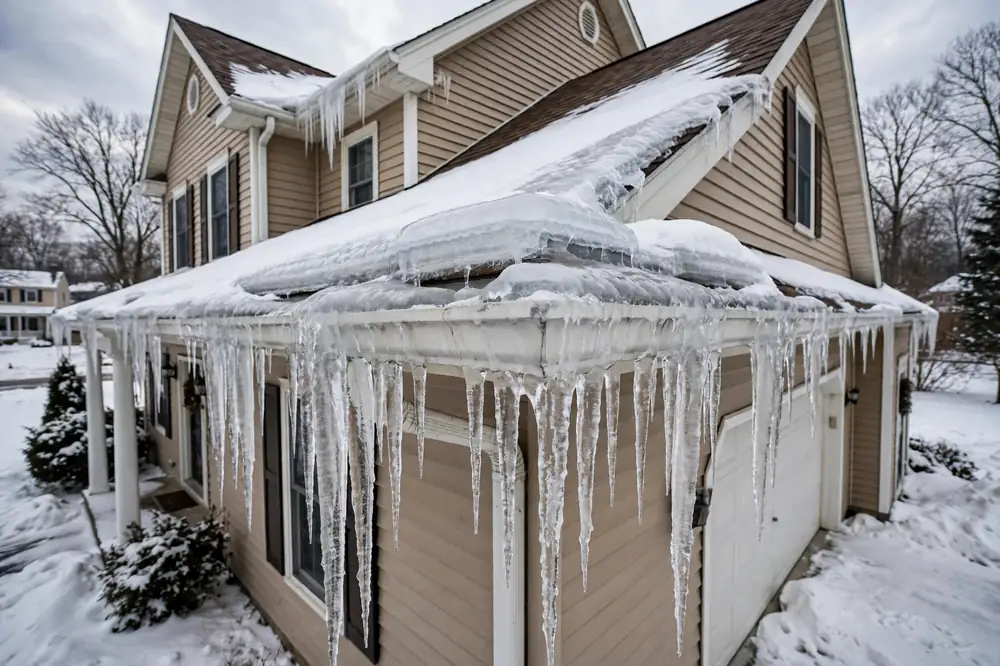
While comprehending the intricacies of roofing warranties is vital for safeguarding your investment, it is equally important to consider other factors that can jeopardize your roof’s longevity. One such issue is the formation of ice dams during the winter months, which can lead to significant water damage if not properly managed. Homeowners often face the unpleasant surprise of leaks and moisture-related problems due to inadequate ice management. Therefore, understanding preventive measures for such winter phenomena is crucial for maintaining a sound roof and avoiding costly repairs. For effective strategies on Ice dam prevention, refer to specialized resources that address this common concern among American homeowners.
Unauthorized Modifications
Installing solar panels, skylights, or satellite dishes without following manufacturer guidelines can void warranties. Any roof penetration should be done by qualified professionals using approved methods. DIY additions are warranty poison.
Walking Damage and Foot Traffic
Cracked tiles from careless walking, punctured membranes — not covered. This is especially relevant for tile roofs and flat roofs. Limit roof access and hire professionals who know how to walk on your specific material.
Prorated vs Non-Prorated: The Math That Matters
Most “50-year” warranties are prorated after an initial non-prorated period (typically 10 years). What this means: in year 11, a defect claim pays only a fraction of material costs, declining each year. By year 30 of a “50-year” warranty, you might receive 20-30% of material costs — and zero labor. The headline number is marketing; the non-prorated period is the real warranty.
Premium extended warranties often feature longer non-prorated periods (up to 50 years for top tiers). When comparing warranties, ask specifically: “How many years are non-prorated?” and “What exactly is covered during the prorated period?” Get the answers in writing.
How to Protect Your Warranty Coverage
Register Your Warranty Immediately
Most manufacturer warranties require registration within 30-45 days of installation. Your contractor should handle this, but verify it was done — get the registration confirmation. Unregistered warranties default to minimal coverage. This single administrative step is the most commonly missed warranty requirement.
Keep Meticulous Records
Maintain a roof file: original contract, product specifications, warranty certificates, registration confirmations, inspection reports, maintenance receipts, and photos. If you ever file a claim, this documentation is everything. Manufacturers deny claims for lack of documentation as readily as for actual exclusions.
Maintain Your Roof Diligently
Schedule professional inspections every 2-3 years. Address flashing issues promptly. Keep records of all maintenance. A well-documented maintenance history defeats the “neglect” denial — the manufacturer’s favorite.
Use Certified Contractors for Repairs
Warranty repairs should be performed by the original contractor or another certified installer. Unauthorized repairs can void remaining coverage. When issues arise, call the contractor first, not a handyman.
Transferring Warranties When You Sell
Most manufacturer warranties are transferable once (sometimes with a fee of $100-$500 and a transfer form). Transferability adds real resale value — buyers pay premiums for warranted roofs. Workmanship warranties are sometimes transferable, sometimes not; check terms. Extended warranties usually transfer. If selling, complete the transfer paperwork before closing — it is a selling point worth advertising.
If buying a home, ask for warranty documentation during inspection. Verify registration, transferability, and remaining terms. A transferable 30-year warranty on a 10-year-old roof is a significant asset; an expired or voided warranty is a negotiating point.
Filing a Warranty Claim: The Process
1. Document the problem thoroughly (photos, dates, description). 2. Determine which warranty applies (material defect → manufacturer; installation issue → contractor). 3. Contact the warrantor with your documentation and proof of purchase/registration. 4. Allow inspection — the manufacturer will send a representative. 5. Await determination (30-90 days typical). 6. If denied, request specific reasons in writing and consider appeal with additional evidence.
Be persistent but professional. Legitimate claims sometimes require escalation. If a manufacturer stonewalls a clearly valid claim, your state’s attorney general consumer protection division and the Better Business Bureau are effective pressure points.
Frequently Asked Questions
Is a 50-year warranty really 50 years?
The shingles are warrantied against manufacturing defects for 50 years on a prorated basis — but the meaningful coverage is the 10-year non-prorated period (longer for premium tiers). The “50-year” label describes the prorated schedule, not 50 years of full protection.
Does a new roof increase home value by the warranty length?
A new roof adds value through condition and remaining life, not warranty marketing. Appraisers value a 5-year-old roof with 25 years remaining — regardless of whether the warranty says “30-year” or “50-year.” Transferable extended warranties add modest premiums.
What voids a roof warranty fastest?
Improper installation by an uncertified contractor, inadequate ventilation, unauthorized modifications, and neglected maintenance — in roughly that order. The irony: the things that void warranties are the same things that cause most roof failures.
Understanding what a roof warranty covers in the USA means looking past the bold “50-YEAR” headline to the terms, exclusions, and requirements underneath. Choose quality materials, hire certified contractors, maintain diligently, register promptly, and keep records. Do these things and your warranty becomes what it should be: a safety net you will probably never need, but are glad to have.