Garage floor coating options have exploded in popularity as American homeowners turn garages into workshops, gyms, and showrooms for their cars. A bare concrete garage floor stains, dusts, cracks, and looks tired — a quality coating fixes all of that while standing up to hot tires, chemicals, and heavy use. In 2026, expect to pay $3 to $12 per square foot professionally installed, or $0.75 to $3 per square foot for DIY kits. This guide compares every major option so you can choose with confidence.
Why Coat Your Garage Floor?
Uncoated concrete is porous — it absorbs oil, road salt, and chemicals, and it constantly sheds fine dust. A coating seals the surface, making it stain-resistant, easier to clean, and far more attractive. It also protects against freeze-thaw damage and road-salt corrosion, which matters in northern states where winterizing your yard and driveway are already annual rituals. Beyond function, a coated floor transforms how the space feels; a glossy epoxy floor makes even a basic garage look intentional and cared for.
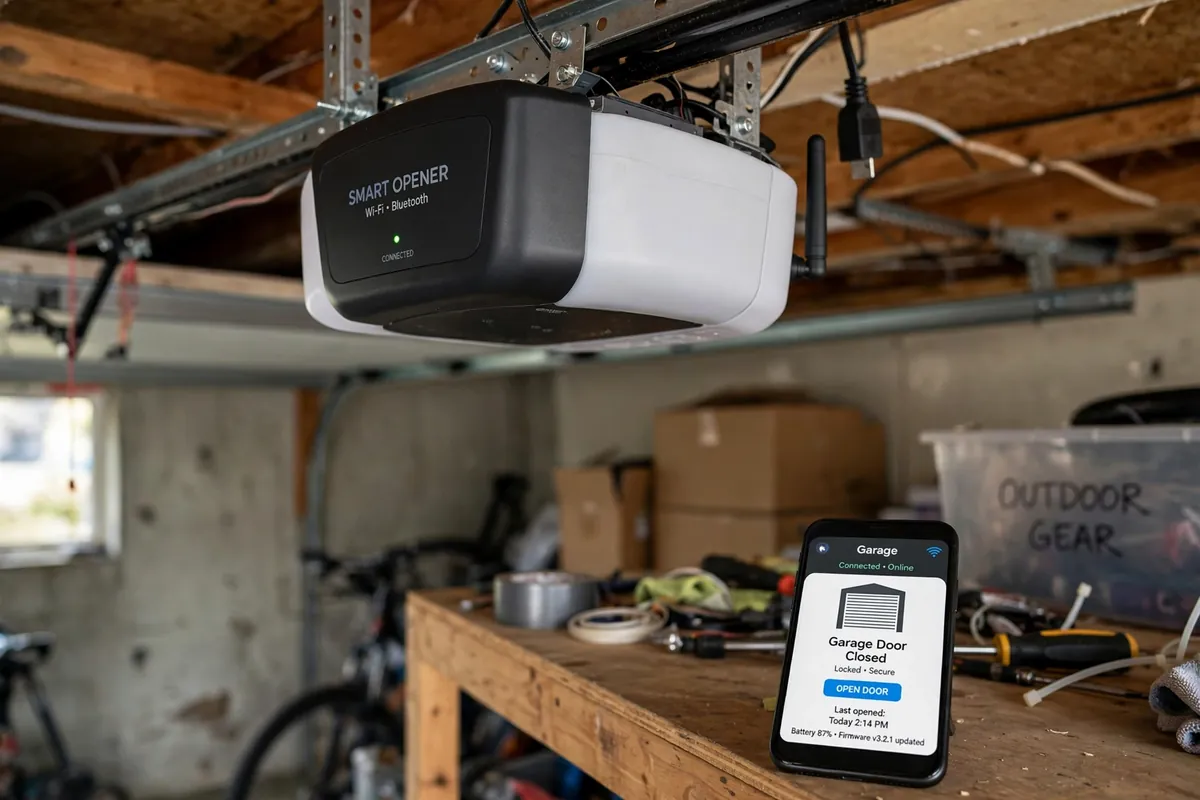
A coated floor pairs naturally with other garage upgrades. If you are investing in the space, consider a smart garage door opener for convenience and garage insulation for comfort — the three together turn a garage from storage shed into genuinely usable space.
Epoxy Coatings
Epoxy is the most popular garage floor coating in the USA, and for good reason. This two-part resin system bonds chemically to concrete, creating a hard, glossy, chemical-resistant surface that lasts 10 to 20 years professionally installed.
Professional Epoxy ($5–$12 per sq ft)
Professional epoxy jobs start with diamond grinding or shot blasting the concrete — critical prep that DIY kits skip — followed by crack repair, primer, high-solids epoxy, decorative flakes or metallic pigments, and a polyaspartic or urethane topcoat. The result is dramatically more durable than any kit. Most pros warranty their work for 5 to 15 years.
DIY Epoxy Kits ($0.75–$3 per sq ft)
Big-box epoxy kits are affordable and widely available, but manage expectations: kit epoxy is thinner (lower solids content) than professional product, and the included etching solution is no substitute for mechanical grinding. Done carefully on well-prepped concrete, a kit floor lasts three to seven years. The most common failure is peeling from hot tires or moisture pushing up through the slab.
Water-Based vs Solvent-Based vs 100% Solids
Water-based epoxies are low-odor and easy to apply but thinnest and least durable. Solvent-based versions penetrate better and last longer but smell strongly during application. One hundred percent solids epoxy — what pros use — contains no evaporating solvents, so the full thickness stays on the floor. Thicker means tougher.
Polyaspartic Coatings
Polyaspartic is epoxy’s faster, tougher cousin. It cures in hours instead of days, resists UV yellowing (epoxy ambers in sunlight), and handles temperature swings better. Professional polyaspartic systems cost $6 to $14 per square foot installed. Many top installers now use polyaspartic topcoats over epoxy base coats to get the best of both: epoxy’s build and adhesion with polyaspartic’s speed and UV stability. If your garage gets direct sun through open doors, polyaspartic is worth the premium.
Concrete Stain and Sealer
For a budget-friendly upgrade, concrete stain ($2 to $4 per square foot professionally, under $1 DIY) adds rich color that will not peel — it penetrates the concrete rather than sitting on top. Seal it with a quality concrete sealer for stain resistance. This will not hide imperfections or stand up to heavy chemical abuse like epoxy, but it looks far better than bare concrete and lasts five to ten years with periodic resealing. It is a smart choice for light-use garages.
Garage Floor Tiles and Mats
Interlocking PVC/Rigid Tiles ($2–$5 per sq ft)
Interlocking tiles snap together over the existing slab with no adhesive and no curing time — drive on them the same day. They come in endless colors and patterns, hide cracked or stained concrete completely, and individual tiles can be replaced if damaged. Downsides: they can trap moisture underneath, shift under heavy loads, and cost more than basic epoxy kits for large garages.
Roll-Out Mats ($1–$3 per sq ft)
Heavy-duty vinyl or rubber roll-out mats are the simplest option — unroll and done. Great for renters or for protecting a specific parking spot or work area. They do not cover the whole floor elegantly and can wrinkle, but nothing is faster or more reversible.
Polished Concrete
Polished concrete ($3 to $8 per square foot) grinds the slab to a smooth, reflective finish and densifies it with hardeners. It is extremely durable, never peels, and looks modern and industrial. However, it does not add chemical resistance beyond a penetrating sealer, and oil stains still show. Best for garages doubling as living or showroom space where aesthetics trump chemical toughness.
Cost Comparison at a Glance
For a typical two-car garage of 400 to 500 square feet in 2026: DIY epoxy kit $300 to $1,500; professional epoxy $2,000 to $6,000; polyaspartic $2,500 to $7,000; stain and sealer $800 to $2,000; interlocking tiles $800 to $2,500; polished concrete $1,200 to $4,000. Get multiple quotes — garage floor coating is a competitive trade and prices vary widely by market.
Preparation: The Make-or-Break Step
Every coating failure story starts with bad prep. Concrete must be clean, dry, and profiled for adhesion. Professionals diamond-grind; DIYers should at minimum degrease thoroughly, etch with acid or a grinding rental, and test for moisture by taping a plastic sheet to the floor for 24 hours — condensation underneath means moisture vapor that will pop coatings off. Fill cracks and spalls with concrete repair compound first. Rushing prep is the number one reason DIY floors fail, the same way skipping prep ruins garage organization paint jobs on walls.
Hot Tire Pickup: What It Is and How to Avoid It
Hot tire pickup — where warm tires soften cheap coatings and peel them off the concrete — is the classic garage floor failure. Prevention: use high-solids professional product, allow full cure time (up to 7 days for epoxy, even if it feels dry sooner), and park on mats for the first month. Polyaspartic resists hot tire pickup better than standard epoxy. If your kit floor is peeling under the tires, this is almost certainly why.
Maintenance Tips
Coated floors are easy to maintain: sweep regularly, mop with a pH-neutral cleaner, and wipe up chemicals promptly. Avoid harsh degreasers and citrus cleaners that dull the finish. Place cardboard or mats under projects involving welding or grinding. Recoat high-traffic areas every few years — a fresh topcoat is cheap insurance. With basic care, a professional epoxy or polyaspartic floor looks great for well over a decade.
Coating and Your Whole Garage Upgrade Plan
A floor coating often kicks off a bigger garage transformation, and it helps to plan the sequence. Do the floor before organizing the garage, since empty space makes coating infinitely easier — move everything out, coat, then organize back in. If you are adding a smart garage door opener, wire and mount it before coating so you are not dragging ladders across a fresh floor. Insulating the garage pairs naturally with a coated floor for a space you will actually want to spend time in, and a fresh coated surface makes wall paint and storage systems look twice as good. Homeowners who heat their garage in winter should also review how to lower heating bills so the newly comfortable space does not spike energy costs. Finally, if the garage is attached, sealing the weatherstripping on the house-to-garage door keeps dust from your workshop projects out of the living areas — a detail that matters more once the garage becomes a real workspace rather than a concrete box.
FAQs: Garage Floor Coating Options USA
What is the most durable garage floor coating?
Professionally installed 100% solids epoxy with a polyaspartic topcoat is the durability champion for most homeowners — 15 to 20+ years of hard use. Polished concrete never peels but stains more easily.
Can I epoxy over a previously painted floor?
Only if the old coating is sound and well-adhered — and even then, grinding it off is safer. Coating over failing paint guarantees the new coating fails with it. When in doubt, grind to bare concrete.
How long before I can park on a new epoxy floor?
Light foot traffic in 24 hours, but wait the full manufacturer cure time — typically 5 to 7 days for epoxy — before parking vehicles. Polyaspartic cures faster, often ready for cars in 24 to 48 hours.
Will epoxy work on a cracked garage floor?
Hairline cracks can be filled and coated over. Wide, shifting, or heaving cracks signal structural movement that coating will not fix — the cracks will telegraph through. Stabilize the slab first.
Is DIY epoxy worth it or should I hire a pro?
DIY kits make sense for tight budgets and light-use garages if you prep meticulously. For daily-driven garages, hot climates, or anyone wanting 15+ year performance, professional installation is worth every penny — the prep equipment and commercial-grade materials make the difference.
Conclusion
Garage floor coating options range from $300 DIY kits to $7,000 professional polyaspartic systems, and the right choice depends on your budget, how hard you use the garage, and how long you want it to last. Professional epoxy with a polyaspartic topcoat is the best all-around value for most American homeowners — a conclusion echoed in our broader garage door replacement cost guide about investing where it counts. Whatever you choose, invest in preparation — it determines the outcome more than the product itself. A coated floor is easier to clean, better looking, and tougher than bare concrete in every way.