The average American garage holds over $5,000 worth of tools, sports equipment, and stored belongings — yet most garages are so cluttered that cars end up parked in the driveway. If you’re tired of wading through boxes to find a screwdriver, these garage organization ideas will help you reclaim your space, protect your belongings, and maybe even fit your car back inside — no garage door replacement required.
Garage organization isn’t about buying the most expensive storage system. It’s about smart zoning, using vertical space, and building habits that keep clutter from creeping back. Whether you have a sprawling three-car garage or a tight single-car space, these proven garage organization ideas work for real American homes.
Start With a Clean Slate: The Garage Purge
Every successful garage organization project starts the same way: empty everything out. Yes, everything. Pull it all into the driveway on a dry weekend day. This feels overwhelming, but it’s the only way to see what you actually own and make honest decisions.
Sort everything into four piles: keep, donate/sell, trash, and relocate (things that belong elsewhere in the house). Be ruthless. That broken weed trimmer you’ve been meaning to fix for three years? Trash. The box of mystery cables? Recycle. Americans hold onto an average of 300,000 items per household — your garage doesn’t need to warehouse all of them.
The One-Year Rule
If you haven’t used it in a year and it has no sentimental value, it goes. Seasonal items (holiday decorations, snow blowers in Florida) get a pass, but be honest about whether you’ll actually use them again. The goal of these garage organization ideas is to create space, not to build a museum of good intentions.
Zone Your Garage Like a Pro
The most transformative of all garage organization ideas is zoning — dividing your garage into dedicated areas based on function. Professional organizers recommend these zones for a typical two-car American garage:
Designate a tool and workshop zone along one wall with a workbench, pegboard, and tool storage. Create a sports and outdoor gear zone near the garage door for bikes, balls, and camping equipment — things you grab on the way out. Set up a lawn and garden zone for mowers, trimmers, fertilizers, and pots. Reserve a household overflow zone for bulk paper goods, cleaning supplies, and seasonal decorations. Keep the center clear for vehicles — and ensure garage door springs and hardware stay accessible for maintenance.
Map It Before You Buy
Sketch your garage layout on paper before purchasing any storage products. Measure wall lengths, note outlet locations, mark where the garage door opener rail hangs (don’t block it), and identify the swing radius of your car doors. This 20-minute exercise prevents expensive mistakes.
Go Vertical: Your Walls Are Prime Real Estate
The floor is for cars. Everything else should live on walls or ceilings. These garage organization ideas maximize vertical space:
Pegboard Systems
A 4×8-foot pegboard panel costs $20 to $40 and holds an astonishing amount of hand tools, extension cords, and small equipment. Mount it on furring strips (for clearance behind the board), add an assortment of hooks ($15 to $30 for a kit), and outline each tool’s position with a marker — you’ll instantly see what’s missing. Metal pegboard systems cost more ($80 to $150 per panel) but hold heavier items and look sharper.
Slatwall and Track Systems
Slatwall panels (like Gladiator GearWall or Rubbermaid FastTrack) are the premium upgrade from pegboard. They hold up to 75 pounds per hook, reconfigure in seconds without tools, and look clean enough for a showroom garage. A starter 4-foot track with hooks runs $50 to $100; outfitting a full wall costs $300 to $600.
Heavy-Duty Shelving
Freestanding metal shelving units ($60 to $150 each) handle bins, paint cans, and bulky items. For maximum strength, wall-mounted steel shelves anchored into studs hold 200+ pounds per shelf. Always anchor tall shelving to wall studs — a loaded shelf tipping over can cause serious injury.
Overhead Storage: The Forgotten Frontier
The ceiling area above your garage door and along the walls is wasted space in most homes. Overhead storage racks ($80 to $200 per 4×8-foot rack) mount to ceiling joists and hold up to 600 pounds of seasonal items — holiday decorations, camping gear, luggage — that you access a few times per year.
Critical safety note: overhead racks must be lag-bolted into joists or blocking, never just into drywall. If you’re not confident locating joists and installing heavy-duty hardware, hire a handyman. A 600-pound rack falling onto a car (or person) is catastrophic. Also, check clearance with your open garage door — the door needs unobstructed travel along its tracks.
Smart Storage for Specific Categories
Generic garage organization ideas only go so far. Here’s how to handle the categories that cause the most chaos:
Tools
Separate hand tools (pegboard or tool chest), power tools (shelf or cabinet with chargers mounted nearby), and specialty tools (labeled bins). A rolling tool cabinet ($200 to $500) is worth the investment if you do regular DIY work — it keeps everything mobile and organized. Mount a power strip with individual switches near your charging station so you’re not hunting for outlets.
Sports Equipment
Bikes are the biggest space hogs. Wall-mounted bike hooks ($10 to $25 each) or a freestanding bike rack ($50 to $150) get them off the floor. Ball storage nets, bat racks, and mesh bags corral smaller items. For families with kids in multiple sports, assign each child a labeled bin — it teaches responsibility and ends the “where’s my cleats?” panic.
Garden and Lawn Supplies
Long-handled tools (rakes, shovels, brooms) belong on wall-mounted tool holders ($15 to $30) that grip handles of any size. Bagged soil, fertilizer, and chemicals go on shelving — always store chemicals on high shelves, locked if children access the garage. Coil hoses on wall-mounted reels to prevent the tangled mess on the floor.
Seasonal Decorations
Use uniform, stackable bins (not a mishmash of cardboard boxes) in a single color. Label every bin on two sides with large, readable tags — “CHRISTMAS — LIGHTS” beats “MISC HOLIDAY.” Store these in overhead racks or on the highest shelves since you access them rarely.
Cabinets: Hiding the Ugly Stuff
Not everything looks good on display. Lockable garage cabinets ($150 to $400 per cabinet) hide paint cans, automotive fluids, cleaning chemicals, and general clutter behind clean doors. They’re also essential if children or pets access the garage — many common garage chemicals are toxic.
For a budget approach, repurpose old kitchen cabinets (often free on Craigslist or Facebook Marketplace during remodel season). A coat of paint and sturdy wall-mounting gives you functional storage for almost nothing.
Workbench Setup That Actually Works
If you do any DIY, a proper workbench zone multiplies the value of your garage organization ideas. You don’t need a massive setup — a 4 to 6-foot bench along one wall suffices for most homeowners.
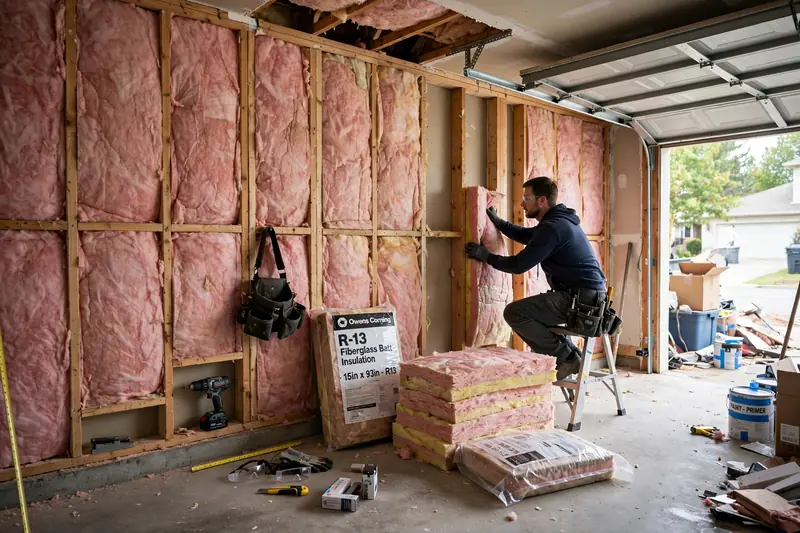
Choose a bench with a solid top (butcher block or thick plywood), add a bench vise ($40 to $100) for holding workpieces, mount task lighting above, and keep your most-used hand tools within arm’s reach on pegboard behind the bench. A small parts organizer ($15 to $30) with labeled drawers prevents the eternal search for the right screw. Insulating your garage makes the workshop usable year-round in cold climates.
Flooring: The Foundation of Organization
Bare concrete is hard to clean, stains permanently, and makes the garage feel like a dungeon. Epoxy floor coating ($300 to $800 DIY for a two-car garage, $1,500 to $3,000 professional) creates a durable, attractive surface that’s easy to sweep and mop — much like the repair vs replace logic applies to flooring investments too. Interlocking PVC tiles ($1 to $3 per square foot) are a DIY-friendly alternative that adds cushioning and style.
A clean, finished floor psychologically discourages clutter — people are less likely to pile junk on a surface that looks good. It’s one of those garage organization ideas that works on your habits, not just your stuff.
Maintaining the System: The 15-Minute Rule
The best garage organization ideas fail without maintenance. Adopt the 15-minute rule: spend 15 minutes every weekend returning items to their zones, breaking down boxes, and sweeping the floor. It’s the difference between a garage that stays organized and one that reverts to chaos within two months.
Do a deeper seasonal reset twice a year — spring and fall. Rotate seasonal gear (swap snow shovels for gardening tools), check for expired chemicals or dead batteries, and re-donate anything that’s crept back into the “maybe” pile.
Budget Breakdown: Organizing Without Overspending
You don’t need to spend thousands. A highly functional garage organization setup costs: pegboard plus hooks ($50), two metal shelving units ($200), wall-mounted bike hooks ($40), tool holders and small organizers ($60), labeled bins ($100), and overhead rack ($150). Total: roughly $600 for a transformed two-car garage. Scale up with slatwall, cabinets, and epoxy flooring as budget allows.
Frequently Asked Questions
How do I start organizing a messy garage?
Empty everything into the driveway, sort into keep/donate/trash/relocate piles, then zone the empty garage before bringing anything back inside. Don’t buy storage products until you’ve purged — you’ll buy less and choose better.
What’s the best way to store bikes in a garage?
Wall-mounted hooks or a vertical bike rack gets bikes off the floor and uses minimal wall space. For multiple bikes, a freestanding rack or ceiling-mounted pulley hoist ($30 to $60 per bike) works well.
How can I keep my garage organized long-term?
Assign everything a labeled home, follow the 15-minute weekly tidy rule, and do a seasonal deep reset. The system fails when items don’t have designated spots — every new purchase needs a planned location.
Is epoxy garage flooring worth it?
For most homeowners, yes. It protects the concrete, makes cleaning dramatically easier, improves lighting (reflective surface), and discourages clutter. DIY kits cost $300 to $800; professional installation runs $1,500 to $3,000 but lasts longer.
These garage organization ideas aren’t about achieving a magazine-perfect space — they’re about building a system that works for your real life. Start with the purge, zone your space, go vertical, and maintain the habit. Complete the transformation with front door upgrades, entry door security, sliding door repairs, and smart garage features for a fully optimized home. Within a single weekend, you can transform the most chaotic catch-all room in your American home into an organized, functional space. And yes, you might even fit the car back inside.