Choosing an entry door might seem simple — until you’re standing in the showroom staring at fifty options that range from $300 to $3,000. The entry door is the hardest-working component in your home’s exterior: it secures your family, seals out weather, and defines your home’s entire first impression — much like your garage door does from the street. Learning how to choose an entry door that balances security, energy efficiency, style, and budget will reward you every day for decades.
This guide walks through every decision point: materials, security ratings, energy performance, style matching, sizing, glass options, and hardware. By the end, you’ll know exactly how to choose an entry door with total confidence.
Start With Your Priorities
Before comparing products, rank what matters most to you. Every homeowner who learns how to choose an entry door successfully starts by clarifying priorities, because no single door is best at everything.
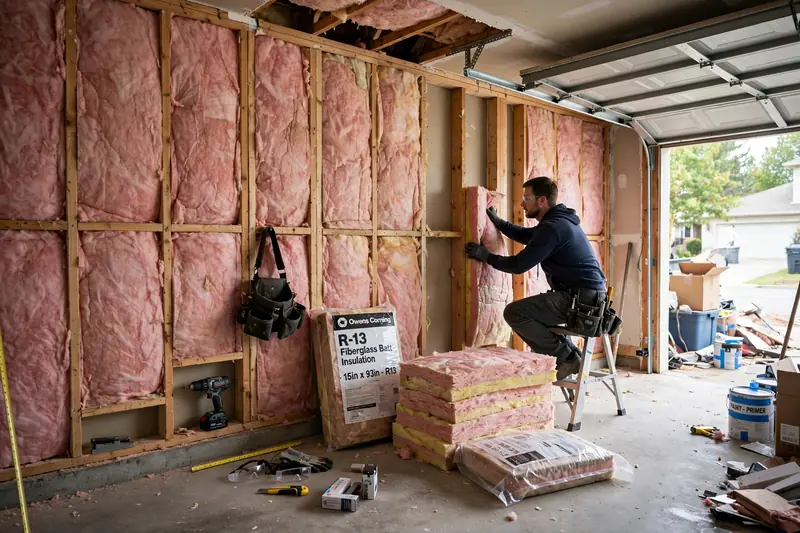
Is security your top concern? Prioritize steel construction, reinforced frames, and Grade 1 deadbolts. Is energy efficiency critical? Focus on foam-core insulation, Energy Star certification, and quality weatherstripping — the same principles behind garage insulation. Is curb appeal the driver? Invest in design — decorative glass, rich finishes, and architectural details. Is low maintenance essential? Lean toward fiberglass or steel over wood. Is budget the constraint? A quality steel door delivers the best value per dollar.
Most homeowners want a balance. The good news: mid-range fiberglass doors ($800 to $1,500 for the unit) deliver strong performance across all categories.
Entry Door Materials: The Core Decision
When you choose an entry door, material is the foundational choice that affects everything else — cost, maintenance, lifespan, and appearance.
Steel: Maximum Security, Minimum Cost
Steel doors are the best-selling entry doors in America for good reason. They offer the highest forced-entry resistance, the lowest price ($200 to $800 for the unit), and minimal maintenance. Modern steel doors come with realistic embossed panel designs and durable baked-on finishes. Look for 24-gauge or thicker steel (lower gauge number means thicker metal) and a polyurethane foam core for insulation. The main weakness: steel can dent from impacts and can rust if the finish is scratched through to bare metal.
Fiberglass: The All-Around Winner
Fiberglass doors have surged in popularity because they do everything well. They convincingly mimic wood grain (even up close), resist dents, won’t warp or rot, need almost no maintenance, and insulate effectively. They cost more than steel ($500 to $1,500 for the unit) but less than quality wood. For most homeowners learning how to choose an entry door, fiberglass is the default recommendation. Front door replacement costs breaks down installed pricing.
Wood: Authentic Beauty, Real Maintenance
Nothing matches the warmth and character of genuine wood — the grain depth, the solid feel, the way it takes stain. But wood demands commitment: refinishing every 2 to 3 years, protection from direct weather exposure, and vigilance against warping and rot. Quality wood entry doors cost $800 to $2,500+ for the unit. Choose wood when architectural authenticity matters and you’re willing to maintain it.
Security: How to Choose an Entry Door That Protects
Your entry door is the primary barrier between your family and intruders. Here’s what actually matters for security:
Door construction comes first — steel offers the best kick-in resistance, followed by solid fiberglass and solid wood. Avoid hollow-core doors for any exterior application. The frame matters as much as the door: a reinforced steel frame or a wood frame with a reinforced strike plate resists forced entry far better than a standard frame — a principle that also applies to garage door opener security features. Install 3-inch screws that anchor the strike plate and hinges into the wall stud, not just the door jamb.
Locks and Hardware Ratings
Choose a Grade 1 or Grade 2 deadbolt (ANSI/BHMA rated) — Grade 1 is the highest residential rating, tested to withstand 10 strikes of 75 pounds and 1 million open/close cycles. A quality deadbolt costs $50 to $150 and is the single most cost-effective security upgrade. Add a reinforced strike box ($15 to $30) and consider a door reinforcement plate that wraps the lock area. Smart deadbolts ($150 to $350) add keyless convenience without sacrificing security — look for BHMA Grade 1 or 2 ratings on smart models too.
What About Glass?
Glass near the lock is a security vulnerability — an intruder can break the glass and reach the interior lock. If you want glass in your entry door, choose decorative glass positioned away from the lock, use impact-resistant or laminated glass, and install a double-cylinder deadbolt (keyed on both sides) so the interior lock can’t be turned by reaching through broken glass. Note: double-cylinder deadbolts may violate fire codes in some jurisdictions — check local requirements.
Energy Efficiency: Sealing Out the Elements
An entry door is a giant hole in your home’s thermal envelope. When you choose an entry door with energy performance in mind, look for these features:
Core insulation is measured by R-value or U-factor. Polyurethane foam cores (R-5 to R-6) outperform polystyrene (R-4 to R-5) and far outperform hollow or wood-stile cores. Energy Star certified doors meet strict standards for U-factor and air leakage — the certification label makes comparison easy. Quality weatherstripping (magnetic or compression bulb type) creates an airtight seal; cheap foam tape compresses permanently within a year. An adjustable aluminum threshold with a replaceable vinyl seal lets you maintain the bottom seal as the door settles.
Glass and Energy Performance
Decorative door glass significantly impacts energy efficiency. Single-pane decorative glass has an R-value under R-1 — a thermal disaster. Double-pane glass (R-2 to R-3) is the minimum you should accept. Triple-pane or Low-E coated glass offers the best performance. If energy efficiency is a priority, limit glass area or choose high-performance glazing.
Style: Matching Your Home’s Architecture
Knowing how to choose an entry door includes understanding architectural harmony. The wrong door style can clash with your home’s character:
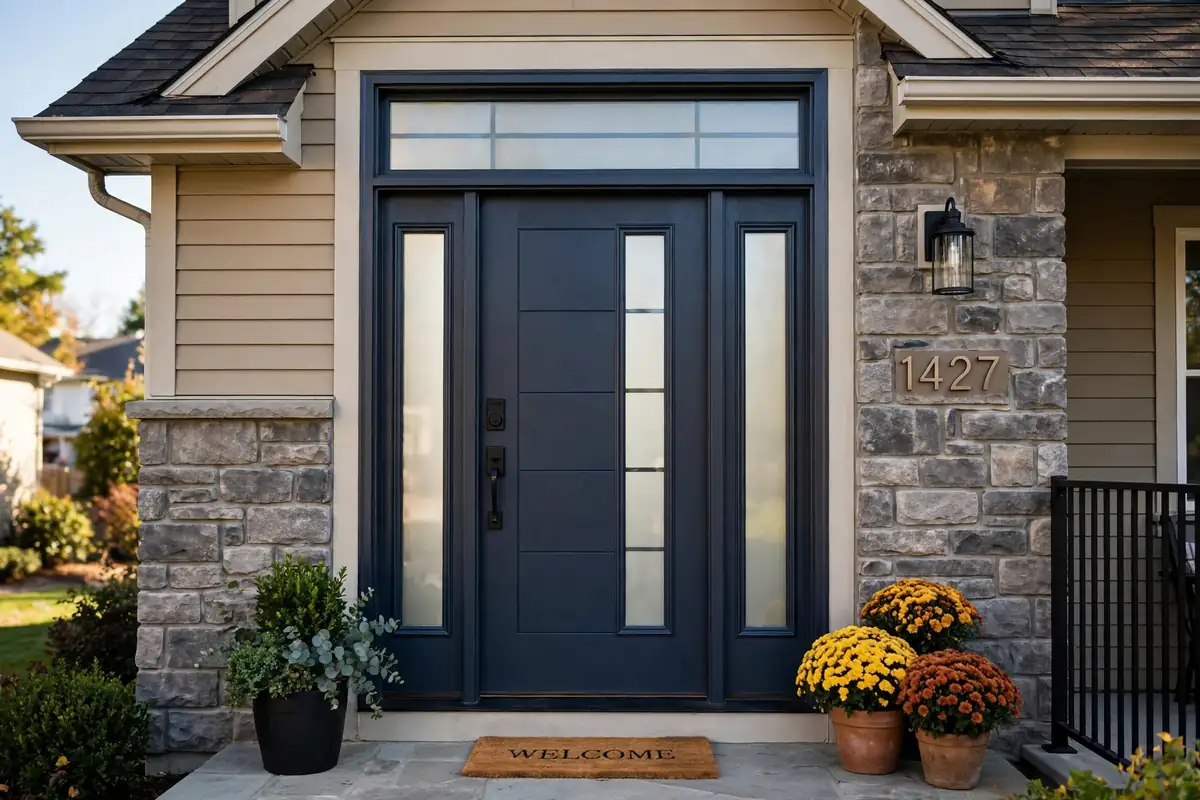
Colonial and traditional homes suit six-panel doors (steel, fiberglass, or wood) with classic brass hardware. Craftsman bungalows pair beautifully with doors featuring dentil shelves and decorative glass in the upper third. Modern and contemporary homes call for clean flush or minimalist grooved designs, often with full-lite glass or bold colors. Mediterranean and Spanish-style homes suit arched tops, wrought iron details, and warm wood tones. Farmhouse styles work with Dutch doors, X-brace designs, or simple Shaker-style panels.
Color Psychology and Curb Appeal
Don’t underestimate color. Real estate studies consistently show that an attractive front door color boosts perceived home value. Classic choices (black, navy, deep red, forest green) suit traditional homes. Bold colors (teal, yellow, coral) make modern homes pop. When in doubt, match the door color to your home’s trim or choose a shade that complements the exterior palette. Most quality doors accept paint, so you’re not locked in forever.
Sizing and Configuration
Standard US entry doors are 36 inches wide by 80 inches tall — this “3-0” size fits most homes. But many homes have non-standard openings. Measure your existing door (not the frame) for width, height, and thickness before shopping. Common variations include 32-inch doors (older homes, secondary entries), 42-inch doors (grand entries), and 96-inch tall doors (luxury homes).
Consider whether to add sidelites (windows flanking the door) or a transom (window above). These add natural light to the entryway and create a grander appearance, but they increase cost by $300 to $1,500 and slightly reduce energy efficiency and security. They’re worth it for dark entryways that need light.
Hardware and Accessories
Hardware is the jewelry of your entry door. Choose a finish that coordinates with your home’s other exterior metals (light fixtures, house numbers, mailbox). Popular finishes include matte black (modern), oil-rubbed bronze (traditional), satin nickel (transitional), and polished brass (classic).
Essential hardware includes: entry handleset ($80 to $300), deadbolt ($50 to $150), hinges (included with pre-hung, upgrade to ball-bearing for heavy doors), door knocker or bell ($20 to $80), kick plate ($15 to $40, protects against scuffs), and a quality doorbell or smart doorbell camera. Budget $200 to $500 total for quality hardware.
Budget Planning
When you choose an entry door, plan the full project budget: door unit ($200 to $2,500), professional installation ($300 to $600), hardware ($200 to $500), painting or staining if unfinished ($100 to $300 DIY, $300 to $600 professional), and potential framing repairs ($0 to $500). A realistic total for a quality mid-range project is $1,200 to $2,500 all-in — and an appliance warranty-style protection mindset helps you budget for long-term maintenance too.
Frequently Asked Questions
What is the best material for an entry door?
For most homeowners, fiberglass offers the best overall combination of durability, energy efficiency, appearance, and low maintenance. Steel is best for maximum security on a budget. Wood is best for authentic traditional aesthetics.
How do I measure for an entry door?
Measure the existing door slab’s width, height, and thickness — not the frame. For pre-hung replacement, also measure the rough opening (frame to frame). When in doubt, have the installer measure before ordering.
Should my entry door swing in or out?
In the USA, residential entry doors almost always swing inward for security (hinges aren’t accessible from outside) and weather protection. Outswing doors are used in hurricane-prone Florida regions and some commercial applications.
How long does it take to install an entry door?
Professional installation of a pre-hung entry door takes 3 to 5 hours for a straightforward replacement. Add time for framing repairs, sidelite installation, or structural modifications.
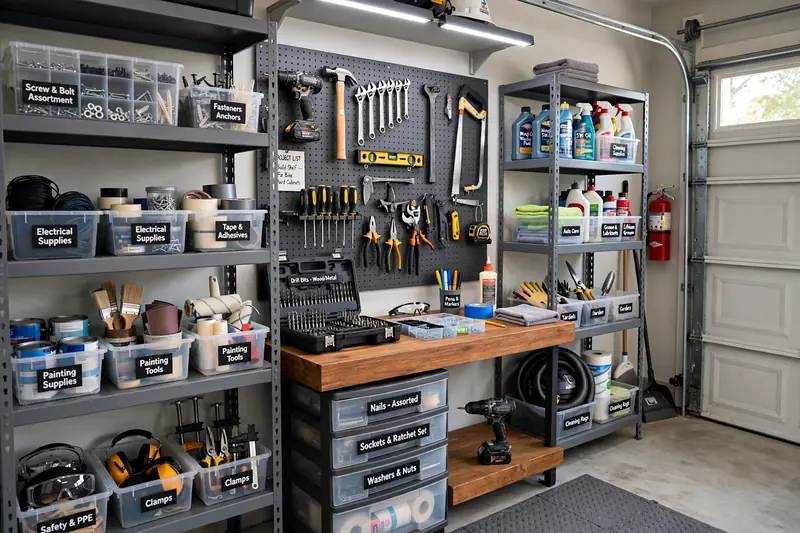
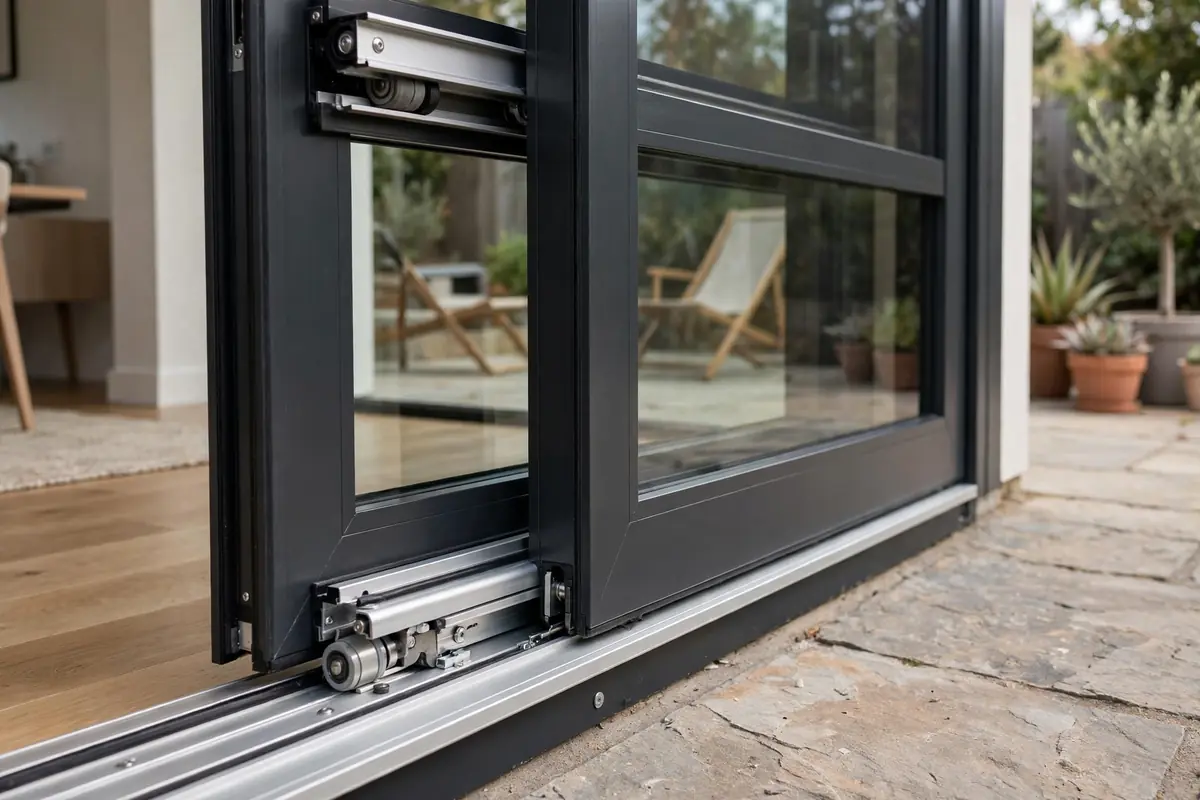
Learning how to choose an entry door is really about understanding trade-offs and matching the door to your specific needs. Prioritize what matters most — security, efficiency, beauty, or budget — then select the material, features, and style that deliver it. Apply the same careful evaluation to your other doors with our sliding door repair guide and garage door spring guide, keep the surrounding space functional with garage organization ideas, and use the repair vs replace framework for every major home decision. Take your time: a quality entry door will greet you home, protect your family, and impress your neighbors for the next 20 to 30 years.