Nothing is more frustrating than a sliding glass door that sticks, grinds, or refuses to budge — especially when you’re carrying groceries or letting the dog out. The good news: most sliding door problems are fixable without replacing the entire unit — unlike a garage door where full replacement is sometimes unavoidable. This sliding door repair guide covers every common issue American homeowners face, from dirty tracks to broken rollers to faulty locks, with clear DIY instructions and honest advice about when to call a professional.
Whether you have a sliding patio door, a closet bypass door, or a barn-style slider, this guide will help you diagnose the problem, gather the right tools, and get things gliding smoothly again.
How Sliding Doors Work: Understanding the Mechanism
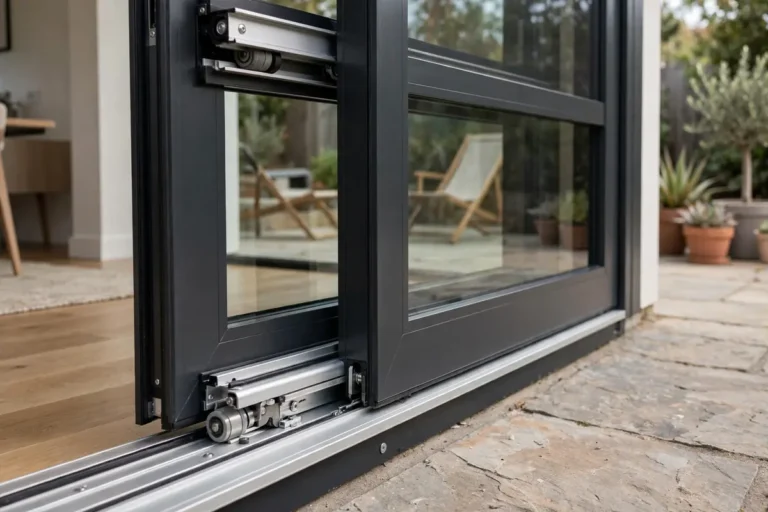
Before diving into this sliding door repair guide, it helps to understand the basic mechanics. A sliding patio door consists of one fixed panel and one (or two) sliding panels that roll along a horizontal track on ball-bearing rollers. The rollers sit in the bottom rail of the moving panel and carry the door’s entire weight — often 100 to 200 pounds for a glass patio door.
Key components include: the track (the metal channel the rollers ride in), rollers (usually two per panel, adjustable for height), the door panel itself, weatherstripping (seals against air and water), the locking mechanism (typically a hook-style mortise lock), and the handle. Most sliding door problems trace back to just three culprits: dirty or damaged tracks, worn rollers, or misalignment — a simpler diagnostic than garage door spring issues.
Problem 1: Door Sticks or Is Hard to Slide
This is the number one complaint in any sliding door repair guide, and it’s usually the easiest to fix. Here’s the systematic approach:
Step 1: Clean the Track Thoroughly
Dirt, pet hair, leaves, and debris accumulate in the track and create enormous friction. Vacuum the entire track with a crevice tool, then scrub with a stiff brush and soapy water. For stubborn grime, use an old toothbrush to reach into the track channel. Dry completely — moisture in the track accelerates roller corrosion.
Step 2: Lubricate Correctly
After cleaning, apply a silicone-based lubricant to the track — not WD-40 or oil-based products, which attract dust and gum up within weeks. Spray silicone lubricant along the full track length, then slide the door back and forth several times to distribute it. Repeat every 3 to 6 months as preventive maintenance.
Step 3: Adjust the Rollers
If cleaning and lubrication don’t solve it, the rollers need height adjustment. Locate the adjustment screws — typically found on the bottom edge of the sliding panel, accessible through small holes or plugs. Turn the screws clockwise to raise the door, counterclockwise to lower it. Adjust both rollers evenly until the door slides smoothly and the gap between the door and frame is uniform. This single step resolves the majority of stubborn sliding door cases.
Problem 2: Damaged or Dented Track
If the track itself is bent, dented, or corroded, no amount of cleaning will help. Minor dents can sometimes be straightened with pliers and a block of wood — gently tap the bent section back into shape. For the track channel specifically, a track cover or cap ($15 to $30) can smooth over damaged sections without full track replacement.
Severely damaged tracks require replacement. A replacement track kit costs $30 to $80, but installation involves removing the door panel entirely — a two-person job given the weight. If the track is part of the door frame (not a separate replaceable piece), you may need professional help or full door replacement. Front door replacement costs gives you a sense of full-unit pricing if it comes to that.
Problem 3: Worn or Broken Rollers
Rollers wear out every 10 to 15 years under normal use. Signs of roller failure include: grinding or crunching noises, the door dropping on one side, visible flat spots or cracks on the roller wheels, and adjustment screws that no longer help.
How to Replace Sliding Door Rollers
This is the most involved repair in this sliding door repair guide, but it’s very doable for patient DIYers. First, remove the sliding panel: open it halfway, lift it up into the top track, and swing the bottom outward. Get help — patio door panels weigh 75 to 150 pounds. Lay the panel on sawhorses padded with blankets.
Remove the old rollers (usually held by screws on the bottom rail), take one to the hardware store to match the exact type — roller designs vary significantly between manufacturers. Install the new rollers ($10 to $25 per pair), reinstall the panel by reversing the removal process, and adjust the roller height for smooth operation. Total DIY cost: $10 to $25 and 1 to 2 hours. Professional roller replacement costs $100 to $200.
Problem 4: Drafty Door and Failed Weatherstripping
If you feel cold air pouring in around your sliding door in winter, the weatherstripping has likely compressed, cracked, or fallen off. This is both a comfort problem and an energy problem — the Department of Energy identifies leaky sliding doors as a major source of heat loss in American homes.
Replacement weatherstripping is inexpensive ($15 to $40 for a full door kit) and installs with adhesive backing or press-fit channels. Remove the old stripping completely, clean the channel, and install the new material — the same air-sealing principle behind garage insulation. Also check the interlock weatherstripping where the sliding panel meets the fixed panel — this vertical seal is often overlooked. While you’re at it, verify the door’s alignment — a misaligned door can’t seal properly no matter how new the weatherstripping is.
Problem 5: Lock Won’t Engage or Latch Properly
A sliding door that won’t lock is a security emergency. Most sliding patio doors use a hook-style mortise lock that catches on a keeper mounted in the door frame. When the door shifts out of alignment (due to settling, roller wear, or track issues), the hook misses the keeper.
First, try adjusting the rollers to realign the door — this fixes most lock alignment issues. If the lock mechanism itself is broken, replacement mortise locks cost $20 to $50 and install with basic tools. For enhanced security beyond the standard lock, add a sliding door security bar ($15 to $30) or a pin lock that prevents the door from being lifted off its track. Entry door security principles apply here too — layered security is always best.
Problem 6: Foggy or Condensation Between Glass Panes
If moisture appears between the panes of your double-pane sliding door glass, the thermal seal has failed. This isn’t fixable with DIY methods — the insulating gas has escaped and the unit’s energy performance is compromised.
You have two options: glass panel replacement ($200 to $500 for the sealed glass unit, keeping the existing frame) or full door replacement ($1,000 to $2,500). If the door is over 15 years old or has other issues, full replacement usually makes more sense. A glass specialist can replace just the sealed unit if the frame is in good condition.
Problem 7: Screen Door Issues
Sliding screen doors have their own set of problems: torn mesh, bent frames, and derailed rollers. Screen mesh replacement is a classic DIY project — a roll of mesh ($10 to $20), a spline roller tool ($8), and 30 minutes of patience. Bent aluminum frames can sometimes be straightened, but severely damaged screens are cheap to replace entirely ($50 to $150 for a standard patio screen door).
When to Call a Professional
This sliding door repair guide covers most DIY-feasible repairs, but call a professional when: the door panel glass is cracked or broken (safety risk), the frame itself is warped or rotted, the track is integral to the frame and severely damaged, the door is exceptionally heavy or oversized, or you’ve attempted the repairs above without success. Professional sliding door repair typically costs $100 to $300 — far less than the $1,000+ cost of unnecessary full replacement.
Preventive Maintenance Schedule
Prevent future problems with this simple maintenance routine: clean tracks monthly during high-use seasons, lubricate tracks and rollers every 3 to 6 months with silicone spray, inspect weatherstripping annually, test the lock monthly, check roller adjustment yearly, and clean the glass and frame with non-abrasive cleaners. Fifteen minutes of maintenance twice a year prevents most sliding door failures.
Frequently Asked Questions
Why is my sliding door so hard to open?
The most common causes are dirty tracks, lack of lubrication, and misadjusted rollers. Clean the track thoroughly, apply silicone lubricant, and adjust the roller height screws. These three steps fix the vast majority of sticking sliding doors.
How much does it cost to repair a sliding glass door?
DIY repairs cost $10 to $80 in parts. Professional sliding door repair ranges from $100 to $300 depending on the issue. Roller replacement is the most common professional repair at $100 to $200.
Can I replace sliding door rollers myself?
Yes, if you’re comfortable handling the heavy door panel with a helper. The rollers themselves cost $10 to $25 per pair. The key challenge is safely removing and reinstalling the panel — get help and protect the glass.
How long do sliding patio doors last?
Quality sliding patio doors last 20 to 30 years. Rollers typically need replacement every 10 to 15 years, weatherstripping every 8 to 12 years, and locks as needed. Regular maintenance significantly extends lifespan — just as smart garage features benefit from periodic updates.
This sliding door repair guide proves that most sliding door problems don’t require expensive replacement. Start with the simplest fixes — cleaning, lubrication, and roller adjustment — before assuming the worst, applying the same repair vs replace logic you’d use for any home component. With basic tools and a little patience, you can restore smooth, quiet operation and extend your door’s life by years. For your other doors, see our garage door opener guide, garage organization ideas, and appliance warranty guide for complete home coverage. And when a problem truly exceeds DIY territory, you’ll now know exactly what to tell the professional, ensuring you get the right repair at a fair price.