That rattling, groaning box mounted to your garage ceiling works harder than you think — the average American garage door opener cycles over 1,500 times per year. When it’s time for a replacement, knowing how to choose a garage door opener that fits your door, your noise tolerance, and your budget makes all the difference between a smooth, quiet upgrade and years of frustration.
In this guide, we’ll walk through every factor that matters when you choose a garage door opener: drive types, horsepower, noise levels, smart features, safety requirements, and installation costs. By the end, you’ll know exactly which opener is right for your US home.
Garage Door Opener Types: Belt vs Chain vs Screw vs Direct Drive
The first decision when you choose a garage door opener is the drive mechanism — the system that actually moves the door along the track. Each type has distinct trade-offs in noise, maintenance, cost, and durability.
Belt Drive Openers: The Quiet Choice
Belt drive openers use a rubber belt (reinforced with steel or fiberglass) to move the trolley. They’re the quietest option available — ideal when you choose a garage door opener for a home with bedrooms above or adjacent to the garage. Belt drives require minimal maintenance and last 10 to 15 years. They cost $250 to $500 installed, making them the most popular choice for new installations in the USA today. Pairing a quiet opener with garage insulation creates the most comfortable setup for attached garages.
Chain Drive Openers: The Budget Workhorse
Chain drives use a metal chain — like a bicycle chain — to move the door. They’re the most affordable option ($200 to $400 installed) and extremely durable, but they’re also the noisiest. If your garage is detached or noise doesn’t bother you, a chain drive is a reliable, economical choice. They need occasional lubrication and chain tension adjustment.
Screw Drive Openers: Fewer Moving Parts
Screw drives use a threaded steel rod that rotates to move the trolley. They have fewer moving parts than belt or chain drives, which means less maintenance. However, they’re sensitive to temperature extremes — the lubricant thickens in cold climates, causing sluggish operation. They’re a reasonable choice for moderate climates but less popular than they once were.
Direct Drive (Jackshaft) Openers: The Premium Option
Wall-mounted jackshaft openers attach directly to the garage door’s torsion bar, eliminating the overhead rail entirely. They’re extremely quiet, free up ceiling space (great for garages with high ceilings or organized storage), and include battery backup as standard. At $400 to $700 installed, they’re the premium choice — and increasingly popular when homeowners choose a garage door opener during a full garage door replacement.
Horsepower: How Much Power Do You Need?
Garage door openers are rated by horsepower, though the rating actually refers to the motor’s lifting force. Here’s how to choose a garage door opener with the right power:
Half-horsepower (1/2 HP) is sufficient for most standard single and double steel garage doors — the most common residential setup in America. Three-quarter horsepower (3/4 HP) is better for heavier doors: wood doors, insulated triple-layer steel, or oversized doors. Some manufacturers now use “lifting force” ratings (measured in newtons) instead of HP — look for at least 700N for standard doors and 1,000N+ for heavy doors.
Bigger isn’t always better. An oversized opener on a light door can actually cause damage by slamming the door with excessive force. Match the opener to your door’s weight and size.
Noise Level: A Key Factor Most Buyers Overlook
When you choose a garage door opener, think about where the noise goes. If bedrooms, a home office, or a nursery sit above or next to the garage, noise matters enormously. Belt drive and direct drive openers are dramatically quieter than chain drives — the difference is immediately noticeable.
Look for openers with DC motors (quieter and smoother than AC motors) and soft start/stop technology, which gently accelerates and decelerates the door instead of jerking it into motion. These features add $50 to $100 to the price but transform the daily experience.
Smart Features Worth Paying For
Modern openers offer connectivity features that were science fiction a decade ago. When you choose a garage door opener in 2026, consider which smart features justify the extra cost:
Wi-Fi and Smartphone Control
Wi-Fi-enabled openers let you open, close, and monitor your garage door from anywhere using a phone app. You’ll get alerts if the door is left open, and you can grant temporary access to delivery drivers, house cleaners, or guests. This is the single most popular smart feature — and many mid-range openers now include it standard. Smart garage door opener guide dives deeper into the options.
Battery Backup
Battery backup keeps your opener working during power outages — required by law in California since 2019 and increasingly standard elsewhere. If you live in an area with frequent outages (hurricane zones, wildfire regions, ice storm country), this isn’t optional. Most new openers include it; for older models, it’s a $75 to $150 add-on.
Security Features
Look for rolling-code technology (changes the access code with every use, preventing code theft), automatic deadbolt locking (physically locks the door when closed), and motion-sensing control panels that light up as you approach. These entry door security principles apply equally to garage access points. Timer-to-close features automatically shut the door after a set period — great for forgetful households.
Safety Requirements You Must Know
Since 1993, federal law has required all garage door openers sold in the USA to include an auto-reverse safety system with photo-eye sensors mounted near the floor. If anything breaks the invisible beam while the door is closing, the door must reverse. When you choose a garage door opener, verify it meets UL 325 safety standards — all major brands do, but no-name imports sometimes don’t.
Test your safety sensors monthly by waving a broomstick through the beam while the door closes. If the door doesn’t reverse immediately, adjust or replace the sensors before someone gets hurt. The Consumer Product Safety Commission attributes thousands of injuries each year to malfunctioning garage doors.
How Much Does a Garage Door Opener Cost?
When you choose a garage door opener, budget for both the unit and installation. Opener units alone cost $150 to $400 depending on type and features. Professional installation adds $150 to $300. Total installed cost typically runs $250 to $600.
If you’re already replacing the door itself, bundling the opener installation saves money — the technicians are already on-site, and many installers discount the opener labor when combined with a full door replacement. Ask for a bundled quote.
DIY Installation: Should You?
Unlike the door itself (with its dangerous springs), opener installation is a manageable DIY project for handy homeowners — it typically takes 4 to 6 hours. However, you’ll need to handle electrical wiring, precise sensor alignment, and force-limit adjustments. If any of that sounds daunting, professional installation is worth the $150 to $300.
Top Brands to Consider
The US garage door opener market is dominated by a few trusted brands. Chamberlain and LiftMaster (sister companies) lead in smart features and reliability. Genie offers strong value, especially in chain-drive models. Craftsman openers (now made by Chamberlain) are widely available. For jackshaft/wall-mount openers, LiftMaster is the category leader.
Stick with established brands for two practical reasons: replacement parts availability and app longevity. A no-name smart opener is useless if the manufacturer discontinues the app in two years. The same logic applies when you replace your front door — quality brands ensure long-term parts support.
Matching the Opener to Your Door
Before you choose a garage door opener, confirm compatibility with your door. Standard sectional doors (the most common type in the USA) work with any opener type. One-piece tilt-up doors need specific opener configurations. Heavy wood or carriage-style doors need 3/4 HP minimum. And low-headroom garages may require a jackshaft opener or special low-clearance track kit.
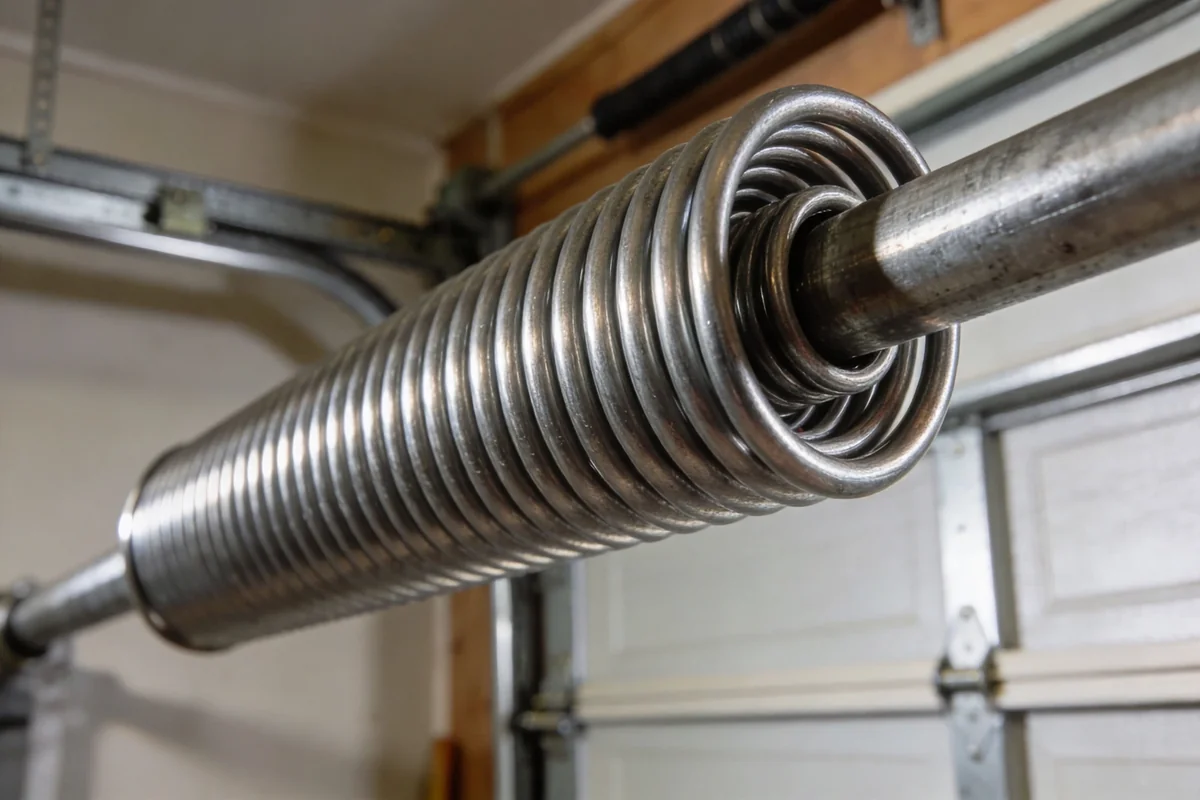
If your door is old, have a technician inspect the springs, cables, and rollers before installing a new opener. A powerful new opener can’t compensate for a door with failing hardware — and it may actually accelerate the failure. Garage door spring repair is often needed before or alongside opener replacement.
Frequently Asked Questions
What is the quietest garage door opener?
Belt drive openers with DC motors are the quietest widely available option. Wall-mounted direct drive (jackshaft) openers are even quieter since there’s no overhead rail. Both are dramatically quieter than chain drives.
How long do garage door openers last?
Most garage door openers last 10 to 15 years with normal use. Belt drives tend to last longest. Signs it’s time to replace include excessive noise, intermittent operation, lack of safety sensors (pre-1993 units), and frequent repairs — similar to the repair vs replace calculus for other home equipment.
Can I install a garage door opener myself?
Yes, if you’re comfortable with basic electrical work and following detailed instructions. Budget 4 to 6 hours. However, professional installation ($150 to $300) ensures correct safety sensor alignment and force settings — worth it for most homeowners.
Do I need Wi-Fi on my garage door opener?
It’s not essential, but it’s the most valued smart feature — letting you monitor and control the door remotely, receive open-door alerts, and grant temporary access. Many mid-range 2026 models include it at no extra cost.
Learning how to choose a garage door opener comes down to matching the drive type to your noise needs, the power to your door’s weight, and the features to your lifestyle. For most American homeowners, a belt-drive opener with Wi-Fi, battery backup, and a DC motor hits the sweet spot. For other door types in your home, our sliding door repair guide covers common fixes. Get it professionally installed, test the safety sensors monthly, and enjoy years of trouble-free operation.