That loud bang from the garage — like a firecracker going off — is the unmistakable sound of a broken garage door spring. Suddenly your 200-pound door won’t budge, your car is trapped inside, and you’re wondering about garage door spring repair cost and whether this is something you can fix yourself.
Here’s what you need to know upfront: garage door spring repair cost in the USA typically ranges from $150 to $350 for a standard replacement, with most homeowners paying around $200 to $250. But more importantly, this is one of the most dangerous DIY repairs in your entire home — far riskier than typical garage door replacement work. In this guide, we’ll break down the costs, explain why professional repair is strongly recommended, and help you understand what’s happening with your garage door.
Average Garage Door Spring Repair Cost in the USA
Garage door spring repair cost depends on the spring type, your door size, and your location. Here’s the national breakdown for 2026:
Standard torsion spring replacement (single spring) costs $150 to $250. Double torsion spring replacement (most double garage doors use two springs) runs $200 to $350 — and professionals strongly recommend replacing both springs simultaneously even if only one broke, because the other is equally worn. Extension spring replacement costs $120 to $200 for a pair. High-cycle springs (rated for more open/close cycles) add $50 to $100 to any of these prices.
Labor accounts for roughly half the total — typically $75 to $150. The springs themselves cost $30 to $100 per spring depending on type and quality. Emergency or after-hours service can add $50 to $150 to the total.
Why Replace Both Springs at Once?
Springs are installed as a matched pair and experience identical wear. When one breaks, the other is living on borrowed time — typically failing within weeks or months. Paying for a second service call doubles your labor cost. Replacing both springs in a single visit is the standard professional recommendation and the smartest financial move.
Torsion Springs vs Extension Springs
Understanding which spring type your door uses helps you interpret garage door spring repair cost quotes and communicate clearly with technicians.
Torsion Springs
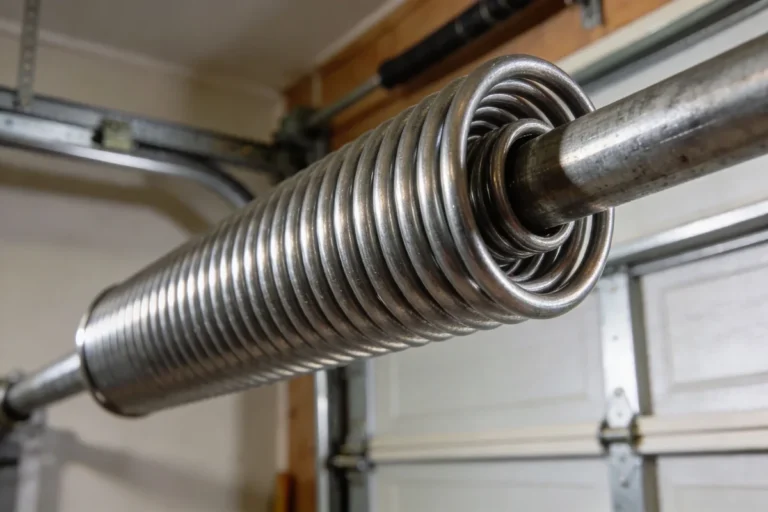
Torsion springs mount horizontally above the garage door opening on a metal shaft. They work by twisting (creating torque) to counterbalance the door’s weight. Torsion springs are the modern standard — quieter, safer (they’re contained on the shaft), and longer-lasting than extension springs. Most garage doors installed in the USA since the early 2000s use torsion springs. They’re also more expensive to replace because the installation requires specialized winding tools and expertise.
Extension Springs
Extension springs mount vertically on either side of the door tracks and work by stretching. They’re common on older doors and lighter single-car garage doors. They’re cheaper to replace but have a shorter lifespan (about 10,000 cycles versus 15,000 to 20,000 for quality torsion springs). Extension springs absolutely must have safety cables running through them — if a spring breaks without a safety cable, it can become a dangerous projectile.
Why Garage Door Spring Repair Is So Dangerous
This cannot be overstated: garage door springs store an enormous amount of mechanical energy. A standard torsion spring holds enough force to lift a 200 to 400-pound door effortlessly — and if released uncontrolled during a DIY repair attempt, it can cause severe injuries including broken bones, lacerations, and eye injuries. The US Consumer Product Safety Commission reports thousands of garage door-related injuries each year, with springs being a leading cause.
Professional technicians use specialized winding bars, follow strict procedures, and carry insurance for this exact reason. The $75 to $150 you save by attempting DIY spring repair is not worth the risk. This is one repair where calling a professional isn’t just recommended — it’s the only sensible choice, unlike simpler tasks in our sliding door repair guide.
What NOT to Do With a Broken Spring
Do not try to force the door open — you could damage the opener, bend the tracks, or injure yourself. Do not disconnect the opener and attempt manual operation of a door with a broken spring; the full weight of the door will come crashing down. Do not watch a YouTube video and attempt the repair with improvised tools. Call a professional garage door technician.
Signs Your Garage Door Springs Are Failing
Springs rarely fail without warning. Watch for these signs that your garage door spring repair cost is about to become relevant:
The door feels unusually heavy when lifted manually (with the opener disconnected). The door opens unevenly or crookedly. You hear loud creaking, popping, or grinding noises during operation. The door only opens a few inches then stops. There’s a visible gap in the torsion spring coil (a 2 to 4-inch separation where the break occurred). The opener strains, hesitates, or reverses unexpectedly. If you notice any of these symptoms, call a technician before the spring fails completely — a planned replacement is cheaper than an emergency call.
How Long Do Garage Door Springs Last?
Standard garage door springs are rated for about 10,000 open/close cycles. For a typical American household that opens the garage door 4 times per day, that’s roughly 7 years. Heavy-use households (multiple drivers, home businesses) may wear through springs in 4 to 5 years. Understanding this lifecycle helps with the broader repair vs replace decision for all your home’s mechanical systems.
High-cycle springs rated for 20,000, 30,000, or even 50,000 cycles are available for $50 to $150 more. If you plan to stay in your home long-term, high-cycle springs are excellent value — they can last 15 to 25 years under normal use, potentially eliminating future spring replacements entirely. It’s the same long-term thinking behind appliance warranty decisions.
Extending Spring Life
Annual professional maintenance ($80 to $150) includes spring inspection, lubrication, and tension adjustment — catching wear before failure. You can also spray the springs with a silicone-based lubricant twice a year (never use WD-40, which attracts dust). Keeping the door balanced reduces strain on both the springs and the garage door opener. While the technician is there, ask about garage organization upgrades to maximize your space.
What’s Included in a Professional Spring Repair
When you pay the garage door spring repair cost, a reputable technician should provide more than just the spring swap. A complete service includes: inspection of both springs, cables, rollers, and tracks; replacement of both springs (torsion) or the full set (extension); new center bearings if worn; lubrication of all moving parts; door balance testing; opener force-limit adjustment; and safety sensor verification.
Ask the technician to show you the old springs and explain what failed. A trustworthy pro will also check the cables — frayed cables should be replaced during the same visit ($80 to $150 additional) since they work in tandem with the springs.
How to Choose a Spring Repair Technician
Garage door repair is an industry with more than its share of scam operators, especially those advertising suspiciously low prices. Here’s how to protect yourself:
Get the total price upfront — not just a “service call fee” that balloons on-site. Be suspicious of quotes under $100; the springs alone cost more than that, which means upselling is coming. Check that the company is licensed and insured in your state. Read recent Google reviews (not just the testimonials on their website). Ask what brand and cycle-rating the replacement springs are. And never pay in full before the work is complete.
Questions to Ask Before Hiring
Are you replacing both springs? What’s the cycle rating of the new springs? Is there a warranty on parts and labor? (Reputable companies offer 1 to 3 years.) Will you inspect the cables and rollers too? Is the quoted price all-inclusive? The answers will tell you whether you’re dealing with a professional or an opportunist.
Preventing Future Spring Emergencies
Once you’ve paid the garage door spring repair cost, take steps to avoid a repeat emergency. Schedule annual garage door maintenance — a technician will spot weakening springs before they snap. Consider upgrading to high-cycle springs if yours failed before the 7-year mark. Keep the tracks clean and rollers lubricated to reduce overall system strain.
Also, test your door’s balance twice a year: disconnect the opener (pull the red emergency cord) and manually lift the door halfway. If it stays in place, the springs are properly tensioned. If it falls or shoots up, the springs need professional adjustment. Insulating your garage can also reduce temperature-related stress on springs in extreme climates.
Frequently Asked Questions
How much does it cost to replace garage door springs?
Garage door spring repair cost ranges from $150 to $350 in the USA, with most homeowners paying $200 to $250 for a standard double-spring torsion replacement. Extension springs cost slightly less at $120 to $200.
Can I replace garage door springs myself?
It’s strongly discouraged. Torsion springs store lethal amounts of energy and require specialized tools and training. Thousands of DIYers are injured each year attempting this repair. Professional repair costs $150 to $350 — a small price for safety.
How do I know if my garage door spring is broken?
The most obvious sign is a loud bang followed by a door that won’t open. You may also see a visible gap in the torsion spring coil above the door, or notice the door feels extremely heavy when lifted manually.
Should I replace both garage door springs at the same time?
Yes. Springs wear evenly, so when one breaks, the other is close behind. Replacing both in one visit saves you the cost of a second service call within weeks or months.
Garage door spring repair cost is one of the more affordable major garage repairs — but it’s also one of the most dangerous to attempt yourself. When you hear that telltale bang, resist the urge to investigate the springs personally. Call a licensed professional, ask for both springs to be replaced with quality high-cycle units, and get back to your day. For comprehensive protection of your home’s entry points, also review our guides on front door replacement cost, choosing an entry door, and smart garage door features. Your car (and your fingers) will thank you.