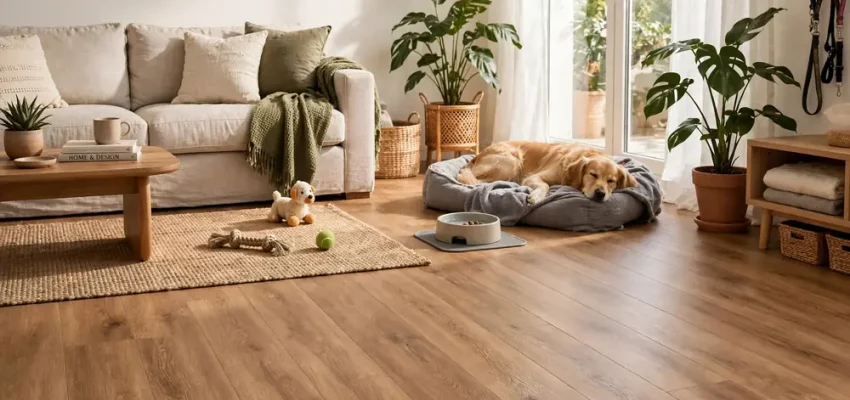

Dogs with muddy paws, cats with sharp claws, the occasional accident on the living room floor — pet owners face unique flooring challenges that most buying guides ignore. Knowing how to choose flooring for pets in USA homes means balancing durability, scratch resistance, waterproofing, comfort, and cost. The wrong choice leads to scratched surfaces, lingering odors, and expensive replacements.
The good news is that modern flooring technology has made pet-friendly options better than ever. From luxury vinyl that shrugs off claws to tile that handles any mess, there is a perfect floor for every pet household. This guide compares every major flooring type for pet owners, ranks them by pet-friendliness, and helps you choose flooring for pets that keeps both your animals and your home happy.
What Makes Flooring Pet-Friendly?
Before comparing materials, understand the five traits that matter most when you choose flooring for pets. Scratch resistance tops the list — dog nails and cat claws destroy soft surfaces. Waterproofing matters because accidents, water bowls, and muddy paws are daily realities. Stain resistance keeps floors looking new despite the occasional mess. Traction is a safety issue — slippery floors injure pets, especially seniors. Ease of cleaning determines whether pet ownership feels manageable or miserable.
Comfort matters too. Hard, cold floors are tough on arthritic joints — a real concern for aging dogs. The ideal pet flooring balances toughness with enough give to keep paws and joints comfortable. Cost is the final factor: the best pet flooring is worthless if it breaks your budget. Throughout this guide, we will weigh all six factors for every option.
Best Flooring for Pets: Ranked
1. Luxury Vinyl Plank (LVP) — Best Overall
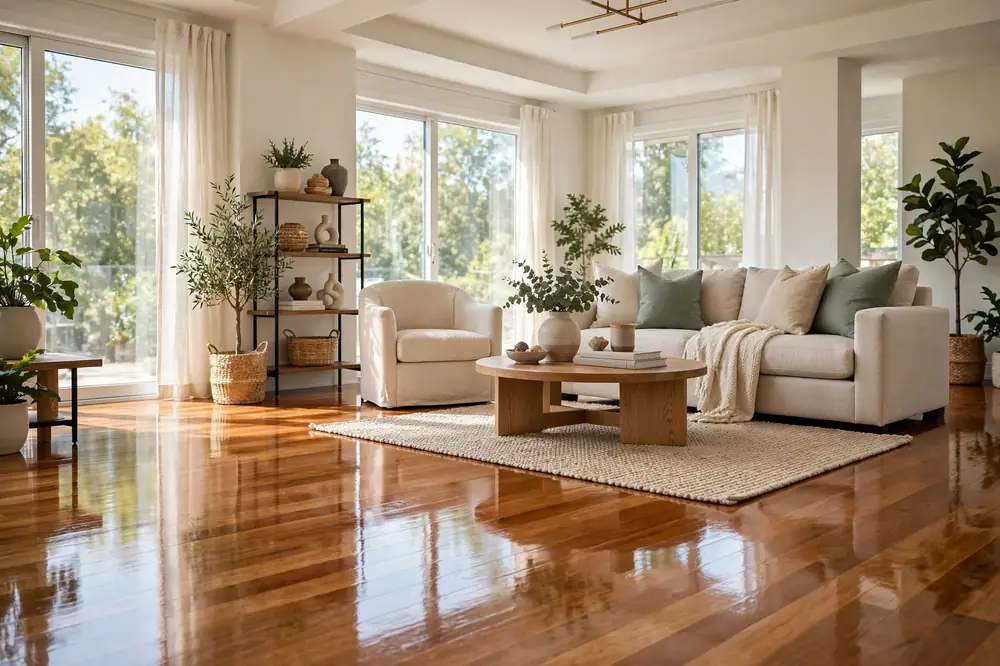
Luxury vinyl plank is the top recommendation when you choose flooring for pets in USA homes, and it is not close. Modern LVP is 100 percent waterproof, highly scratch-resistant (look for 20-mil wear layers or thicker), comfortable underfoot, and affordable at $3 to $7 per square foot installed. It convincingly mimics wood, tile, or stone while shrugging off everything pets dish out.
LVP handles accidents without staining, resists claw scratches better than any wood product, and cleans with a simple damp mop. It is also warmer and softer than tile — easier on pet joints. For a detailed breakdown, see our vinyl plank flooring pros and cons USA guide. The only real downside: very heavy furniture can dent it, and cheap thin vinyl (under 12-mil wear layer) will not survive determined claws.
2. Tile (Porcelain/Ceramic) — Most Durable
Nothing beats tile for pure toughness. Porcelain tile is virtually indestructible — claws cannot scratch it, accidents cannot stain sealed grout, and it lasts decades. At $5 to $15 per square foot installed, it costs more than vinyl but outlasts everything. Tile is the best choice for mudrooms, laundry rooms, and entryways where pets track in the worst messes.
The tradeoff is comfort and traction. Tile is hard and cold — tough on senior pets — and can be slippery when wet. Area rugs solve both problems in living spaces. If you are considering tile, our tile installation cost in USA guide covers pricing, and tile vs laminate in bathrooms USA compares tile against another popular option.
3. Laminate — Budget-Friendly and Tough
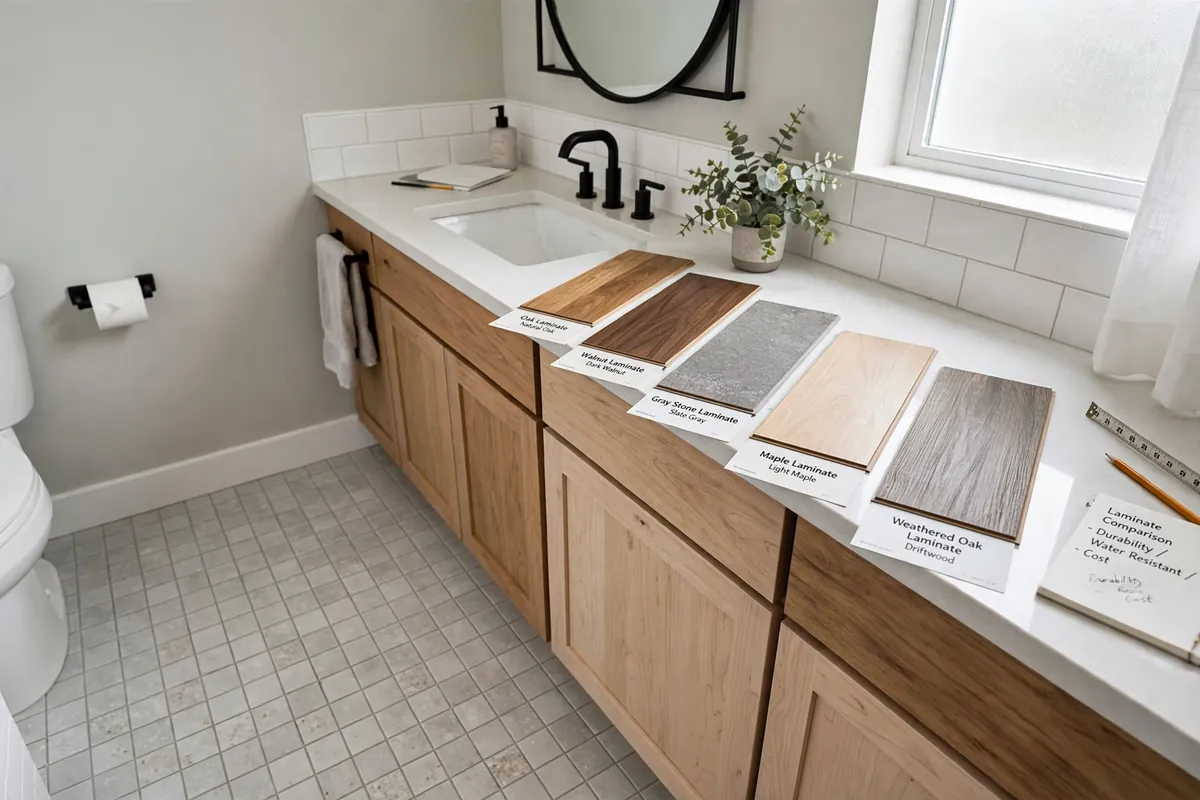
Modern laminate flooring offers excellent scratch resistance at $2 to $5 per square foot installed — the best value when you choose flooring for pets on a budget. The aluminum-oxide wear layer resists claws remarkably well. However, standard laminate is not waterproof; accidents that seep into seams cause swelling. Waterproof laminate (a newer category) solves this but costs more.
Laminate is also slippery and noisy — clicking nails on laminate drives some owners crazy. Area rugs and runners help with both. For the full comparison, see laminate vs hardwood USA: which is better.
4. Engineered Hardwood — Beautiful but Risky
Real wood floors and pets are a difficult combination. Solid hardwood scratches, dents, and stains — dog nails leave marks within weeks. Engineered hardwood with a thick wear layer and tough finish (aluminum oxide) performs better but still shows wear. At $6 to $12 per square foot installed, it is an expensive choice to watch deteriorate.
If your heart is set on wood, choose harder species (hickory, white oak), site-finished floors (thicker finish than prefinished), and matte finishes that hide scratches. Keep pet nails trimmed and use rugs in high-traffic paths. Our hardwood floor installation cost USA 2026 guide covers pricing, and how to maintain hardwood floors USA helps you protect the investment.
5. Carpet — Comfortable but Challenging
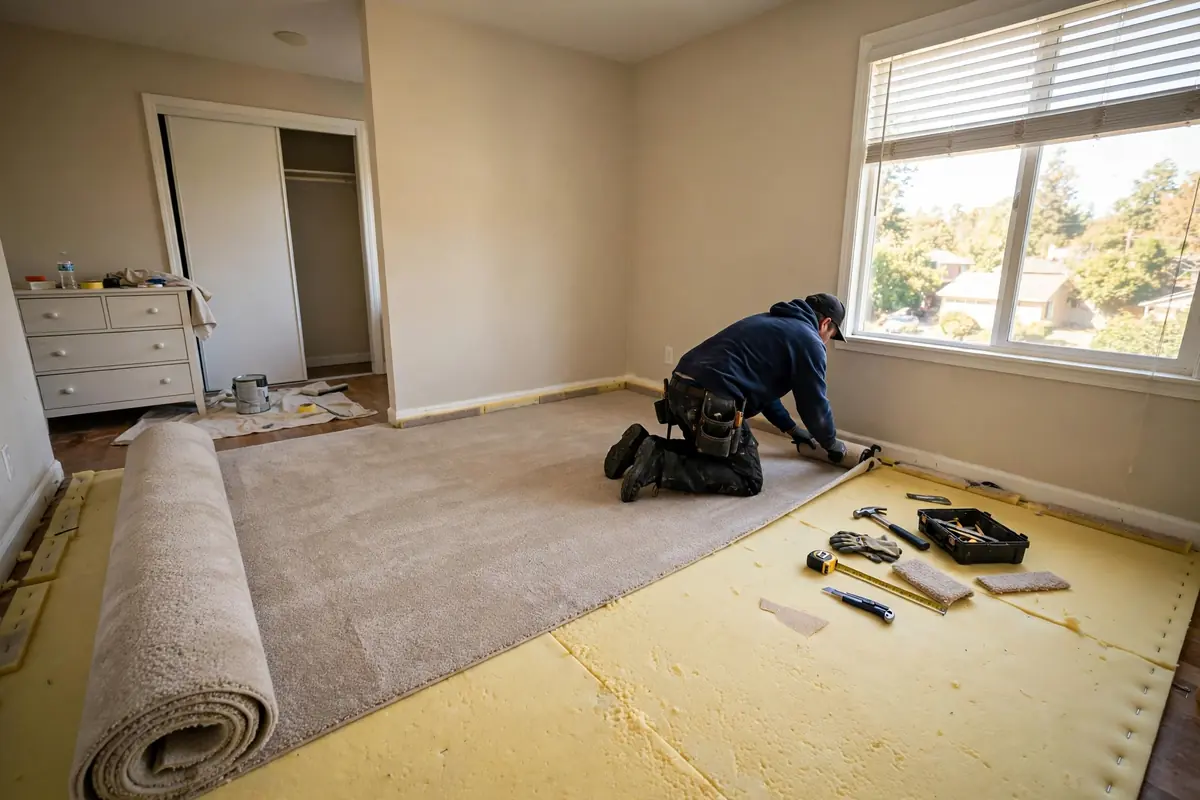
Pets love carpet — it is warm, soft, and provides great traction. Owners love it less: carpet traps pet hair, absorbs odors, stains from accidents, and harbors allergens. If you must have carpet with pets, choose low-pile, stain-resistant fibers (triexta or solution-dyed nylon), dark patterns that hide hair, and carpet tiles that allow replacing individual stained sections.
Budget for professional deep cleaning every 6 to 12 months — twice as often as pet-free homes. Our carpet installation cost USA 2026 guide covers pricing, and deep cleaning checklist USA includes pet-specific carpet care.
6. Cork and Bamboo — Niche Options
Cork is naturally antimicrobial, warm, and comfortable — but soft enough for claws to dent. It suits homes with small, calm pets. Bamboo (strand-woven) is harder than most hardwoods and resists scratches well, though it can be slippery. See our cork flooring pros and cons USA and bamboo flooring cost in USA 2026 for details.
Flooring for Pets by Pet Type
Dogs (large/active): LVP or tile. Big dogs bring the most wear — heavy nails, muddy paws, drool. Waterproof LVP with a thick wear layer is the sweet spot. Avoid solid hardwood and standard laminate.
Dogs (small/calm): Almost anything works. Smaller dogs cause less damage, so you can prioritize aesthetics. Engineered hardwood, quality laminate, or LVP all perform well.
Cats: LVP, tile, or laminate. Cats scratch vertical surfaces more than floors, but litter tracking is the main issue — hard floors clean up litter far easier than carpet. Avoid carpet in litter box areas.
Senior pets: Prioritize traction and comfort. LVP with textured finish, cork, or carpeted areas over hard floors. Avoid slippery tile and polished surfaces. Runners along common paths prevent injuries.
How to Choose Flooring for Pets: Room by Room
Entryway/mudroom: Tile or LVP. This is ground zero for muddy paws. Waterproof, easy-clean surfaces are non-negotiable. Add a washable rug for extra protection.
Living room: LVP or laminate. You want comfort and good looks here — LVP delivers both with pet-proof durability. Large area rugs add warmth.
Bedrooms: Carpet or LVP. Many pet owners allow pets on the bed, making bedroom flooring a comfort choice. Stain-resistant carpet works if you commit to regular cleaning.
Kitchen: Tile or LVP. Water bowls, food spills, and accidents demand waterproof flooring. Our kitchen remodel cost in USA 2026 guide covers full kitchen flooring projects.
Basement: LVP or tile. Basements need moisture-resistant flooring regardless of pets. See best flooring for basements USA for the complete picture.
Protecting Your Floors From Pets
The right flooring is half the battle — maintenance is the other half. Trim pet nails every 2 to 3 weeks; this single habit prevents most scratch damage. Place washable mats under food and water bowls. Use washable area rugs in high-traffic pet paths — they are cheaper to replace than flooring. Clean accidents immediately; even waterproof floors can develop odor issues if messes sit.
For hardwood floors specifically, our how to clean hardwood floors properly USA guide has pet-safe cleaning methods. Keep a pet-specific cleaning kit handy: enzyme cleaner for accidents, microfiber mop for daily hair, and washable mop pads.
Cost Comparison: Pet-Friendly Flooring
Budget matters when you choose flooring for pets. Approximate installed costs per square foot: waterproof laminate $3–$6, LVP $3–$7, tile $5–$15, engineered hardwood $6–$12, stain-resistant carpet $3–$7. For a 500-square-foot living area, that is $1,500 to $7,500 depending on material.
Factor in lifespan too. Cheap carpet replaced every 5 years costs more long-term than LVP lasting 20 years. The most economical pet flooring over a 15-year horizon is usually LVP or tile — higher upfront cost, minimal replacement expense.
Frequently Asked Questions
What is the most scratch-resistant flooring for dogs?
Porcelain tile is the most scratch-resistant, followed by LVP with a 20+ mil wear layer. Both easily handle large dog nails. Avoid solid hardwood and soft bamboo with big dogs.
Is laminate or vinyl better for pets?
Vinyl (LVP) is better for pets — it is waterproof, while standard laminate is not. Waterproof laminate narrows the gap but typically costs as much as LVP. For pet homes, LVP wins.
How do I keep pet odors out of my floors?
Choose non-porous flooring (LVP, tile), clean accidents with enzyme cleaners immediately, wash pet bedding weekly, and deep-clean floors monthly. Carpet is the hardest flooring to keep odor-free with pets.
When you choose flooring for pets, prioritize waterproofing, scratch resistance, and ease of cleaning — then balance those against comfort and budget. For most USA pet households, luxury vinyl plank hits the sweet spot. Whatever you choose, proper maintenance and a good vacuum will keep your floors beautiful for years.