
Hardwood floors remain the gold standard of USA home flooring — beautiful, durable, and proven to increase home value more than any other floor type. But before you commit, understanding the hardwood floor installation cost in USA markets for 2026 helps you budget accurately and avoid surprises. Prices vary widely based on wood species, installation method, your region, and the condition of your subfloor.
This comprehensive guide breaks down the hardwood floor installation cost across every factor that matters: material prices by wood type, labor rates by region, additional costs like subfloor prep and old floor removal, and how hardwood compares to alternatives. Whether you are flooring a single bedroom or an entire house, you will know exactly what to expect before you sign a contract.
Average Hardwood Floor Installation Cost USA 2026
The national average hardwood floor installation cost in the USA for 2026 ranges from $8 to $18 per square foot installed, with most homeowners paying $12 to $15 per square foot all-in. For a standard 500-square-foot living area, that translates to $6,000 to $7,500 total. A whole-house installation of 1,500 square feet typically runs $18,000 to $22,500.
This per-square-foot figure includes both materials ($5–$12 per square foot for the wood itself) and professional labor ($3–$8 per square foot). The wide range reflects real differences: basic domestic oak in the Midwest costs far less than imported Brazilian cherry installed in San Francisco. Understanding where your project falls in the hardwood floor installation cost spectrum starts with wood selection.
Regional labor rates drive significant variation. In high-cost USA metros — New York, Boston, San Francisco, Seattle — expect total installed costs 25 to 40 percent above the national average. In the South and Midwest, prices often run 10 to 20 percent below average. Always get at least three written quotes from licensed flooring contractors in your area. For comparing with other floor types, our laminate vs hardwood comparison provides useful context.
Hardwood Floor Installation Cost by Wood Species
Wood species is the biggest driver of material cost in any hardwood floor installation cost estimate. Here is what USA homeowners typically pay per square foot for materials alone in 2026:
Red oak ($5–$8/sq ft materials): The most popular and affordable hardwood in the USA. Red oak is durable, takes stain beautifully, and its prominent grain hides wear well. For budget-conscious projects that still deliver genuine hardwood, red oak is the default choice and keeps your hardwood floor installation cost at the lower end.
White oak ($6–$10/sq ft materials): Slightly harder and more water-resistant than red oak, with a subtler grain that suits modern interiors. White oak’s popularity has surged in recent years, and it pairs beautifully with contemporary USA design. The modest premium over red oak is worth it for many homeowners.
Maple ($6–$9/sq ft materials): Hard, smooth, and light-colored, maple creates a clean, bright look. Its tight grain shows dents less visibly than oak. However, maple can be blotchy when stained dark, so it is best in natural or light finishes.
Hickory ($6–$10/sq ft materials): The hardest domestic USA wood, with dramatic color variation and bold grain. Hickory’s rustic character hides wear extraordinarily well, making it ideal for busy households with kids and pets. For pet-specific flooring advice, see our how to choose flooring for pets guide.
Walnut ($9–$14/sq ft materials): Rich, dark, and luxurious, walnut makes a stunning statement. It is softer than oak, so it dents more easily, but its beauty is unmatched. Walnut pushes your hardwood floor installation cost toward the premium range.
Brazilian cherry / Jatoba ($8–$14/sq ft materials): Exotic hardwoods offer striking color and exceptional hardness. They darken with sun exposure, which some homeowners love and others regret. Factor in acclimation time — exotics need longer to adjust to your home’s humidity before installation.
Solid vs Engineered Hardwood: Cost and Performance
An important distinction in any hardwood floor installation cost discussion is solid versus engineered hardwood. Solid hardwood is milled from a single piece of wood, typically 3/4 inch thick. It can be sanded and refinished multiple times over a 50-plus-year lifespan. Solid hardwood costs $5 to $12 per square foot for materials.
Engineered hardwood has a thin veneer of real hardwood bonded to plywood layers. It looks identical to solid once installed but costs less — $4 to $9 per square foot for materials — and handles moisture and temperature swings better. This makes engineered the smarter choice for basements, concrete slabs, and radiant-heated floors. Our best flooring for basements guide covers moisture considerations in detail.
Engineered hardwood can typically be refinished once or twice depending on veneer thickness, versus many times for solid. For most USA homeowners planning to stay 10 to 20 years, engineered offers the best balance of beauty, performance, and hardwood floor installation cost. If this is your forever home and you want floors your grandchildren will refinish, solid is the legacy choice.
Installation Methods and Their Costs
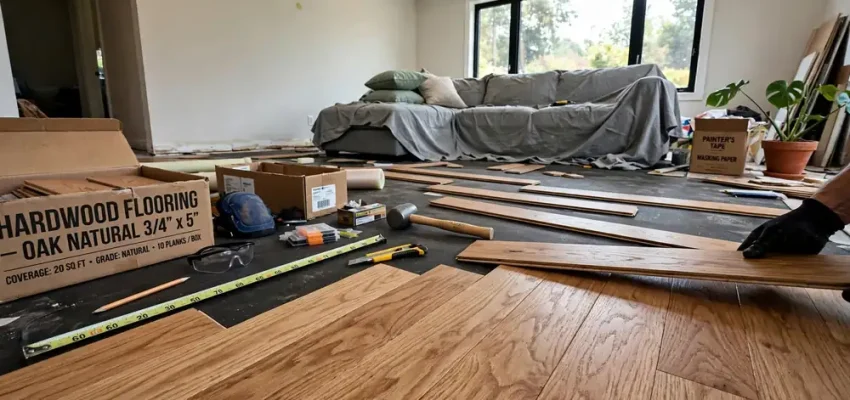
How hardwood is installed affects both cost and performance. Nail-down installation, the traditional method for solid hardwood over wood subfloors, is the most labor-intensive at $3 to $8 per square foot for labor alone. It produces the most solid, long-lasting result with that satisfying feel underfoot.
Glue-down installation, common for engineered hardwood over concrete, runs $3 to $7 per square foot in labor. It requires a perfectly flat slab — any unevenness telegraphs through. Floating installation, where planks click together over an underlayment without attachment to the subfloor, is fastest and cheapest at $2 to $5 per square foot in labor, and it is the most DIY-friendly method.
Your subfloor condition significantly impacts the total hardwood floor installation cost. If the subfloor needs leveling, expect $1 to $3 per square foot extra — our floor leveling cost guide breaks this down. Removing old flooring adds $1 to $4 per square foot depending on the material; tearing out old tile is the most expensive. Always have contractors assess the subfloor before quoting, not after they start.
Additional Costs to Budget For
Beyond materials and basic labor, several extras affect your hardwood floor installation cost. Transitions and moldings — thresholds, reducers, stair nosing — run $200 to $800 for an average project. If you have stairs, budget $100 to $300 per step for hardwood stair treads installed, which adds up fast on a full staircase.
Furniture moving costs $200 to $500 if the contractor handles it. Baseboard removal and reinstallation adds $1 to $3 per linear foot. Underlayment for floating or glue-down installations runs $0.50 to $1.50 per square foot. And do not forget the finish: site-finished floors (sanded and finished in your home) cost $3 to $8 per square foot extra but allow custom stain colors; prefinished floors come factory-finished with no additional cost or fumes.
Order 10 percent extra material beyond your measured square footage for cuts, waste, and future repairs. This is standard industry practice, and that box of matching planks in your garage will be invaluable if you ever need to replace a damaged board. For long-term care after installation, our how to maintain hardwood floors guide protects your investment.
Hardwood vs Alternatives: Is It Worth the Cost?
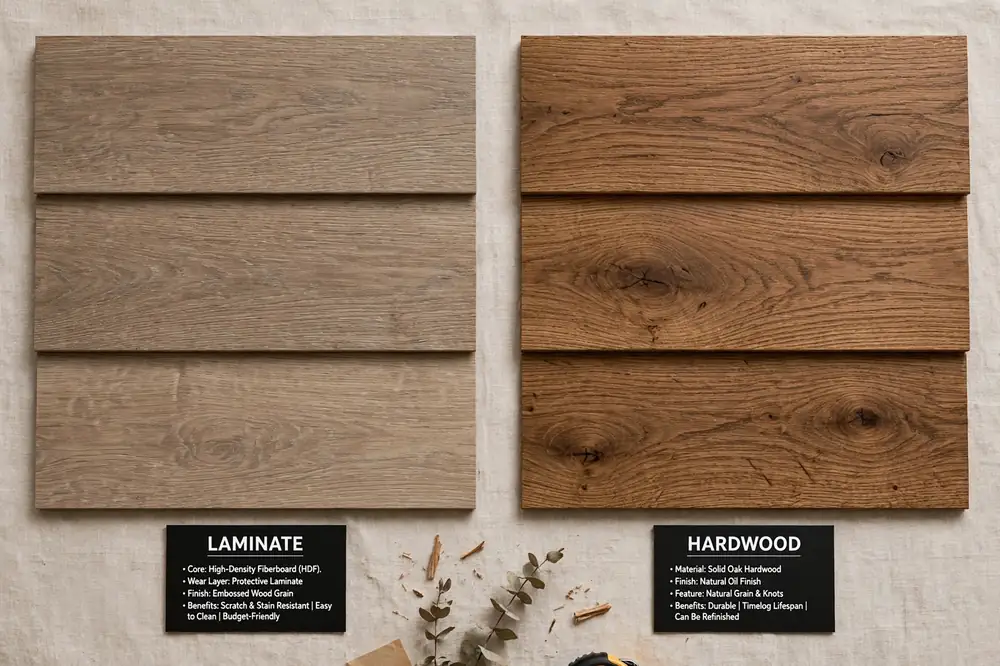
At $12 to $15 per square foot installed, hardwood costs two to three times more than quality laminate or vinyl plank. Is the premium justified? For resale value, absolutely — the National Association of Realtors consistently finds hardwood floors among the highest-ROI interior improvements, with homeowners recovering 100 percent or more of the cost at sale in many USA markets. No other flooring type boosts buyer appeal quite like real wood.
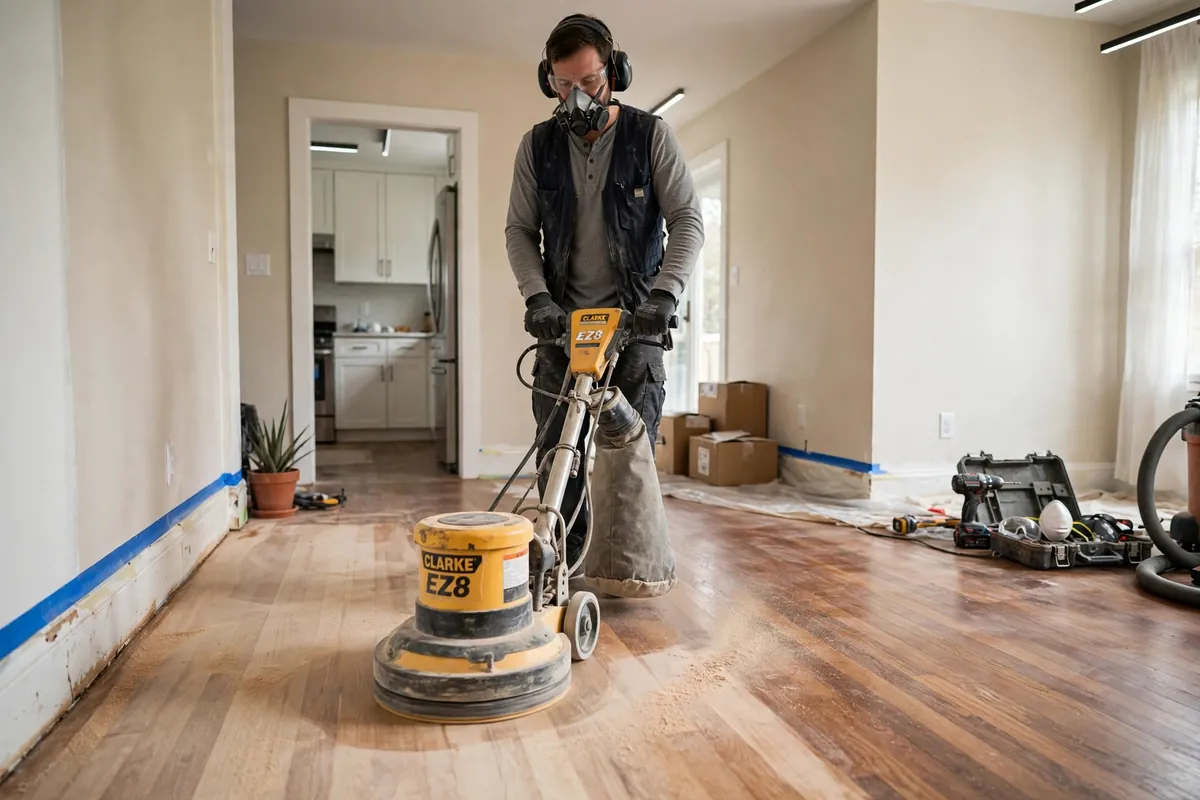
For daily living, hardwood offers unmatched longevity. A well-maintained solid hardwood floor lasts 50 to 100 years and can be refinished repeatedly — our hardwood refinishing guide explains the process. Laminate and vinyl need full replacement every 15 to 25 years. Over a 30-year homeownership, hardwood’s lifetime cost can actually be lower despite the higher upfront hardwood floor installation cost.
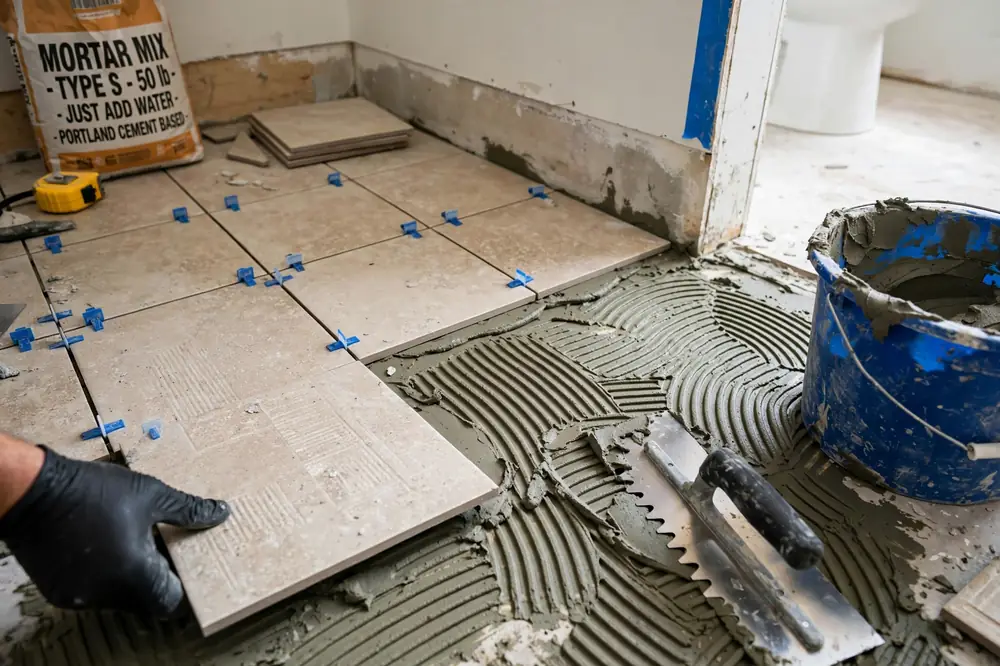
That said, hardwood is not ideal everywhere. Bathrooms, laundry rooms, and below-grade basements expose wood to moisture risks that alternatives handle better. Our tile vs laminate in bathrooms and basement flooring guides help you choose room by room. Many USA homeowners use hardwood in living areas and bedrooms, with tile or vinyl in wet zones — the best of both worlds.
How to Save on Hardwood Floor Installation Cost
Smart shopping can meaningfully reduce your hardwood floor installation cost without sacrificing quality. Buy materials during flooring sales events — many USA retailers discount hardwood 15 to 30 percent during holiday weekends. Consider short-length or rustic-grade planks, which cost less than long, clear-grade boards but look characterful once installed.
Schedule installation during contractors’ slower seasons (late fall and winter in most USA regions) for better pricing and availability. Get at least three detailed quotes specifying wood species, grade, installation method, and exactly what is included. Be wary of quotes significantly below the others — they often exclude subfloor prep, transitions, or furniture moving that appear as surprise charges later.
Handle demolition yourself if you are able. Ripping out old carpet and pad is labor-intensive but requires no special skill, saving $1 to $2 per square foot. Just confirm with your installer first that they are comfortable with you doing the tear-out — some prefer to handle it to assess the subfloor themselves.
What to Ask Your Flooring Contractor
Before committing to a hardwood floor installation cost quote, ask: What species, grade, and manufacturer are you quoting? Is the price for solid or engineered, prefinished or site-finished? What installation method do you recommend for my subfloor and why? What is your process for acclimating the wood to my home’s humidity? What subfloor preparation is included, and what costs extra?
Also ask about the finish warranty, the installer’s experience with your chosen wood species, and whether they will handle baseboards, transitions, and furniture moving. Verify licensing and insurance, check references from recent hardwood jobs (not just any flooring), and get everything in writing. A reputable contractor welcomes detailed questions — evasiveness is a red flag.
Understanding the hardwood floor installation cost in USA markets empowers you to plan confidently, compare quotes intelligently, and invest wisely in floors that will serve your family for decades. Get multiple quotes, choose quality materials, hire experienced installers, and maintain your floors properly. For related projects, explore our refinishing guide, maintenance tips, and bamboo flooring cost articles to round out your flooring knowledge.