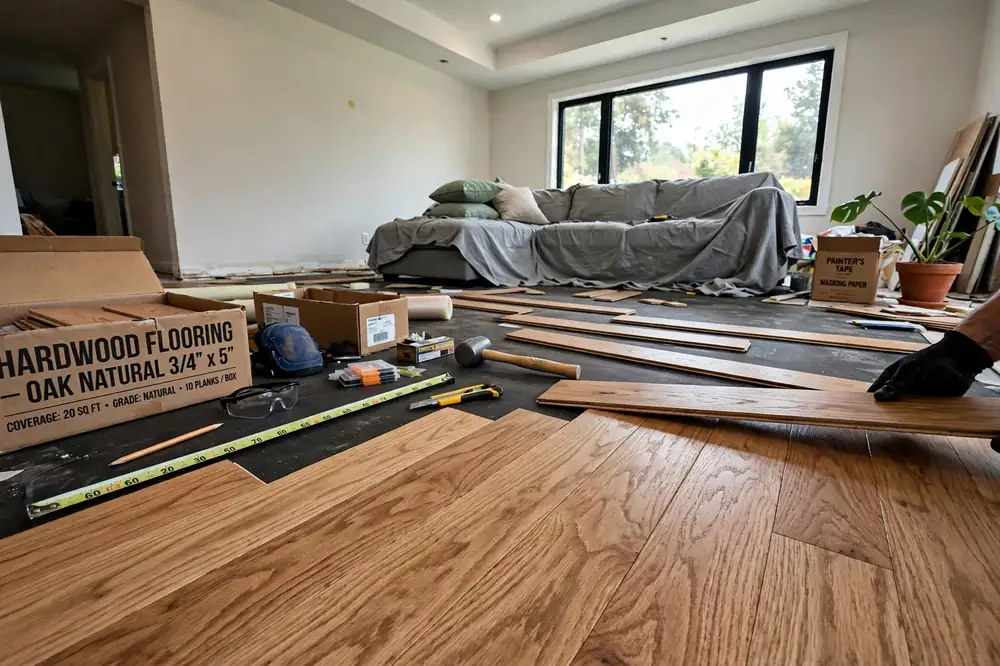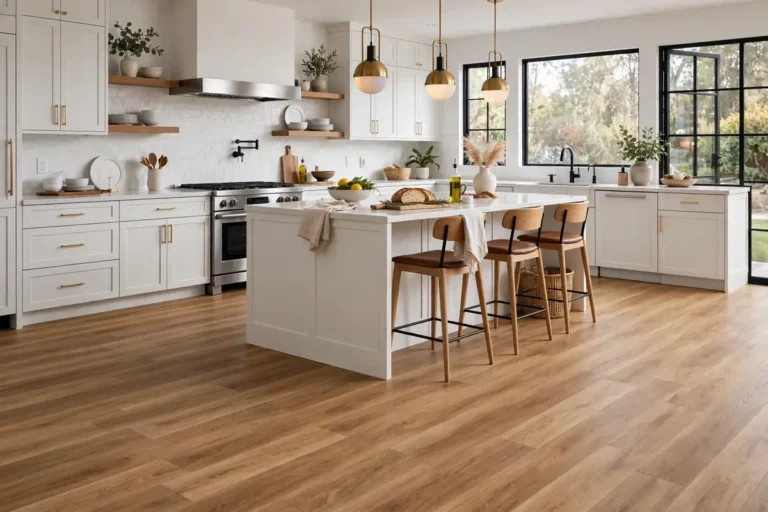

Scratched, dull, worn hardwood floors do not necessarily need replacement. Learning how to refinish hardwood floors can restore them to like-new beauty for a fraction of the cost of new flooring — typically $3 to $8 per square foot versus $12 to $15 for replacement. Refinishing removes surface damage, lets you change the stain color, and adds decades of life to floors you already own.
This complete guide to how to refinish hardwood floors covers everything USA homeowners need: when refinishing makes sense versus replacement, DIY versus professional costs, the full sanding and finishing process step by step, dust control strategies, finish options, and how to maintain your newly refinished floors. Whether you hire a pro or tackle it yourself, you will know exactly what to expect.
When Does It Make Sense to Refinish?
Understanding how to refinish hardwood floors starts with knowing whether your floors are candidates. The key question is whether you have solid hardwood or engineered hardwood with sufficient wear layer. Solid hardwood 3/4 inch thick can be refinished many times — virtually unlimited for residential use. Engineered hardwood can be refinished once or twice if the veneer is at least 2mm thick; thinner veneers cannot be sanded safely.
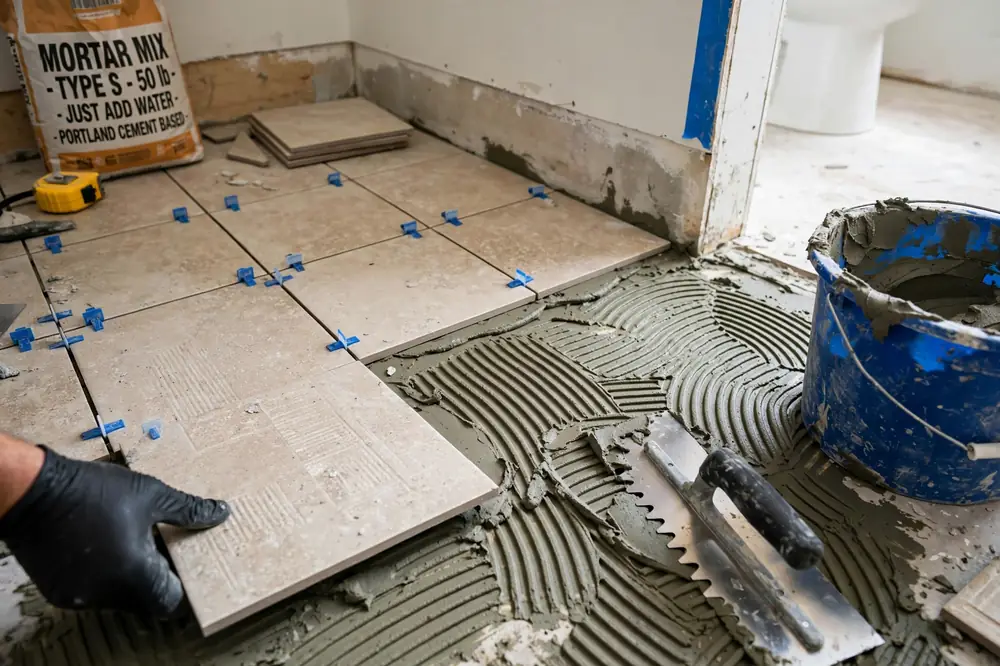
Good refinishing candidates show surface wear: scratches, dull finish, worn traffic paths, minor stains, or a color you no longer love. The wood beneath should be structurally sound — no deep gouges through to bare wood across large areas, no widespread water damage, no warped or cupped boards from moisture issues. If boards are loose, squeaky, or separating, address those structural issues first; refinishing will not fix them. For wet areas where wood is not ideal, our tile installation cost in USA guide covers the alternative.
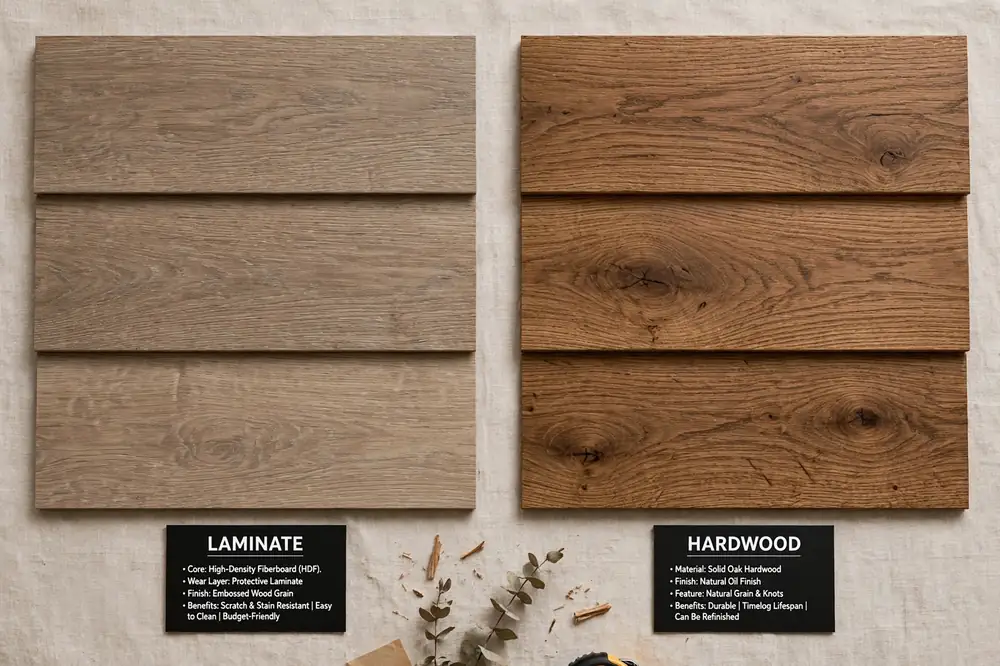
Consider replacement instead of learning how to refinish hardwood floors when: the floors have been refinished so many times that nails are visible (solid wood worn too thin); engineered veneer is too thin to sand; there is extensive water damage, pet urine staining deep into the wood, or structural subfloor problems; or the cost of refinishing approaches 60 percent of replacement. For replacement pricing, see our hardwood floor installation cost USA 2026 guide and laminate vs hardwood USA comparison.
How to Refinish Hardwood Floors: DIY vs Professional Cost
Professional hardwood floor refinishing in the USA typically costs $3 to $8 per square foot, with most homeowners paying $4 to $6. For a 500-square-foot living area, that is $2,000 to $3,000. This includes sanding, staining (if desired), and two to three coats of polyurethane finish. Dustless sanding systems, which most reputable pros now use, may add $0.50 to $1 per square foot but keep your home dramatically cleaner.
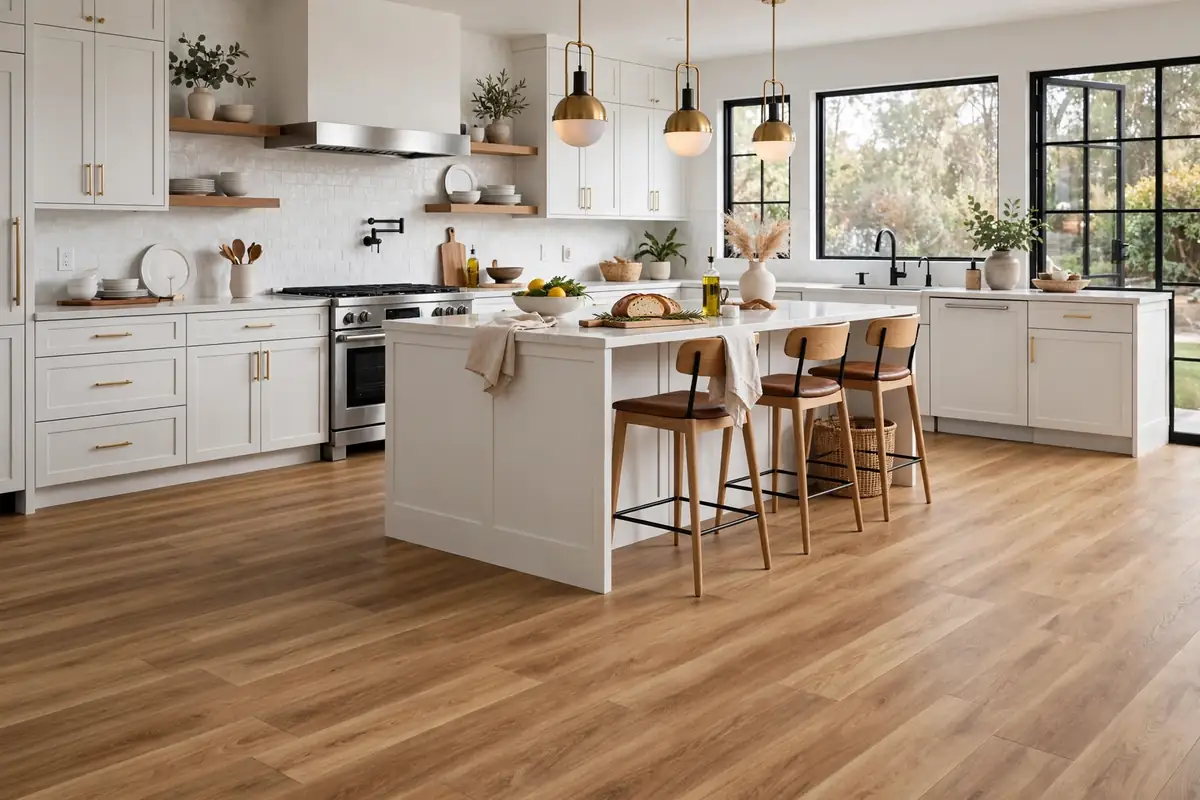
DIY refinishing costs $500 to $1,000 for an average room, mostly in equipment rental and materials — still far less than replacement, though vinyl plank flooring offers a cheaper new-floor alternative. A drum sander rents for $60 to $80 per day, an edge sander for $40 to $60, plus sandpaper ($100–$200), stain ($30–$60), and polyurethane ($50–$100 per gallon). The savings are substantial — but so is the skill required. Drum sanders are aggressive machines that can gouge floors in seconds in inexperienced hands.
The honest assessment of how to refinish hardwood floors as a DIY project: it is achievable for handy homeowners, but the learning curve is real and mistakes are visible forever. If your floors are in a prominent area and you want flawless results, professional refinishing is worth the cost. If you are refinishing a bedroom or home office and accept minor imperfections, DIY can work well. Never practice on your living room — start in a closet or spare bedroom. (For bedrooms, some homeowners prefer carpet installation for warmth.)
How to Refinish Hardwood Floors Step by Step
Step 1: Prepare the Room
Every guide to how to refinish hardwood floors starts with thorough prep. Remove all furniture, rugs, and window treatments. Pull shoe molding and baseboards if you want the finish to extend fully to the walls (label each piece for reinstallation). Cover doorways with plastic sheeting to contain dust, seal HVAC vents in the room, and remove light fixtures or cover them. Hammer down any protruding nails and fill deep gaps with wood filler.
Step 2: Sand with Coarse Grit
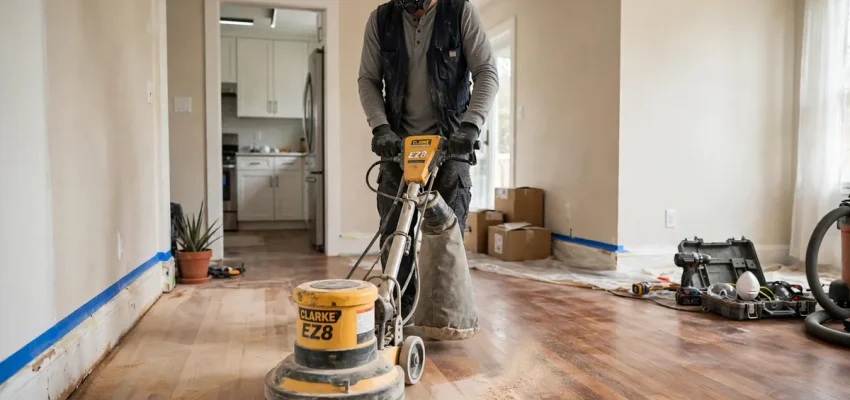
Start sanding with 36- or 40-grit sandpaper on the drum sander to remove the old finish. Work with the grain in smooth, even passes, overlapping slightly. Keep the sander moving at all times — stopping in one spot creates a divot. Empty the dust bag frequently; a full bag reduces suction and leaves dust that causes swirl marks. This is the most critical skill in how to refinish hardwood floors: steady, continuous motion.
Use the edge sander with the same grit along walls, corners, and around obstacles where the drum sander cannot reach. The edge sander is where most DIY damage happens — it cuts aggressively and leaves circular marks if you linger. Keep it moving in smooth arcs, feathering into the drum-sanded area for a seamless blend.
Step 3: Progress Through Finer Grits
After the old finish is gone, sand the entire floor with 60-grit, then 80-grit, then finish with 100-grit. Each progressively finer grit removes the scratches left by the previous one. Skipping grits leaves visible scratch patterns in the final finish — this patience separates professional results from amateur ones in how to refinish hardwood floors.
Between each grit, vacuum thoroughly and inspect under raking light (a work light held low to the floor reveals scratches invisible in overhead light). Any scratches or marks you see now will show in the final finish, only magnified. (Uneven subfloors cause similar issues — see our floor leveling cost before installation USA guide.) Take the time to get each stage right before moving finer.
Step 4: Stain (Optional)
If you want to change your floor color, apply stain after the final sanding. Test stain colors on an inconspicuous area or spare board — stain looks dramatically different on your actual floor than on a sample chip. Apply with a rag or applicator pad, working in manageable sections and wiping off excess consistently for even color. Let the stain dry fully (usually 24 hours) before applying finish.
Popular USA stain trends include natural (no stain, just clear finish), warm medium browns, and modern gray washes. Dark stains like ebony look dramatic but show every speck of dust and scratch more visibly — a real concern in homes with pets. Consider your lifestyle: busy households with pets do better with medium tones that hide wear. For color ideas that boost home value, our paint colors for resale principles apply to floor tones too.
Step 5: Apply Finish Coats
The final stage of how to refinish hardwood floors is applying protective finish. Water-based polyurethane is the most popular choice in USA homes today: it dries fast (2–3 hours between coats), has low odor, and does not yellow over time. Oil-based polyurethane is more durable and gives a warm amber tone but takes 8–10 hours between coats and yellows gradually.
Apply three coats for best durability, lightly buffing with 220-grit screen between coats to ensure adhesion and remove dust nibs. Use a high-quality applicator — a lambswool applicator or T-bar — and maintain a wet edge to avoid lap marks. Do not shake the polyurethane (it creates bubbles); stir gently. Keep the room dust-free during application and drying — even small particles become permanent bumps in the finish.
Step 6: Cure Before Use
Water-based finish is walkable in socks after 24 hours; oil-based needs 48–72 hours. Wait at least 72 hours before moving furniture back, and use felt pads on everything. Area rugs should wait 7 to 14 days — placing them too early can trap moisture and mar the finish. Full cure takes 30 days; treat floors gently during this period. This patience is the final step in how to refinish hardwood floors properly.
Choosing the Right Finish
Finish selection affects both appearance and durability in how to refinish hardwood floors. Water-based polyurethane in satin sheen is the default recommendation for most USA homes — it looks natural, resists yellowing, and cleans easily. Matte finishes are trending for a modern, low-sheen look but show scuffs slightly more. Semi-gloss and gloss look formal and highlight every imperfection; reserve them for low-traffic formal areas.
For maximum durability, consider commercial-grade finishes or hardwax oils. Eco-conscious homeowners may also explore bamboo flooring cost USA as a renewable alternative. Hardwax oil (like Rubio Monocoat) penetrates the wood rather than forming a surface film, creating a natural matte look that spot-repairs beautifully — damaged areas can be fixed without refinishing the whole floor. It is popular in high-end USA homes but requires more regular maintenance than polyurethane. Discuss options with your refinisher based on your household’s traffic and lifestyle.
Common Refinishing Mistakes to Avoid
The biggest mistake in how to refinish hardwood floors is inadequate sanding — either skipping grits, not sanding enough with each grit, or failing to blend edge-sander marks into drum-sander areas. These shortcuts show permanently in the final finish. Second is poor dust control: dust in the finish creates a rough, amateurish surface. Vacuum between every step, tack-cloth before finishing, and keep the work area sealed.
Other common errors include applying finish too thickly (it bubbles and peels), not maintaining a wet edge (visible lap lines), staining without testing first (surprise colors), and rushing cure times (dents and marks in soft finish). Each of these is avoidable with patience. Rushing is the enemy of good floor refinishing — plan for the project to take four to five days including cure time, not a single weekend.
Maintaining Newly Refinished Floors
Once you have learned how to refinish hardwood floors and completed the project, protect your investment. Our hardwood floor maintenance guide covers the full routine, but the essentials are: sweep or dust-mop regularly with soft tools, clean with hardwood-specific products only (never wet-mop, steam-mop, or use vinegar), place doormats at every entrance, use felt pads on all furniture, and keep pet nails trimmed.
Maintain consistent indoor humidity between 35 and 55 percent — extreme dryness causes gaps, excessive moisture causes cupping. In dry USA winters, a humidifier protects your floors as well as your comfort. With proper care, a professional refinish lasts 7 to 10 years in active households and 15+ years in low-traffic areas before needing attention again.
Learning how to refinish hardwood floors — whether you DIY or hire a pro — is one of the most cost-effective ways to transform your USA home. For $2,000 to $3,000 professionally, or under $1,000 DIY, you get floors that look brand new and last for decades. Take your time, do not skip steps, and enjoy the remarkable difference that fresh, gleaming hardwood makes to every room it touches.