
No hot water is one of those household emergencies that feels bigger than it is. One cold shower and suddenly the water heater dominates your day. Before you panic and order a full replacement, know this: many water heater problems are cheap to fix, and water heater repair cost is often a fraction of replacement cost. A failed heating element, a worn thermocouple, or a faulty thermostat can be repaired for a few hundred dollars, while a new unit installed runs $1,500 to $3,500 or more.
This guide covers water heater repair cost in 2026 for both tank and tankless systems: typical repair prices, how to diagnose common symptoms, when repair stops making sense, and how to hire a plumber who fixes the problem rather than selling you a new unit you do not need.
Water Heater Repair Cost in 2026: National Averages
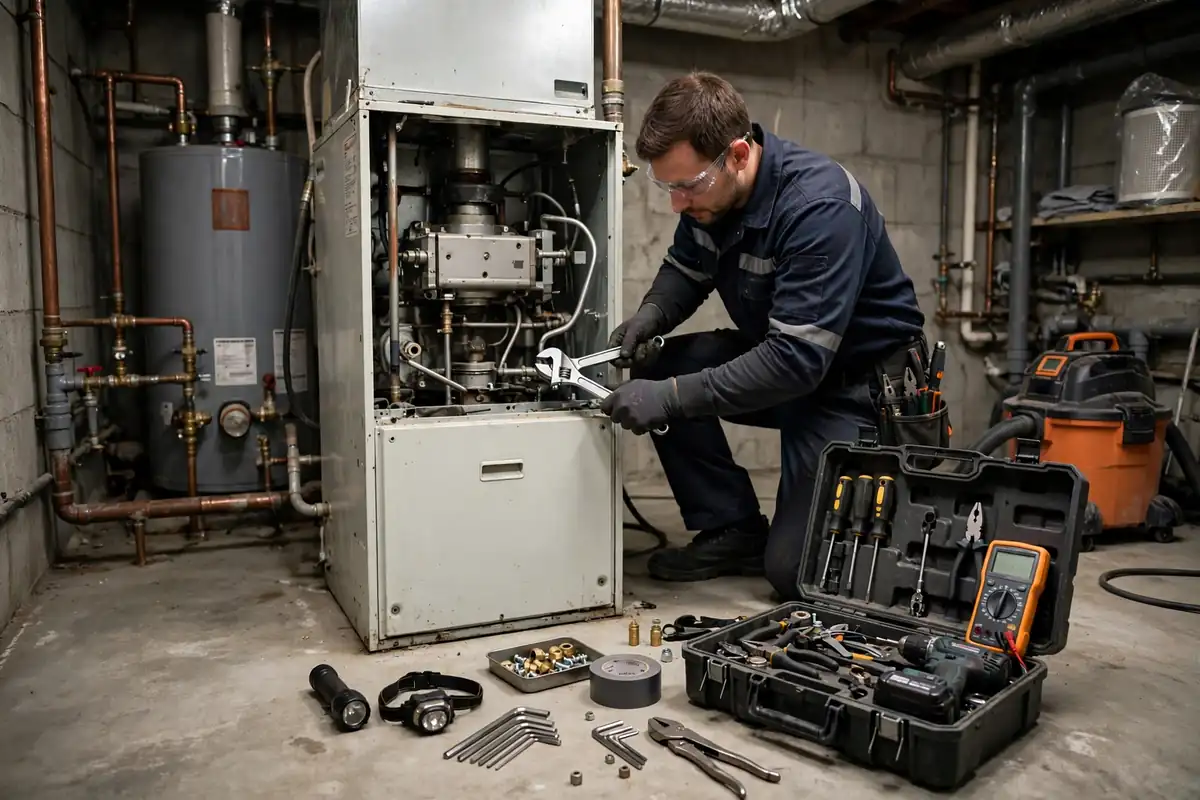
Most water heater repairs cost $150 to $600, with a national average near $350 for a standard tank unit. Minor repairs like a thermostat or thermocouple replacement run $150 to $300. Mid-range repairs like a heating element or gas valve replacement run $300 to $600. Major repairs, such as a tankless heat exchanger descaling with part replacement, can run $600 to $1,000.
Emergency or after-hours calls add $100 to $250 to the bill, so if you can wait until morning and your home has another hot water source, do so. Diagnostic fees typically run $75 to $150 and are often waived or credited if you approve the repair. Always ask whether the diagnostic fee applies to the repair total before authorizing work.
Common Water Heater Repairs and Their Costs
- Thermostat replacement: $150 to $300
- Heating element replacement (electric): $200 to $350
- Thermocouple or pilot assembly (gas): $150 to $300
- Gas control valve replacement: $350 to $600
- Pressure relief valve (T&P valve) replacement: $150 to $300
- Anode rod replacement: $150 to $350, and one of the best life-extending repairs available
- Dip tube replacement: $150 to $300
- Tankless descaling and flush: $150 to $400
- Tankless igniter or flame sensor: $200 to $450
- Leak repair at fittings: $150 to $400, depending on access and parts
Anode rod replacement deserves emphasis. The anode rod sacrifices itself to corrosion so the tank does not. Replacing it every three to five years can double a tank’s life, yet most homeowners never do it. If your water heater is five or more years old and has never had an anode replacement, ask your plumber to check it during any service visit.
Water Heater Repair Cost by Symptom
No hot water at all
For electric units, the usual culprits are a tripped breaker, a failed heating element, or a bad thermostat. For gas units, check the pilot light, thermocouple, and gas valve. Most no-hot-water repairs cost $150 to $400 and are completed in one visit. Before calling, check your breaker panel and, for gas units, whether the pilot is lit, since both are free fixes.
Not enough hot water or water cools too fast
This often means one of two elements has failed on an electric unit, the thermostat is set too low, or sediment has built up in the tank. Sediment reduces capacity and efficiency, and a flush costing $100 to $250 often restores performance. If your household has grown or you added a bathroom, the unit may simply be undersized, in which case repair will not solve the underlying capacity problem.
Discolored, rusty, or smelly water
Rusty water from hot taps usually points to a failing anode rod or internal tank corrosion. A rotten-egg smell comes from bacteria reacting with the anode rod, and a plumber can often fix it by replacing the rod with an aluminum-zinc alloy version. If rust appears in both hot and cold water, the problem is likely in your pipes rather than the heater, and a plumber cost guide will help you budget the diagnosis.
Leaking water heater
Leaks at fittings, valves, or pipes are usually repairable for $150 to $400. A leak from the tank itself, however, means the tank has corroded through, and no repair will hold. Tank leaks require replacement. If you see water pooling under the unit, shut off the water supply and power or gas to the unit, and call a plumber promptly to limit water damage.
Strange noises: popping, rumbling, or banging
Popping and rumbling almost always mean sediment buildup. Water trapped under sediment boils and pops as it heats, which wastes energy and stresses the tank. A flush usually fixes it for $100 to $250. Banging or hammering when water runs points to water hammer in your pipes, which is a plumbing issue rather than a heater failure.
Tank vs Tankless Water Heater Repair Cost
Tank repairs are generally cheaper and simpler, because the technology is straightforward and parts are universal. Tankless repairs cost 20 to 40 percent more on average, because diagnosis requires brand-specific knowledge and parts are proprietary. However, tankless units last 20 years or more versus 8 to 12 years for tanks, so lifetime repair frequency is lower.
If you own a tankless unit, annual descaling is essential in hard-water areas. Skipping it voids some warranties and leads to expensive heat exchanger failures. If you are weighing tank versus tankless for your next unit, compare tankless water heater costs and tankless pros and cons before deciding. Homeowners interested in the most efficient option should also look at heat pump water heaters, which use far less electricity but cost more upfront.
When to Repair vs Replace Your Water Heater
Repair when the unit is under 8 years old for a tank or under 15 for tankless, the repair costs less than half the replacement price, and the tank itself is not leaking. Replace when the tank leaks, the unit is past its expected lifespan, repairs have become frequent, or a single repair exceeds 50 percent of replacement cost. Also consider replacement if your household needs have outgrown the unit’s capacity.
A new tank water heater installed costs $1,200 to $3,000, while a tankless unit installed runs $2,500 to $5,500. If your current unit is old and inefficient, replacement may pay for itself in energy savings within a few years, especially when switching to a high-efficiency or heat pump model. Compare water heater replacement costs to make an apples-to-apples decision.
How to Hire a Plumber for Water Heater Repair
Choose a licensed plumber with water heater experience, not just a general handyman, since gas and electrical work carry real safety risks. Get a written estimate before work begins, confirm whether the diagnostic fee is credited toward the repair, and ask about parts and labor warranties. Reputable plumbers warranty labor for at least 90 days and use manufacturer or equivalent-quality parts.
To find the right pro, follow the same vetting approach as any plumbing hire. Our guide on how to find a reliable plumber covers licenses, reviews, and red flags. Be wary of any technician who declares the unit dead without testing elements, thermostats, or the gas valve, or who pressures you into an immediate replacement without explaining the repair option.
For emergencies like a major leak or a gas smell, act first and vet later. Shut off water and gas, ventilate the area if you smell gas, and call an emergency plumber or your gas utility. Gas leaks are never a wait-until-morning situation.
Water Heater Maintenance That Prevents Repairs
Flush your tank annually to remove sediment, test the temperature and pressure relief valve yearly, and check the anode rod every three years. Set the thermostat to 120 degrees Fahrenheit, which is hot enough for household use, prevents scalding, and slows sediment buildup. Insulate exposed hot water pipes, which reduces heat loss and shortens wait times at distant fixtures.
For tankless units, descale annually in hard-water areas and clean the inlet filter regularly. Keep the area around any water heater clear, check for leaks monthly, and know where your shutoff valves are before an emergency. A small drip caught early is a $150 repair. The same drip ignored for months can rot a floor, damage drywall, and turn into a much larger project involving bathroom plumbing or structural repairs.
Ways to Save on Water Heater Repair Cost
Schedule non-emergency repairs during business hours to avoid after-hours surcharges. Ask whether the plumber charges flat-rate or hourly pricing, and get the total in writing before work starts. If multiple fixtures or drains also need attention, bundle the work into one visit to save a second trip charge. A drain cleaning done during the same visit often costs less than a separate appointment.
Consider a home warranty if your water heater and other major systems are aging. Some plans cover water heater repair or replacement up to a set limit, though coverage terms vary widely, so read the fine print. Review home warranty costs and compare what each plan actually pays for water heater claims before buying.
Conclusion: Is Water Heater Repair Worth It?
Almost always, when the tank is sound and the unit has life left. Water heater repair cost of $150 to $600 restores hot water quickly and cheaply, while a premature replacement wastes thousands. Diagnose first, repair when sensible, and replace only when the tank leaks, the unit is past its lifespan, or repairs exceed half the replacement price.
Keep up with annual flushing and anode checks, know your shutoffs, and call a licensed plumber for anything involving gas or electricity. A little maintenance goes a long way with water heaters, and it is the difference between a $200 element replacement and a $2,500 emergency replacement on a holiday weekend. If your plumbing project grows, larger system work may be on the horizon, so keep sewer line replacement costs in mind as part of your long-term home maintenance plan.