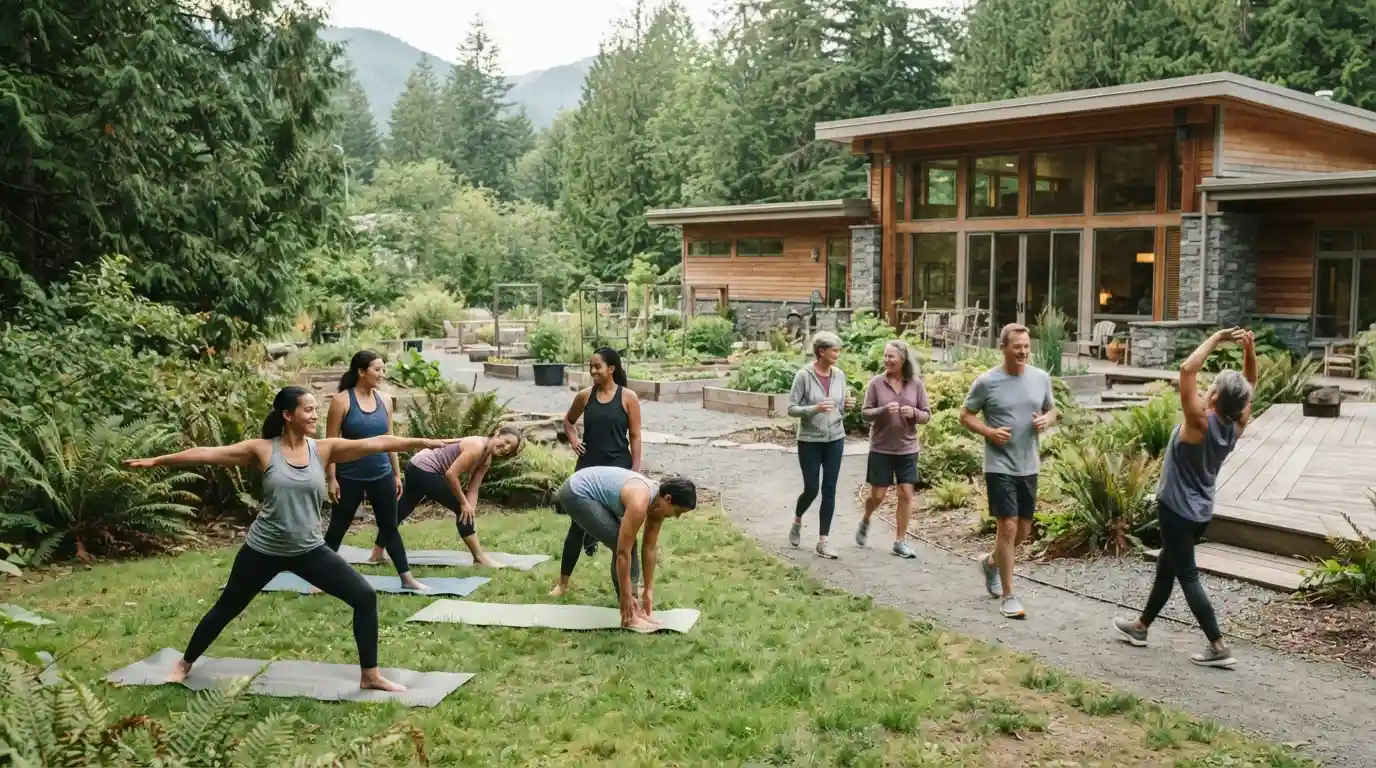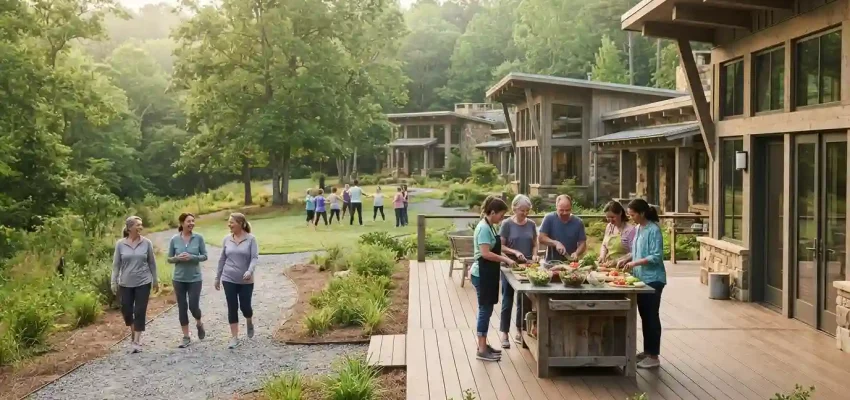

For people looking to make meaningful changes to their health habits, the Uchee Pines Lifestyle Center offers an approach built around education, daily routines, nutrition, exercise, stress management, and other lifestyle practices. Located near Seale, Alabama, Uchee Pines has developed its lifestyle programs around the idea that lasting health improvements involve more than addressing an isolated symptom.
For readers interested in the broader relationship between exercise and healthy living, our fitness guide provides additional context on building sustainable physical activity habits.
What Is the Uchee Pines Lifestyle Center?
Uchee Pines Lifestyle Center is part of Uchee Pines Institute, a health education and wellness organization based in rural Alabama. The organization has focused on lifestyle education and natural health practices for decades.
The Lifestyle Center provides structured programs that combine education, personalized lifestyle guidance, physical activity, nutrition, and selected natural therapies. Its residential sessions are intended to give participants an environment where they can focus on understanding and practicing healthier routines.
Rather than presenting wellness as a single treatment or product, the model emphasizes multiple areas of daily life. This can include food choices, exercise, hydration, rest, time outdoors, stress management, and other behavioral factors.
This broader approach is similar to the way modern wellness discussions increasingly connect physical activity, nutrition, recovery, and everyday habits. Readers exploring this wider subject can also review holistic health and wellness developments.
A Lifestyle-Based Approach to Health
The central idea behind a lifestyle center is relatively straightforward: daily habits can play an important role in long-term health. Instead of focusing only on short-term changes, lifestyle programs can help people identify routines that they can continue after returning home.
At Uchee Pines, the program incorporates several interconnected areas of lifestyle education. Participants may learn about nutrition, physical activity, hydrotherapy, stress reduction, healthy cooking, and other practical subjects.
The objective is not simply to spend time away from normal responsibilities. The educational component is intended to give participants practical knowledge they can apply in their everyday environment.
Nutrition as Part of a Healthy Lifestyle
Food is one of the most important areas of lifestyle education. Uchee Pines places substantial emphasis on healthful nutrition and vegetarian cooking as part of its overall approach.
A sustainable nutrition strategy generally needs to be practical enough to follow after a structured program ends. Learning how to prepare balanced meals, understand food choices, and develop consistent eating habits can therefore be more useful than relying on short-term restrictive diets.
People with specific dietary requirements may also need to consider individual nutritional needs when planning meals. For example, our guide to lactose-free breakfast foods explores practical meal ideas for people avoiding lactose.
Nutrition is only one part of the equation. A healthy eating pattern works alongside movement, adequate rest, hydration, and other lifestyle factors.
Exercise and Physical Activity
Regular movement is another important part of lifestyle-oriented wellness. Exercise can support physical fitness, mobility, cardiovascular health, strength, and the ability to perform everyday activities.
A useful exercise routine does not necessarily need to be complicated. Walking, resistance exercises, recreational activities, mobility work, and appropriately structured cardiovascular exercise can all have a place in a balanced routine.
The appropriate level of activity depends on the individual. People who have chronic conditions, injuries, significant limitations, or other medical concerns should work with qualified healthcare professionals when determining what types and amounts of exercise are appropriate.
For additional ideas about developing a consistent fitness routine, see training, fitness, and wellness strategies and our practical guide to staying motivated to exercise.
Stress, Rest, and Recovery
Health is not only about what a person eats or how often they exercise. Recovery and stress management also influence how sustainable a lifestyle routine can become.
Consistent sleep, periods of recovery, time outdoors, manageable schedules, and healthy ways of responding to stress can all contribute to a more balanced routine.
People who constantly increase physical activity without allowing sufficient recovery may find it difficult to maintain their routine. A sustainable approach considers exercise and recovery together.
The relationship between physical and emotional well-being is also relevant when considering broader wellness services. Readers interested in health-related support can explore health and wellness conversations as another perspective on whole-person well-being.
Natural Health Practices at Uchee Pines
Uchee Pines incorporates several natural health practices into its lifestyle education model. These include areas such as hydrotherapy, massage, nutrition, exercise, and selected herbal approaches.
These practices should be understood within the context of an individual’s health circumstances rather than treated as universal solutions. Natural products and therapies can have limitations, interactions, or contraindications, and people taking medications or managing medical conditions should discuss relevant choices with qualified healthcare professionals.
The emphasis on practical education is particularly important because participants need to understand how a lifestyle practice fits into their own daily routines.
Readers researching the wider wellness industry can also explore wellness products and health-focused solutions while keeping in mind that marketing claims should always be evaluated carefully.
Health Education and Personal Responsibility
One distinctive feature of a lifestyle-centered model is its emphasis on education. Instead of simply receiving instructions, participants are encouraged to understand why certain habits matter and how they can incorporate them into everyday life.
This educational focus can include cooking demonstrations, health discussions, exercise guidance, stress-management concepts, and information about lifestyle-related health concerns.
Education becomes especially valuable when participants return home. A temporary change in environment can provide motivation, but long-term results depend heavily on what happens afterward.
For people interested in lifelong learning and health education, our article about adult education and lifelong learning offers a related perspective.
Who May Be Interested in a Lifestyle Center?
A lifestyle center may appeal to several types of people. Some individuals may simply want to improve their daily habits, while others may be looking for structured education after struggling to maintain healthy routines independently.
Uchee Pines describes different levels of participation, including programs for people seeking health education and programs that include a medical component for qualifying guests with health concerns.
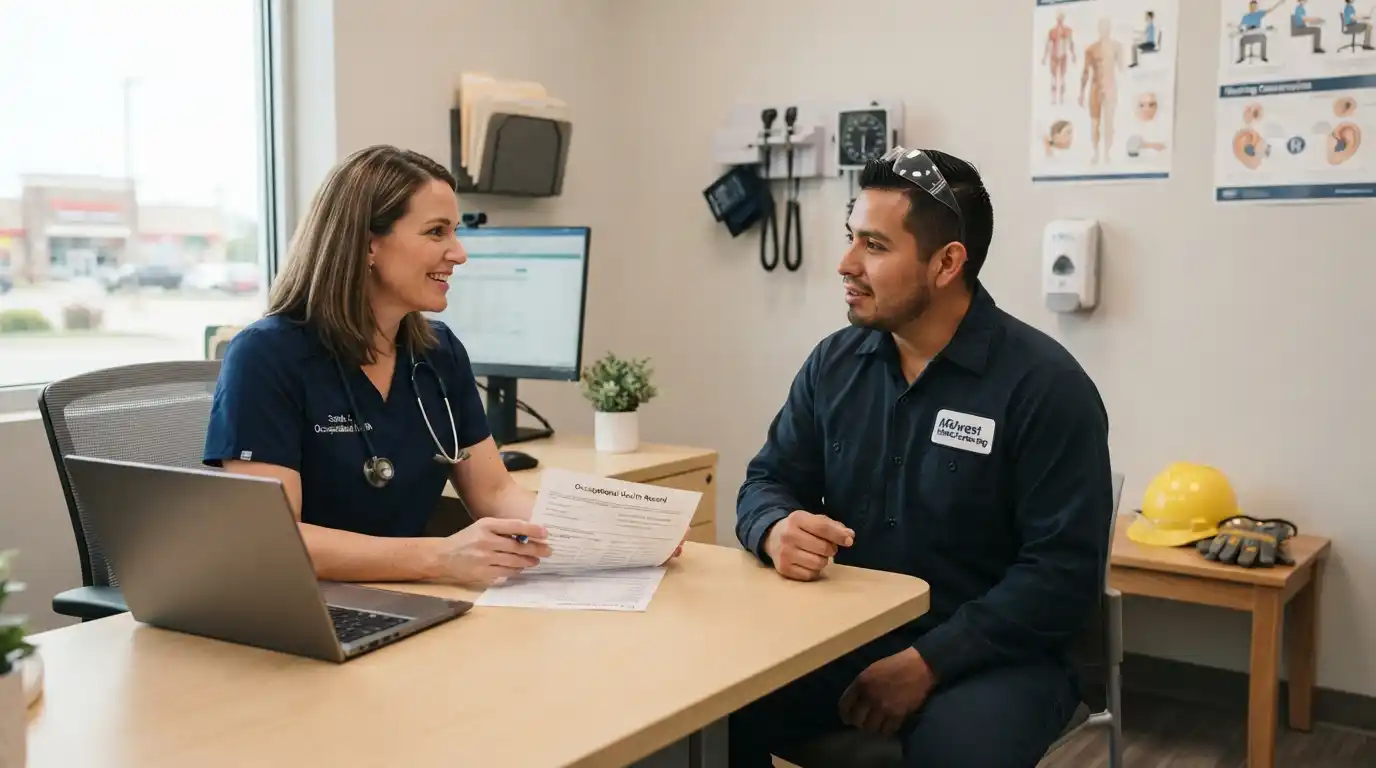
Anyone considering a residential health program should first determine whether the program is appropriate for their individual needs. People requiring hospital-level or intensive nursing care may need a different type of medical facility.
Those researching broader healthcare options can also read about patient care and medical clinic services.
The Importance of Personalized Health Planning
There is no single lifestyle routine that works identically for everyone. Age, existing health conditions, medications, physical ability, dietary requirements, work schedule, sleep patterns, and personal preferences can all influence an appropriate health plan.
A useful lifestyle program therefore needs room for individual circumstances. Exercise should be appropriate to a person’s ability, nutrition should meet individual requirements, and medical conditions should be considered before significant changes are made.
This is one reason structured lifestyle education can be useful: it can provide a framework while allowing health professionals and participants to address individual needs.
Building Healthy Habits After a Lifestyle Program
The biggest challenge for many people is not learning what healthy habits are. It is maintaining those habits once normal routines return.
A practical post-program strategy can begin with a few sustainable commitments:
- Plan balanced meals before the week begins.
- Schedule regular physical activity.
- Protect consistent sleep and recovery time.
- Drink adequate water throughout the day.
- Spend regular time outdoors when practical.
- Use manageable strategies for reducing stress.
- Track progress without expecting perfection.
- Seek professional guidance when health concerns require it.
Small changes can be easier to maintain than attempting to transform every part of a person’s routine overnight.
Holistic Wellness Is About the Bigger Picture
The concept of holistic wellness is based on considering multiple aspects of health rather than treating each habit as completely separate. Nutrition, movement, sleep, stress, social connection, environment, and personal values can all influence the way people experience their overall well-being.
That broader perspective does not mean every wellness practice is automatically effective or appropriate. Health decisions should still be based on reliable information and individualized professional guidance when necessary.
For readers interested in other approaches to health and fitness, our fitness and healthy-routine guide provides practical ideas for creating a more consistent exercise lifestyle.
What Makes the Uchee Pines Model Distinct?
Uchee Pines combines residential lifestyle education with a strong emphasis on practical daily habits. Its approach includes health education, nutrition, physical activity, natural health practices, and spiritual elements.
The organization also provides educational opportunities for people interested in learning more about lifestyle counseling and health education. This makes the broader Uchee Pines model relevant not only to guests but also to people interested in lifestyle-focused health education.
Professionals and students interested in health-related career development can also explore healthcare career opportunities and specialized education roles as examples of work centered on helping others.
Health and Wellness Beyond a Residential Program
A residential program can provide structure, but lasting lifestyle change ultimately takes place in everyday life. The home environment, food available in the kitchen, work schedule, sleep routine, social environment, and access to physical activity all influence whether new habits continue.
Creating a supportive home environment can therefore be an important next step. People may benefit from preparing healthier foods in advance, reducing unnecessary barriers to exercise, establishing consistent sleep times, and building routines that fit their actual responsibilities.
Readers interested in improving their overall living environment can also explore home support services and home improvement and living-space resources.
Final Thoughts
The Uchee Pines Lifestyle Center represents a structured approach to health education that brings together nutrition, exercise, rest, stress management, natural health practices, and personal lifestyle change.
Its philosophy emphasizes learning practical habits rather than viewing health as a single short-term project. For people exploring lifestyle-centered wellness, the model provides an example of how education and daily routines can be combined in a residential setting.
At the same time, health decisions should remain individualized. A lifestyle program should complement appropriate medical care rather than replace necessary diagnosis or treatment. Anyone with a significant medical condition should discuss major dietary, exercise, medication, or treatment changes with an appropriately qualified healthcare professional.
Ultimately, sustainable wellness is built through consistent choices. Whether someone begins with better nutrition, regular movement, improved sleep, stress management, or another practical habit, the goal is to create routines that can realistically become part of everyday life.