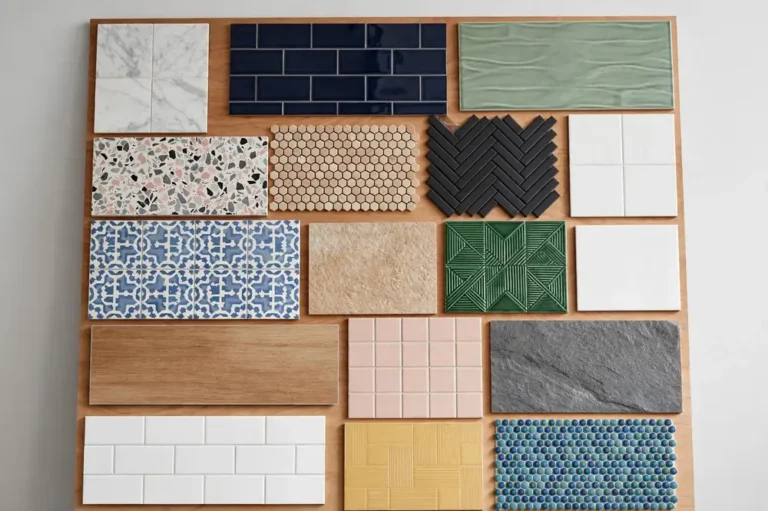
Tile sets the tone for your entire bathroom — it is the largest visual surface, the most tactile element, and the hardest to change later. Knowing how to choose bathroom tile USA homeowners love for decades (not just until trends shift) saves money and regret. With thousands of options in ceramic, porcelain, natural stone, and glass, each with different costs, durability, and maintenance demands, informed selection matters enormously.
The wrong tile choice haunts you daily — slippery floors, stained grout, dated patterns. The right choice elevates the whole bathroom and lasts 20+ years. This guide to how to choose bathroom tile covers materials, sizes, finishes, slip resistance, grout, and budgeting, with specific recommendations for floors, shower walls, and accents.
Tile Materials Compared
Ceramic Tile: The Value Choice
Cost: $5–$15/sq ft installed. Best for: walls, low-traffic floors.
Ceramic is the most affordable bathroom tile — glazed, easy to clean, available in endless colors and patterns. It is softer than porcelain, making it easier to cut (lower installation cost) but less suitable for high-traffic floors. For shower walls and backsplashes on a budget, ceramic delivers excellent value. When learning how to choose bathroom tile USA budgets favor, ceramic is the starting point.
Porcelain Tile: The All-Rounder
Cost: $8–$22/sq ft installed. Best for: floors, shower walls and floors, virtually anywhere.
Porcelain is denser, harder, and less porous than ceramic — the best overall bathroom tile for most USA homeowners. It resists water, stains, and wear superbly. Modern porcelain convincingly mimics marble, wood, concrete, and natural stone at a fraction of the cost with zero sealing maintenance. For floors especially, porcelain is the default recommendation when deciding how to choose bathroom tile for durability.
Natural Stone: Luxury With Maintenance
Cost: $15–$40/sq ft installed. Best for: accent walls, high-end bathrooms.
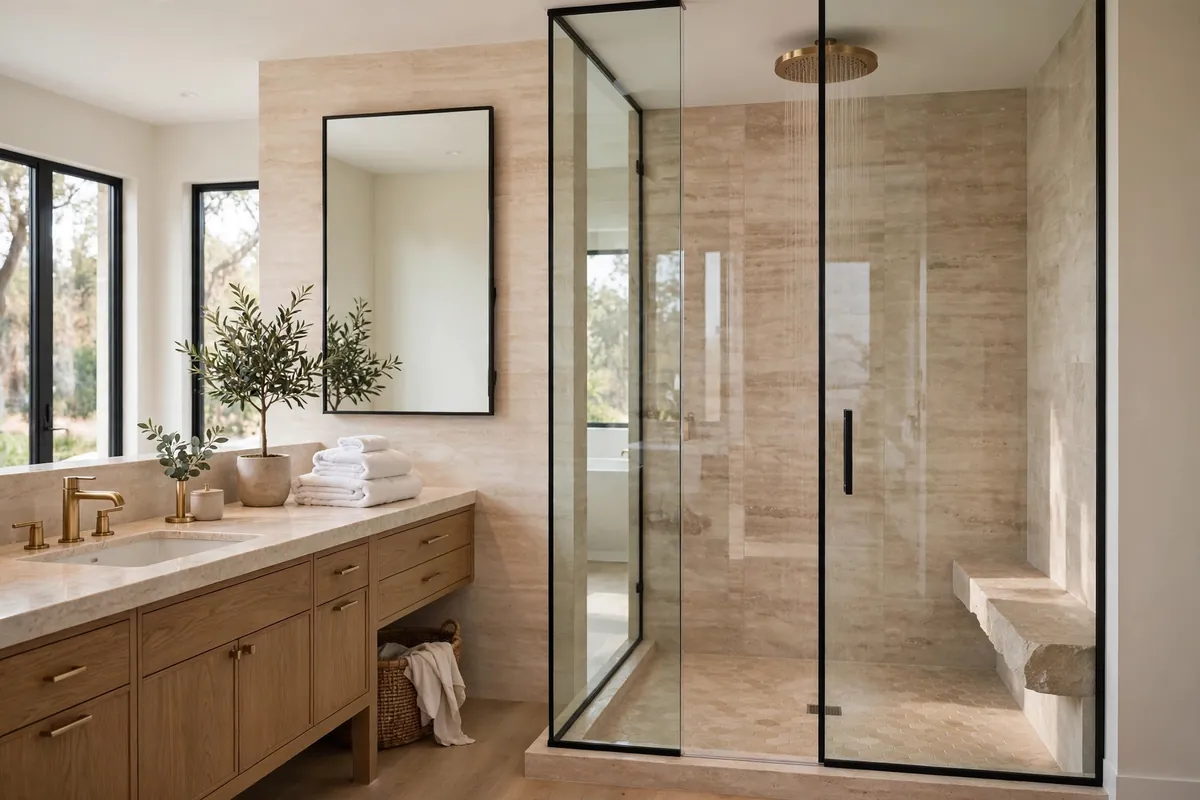
Marble, travertine, slate, and limestone offer unmatched natural beauty — no two tiles are identical. But stone is porous (requires annual sealing, $100–$300 professionally), stains more easily, and can be slippery. In showers, stone demands diligent maintenance. Choose stone for its beauty with eyes open about upkeep, or capture the look with porcelain mimics for 90% of the aesthetic at 40% of the cost and 10% of the maintenance.
Glass Tile: Accent Star
Cost: $20–$50/sq ft installed. Best for: accent strips, niches, backsplashes.
Glass tile adds luminosity and color depth that no other material matches. But it is expensive, shows every installation imperfection, and can be slippery underfoot — reserve it for walls and accents, not shower floors. A glass accent strip ($200–$500 in a typical shower) delivers high visual impact at controlled cost.
Choosing Tile by Location
Bathroom Floor Tile
Priorities: slip resistance, durability, water resistance. Choose porcelain with a matte or textured finish — polished tile becomes dangerously slippery when wet. Look for a DCOF (dynamic coefficient of friction) rating of 0.42+ for wet areas; reputable manufacturers list this. Larger tiles (12×24) mean fewer grout lines and easier cleaning, but small mosaics (2×2) conform better to shower floor slopes. For the shower floor specifically, mosaics are practically mandatory for proper drainage slope. Compare flooring options broadly in best bathroom flooring options USA.
Shower Wall Tile
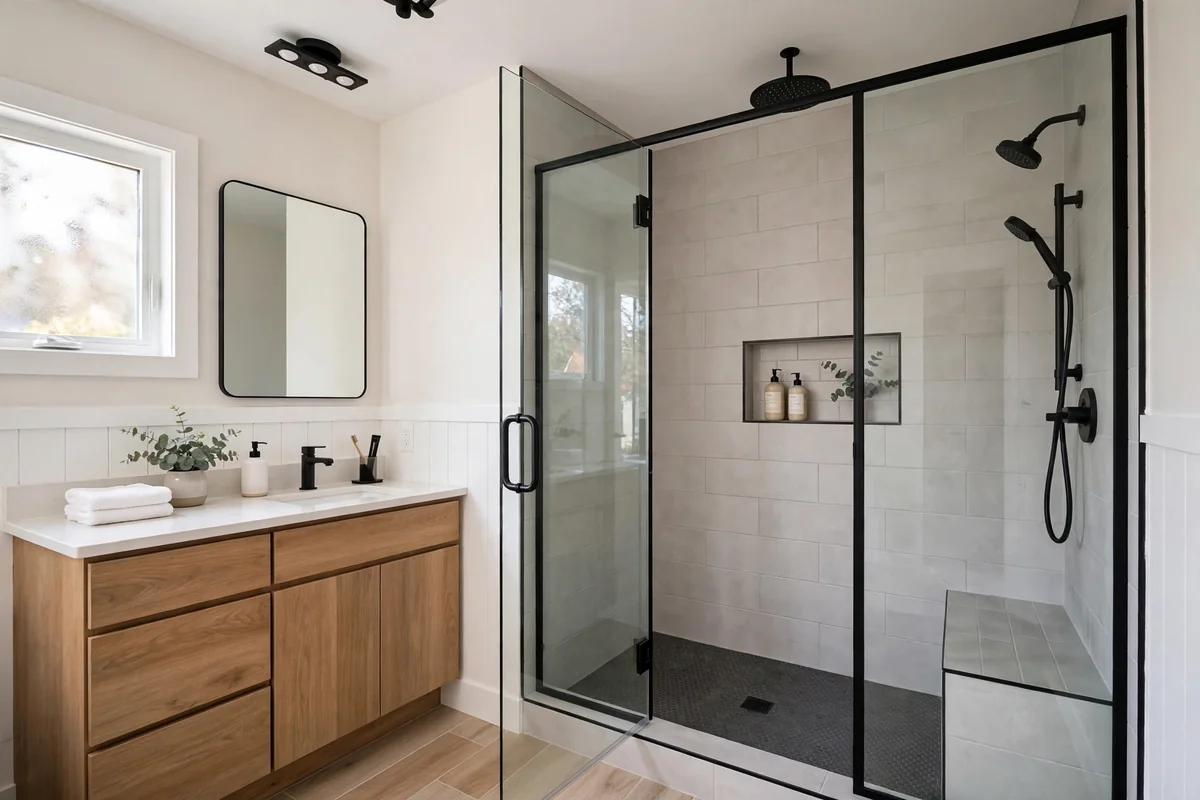
Priorities: water resistance, cleanability, aesthetics. Almost any glazed tile works on shower walls — this is where you can indulge in the look you love. Large-format tiles (12×24, 24×48) minimize grout lines (less cleaning, modern look) but require perfectly flat walls and skilled installation. Subway tile (3×6) remains the timeless, budget-friendly classic. Vertical stacking or herringbone patterns add designer flair at higher labor cost.
Accent and Feature Tile
Priorities: visual impact, personality. The shower niche, a vertical stripe, the vanity backsplash, or the floor border — these small areas justify splurging on handmade, patterned, or glass tile. Limit expensive tile to 10–20 sq ft; the impact is disproportionate to the cost. This targeted splurge strategy is central to how to choose bathroom tile USA designers recommend for budget-conscious style.
Size, Finish, and Layout Decisions
Tile size affects both aesthetics and cost. Large tiles make small bathrooms feel bigger (fewer grout lines = less visual busyness) but require flat substrates and cost more to install. Small tiles suit curved areas and shower floors. The current USA sweet spot: 12×24 porcelain for floors and walls — modern, affordable, and installer-friendly.
Finish determines maintenance and safety. Matte/honed: best for floors (slip-resistant, hides water spots). Polished: stunning on walls, hazardous on floors. Textured: excellent grip, harder to clean. In showers, matte walls + textured floor is the practical luxury combination.
Grout deserves as much thought as tile. Dark grout hides stains but can overwhelm light tile; light grout shows every mark but keeps spaces airy. Epoxy grout ($3–$8/sq ft premium over cement grout) resists stains and never needs sealing — worth every penny in showers. Grout width affects style: tight 1/16-inch joints look modern; wider 1/4-inch joints suit rustic styles. Include grout selection in your planning from how to plan a bathroom remodel USA.
Slip Resistance: The Safety Non-Negotiable
Bathroom falls injure hundreds of thousands of Americans annually — tile choice directly affects safety. For floors, prioritize texture over polish, smaller tiles over large (more grout lines = more grip), and DCOF 0.42+ ratings. If you love the look of polished marble, use it on walls and choose a honed or tumbled version for floors.
For aging-in-place or accessible bathrooms, slip resistance is even more critical — pair safe tile with grab bars and curbless shower design. Our accessible bathroom design USA guide integrates tile selection with broader safety planning.
Budgeting: Tile Costs in Context
Tile material typically represents 15–25% of a midrange bathroom remodel cost — but tile labor often exceeds material cost. A $4/sq ft ceramic with $10/sq ft installation totals $14/sq ft; a $12/sq ft porcelain with the same labor totals $22. Intricate patterns, small mosaics, and natural stone all increase labor rates 30–100%.
Smart budgeting for how to choose bathroom tile: allocate generously for shower tile (the focal point), economize on floor tile (porcelain that coordinates, not competes), and splurge surgically on accents. A typical 5×8 bathroom needs 80–120 sq ft of wall tile and 40–50 sq ft of floor tile — calculate quantities early to avoid mid-project budget shock. Full cost context in bathroom remodel cost in USA 2026.
Timeless vs. Trendy: Making Tile Last
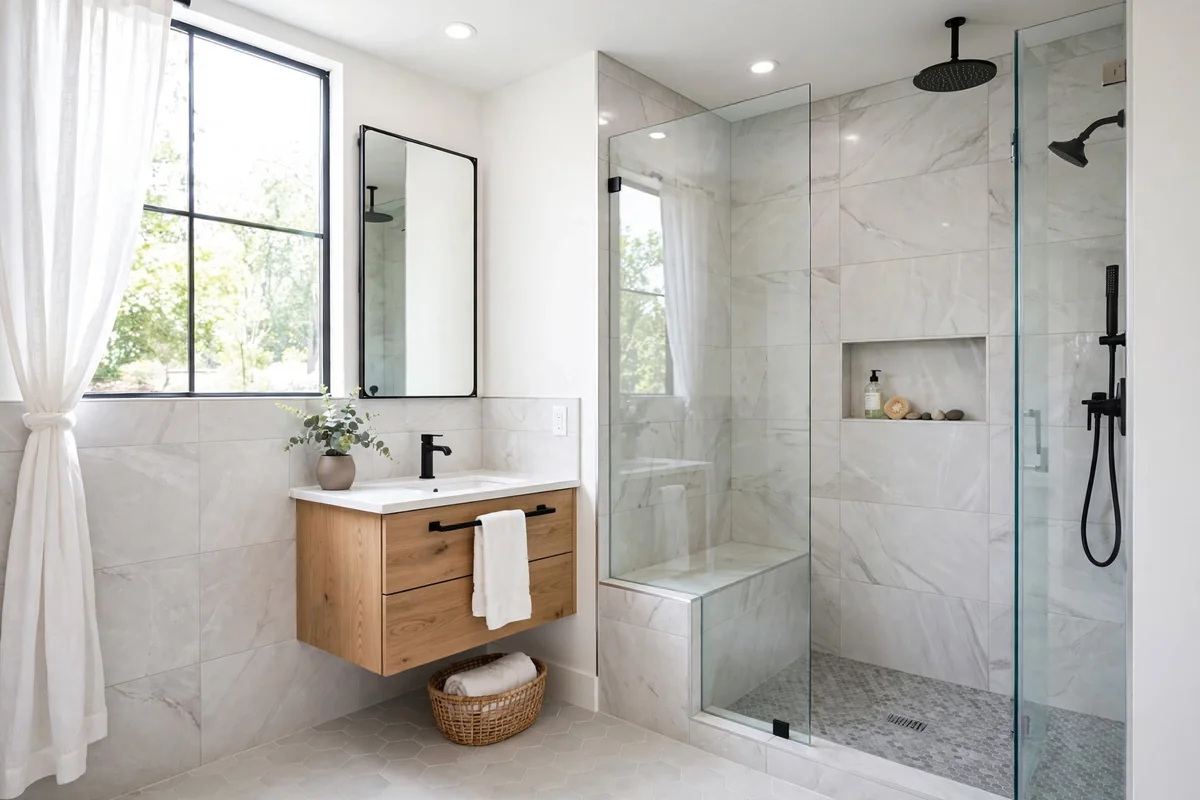
The tile you choose today should still please you in 15 years — replacement is enormously expensive. Timeless choices: white/light-gray subway or large-format porcelain, marble-look porcelain, classic hex floors. These have appealed to USA buyers for decades. Trendy choices (bold encaustic patterns, extreme colors, ultra-specific motifs) date quickly and can hurt resale.
The designer-approved compromise: timeless field tile everywhere, trendy accents in easily changeable areas. A bold patterned floor is a 20-year commitment; bold towels and art are a weekend swap. When learning how to choose bathroom tile USA resale markets reward, timeless wins.
Working With Tile Installers
Tile installation quality matters more than tile price — a $5/sq ft tile installed flawlessly outperforms a $25/sq ft tile installed poorly. When hiring, ask: How do you waterproof shower areas? What is your process for ensuring flat walls? Can I see a current project? The answers distinguish craftsmen from laborers. Expect to pay $8–$15/sq ft for standard installation labor, more for intricate patterns or natural stone.
Provide your installer with 10–15% overage on tile quantities (for cuts, breakage, and future repairs). Keep leftover tile after the project — manufacturers discontinue lines, and having matching tile for future repairs is invaluable. Discuss grout selection explicitly; many installers default to whatever is on the truck unless you specify. The hiring principles in how to hire a bathroom contractor USA apply equally to tile specialists.
Tile Trends Worth Considering (and Ones to Skip)
Worth considering: large-format porcelain (fewer grout lines, modern feel, easier maintenance), wood-look porcelain for warmth without water worries, handmade-look subway tile (subtle variation adds character without chaos), and terrazzo-look porcelain (classic pattern, modern durability).
Approach with caution: ultra-dark grout with light tile (striking but unforgiving of installation imperfections), tiny intricate mosaics everywhere (beautiful but budget-devouring and hard to clean), and extreme geometric patterns (dazzling today, dating quickly). Remember the core principle of how to choose bathroom tile USA longevity demands: timeless field tile, personality in accents.
One emerging USA trend with staying power: fluted and three-dimensional tile on single feature walls. Used sparingly (behind the vanity, in the shower niche wall), it adds tactile luxury without overwhelming. Like all trends, deploy it as the accent — not the foundation — of your tile scheme.
Coordinating Tile With Other Bathroom Elements
Tile does not exist in isolation — it must harmonize with your vanity, countertop, fixtures, and paint. The foolproof coordination method: choose tile first (largest surface, hardest to change), then select countertop and vanity to complement it, then fixtures and hardware, then paint last (infinite options, easiest to change). This sequence prevents the common mistake of falling in love with a faucet finish that clashes with your tile undertones.
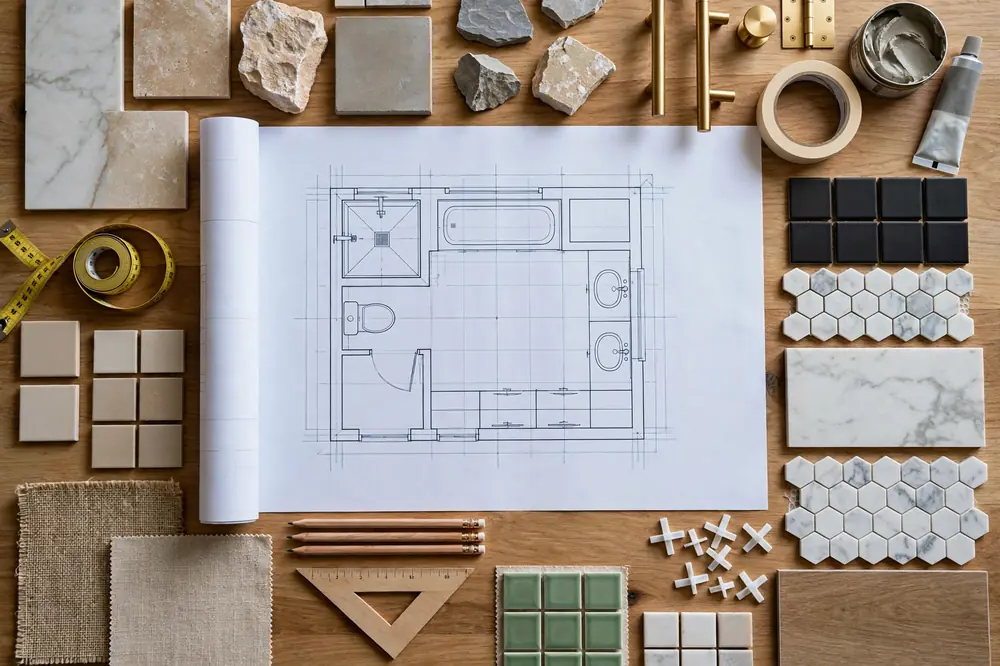
Pay attention to undertones: white tiles range from warm (creamy) to cool (blue-gray). Mixing warm and cool whites creates subtle discord that bothers the eye without an obvious cause. Bring samples home and view them together in your bathroom’s lighting before committing. This coordination discipline, combined with the material knowledge from this guide on how to choose bathroom tile, ensures a cohesive result. For full project coordination, revisit how to plan a bathroom remodel USA and budget with bathroom remodel cost in USA 2026.
Tile choices pair with bigger decisions — see our walk-in shower installation guide and tub-to-shower conversion costs when tile is part of a larger shower project.
Frequently Asked Questions
What is the best tile for bathroom floors?
Porcelain with matte/textured finish and DCOF 0.42+. It offers the best combination of water resistance, durability, slip resistance, and value. Avoid polished tile on floors — it becomes dangerously slippery when wet.
Can I use the same tile on floor and walls?
Yes, with caveats. Use the matte version on floors and polished (if desired) on walls. On shower floors, switch to a smaller mosaic version of the same tile for proper slope drainage — most tile lines offer coordinating sizes.
How much should I budget for bathroom tile?
For a typical 5×8 bathroom: $1,500–$4,000 for tile materials and $2,000–$5,000 for installation. Accent tile adds $200–$800. These fit within the broader bathroom remodel cost in USA 2026 framework.
Mastering how to choose bathroom tile USA homeowners love long-term means balancing beauty, durability, safety, and budget. Prioritize slip-resistant porcelain for floors, choose shower wall tile you will love for decades, splurge strategically on accents, and invest in quality installation — because even the most beautiful tile fails when poorly installed. Choose well, and your tile will outlast every trend.