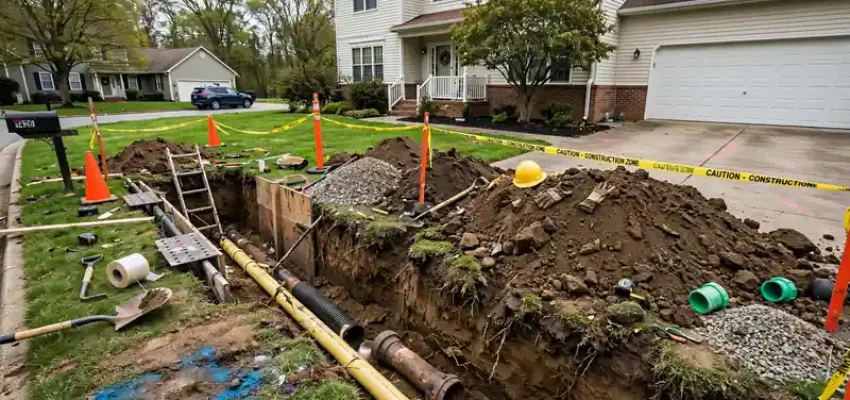

Few home repairs inspire as much dread — or as large a bill — as sewer line replacement. When your main sewer line fails, you are looking at one of the most expensive plumbing projects a homeowner can face. The sewer line replacement cost in USA homes ranges from $3,000 to $12,000+ in 2026, with most homeowners paying $5,000 to $8,000. Understanding what drives these costs, the replacement methods available, and the warning signs of failure can save you thousands and prevent a sewage nightmare.
Your sewer line is the underground pipe carrying all wastewater from your home to the municipal sewer main or septic system. Out of sight and out of mind — until it fails. Tree root intrusion, pipe corrosion, ground shifting, and simple old age cause thousands of sewer line failures across America every year. When replacement becomes necessary, knowledge is your best defense against overpaying.
Average Sewer Line Replacement Cost USA 2026
For a typical residential sewer line (50 to 100 feet from house to street), traditional trench replacement costs $50 to $250 per linear foot, putting most projects between $3,000 and $12,000 all-in. The national average hovers around $5,500 to $7,500 for a standard replacement. Trenchless methods, which avoid digging up your yard, run $80 to $250 per foot — $6,000 to $15,000 total — but save enormously on landscape restoration.
Several variables swing costs dramatically. Shorter lines cost less (obviously), but depth matters too — a line buried 8 feet deep costs far more to excavate than one at 3 feet. Urban areas with high labor rates (New York, San Francisco, Boston) run 30 to 50 percent above the national average. Permits add $200 to $500 in most jurisdictions, and some cities require street-cut permits ($500–$2,000) if the line extends under the roadway.
Before committing to replacement, always get a camera inspection ($150–$400) to confirm the diagnosis. Too many homeowners pay for full replacement when a $500 drain cleaning or spot repair would suffice. If you have not yet vetted a contractor, our guide on how to find a reliable plumber near you in USA is essential reading before signing anything this expensive.
Replacement Methods Compared
Traditional Trench (Open-Cut) Replacement
The conventional approach: excavate a trench along the entire pipe path, remove the old pipe, lay new pipe, backfill, and restore the surface. Costs $50 to $250 per linear foot. It is the cheapest method per foot for the pipe work itself, but total project cost must include landscape restoration — replacing driveways ($4,000–$8,000), sidewalks, sod, gardens, and patios torn up during excavation. For lines running under established landscaping or hardscaping, restoration can double the project cost.
Open-cut remains the best choice when the old pipe has collapsed completely, when the line needs rerouting, or when the soil conditions do not suit trenchless methods. It also allows full visual inspection of the new installation. Expect 3 to 5 days of work plus restoration time.
Trenchless Pipe Bursting
Pipe bursting pulls a new HDPE pipe through the old line, fracturing the old pipe outward as it goes. Only two small access pits are dug — one at each end. Costs $80 to $200 per foot ($6,000–$12,000 typical total). The new pipe is seamless, root-resistant, and rated for 50+ years.
Bursting works for most pipe materials (clay, cast iron, concrete, PVC) and can even upsize the pipe diameter. It cannot navigate sharp bends or severely collapsed sections. Most residential jobs complete in 1 to 2 days with minimal yard disruption — a huge advantage if your line runs under a prized garden or expensive driveway.
Trenchless Pipe Lining (CIPP)
Cured-in-place pipe lining inserts a resin-saturated felt tube into the old pipe, then cures it with heat or UV light to form a smooth new pipe inside the old one. Costs $80 to $250 per foot. Like bursting, it needs only small access points and finishes in a day or two.
Lining slightly reduces pipe diameter (usually not a functional issue) and cannot fix collapsed or back-pitched (bellied) sections. It excels for cracked or root-infiltrated pipes that are structurally mostly intact. The resulting epoxy pipe resists roots and corrosion for 50 years. For a detailed comparison of when lining suffices versus full replacement, ask your contractor to show you the camera footage and explain the pipe’s condition grade.
What Drives the Cost Up or Down
Pipe Material
PVC is the standard for new installations — affordable ($5–$15 per foot for materials), durable, and root-resistant at joints. HDPE (used in bursting) costs more but offers superior flexibility and joint-free runs. Cast iron ($15–$30/foot materials) is quieter and still used in some areas but costs significantly more installed. Avoid contractors proposing Orangeburg (bituminous fiber) — it is obsolete and fails within 30 years.
Length and Depth
Longer and deeper costs more — straightforwardly. A 40-foot line at 4 feet deep might cost $4,000; a 120-foot line at 8 feet deep in rocky soil can exceed $15,000. Get the exact linear footage from your camera inspection report and make sure all quotes use the same measurement.
Access and Obstacles
Lines under driveways, mature trees, retaining walls, pools, or additions cost more — either in excavation complexity (trench) or in navigating obstacles (trenchless). Tree root damage is the number one cause of sewer failure; ironically, the same trees that destroyed the pipe complicate its replacement. Removing a large tree near the line can add $1,000 to $3,000 (see tree removal cost in USA 2026).
Permits and Street Work
Most cities require a plumbing permit ($200–$500). If the line connects under a public street or sidewalk, you may need a right-of-way or street-cut permit ($500–$2,000) plus restoration to municipal standards — often pricier than residential restoration. Some HOAs have additional requirements. Your contractor should handle all permitting; confirm it is included in the quote.
Soil Conditions
Rocky soil, high water tables, or unstable ground increase excavation difficulty and cost. In some regions, dewatering (pumping groundwater during the dig) adds $1,000 to $3,000. Trenchless methods are less affected by soil conditions, which is another point in their favor for difficult sites.
Warning Signs Your Sewer Line Is Failing
Frequent main-line clogs. If drain cleaning is needed every few months, the pipe — not the clog — is the problem. Recurring blockages signal roots, bellies, cracks, or scale.
Multiple fixtures backing up. Toilets gurgling when the washer drains, showers filling during flushes — these indicate a main line restriction. Do not ignore this; the next stage is sewage backing into your home.
Sewage odors indoors or outdoors. Persistent rotten-egg smells from drains or a foul patch in the yard suggest a cracked line venting gases or leaking waste. This is both a repair signal and a health concern.
Lush green patches in the yard. Sewage acts as fertilizer. An unusually green, fast-growing strip above the sewer line path often marks a leak — nature’s own diagnostic tool.
Given the significant financial implications associated with sewer line replacement, it becomes crucial for homeowners to not only understand the factors influencing these costs but also to secure the services of a trustworthy plumbing professional. The right plumber can not only assist in navigating the complexities of the replacement process but also provide invaluable advice on maintenance and preventive measures to mitigate future risks. To ensure you engage a competent and reliable expert, consider utilizing resources that help you find plumber near me USA. This proactive approach can save you time, money, and unnecessary stress when dealing with one of the most critical components of your home’s infrastructure.
Soggy spots or sinkholes. Wastewater surfacing in the yard, or soil depressions forming along the pipe route, indicate significant leakage washing away soil. Address immediately — sinkholes can damage foundations.
Mold or water damage in the basement. Sewer moisture wicking through foundation walls causes mold and efflorescence. If you see these signs, check our water damage restoration cost in USA guide alongside sewer diagnosis.
Slow drains throughout the house. System-wide slowness (not isolated to one fixture) points to the main line. For homes on septic tank systems, rule out a full tank first — septic inspection costs far less than sewer replacement.
Repair vs Replace: Making the Call
Not every sewer problem requires full replacement. Use this framework:
Spot repair ($1,500–$4,000) makes sense for a single damaged section — one crack, one root intrusion point, one bellied segment — with the rest of the pipe in good condition. The camera inspection should show 80%+ of the line in serviceable shape.
Pipe lining ($6,000–$12,000) suits pipes with multiple cracks or root entry points but no collapse or severe misalignment. It is the sweet spot for aging clay tile systems with widespread minor damage.
Full replacement ($5,000–$15,000+) is warranted for collapsed sections, severe bellies (standing water in the pipe), Orangeburg pipe, or systems where repair costs approach 60% of replacement. Replacement also makes sense if you are already doing major yard work — trenching is cheaper when the landscape is being redone anyway.
Be skeptical of any contractor who recommends full replacement without showing you camera footage. Reputable companies record the inspection and walk you through it. Get a second opinion on any quote over $8,000 — the diagnostic fee is trivial compared to the project cost.
How to Save on Sewer Line Replacement
Get 3+ quotes with camera footage. Prices for identical trenchless jobs vary by $3,000+ between companies. Every bidder should camera-inspect (or review your existing footage) before quoting. Quotes without inspection are guesses.
Consider trenchless seriously. Higher per-foot cost, but total project cost often ends lower once you factor landscape restoration. Get both trench and trenchless quotes for comparison.
Check insurance and municipal programs. Standard homeowner’s insurance rarely covers sewer line replacement (it covers sudden damage, not wear). However, many insurers offer affordable sewer line riders ($40–$100/year) — too late for this failure, but buy one after replacement. Some cities offer low-interest loans or cost-sharing for lines under public right-of-way.
Time it strategically. If the line is deteriorating but functional, schedule replacement during dry months (easier digging) and coordinate with other yard projects. Emergency replacements after a catastrophic backup cost 20–40% more and may require immediate water damage restoration too.
Ask about pipe bursting vs lining. Bursting gives you a brand-new, larger-diameter pipe; lining is slightly cheaper but keeps the old pipe as a host. For root-prone areas, bursting’s seamless HDPE offers the best long-term protection. Discuss which suits your soil and pipe condition.
What to Expect During the Project
Trenchless jobs take 1–2 days with minimal disruption — you can usually stay home, though water pauses for hours. Traditional trench replacement takes 3–5 days plus 1–2 weeks for landscape restoration.
Your contractor should: pull all permits, call 811 for utility marking (required by law before digging), protect your property, keep you updated daily, and provide a final camera video of the new installation. Keep all documentation — permits, warranties (look for 10+ years on trenchless, 5+ on trench work), and the final inspection report. These matter for resale and any future claims.
After replacement, protect your investment: avoid planting trees within 10 feet of the line (choose sewer-safe species), never flush wipes or grease, and consider a preventive camera check every 5 years. If your home has other aging systems, this is also a good time to assess repiping a house needs or schedule water heater maintenance — bundling inspections saves trip fees.
Frequently Asked Questions
How long does a new sewer line last?
PVC and HDPE: 50–100 years. CIPP lining: 50 years. Cast iron: 50–75 years. Clay tile: 50–60 years (but vulnerable to roots). With proper installation and no root abuse, your new line should outlive your ownership.
Will my yard be destroyed?
With trenchless methods: barely touched — two small pits that are backfilled and resodded. With open trench: the entire pipe path is excavated, typically 3–4 feet wide. Restoration is part of the quote; confirm exactly what surface restoration includes.
Can I stay in my home during replacement?
Usually yes. Water and sewer service are interrupted for hours (not days) during the actual pipe work. Your contractor will coordinate timing — plan to be out during the main work window.
Does homeowners insurance cover sewer line replacement?
Almost never for wear-and-tear failure. It may cover resulting water damage (not the pipe fix itself). Sewer line endorsement riders, purchased before failure, are the exception — typically $40–$100/year for $10,000 in coverage.
The sewer line replacement cost in USA homes is undeniably steep, but it is also one of the highest-value repairs you can make — protecting your home’s foundation, your family’s health, and your property value. Get that camera inspection, collect multiple quotes, weigh trenchless options, and choose a contractor you trust. Your home’s most important pipe deserves nothing less.
Sewer work is complex, permitted, and expensive — exactly the kind of project where contractor vetting matters most. Before you sign, read how to hire a general contractor: the vetting checklist, key interview questions, red flags, and deposit and payment rules that protect your budget on big jobs.
On a septic system instead of city sewer? See our 2026 septic system replacement cost guide for pricing by system type.