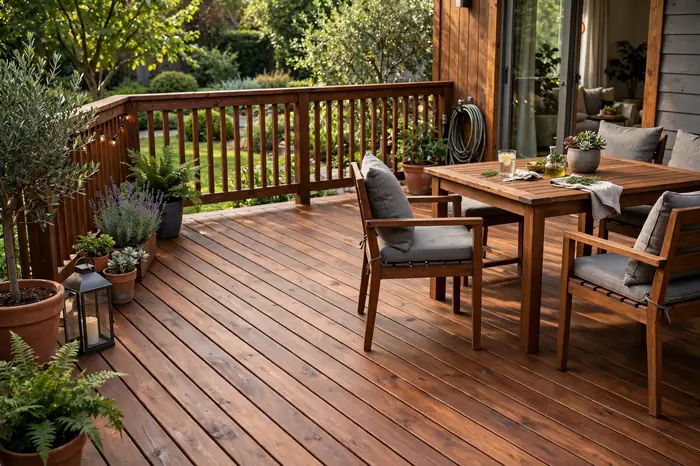

Learning how to maintain deck boards, railings, and framing is the difference between a deck that lasts 12 years and one that lasts 25. Deck maintenance isn’t complicated — it mostly comes down to regular cleaning, periodic sealing or staining for wood decks, annual inspections, and catching small problems before they become structural ones. This guide covers the full routine for both wood and composite decks in US climates.
Most deck damage is slow and invisible until it isn’t: moisture creeping into end grain, UV breaking down wood fibers, fasteners loosening a fraction each season. A few hours of maintenance each year prevents the multi-thousand-dollar rebuild that neglect eventually demands.
Know Your Deck Material First
Maintenance starts with knowing what you’re working with. Pressure-treated pine, cedar, and redwood are all wood decks — they need regular sealing or staining to survive. Composite and PVC decks need no sealing at all, just cleaning. If you’re unsure, look at the board ends: wood shows grain and absorbs water, composite looks uniform and beads water.
The maintenance gap is the real cost of a “cheap” wood deck. When you compared deck building costs in the USA, the upfront savings of pressure-treated wood were clear — but budget $500 to $1,500 every 2 to 3 years for professional refinishing, or plan to do it yourself.
Annual Deck Inspection Checklist
Inspect your deck every spring, and give it a quick look each fall. Work through this checklist:
Check the Structure and Ledger Board
The ledger board — where the deck attaches to the house — is the most critical connection. Look for rusted or missing lag bolts, gaps between the ledger and the house, and signs of water intrusion or rot. Probe suspicious wood with a screwdriver; if it sinks in easily, you have rot. Ledger failures cause most deck collapses, so take this seriously. If anything looks wrong, call a professional before using the deck.
Inspect Boards, Railings, and Stairs
Walk the deck and feel for soft, spongy, or cracked boards. Check for popped nails and screws — replace them with longer deck screws. Grab each railing post and push hard; railings should not wobble. Test every stair tread and make sure stringers are solid. Tighten or replace any loose fasteners you find.
Look Underneath
Crawl under the deck if you can. Check joists, beams, and posts for rot, mold, and insect damage. In termite-heavy regions like the Southeast, Gulf Coast, and parts of California, look for mud tubes on posts and footings — and keep up with termite prevention measures around the structure. Make sure the ground underneath slopes away from the house and that vents aren’t blocked.
How to Clean Your Deck
Clean every deck — wood or composite — at least once a year, ideally in spring. Start by sweeping off all debris, then clear the gaps between boards with a putty knife; trapped leaves hold moisture and rot boards from the sides.
Cleaning Wood Decks
Use a deck cleaner formulated for your wood type, applied with a pump sprayer and scrubbed with a stiff brush. Work in sections and rinse thoroughly. A pressure washer is fine on wood if you keep it under 1,500 PSI, hold the wand at least 12 inches away, and use a fan tip — too much pressure gouges soft wood and voids some warranties. Let the deck dry 48 hours before staining or sealing.
Cleaning Composite Decks
Composite is easier: warm water, mild dish soap, and a soft-bristle brush handle most grime. For mold or mildew spots, use a composite-specific cleaner — never bleach, which can damage the surface and void the warranty. Rinse well. Skip the pressure washer or keep it under 1,500 PSI at a safe distance.
How to Maintain Deck Wood: Staining and Sealing
This is the heart of how to maintain deck wood in American climates. Bare wood absorbs water, and the freeze-thaw cycle in northern states plus UV everywhere else destroys unprotected boards within a few seasons.
When to Stain or Seal
Test with the water-drop method: sprinkle water on the boards. If it beads up, the old finish is still working. If it soaks in within seconds, it’s time to refinish. Most US climates need refinishing every 2 to 3 years; harsh sun in Arizona, Florida, and Texas can demand it every 18 months on south-facing decks.
Choosing the Right Product
Transparent stains show the wood grain but offer the least UV protection (1 to 2 years). Semi-transparent stains are the sweet spot for most homeowners — good color, decent protection, 2 to 3 years. Solid stains and paints last longest (3 to 5 years) but hide the grain. In humid climates, pick a product with mildewcide. Always buy exterior-rated products designed for horizontal surfaces.
How to Maintain Deck Stain Between Recoats
Between full recoats, learning how to maintain deck stain is mostly about gentle care: sweep regularly so grit doesn’t grind into the finish, clean spills promptly, and touch up high-traffic areas like stair treads with a matching stain before bare wood shows. These small touch-ups can stretch a finish job by a full season or more.
Application Tips
Apply stain when temperatures are between 50 and 90°F with no rain forecast for 48 hours. Work in the shade when possible — hot sun causes lap marks. Brush or roll two thin coats rather than one thick one, and coat all six sides of any replacement boards before installing them, especially the end grain. End grain absorbs water fastest and rots first.
Seasonal Deck Maintenance Schedule
Spring
Do the full inspection, deep clean, and refinish wood decks if the water-drop test fails. Check that winter hasn’t heaved footings or loosened railings. Reattach any popped fasteners. This is also the time to clean and inspect landscape lighting fixtures mounted on or near the deck, and to review outdoor lighting options if your stairs or railings still go dark at night — proper step lighting prevents most after-dark stumbles.
Summer
Sweep weekly and hose off pollen, which feeds mildew. Move planters and furniture periodically — trapped moisture underneath stains and rots boards. Use saucers under planters. Keep the grill at least 3 feet from railings, and never use a charcoal grill on a wood deck without a protective mat. The same clearance rule applies to portable fire features — check a fire pit installation guide for safe distances from wooden structures before you set one on or beside the deck.
Fall
Clear leaves promptly; wet leaf piles are rot factories. Give the deck a lighter cleaning before winter. In northern states, follow a full yard winterizing routine — store or cover furniture, shut off and drain water lines to outdoor spigots near the deck, and make sure gutters above the deck drain away from it.
Winter
Shovel snow with a plastic shovel, pushing along the boards rather than across them — metal shovels gouge wood and scratch composite. Avoid rock salt, which damages wood fibers and metal fasteners; use calcium chloride sparingly if you must de-ice. Never let ice dams form where the deck meets the house.
Common Deck Repairs and Their Costs
Even well-maintained decks need repairs. Replacing a few deck boards costs $200 to $500 professionally, or $50 to $150 DIY. A wobbly railing post repair runs $150 to $400. Replacing a rotted stair stringer costs $250 to $600. A full railing replacement on an average deck runs $1,500 to $4,000.
Structural repairs cost more: sistering a rotted joist runs $200 to $500 per joist, and replacing a support post costs $300 to $800. If more than a quarter of the framing shows rot, get quotes for a rebuild rather than patching — at that point, replacement is usually the smarter money. A rebuild is also the moment many homeowners switch to composite and escape the maintenance cycle entirely.
Protecting Your Deck From Pests and Moisture
Moisture is the root cause of most deck problems. Keep soil and mulch at least 6 inches below the deck framing, and never let sprinklers spray the deck daily — adjust heads so they water the lawn, not the lumber. If you’re planning irrigation near the deck, review sprinkler system installation costs with a layout that keeps water off wooden structures.
Carpenter bees bore into railings and fascia in the Southeast and Midwest — fill holes and paint or stain to deter them. Carpenter ants target damp wood; fixing the moisture problem usually fixes the ant problem. Keep firewood stacked away from the deck, and follow firewood storage best practices to avoid inviting termites and rodents toward the house.
DIY vs Hiring a Deck Maintenance Pro
Cleaning, sweeping, tightening fasteners, and applying stain are all solid DIY tasks — a homeowner can refinish an average deck in a weekend for $150 to $300 in materials versus $800 to $1,500 professionally. The work is straightforward but physical.
Hire a pro for structural inspections if you suspect ledger or framing issues, for repairs involving posts and beams, and for refinishing if the deck is large, multi-level, or has intricate railings. A professional also makes sense if the deck hasn’t been maintained in years — stripping failed finish and restoring neglected wood is miserable DIY work. For anything structural, vet contractors carefully, the same way you’d choose a landscaping company — license, insurance, and local references.
Frequently Asked Questions
How often should I seal my deck?
Every 2 to 3 years in most US climates. Use the water-drop test annually: if water soaks into the boards instead of beading, it’s time. High-sun regions like Arizona and Florida may need sealing every 18 to 24 months.
Can I use bleach to clean my deck?
Avoid bleach on wood — it damages wood fibers and lightens the surface unevenly. On composite, bleach can void the manufacturer’s warranty. Use cleaners formulated for your deck material instead.
Should I sand my deck before staining?
Light sanding (80-grit) helps stain adhere on weathered wood and smooths rough spots, but it’s not always required if the old finish is mostly gone and the wood is clean. Never sand composite decking.
How do I stop my deck boards from rotting?
Keep water away: seal end grain, maintain the stain or sealer, clear debris from between boards, ensure drainage underneath, and keep soil and mulch away from the framing. Most rot starts where moisture sits undisturbed.
Is composite decking really maintenance-free?
Not entirely — composite still needs annual cleaning to prevent mold, mildew, and staining, especially in shaded or humid spots. But it eliminates sanding, staining, sealing, and board replacement, which is where wood decks consume most maintenance time and money.
Deck maintenance rewards consistency more than effort. Inspect every spring, clean every year, seal the wood when the water test tells you to, and fix small problems the season you find them. Treat the deck as one part of a bigger picture — a coordinated backyard design plan keeps the deck, plantings, paths, and lighting working together instead of fighting each other. Follow that rhythm and your deck will stay safe, solid, and good-looking for decades — instead of becoming the expensive rebuild you kept putting off.