
A dripping faucet is annoying, and a dated one can drag down an otherwise nice kitchen. Replacing it is one of the most common small plumbing jobs in American homes, and it is usually quick. Still, the final bill surprises many homeowners, because the kitchen faucet installation cost depends on the faucet you choose, the condition of your pipes, and whether the job is simple or complicated.
This guide gives you realistic USA price ranges for 2026, explains what a plumber actually does during the job, and helps you decide whether to do it yourself or hire a professional. As with all home prices, treat these figures as typical ranges. Your city, your plumber, and your sink setup will move the final number up or down.
How Much Does Kitchen Faucet Installation Cost?
For a standard replacement in the USA, most homeowners pay between $150 and $400 for labor when the setup is straightforward. Add the faucet itself, which usually costs $50 to $300 for a good mid-range model, and the total kitchen faucet installation cost is typically $200 to $700. A basic single-handle faucet on an easy-to-reach sink sits at the low end, while a touchless or bridge faucet with extra parts sits higher.
More complex jobs cost more. If shut-off valves are stuck or leaking, if supply lines need replacing, or if the old faucet is corroded in place, labor can reach $400 to $600. Installing a faucet in a brand-new sink or countertop, where holes must be drilled and lines run for the first time, can push the total to $500 to $900. High-end designer faucets can add $500 or more for the fixture alone, before any labor.
What Is Included in a Standard Installation?
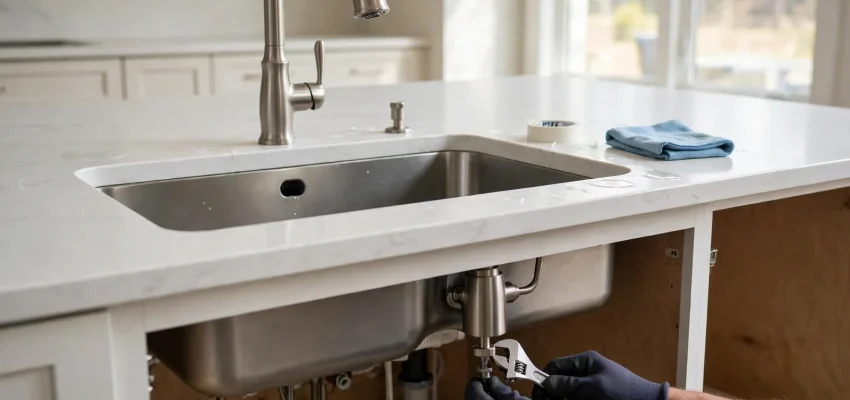
A standard job starts with turning off the water and checking the shut-off valves. The plumber then disconnects the old faucet, removes it, cleans the sink surface, and fits the new faucet with fresh seals. Next, the supply lines are connected, the water is turned back on slowly, and every joint is checked for leaks. Finally, the sprayer or soap dispenser is tested if your model includes one. The whole visit often takes one to two hours.
That simple picture changes when the space under the sink is tight, rusted, or full of old fittings. A plumber may need to replace valves or supply lines before the new faucet can be fitted safely. Those parts are inexpensive on their own, but the extra labor adds up. This is also why a very low quote should be checked carefully: it may exclude valves, lines, or disposal of the old faucet. If you are planning a wider sink upgrade, compare the timing with a kitchen sink installation so you do not pay twice for the same disconnection work.
Factors That Affect the Cost
Faucet type is the biggest factor after labor. A single-hole, single-handle faucet is the simplest to fit. A three-hole faucet, a wall-mount model, or a commercial-style faucet with a tall spring spout takes longer and may need extra parts. Touchless faucets add electrical or battery work, and a pot filler or a second prep-sink faucet adds a second installation altogether.
Sink and countertop material matter too. Stainless steel and laminate are easy to work with, while stone countertops need care and the right tools to avoid chips. The age of your plumbing matters as well. In older homes, valves may not shut off fully, and a plumber may need to replace them before starting. If you have had trouble with shut-offs before, mention it when you book, and find a reliable plumber near you who is clear about what the visit includes.
DIY vs. Hiring a Plumber
A confident homeowner with good access under the sink can often replace a like-for-like faucet in an hour or two. You will need a basin wrench, plumber’s putty or silicone, and new supply lines if the old ones look worn. The job is a good do-it-yourself project when the valves work, the fittings are standard, and you are comfortable lying under a sink with a wrench.
Hire a plumber when the valves are stuck, the old faucet is seized, the sink is hard to reach, or the job involves a new hole, a water filter line, or a garbage disposal connection. A professional also makes sense if you spot water damage, mold, or a slow leak under the sink. Small leaks cause real harm over time, so learn how to detect a water leak in your home and act early. For a burst line or a flood, do not wait: know when to call an emergency plumber and shut the water off first.
Kitchen Faucet Prices by Type
- Basic single-handle faucet: $50 to $150 for the fixture, plus $150 to $300 labor.
- Pull-down or pull-out faucet: $100 to $300 for the fixture, plus $175 to $350 labor.
- Touchless faucet: $200 to $500 for the fixture, plus $200 to $400 labor, including power setup.
- Bridge or commercial-style faucet: $250 to $600 for the fixture, plus $250 to $450 labor.
- Wall-mounted faucet: $200 to $500 for the fixture, plus $300 to $600 labor, because the plumbing runs through the wall.
These ranges assume a replacement in an existing sink. New construction or a full kitchen remodel changes the picture, because the plumber is already on site and the lines are new. In that case, the faucet may be a small line item in a much larger project, and it pays to compare it with related work such as a outdoor faucet installation or a bathroom plumbing rough-in if those jobs are on your list too.
How to Get a Fair Quote
Ask for a written quote that lists the faucet model, the labor charge, and any parts such as valves or supply lines. Ask whether the visit includes a leak check after the water is back on, and what happens if a valve breaks during the job. A clear plumber will explain the risk before starting, not after. If two quotes differ a lot, compare the scope, not just the price: one may include new valves while the other does not.
It also helps to bundle small jobs into one visit. A plumber who is already under your sink can often check a slow drain, replace a worn valve, or look at a second faucet for a smaller extra charge than a separate visit would cost. If your home has older pipes, ask about the bigger picture too, including a repiping cost estimate for planning, a water softener installation if hard water is damaging fixtures, or a drain cleaning visit if drains are slow. You do not need to approve everything at once, but a plan beats a surprise.
Common Mistakes to Avoid
The most common mistake is buying a faucet that does not fit the sink. Count the holes in your sink and measure the spread between them before you shop. A three-hole faucet will not fit a single-hole sink without a cover plate, and a tall faucet may hit a low window or shelf. Another mistake is reusing old supply lines that are stiff or corroded. New lines cost little and prevent the most common post-installation leak.
Do not overtighten fittings either. Overtightening can crack a fitting or crush a seal, and the leak may not show up until days later. Finally, always test the faucet fully before the plumber leaves: run hot and cold, test the sprayer, check under the sink with a flashlight, and run the water for a few minutes. A careful final check takes two minutes and saves a return visit. For a matching bathroom job, the same care applies to a toilet installation, where a slow seal leak can damage a floor just as quietly.
When to Repair Instead of Replacing
Not every faucet problem needs a full replacement. A dripping faucet often needs only a new cartridge, washer, or O-ring, and those parts cost a few dollars plus a short visit. A loose handle may need only a tightened set screw, and low water pressure may come from a clogged aerator that unscrews and cleans in minutes. Try those simple fixes first when the faucet body and finish are still in good shape.
Replacement makes more sense when the finish is peeling, the spout is corroded, parts are no longer available, or the faucet leaks from the body itself rather than a seal. It also makes sense during a larger kitchen refresh, when a new faucet completes the look of a new sink and countertop. A plumber can tell you honestly which case you are in, and a good one will suggest a repair when a repair is enough, because that honesty earns repeat work.
Conclusion
A kitchen faucet replacement is a small job with a big daily payoff. For most American homes, the total kitchen faucet installation cost lands between $200 and $700, with the faucet itself and the condition of your valves setting the final figure. Choose a faucet that fits your sink, replace worn supply lines, and hire a plumber when the job involves stuck valves, new holes, or water damage. With a clear written quote and a careful leak check at the end, your new faucet should serve you well for many years.