
A new air conditioner is one of the largest home comfort purchases most families ever make. When the old unit fails in the middle of a heat wave, the pressure to decide fast is real. Yet rushing into the cheapest quote can leave you with a system that is too small, too loud, or too costly to run. Understanding the AC installation cost before you sign helps you compare quotes fairly and choose a system that fits your home.
This guide covers realistic USA price ranges for 2026, the factors that move the price, and the questions to ask every contractor. All figures are typical ranges, not fixed prices. Your home’s size, your ductwork, your climate, and your local labor rates will shape the final bill.
How Much Does AC Installation Cost in the USA?
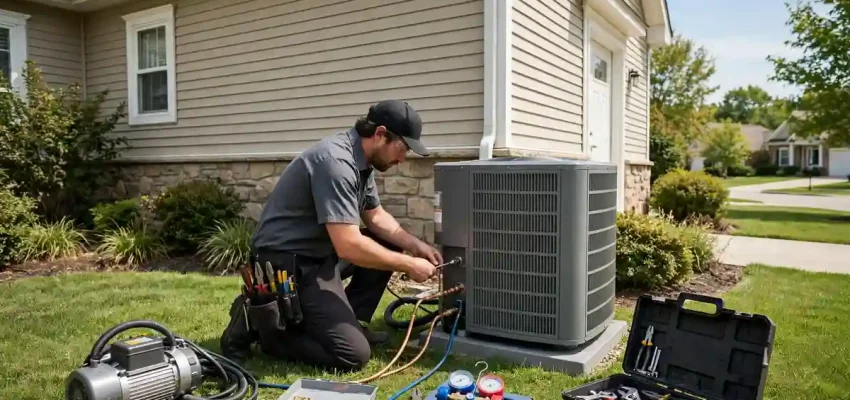
For a full central air conditioning replacement in a typical American home, most homeowners pay between $5,000 and $12,000, including the unit and labor. A smaller home with simple ductwork may land near $4,500 to $7,000, while a larger home, a high-efficiency system, or a job that needs duct repairs can reach $12,000 to $18,000. Ductless mini-split systems are priced differently: a single-zone unit often costs $2,500 to $5,000 installed, while a multi-zone system for a whole home can run $8,000 to $15,000.
These ranges assume a like-for-like replacement, where the new unit uses the existing ductwork and electrical setup. When the job also needs new ducts, a new electrical circuit, or a concrete pad for the outdoor unit, the total rises. A new system in a home that never had central air costs the most, because ductwork alone can add $3,000 to $8,000 or more, depending on the size and layout of the home.
What Determines Your AC Installation Cost?
System size is the first factor. Air conditioners are sized in tons, and a home that needs a 3-ton unit will pay less for equipment than a home that needs a 5-ton unit. Bigger is not better, though. An oversized unit cools too fast, shuts off early, and leaves humidity behind, which feels clammy and can encourage mold. A proper load calculation, known as a Manual J, measures your home’s size, insulation, windows, and climate to find the right size. Any contractor who sizes a system by guessing, or by copying the old unit’s size without checking, should raise a red flag.
Efficiency is the second factor. The SEER2 rating measures how efficiently a unit cools. Higher-rated units cost more upfront but use less electricity over their life. In hot climates where the system runs for months, a higher rating often pays for itself. In mild climates with short summers, a mid-range rating may be the smarter value. Ask each contractor to show the estimated yearly running cost for each option, not just the purchase price.
Ductwork, Electrical Work, and Permits
Ductwork is often the hidden cost in an AC job. Leaky, crushed, or undersized ducts waste cooled air and make even a new unit perform poorly. A contractor should inspect your ducts before quoting, and the quote should say whether sealing or repair is included. Electrical work is another factor: a new unit may need a different breaker or disconnect, and that work must meet code. Permits and inspections usually add a few hundred dollars, but they protect you and confirm the installation is safe. If you are comparing quotes, check whether a electrical panel upgrade is included or listed separately, because that item alone can change the total by a large amount.
Central AC vs. Ductless Mini-Split: Which Fits Your Home?
Central AC suits homes that already have ductwork and want even cooling in every room. It uses one outdoor unit and one indoor coil, and it pairs well with a furnace or air handler. Ductless mini-splits suit homes without ducts, room additions, and older houses where running ducts is impractical. Each room gets its own wall unit, so you can cool only the rooms you use, which can save energy.
Mini-splits also work well for a single hot room or a converted garage, where extending ducts would be costly. The trade-off is appearance: wall units are visible, and a multi-zone system needs more indoor units and more refrigerant lines. Your contractor should walk the home, check insulation and window exposure, and explain both options with prices, rather than pushing one system for every home. Good upkeep after installation matters just as much as the unit itself, so follow a HVAC maintenance checklist from the first season onward.
AC Installation Cost by Home Size
- Small home, up to 1,200 sq ft: typically $4,500 to $7,500 for central AC replacement.
- Medium home, 1,200 to 2,000 sq ft: typically $6,000 to $10,000 for central AC replacement.
- Large home, 2,000 to 3,000 sq ft: typically $8,000 to $14,000, often with zoning or a larger unit.
- Very large home, over 3,000 sq ft: typically $12,000 to $18,000 or more, sometimes with two systems.
These are planning ranges for replacement work with usable ductwork. A home in Phoenix will run its system far more than a home in Seattle, so the value of a high-efficiency unit differs by climate. Ask for a quote that shows both the installed price and the expected energy use, and check whether local utility rebates apply. Rebates for high-efficiency systems change often, and a good contractor will help you claim them rather than leaving the money on the table.
How to Compare AC Quotes Fairly
Get at least three written quotes, and make sure each one lists the same scope: the exact unit model and SEER2 rating, the thermostat, the duct work included, the electrical work, the permit, and the disposal of the old unit. A quote that lists only a brand name, without a model number, cannot be compared fairly. Two units from the same brand can differ greatly in efficiency and features.
Also compare warranties. Most manufacturers offer a 10-year parts warranty when the unit is registered, but labor warranties vary from one year to ten years depending on the contractor. A longer labor warranty is worth real money, because labor is often the larger part of a repair bill. Check the contractor’s license and insurance, read recent reviews, and ask for references from similar jobs. If a quote is far below the others, ask what is missing. It may exclude duct sealing, a new thermostat, or permit fees that appear later. For a city-specific comparison, a Houston AC replacement cost example shows how local climate and labor rates shift the same job from one city to another.
Ways to Save Without Buying the Wrong System
The best savings come from buying the right size and rating, not the cheapest unit on the shelf. Improve insulation and seal air leaks before you size the system, because a tighter home may need a smaller, cheaper unit. Consider a smart thermostat, which helps the system run only when needed and can cut bills without reducing comfort. Schedule the job outside the peak summer rush if you can: contractors are busiest during heat waves, and a spring or fall installation often comes with a better schedule.
Look for rebates and financing before you sign. Many utilities offer rebates for high-efficiency units, and some offer low-interest loans for the whole job. Federal tax credits for qualifying heat pumps and efficient systems also change from year to year, so check the current rules rather than assuming an old credit still applies. Finally, protect the investment with regular service. A yearly tune-up, clean filters, and clear space around the outdoor unit keep efficiency up and catch small problems early. Related home protection work, such as attic insulation, a generator installation for storm outages, or a home warranty review, is worth planning at the same time, so comfort, power, and coverage are handled together.
Common AC Installation Mistakes
The most expensive mistake is wrong sizing, followed closely by poor ductwork. A new unit connected to leaky ducts will never perform as promised, no matter how efficient the label says it is. Another mistake is placing the outdoor unit where airflow is blocked by shrubs, fences, or a tight corner. The unit needs clear space to release heat, or it will work harder and wear out sooner. A third mistake is skipping the thermostat upgrade. An old manual thermostat cannot use the features of a modern variable-speed system, so include a matching thermostat in the quote.
Finally, do not ignore the indoor air quality side of the job. A new filter cabinet, a better filter, or a dehumidifier setting can make a real difference in humid climates. Ask your contractor what the system will do for humidity, not just temperature, because comfort depends on both. For the rest of the home, the same care applies to smaller comfort jobs, from a ceiling fan installation to a recessed lighting installation, and a home addition cost guide helps if you plan to cool new rooms in the future. A general contractor can also coordinate AC work with a larger remodel, so ducts and finishes are planned once, not twice.
Conclusion
A new air conditioner is a major purchase, but it does not need to be a gamble. For most American homes, the AC installation cost for a central replacement falls between $5,000 and $12,000, with size, efficiency, ductwork, and climate setting the final figure. Get a proper load calculation, compare three detailed quotes with model numbers and warranties, and choose the system that fits your home, not just the lowest price. Done right, a new AC will cool evenly, run quietly, and cost less to operate for the next 15 years.