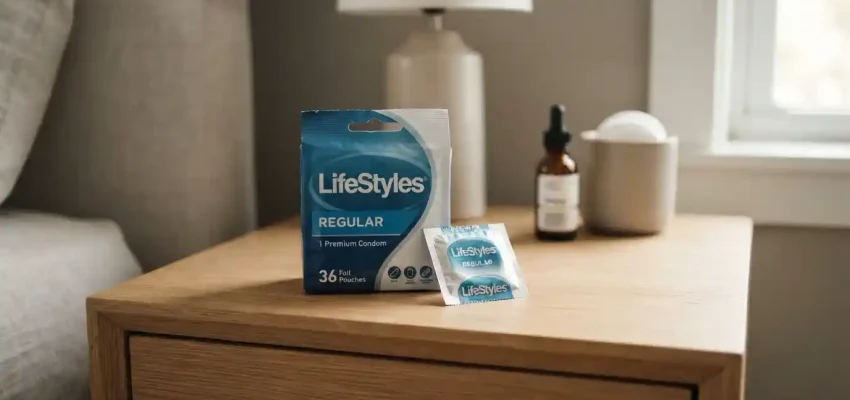

For anyone comparing condoms, understanding what a regular-fit option offers can make the buying decision easier. A condom should feel secure without being unnecessarily restrictive, and it should be used correctly every time to help reduce the risk of pregnancy and sexually transmitted infections (STIs).
This guide explains what to consider when choosing LifeStyles Regular Condoms, how fit can influence comfort, how to use condoms properly, and what practical factors are worth checking before purchase.
What Are LifeStyles Regular Condoms?
LifeStyles Regular Condoms are intended as an everyday condom option for consumers who want a conventional fit and a simple approach to sexual protection. The LifeStyles brand offers a range of condom products, but a regular-style product is generally aimed at people who do not specifically need an unusually narrow or larger fit.
Fit is important because condoms work best when they remain securely positioned during sexual activity. A condom that is too loose may slip, while one that is too tight can feel uncomfortable and may be more likely to become damaged if it is not the appropriate size.
People who are also interested in broader personal wellness and everyday self-care may find it useful to explore related topics such as wellness and health conversations when thinking about personal health as a whole.
Why Condom Fit Matters
Condom fit is one of the most important considerations when choosing a product. The right condom should stay in place while allowing comfortable movement. A regular fit can be a practical starting point for people whose measurements and preferences align with standard condom dimensions.
There is no single condom that feels identical for everyone. Factors such as width, length, material, texture, lubrication, and individual sensitivity can all affect the experience.
If a regular condom repeatedly slips, feels excessively tight, or causes discomfort, it may be worth exploring other sizes or designs instead of assuming that all condoms will feel the same.
Comfort and Everyday Use
Comfort can influence whether people consistently use condoms. A product that feels natural and stays securely in position can make protection easier to incorporate into a routine.
Lubrication is another consideration. Adequate lubrication can reduce friction and improve comfort during sexual activity. If additional lubricant is needed, users should check that the lubricant is compatible with the condom material. For latex condoms, oil-based products can weaken latex and should generally be avoided.
Personal care is also part of a broader approach to comfort and confidence. Resources covering personal skincare routines and personal-care product choices illustrate how product selection can vary according to individual needs and preferences.
Protection and Responsible Use
The primary reason to use condoms is protection. When used correctly and consistently, condoms can help reduce the risk of pregnancy and lower the risk of transmitting many sexually transmitted infections.
However, no condom provides complete protection against every infection or every possible pregnancy. Correct use is therefore just as important as selecting the product itself.
Users should check the package before opening it, confirm that it is within its expiration date, and avoid using a condom if the packaging appears damaged. Condoms should also be stored in a cool, dry location rather than exposed to excessive heat or friction.
For people taking a wider view of health and well-being, health and wellness resources can provide useful context for building responsible personal-care habits.
How to Use a Condom Correctly
Correct application helps a condom perform as intended. The basic process is straightforward:
- Check the expiration date and inspect the package for damage.
- Open the package carefully without using teeth, scissors, or sharp objects.
- Make sure the condom is being placed on the erect penis in the correct direction.
- Pinch the tip to leave room for semen and remove trapped air.
- Roll the condom down to the base before sexual contact.
- After ejaculation, hold the condom at the base while withdrawing.
- Remove it carefully, tie or wrap it if appropriate, and dispose of it in the trash.
A new condom should be used for every act of vaginal, anal, or oral sex when barrier protection is desired. A condom should never be reused.
Choosing the Right Condom for Your Needs
LifeStyles Regular Condoms may be suitable for people who prefer a conventional condom fit, but choosing a condom is ultimately a personal decision. Consumers may want to compare several characteristics before settling on a product.
1. Size and Fit
Width is often more useful than simply looking at a label such as regular, standard, snug, or large. If a condom does not stay securely in place or feels excessively restrictive, another size may be more appropriate.
2. Material
Many conventional condoms are made from latex, while other products use alternative materials. Anyone with a known latex sensitivity should carefully review the product packaging and select an appropriate non-latex alternative when necessary.
3. Lubrication
Some condoms are pre-lubricated, while users may prefer additional compatible lubricant. Checking lubricant compatibility is particularly important with latex products.
4. Sensation and Preference
Some consumers prioritize a thinner feel, while others may prefer additional texture or lubrication. Product preferences can vary considerably from one person to another.
5. Packaging and Storage
Always examine packaging before use. Avoid condoms that have been stored in extreme heat or that show signs of damage or deterioration.
LifeStyles Regular Condoms and Personal Confidence
Confidence often comes from knowing that a product fits comfortably and that it is being used correctly. Selecting a condom in advance, keeping it properly stored, and understanding how to use it can remove unnecessary uncertainty.
Sexual health is also connected to communication. Partners can discuss contraception, STI testing, boundaries, and condom preferences before sexual activity. Open communication can make protection feel like a normal part of responsible decision-making rather than an interruption.
This broader approach to confidence and personal well-being can also be considered alongside holistic wellness information and other personal-care resources.
Common Mistakes to Avoid
Even a quality condom may not provide the expected protection if it is used incorrectly. Several common mistakes are worth avoiding.
- Waiting too long to put it on: A condom should be used before genital contact when protection is required.
- Using an expired condom: Always check the expiration date.
- Opening the wrapper aggressively: Sharp objects and teeth can damage the condom.
- Using two condoms together: Double-bagging can increase friction and cause breakage.
- Using incompatible lubricant: Oil-based products can damage latex.
- Reusing a condom: Condoms are designed for one-time use.
- Ignoring poor fit: Repeated slipping or excessive tightness is a reason to consider another size.
Responsible product selection is similar to making informed choices in other areas of personal care. For example, consumers researching personal-care product reviews often compare ingredients, intended use, comfort, and individual suitability before purchasing.
Storage Tips for Condoms
Proper storage is easy but important. Condoms should normally be kept somewhere cool, dry, and away from direct sunlight. Long-term storage in a hot vehicle, wallet, or other location where the package experiences repeated friction or heat may increase the chance of damage.
It is also useful to check the packaging before use rather than assuming that a previously stored condom is automatically suitable.
People who take an organized approach to household and personal products can apply the same principle to other everyday items, from lifestyle products to personal-care essentials.
When a Different Condom May Be Better
A regular-fit condom is not automatically the right choice for every individual. If a condom frequently slips, breaks, feels too tight, or creates persistent discomfort, trying another size or product design may make more sense.
People with latex allergies should also pay attention to material information. Anyone experiencing significant irritation, pain, swelling, or another concerning reaction should stop using the product and seek appropriate medical advice.
Consumers can also consider broader healthcare information from resources such as healthcare and patient-care resources when looking for general information about personal health.
Buying LifeStyles Regular Condoms
When purchasing LifeStyles Regular Condoms, check the exact product name, package quantity, expiration date, and material information. Product packaging can change, and different versions may have different features, so the information on the current package should be treated as the final reference for that particular product.
Price is another consideration, but it should not be the only factor. A suitable fit, appropriate material, reliable packaging, and correct storage are more important when choosing a product for regular use.
Consumers interested in broader shopping and product-selection topics may also find value in reading about retail product presentation and online consumer shopping choices.
Frequently Asked Questions
Are LifeStyles Regular Condoms suitable for everyday use?
They are designed as a conventional condom option for people who prefer a regular fit. Suitability depends on individual fit, comfort, material preferences, and correct use.
How should LifeStyles Regular Condoms be stored?
Keep condoms in a cool, dry place away from direct sunlight, excessive heat, and repeated friction. Always inspect the package before use.
Can I use additional lubricant with a condom?
Additional lubricant can be used when compatible with the condom material. With latex condoms, avoid oil-based lubricants because they can weaken latex.
What should I do if a condom feels too tight?
If a condom feels uncomfortably tight, consider trying a different size or design. The condom should remain secure without causing unnecessary discomfort.
What if a condom slips or breaks?
If a condom slips or breaks during sexual activity, appropriate steps may depend on pregnancy and STI concerns. Emergency contraception and STI testing may be relevant in some situations, so timely professional medical advice can be important.
Can condoms be reused?
No. A condom is designed for one-time use. Use a new condom for each separate act of sexual activity when barrier protection is desired.
Final Thoughts
LifeStyles Regular Condoms can be considered by people looking for a conventional condom option that emphasizes everyday comfort, fit, and barrier protection. The most important factors are not simply the brand name but whether the condom is appropriate for the individual, stored correctly, used before sexual contact, and applied according to the package instructions.
Choosing the right size, checking the material, using compatible lubrication, and communicating openly with partners can all contribute to more confident and responsible condom use. If a regular fit does not feel right, there are other condom sizes and designs available, making it worthwhile to find an option that matches individual needs.
For broader lifestyle and wellness reading, related resources on personal grooming and care, personal appearance and self-care, and lifestyle and personal style can complement a wider approach to personal confidence.