
Stepping onto a warm bathroom floor on a freezing January morning is a luxury that never gets old — and it is more achievable than most American homeowners realize. But what does it actually cost? The radiant floor heating cost in the USA for 2026 ranges from $6 to $20+ per square foot installed, putting a typical bathroom project at $1,500 to $6,000 and whole-house systems at $15,000 to $40,000. This guide breaks down every cost factor, compares electric vs hydronic systems, covers operating costs, and helps you decide whether radiant heat is worth the investment for your home.
Radiant floor heating warms your home from the ground up — literally. Instead of blowing hot air through ducts, it circulates warm water (hydronic) or electric current (electric) through elements beneath your flooring, radiating gentle, even heat upward. Because heat rises naturally and warms objects rather than just air, radiant systems deliver superior comfort at lower air temperatures. Understanding the true radiant floor heating cost — installation, operation, and long-term value — is essential before committing to this premium heating approach.
Average Radiant Floor Heating Cost in the USA for 2026
For a standard bathroom (50 to 100 square feet), electric radiant floor heating costs $1,500 to $4,000 installed, or roughly $15 to $30 per square foot including the mat, thermostat, and electrician’s labor. Hydronic systems for the same bathroom run $3,000 to $6,000 — more expensive because they need a boiler or water heater connection, pumps, and manifolds.
Whole-house hydronic radiant heating for a 2,000-square-foot home costs $15,000 to $35,000 installed ($8 to $18 per square foot), depending on whether it goes into new construction (cheapest — installed before flooring) or a retrofit (pricier — flooring must come up). Whole-house electric radiant is rarely practical — operating costs are prohibitive at scale — so whole-house almost always means hydronic. The overall radiant floor heating cost spectrum is wide because the technology spans from a $500 DIY bathroom mat kit to a $40,000 engineered whole-house system.
Electric vs Hydronic: Cost Comparison
Electric Radiant Floor Heating
Electric systems use thin heating mats or cables installed directly under tile, stone, or engineered flooring, wired to a dedicated circuit and controlled by a floor-sensing thermostat. Materials cost $5 to $15 per square foot; professional installation adds $5 to $12 per square foot for the electrician’s work. Total installed: $10 to $25 per square foot.
Electric radiant is ideal for small areas — bathrooms, kitchens, mudrooms — where the simplicity outweighs the higher operating cost. Installation is straightforward enough that handy homeowners often DIY the mat placement (leaving electrical connections to a licensed electrician), saving $500 to $1,000. Operating cost is the catch: at $0.15/kWh, heating a 100-square-foot bathroom costs roughly $30 to $60 per month in winter — fine for a bathroom used mornings and evenings, punishing for whole-house use.
Hydronic Radiant Floor Heating
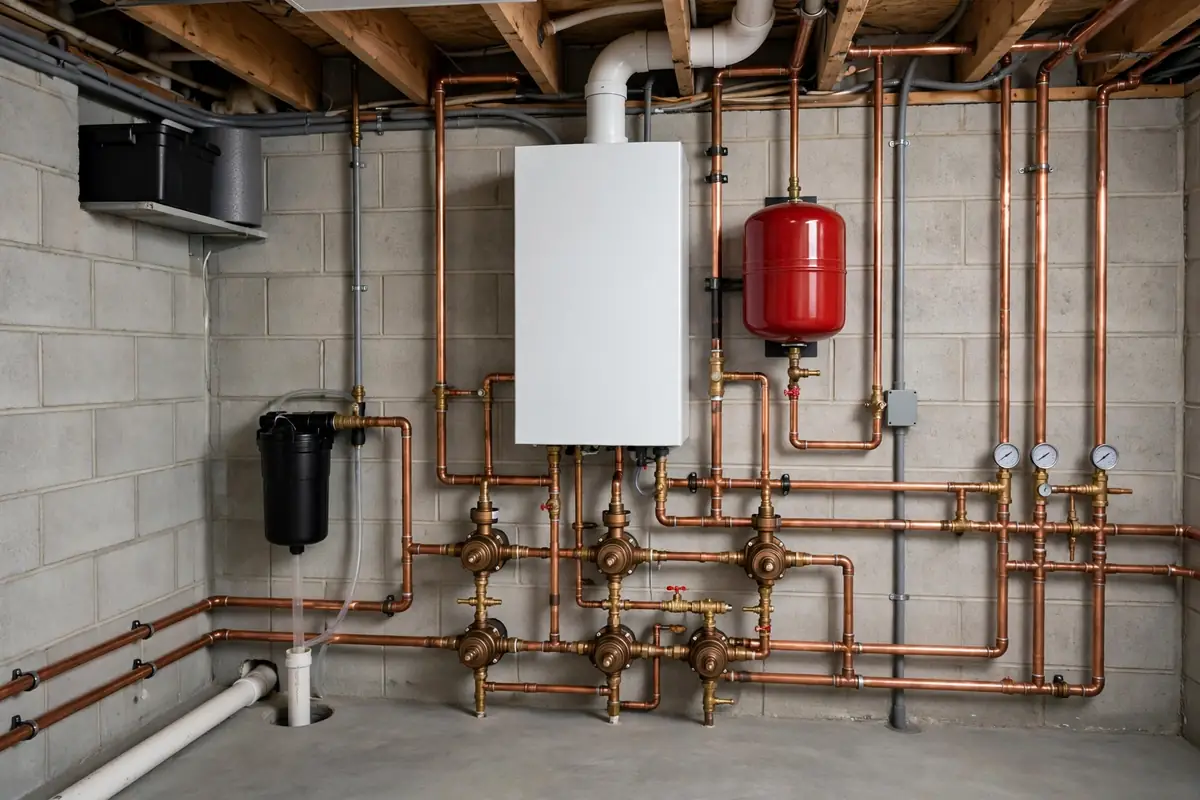
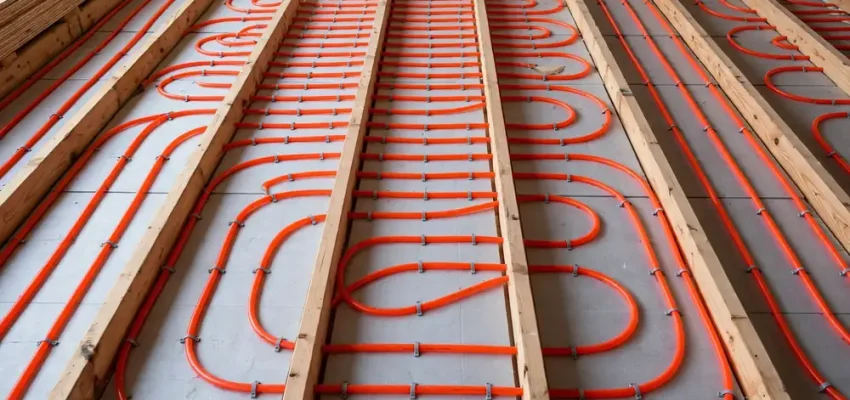
Hydronic systems circulate heated water through PEX tubing embedded in the floor — in concrete slabs, in lightweight gypsum overpour, between joists with aluminum transfer plates, or in grooved subfloor panels. A boiler, water heater, or heat pump supplies the hot water; manifolds distribute it zone by zone. Materials run $4 to $10 per square foot; installation adds $4 to $12 per square foot. Total installed: $8 to $20 per square foot.
Hydronic is the choice for whole-house heating and large areas. Operating costs are dramatically lower than electric — a high-efficiency boiler or heat pump delivering radiant heat costs roughly the same to run as a conventional forced-air system, sometimes less because radiant delivers comfort at lower thermostat settings. The upfront radiant floor heating cost is higher, but the 25+ year lifespan of PEX tubing and the superior comfort justify it for whole-house applications. Homes pairing hydronic radiant with an efficient heat source should also review our analysis of geothermal heating cost for US homes — geothermal plus radiant is the gold standard of residential comfort.
Cost by Project Type
Bathroom retrofit (electric): $1,500 to $4,000. The most popular radiant project in America — a warm tile floor transforms the coldest room in the house. Best done during a bathroom remodel when flooring is already being replaced; our guide to bathroom remodel cost in the USA for 2026 helps you budget the full project.
Kitchen retrofit (electric or hydronic): $2,500 to $7,000. Kitchens benefit enormously from radiant heat since tile and stone floors are cold underfoot. Electric mats work well for kitchens under 200 square feet; larger kitchens favor hydronic tied into a boiler system.
Basement slab (hydronic): $4,000 to $10,000 for a 1,000-square-foot basement. PEX tubing is tied to rebar or mesh before the concrete pour — the cheapest possible hydronic installation since the tubing goes in during construction. Basement radiant is extraordinarily comfortable and eliminates the cold-floor problem that plagues below-grade spaces.
Whole-house new construction (hydronic): $15,000 to $30,000 for 2,000 square feet. Installing during construction avoids retrofit premiums — no flooring removal, easy manifold placement, straightforward boiler integration. This is the radiant floor heating cost sweet spot for maximum value.
Whole-house retrofit (hydronic): $25,000 to $45,000+. Removing and replacing all flooring, potentially raising floor heights (affecting doors and transitions), and threading manifolds through finished spaces adds 40 to 60% over new-construction costs. Most homeowners retrofit room-by-room during planned remodels rather than all at once.
What Drives Radiant Floor Heating Cost Up or Down
Flooring Type
Tile, stone, and polished concrete are ideal — they conduct heat beautifully and add minimal cost since the heating elements install directly beneath. Engineered hardwood works with careful temperature limits (surface under 80°F to prevent damage). Carpet is the worst choice — it insulates against the heat you are paying to produce, requiring higher water temperatures and erasing efficiency gains. If you love carpet, radiant is probably not your system. Luxury vinyl plank (LVP) compatibility varies by manufacturer; verify temperature ratings before committing.
Heat Source
The heat source significantly affects both installation and operating cost. A dedicated high-efficiency boiler ($3,500 to $8,000) is the premium option with the best performance. Tying into an existing boiler adds only $1,000 to $2,000 in piping and controls — a bargain if your boiler has spare capacity. Tankless water heaters can serve small hydronic zones. Air-to-water heat pumps ($8,000 to $15,000) pair beautifully with radiant’s low water temperatures, achieving remarkable efficiency. For a detailed heat source comparison, see boiler vs furnace pros and cons in the USA.
Zoning and Controls
Each additional zone needs its own thermostat, manifold circuit, and sometimes its own pump — adding $300 to $800 per zone. Most homes need 4 to 8 zones for proper control. Smart thermostats with floor sensors ($200 to $400 each) optimize comfort and efficiency but add to upfront cost. Do not skimp on zoning — it is the difference between a system that delights and one that overheats some rooms while underheating others.
New Construction vs Retrofit
This is the single biggest cost variable. New construction or gut renovations allow the cheapest installation methods (tubing in slab, easy manifold access). Retrofits into finished homes require flooring removal, potential subfloor modifications, and creative piping routes — typically adding 40 to 60% to the radiant floor heating cost. Timing radiant installation with planned flooring replacement or additions captures most of the new-construction savings.
Operating Costs: What You Will Pay Monthly
Hydronic radiant operating costs are comparable to high-efficiency forced-air heating — $100 to $250 per month in winter for a typical home, depending on climate, fuel, and insulation. The comfort advantage means most households set thermostats 2 to 4 degrees lower than with forced air (68°F radiant feels like 72°F forced-air), saving 6 to 12% on fuel outright.
Electric radiant operating costs are higher: roughly $0.30 to $0.60 per square foot per month in heating season. A 100-square-foot bathroom runs $30 to $60 monthly — acceptable for supplemental comfort heating used a few hours daily, especially with a programmable thermostat that warms the floor before your morning routine and idles the rest of the day. Never use electric radiant as a primary whole-house heat source; the bills will shock you.
Pairing hydronic radiant with a heat pump heat source delivers the lowest operating costs of any residential heating combination — the heat pump’s 300%+ efficiency multiplied by radiant’s comfort-at-lower-temperatures advantage. This is the configuration that makes energy nerds swoon, and it is increasingly popular in high-performance new construction across the USA.
Radiant vs Forced Air: Honest Comparison
Comfort is radiant’s undisputed win: no drafts, no dust blown around, no hot/cold spots, silent operation, and warm floors underfoot. Allergy sufferers benefit enormously from the absence of duct-blown dust and the lower air circulation that keeps particles settled. Forced air wins on cost (half the installation price), cooling capability (radiant does not cool — you still need AC or mini-splits), and air filtration (ducts carry filters; radiant has none).
Most radiant homes still need a cooling solution — typically ductless mini-splits or a conventional AC air handler. Budget for this separately; the radiant floor heating cost covers heating only. Our ductless vs central AC comparison helps you choose the cooling complement. Some homeowners run a minimal duct system for cooling, filtration, and ventilation alongside radiant heating — the best of both worlds at a combined premium price.
Resale value favors radiant in luxury markets, where it is expected in high-end bathrooms and appreciated throughout. In mid-range markets, buyers value it but rarely pay full premium — install radiant for your own comfort, not as a flip investment.
Explore more heating options in our guides to AC replacement cost, furnace replacement cost, choosing an HVAC contractor, HVAC lifespan, thermostat installation, and maintenance plans.
Frequently Asked Questions
Can radiant floor heating be installed under existing floors?
Electric mats can go under tile during a re-tile without major surgery. Hydronic retrofits typically require removing flooring to access the subfloor, though below-joist installations with aluminum transfer plates can work from an unfinished basement or crawl space below. There is no magic way to add hydronic radiant without accessing the floor structure.
How long does radiant floor heating last?
PEX tubing carries 25-year warranties and expected lifespans of 50+ years — it will outlive the house’s other mechanical systems. Electric mats last 20 to 30 years. Boilers and controls need replacement on normal 15 to 20-year cycles, but the in-floor infrastructure is essentially permanent.
Can you run radiant heating with a heat pump?
Yes — and it is an outstanding combination. Radiant floors need only 85 to 120°F water (versus 160 to 180°F for radiators), which is exactly the range where heat pumps operate most efficiently. Air-to-water heat pumps designed for hydronic heating are increasingly available in the US market.
Does radiant floor heating increase home value?
In luxury and cold-climate markets, yes — appraisers and buyers recognize it as a premium feature, particularly in bathrooms and primary suites. In average markets, expect partial value recovery. Install it for comfort you will enjoy daily, and treat any resale premium as a bonus.
The radiant floor heating cost is premium-priced because it delivers a premium experience — silent, even, dust-free warmth with floors that feel wonderful underfoot. For bathrooms and kitchens, electric radiant is an affordable luxury most homeowners can justify. For whole-house heating, hydronic radiant is a serious investment that pays back in decades of unmatched comfort. Time it with new construction or planned remodels, choose the right heat source, and you will wonder why anyone still heats with noisy, dusty forced air.